

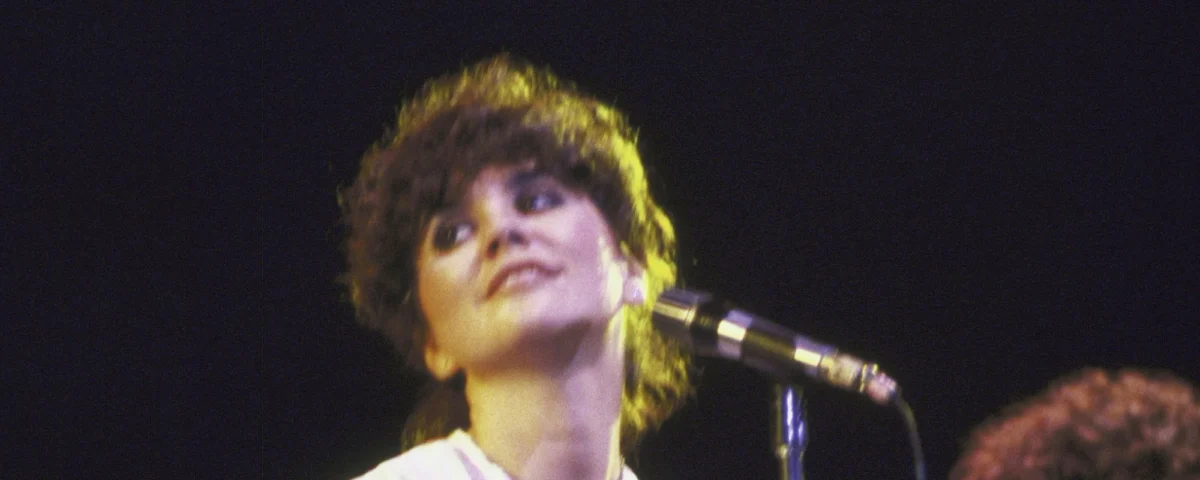
On March 25, 1975, the American music landscape witnessed a pivotal moment in the career of Linda Ronstadt with the release of her single "When Will I Be Loved." While the song was a cover of a 1960 classic by the Everly Brothers, Ronstadt’s interpretation did more than merely pay homage to her predecessors; it fundamentally altered the trajectory of her career and solidified her position as a dominant force across multiple musical genres. This release, emerging from her breakthrough album Heart Like a Wheel, served as a masterclass in how an interpretive artist can reclaim and modernize a composition, ultimately surpassing the commercial benchmarks of the original version.
The 1970s represented a period of significant transition in the recording industry, as the lines between folk, rock, country, and pop began to blur. Ronstadt, an 11-time Grammy Award winner, became the personification of this "crossover" appeal. By the time "When Will I Be Loved" reached the airwaves in the spring of 1975, Ronstadt had already transitioned from the lead singer of the Stone Poneys to a formidable solo artist, yet it was the specific synergy of her vocal prowess and the production of Peter Asher that propelled her into the stratosphere of "arena-class" stardom.
Historical Context and the Everly Brothers Original
To understand the magnitude of Ronstadt’s success, one must look back to the song’s origins. Written by Phil Everly, "When Will I Be Loved" was originally recorded by the Everly Brothers in 1960. At the time, the duo was at the height of their influence, known for their tight, sibling harmonies and a sound that bridged the gap between Appalachian tradition and the burgeoning rock and roll movement. Their version of the song peaked at No. 8 on the Billboard Hot 100.
Fifteen years later, Ronstadt revisited the track, but she did not simply replicate the Everly Brothers’ vocal arrangement. Instead, she injected the song with a more aggressive, driving rhythm and a sophisticated vocal layering that was emblematic of the "California Sound" of the mid-70s. One of the most notable creative liberties she took was the restructuring of the lyrics. Ronstadt opted to switch the first and fourth verses, opening the track with the evocative lines: "I’ve been cheated / Been mistreated / When will I be loved." This subtle change emphasized the vulnerability and resilience that became hallmarks of her public persona.
The Production and Strategy of Heart Like a Wheel
The success of the single was inextricably linked to the album from which it came. Released in November 1974, Heart Like a Wheel was Ronstadt’s fifth solo studio album and her final release for Capitol Records before moving to Asylum Records. The production of the album was a high-stakes endeavor, as Capitol sought to maximize Ronstadt’s potential as a mainstream superstar.
Internal reports from the era suggest that Capitol Records executives faced a difficult decision regarding the album’s lead single. The choice was between "When Will I Be Loved" and a cover of Dee Dee Warwick’s "You’re No Good." Ultimately, the label chose the latter as the initial offering. This decision proved strategically sound; "You’re No Good" climbed to No. 1 on the Billboard Hot 100 in early 1975, providing the necessary momentum for "When Will I Be Loved" to follow.
When "When Will I Be Loved" was finally released as a single in March, it achieved a rare feat of chart dominance. It peaked at No. 2 on the Billboard Hot 100, held back from the top spot only by Captain & Tennille’s "Love Will Keep Us Together," which became the biggest hit of the year. However, Ronstadt’s version found even greater success on the country charts, peaking at No. 1 on the Hot Country Songs chart. This dual success highlighted her unique ability to navigate the disparate worlds of Nashville and Hollywood, a feat few artists of the era could replicate.
Supporting Data and Commercial Milestones
The commercial performance of "When Will I Be Loved" and the Heart Like a Wheel album can be quantified through several key metrics:
- Chart Performance: The single spent 15 weeks on the Billboard Hot 100 and 14 weeks on the Hot Country Songs chart. It also reached No. 3 on the Adult Contemporary chart, illustrating its broad demographic appeal.
- Album Sales: Heart Like a Wheel reached No. 1 on the Billboard 200 and was eventually certified Double Platinum by the RIAA, signifying over two million units sold in the United States.
- Critical Acclaim: The album earned four Grammy nominations at the 18th Annual Grammy Awards. While she did not win for the single itself, Ronstadt took home the Grammy for Best Female Country Vocal Performance for her cover of Hank Williams’ "I Can’t Help It (If I’m Still in Love with You)," another standout track from the same album.
The technical execution of the song also deserves scrutiny. The recording featured a lineup of premier session musicians, including Andrew Gold, who contributed the iconic guitar solo and played drums, and Kenny Edwards on bass. Their contribution created a polished, radio-friendly sound that maintained enough "grit" to satisfy rock audiences while retaining the melodic clarity required for pop and country radio.
The Psychological Burden of Stardom
Despite the objective success of the era, the period was marked by significant personal turmoil for Ronstadt. In a 1976 interview with Rolling Stone, she revealed a profound sense of "imposter syndrome" and social anxiety that coincided with her rise to fame. The phenomenon of being the first female artist to reach "arena class" status—playing to tens of thousands of people in sports stadiums—brought with it a level of scrutiny that Ronstadt found overwhelming.
"I just walked around apologizing every single day," Ronstadt told journalist Ben Fong-Torres. She expressed concern that her rapid ascent was causing resentment among her peers in the Los Angeles music scene. This self-consciousness reportedly hindered her live performances, as she felt a constant pressure to justify her success. This internal conflict stands in stark contrast to the confident, powerful vocal delivery heard on "When Will I Be Loved," suggesting that Ronstadt’s artistry served as a shield or a separate entity from her private insecurities.
Industry Implications and Long-term Legacy
The success of Ronstadt’s March 1975 release had broader implications for the music industry as a whole. It demonstrated the viability of the "interpretive singer" in an era that was increasingly obsessed with the singer-songwriter movement. While contemporaries like Joni Mitchell and Carole King were celebrated for their original compositions, Ronstadt proved that the art of curation and arrangement was equally vital.
Furthermore, Ronstadt’s ability to dominate the country charts while being a staple of rock radio helped pave the way for future crossover artists. Her success signaled to labels that female artists did not need to be pigeonholed into a single genre to achieve massive commercial success. She effectively bridged the gap between the traditionalism of Nashville and the experimentalism of the West Coast rock scene.
The legacy of "When Will I Be Loved" continues to be felt decades later. It remains a staple of classic rock and country radio, and its production style continues to be cited by contemporary producers as a benchmark for vocal-centric pop-rock. Ronstadt’s refusal to "copy and paste" the original versions of her covers—a philosophy clearly evidenced in the 1975 release—set a standard for creative reinterpretations.
Chronology of the Heart Like a Wheel Era
- September 1973 – March 1974: Recording sessions for Heart Like a Wheel take place at The Sound Factory in Los Angeles.
- November 1974: Heart Like a Wheel is released to critical acclaim.
- January 1975: "You’re No Good" reaches No. 1 on the Billboard Hot 100.
- March 25, 1975: "When Will I Be Loved" is officially released as the second single.
- May 1975: The single reaches the Top 10 across multiple Billboard charts.
- June 1975: The song peaks at No. 1 on the Hot Country Songs chart and No. 2 on the Hot 100.
- February 1976: Ronstadt wins her first Grammy Award as a solo artist for "I Can’t Help It (If I’m Still in Love with You)."
In retrospect, the release of "When Will I Be Loved" was not just a successful chart run; it was the moment Linda Ronstadt claimed her throne. By outperforming the Everly Brothers on the charts and bringing a 1960s melody into the modern rock era, she proved that great songs are timeless, but great voices are transformative. The article of her career during this period remains a study in the power of interpretation, the complexities of fame, and the enduring influence of a woman who, despite her own apologies, had nothing for which to be sorry.
