

The modern landscape of music marketing has undergone a radical transformation over the past decade, moving away from centralized website hubs toward a fragmented ecosystem of social media platforms, streaming services, and digital marketplaces. For the contemporary musician, the "link in bio" has evolved from a simple list of hyperlinks into a critical piece of digital real estate that serves as a primary storefront and engagement portal. Recent analysis from industry experts suggests that the choice of platform for this single link can significantly dictate an artist’s ability to convert casual listeners into dedicated fans and revenue streams. Music marketing strategist and author Jesse Cannon, known for his influential work on fan-base building, has identified Koji as a superior solution for musicians, producers, and instrumentalists seeking to optimize their digital presence.
The shift toward sophisticated link-in-bio tools comes at a time when the creator economy is estimated to be worth over $250 billion, with musicians representing a significant portion of the "middle-class" creators who rely on direct-to-fan monetization. In an era where platforms like Instagram and TikTok restrict users to a single external link, that link must function as a high-performance landing page. Cannon’s assessment highlights that traditional link aggregators often fail to provide the depth of engagement required to sustain a modern music career, leading many professionals to seek out more robust, app-integrated alternatives.

The Psychology of First Impressions in the Digital Music Space
In the realm of digital marketing, the "first impression" is often measured in milliseconds. For a musician, the moment a potential fan clicks the link in their social media bio is a high-stakes transition. If the landing page is slow, visually unappealing, or requires multiple redirects to external apps, the likelihood of user drop-off increases exponentially. Cannon emphasizes that this initial interaction is frequently the most overlooked aspect of fan-base development. A seamless transition from a social media post to a link-in-bio interface can be the difference between a one-time viewer and a lifelong subscriber.
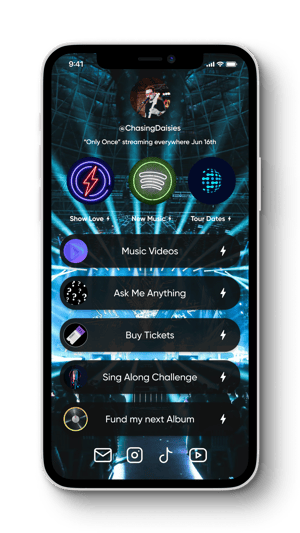
Koji addresses this by offering a highly customizable interface that functions more like a personalized mini-website than a static list of buttons. By providing free tools for custom text, high-resolution graphics, and interactive layouts, the platform allows artists to maintain brand consistency. This level of aesthetic control is vital in an industry where visual identity is inextricably linked to sonic output. When an artist can control the narrative from the first click, they establish a professional veneer that signals to the audience that their art is worth the investment of time and money.
Technical Innovation: The Koji App Store and Frictionless Commerce
Perhaps the most significant differentiator identified by industry analysts is Koji’s integrated app store. Unlike traditional link-in-bio services that act as "switchboards"—directing traffic away from the social media app to external sites like Spotify, Apple Music, or Patreon—Koji utilizes a framework of "mini-apps." These apps run inside the link-in-bio interface itself, meaning fans never have to leave the platform they are currently using.

Jesse Cannon points out that these are not native iOS or Android apps that require a download from a traditional app store. Instead, they are web-based applications that load instantly. For musicians, this removes "friction"—the technical term for any obstacle that slows down a user’s path to a desired action. Whether a fan wants to tip the artist, buy a digital download, or subscribe to a newsletter, they can do so without the jarring experience of being redirected to a browser and prompted to log in to another service. This "frictionless" environment is proven to increase conversion rates for digital sales and email sign-ups, which are the lifeblood of independent music careers.
A Chronological Shift in Artist-Fan Interactivity
To understand the rise of platforms like Koji, one must look at the chronology of artist-fan interactions online. In the early 2000s, the personal artist website was the gold standard, often built with Flash or basic HTML. However, as MySpace and later Facebook rose to dominance, artists traded control for reach, moving their primary engagement to social networks. By the mid-2010s, the "fragmentation era" began, with artists forced to manage presences on Twitter, Instagram, YouTube, SoundCloud, and various streaming platforms simultaneously.
The "link in bio" emerged as a necessity around 2016 to bridge these gaps. Early iterations were simple and utilitarian. However, as the 2020s approached, the limitations of these simple lists became apparent. Artists needed to do more than just "send" people places; they needed to "do" things with their fans. This led to the current era of the "Super-Link," where the link in bio is no longer a directory but a destination. Koji’s entry into the market represents the peak of this evolution, turning the link into a functional commerce and engagement hub that rivals traditional e-commerce sites in capability but surpasses them in speed and accessibility.

Supporting Data: The Impact of Integrated Mini-Apps
Data from the broader creator economy suggests that platforms offering integrated commerce see higher per-user revenue than those relying on external redirects. Industry reports indicate that every additional click or redirect in a mobile purchase journey can result in a 20% to 30% drop in conversion. By hosting the transaction within the link-in-bio interface, Koji effectively bypasses several stages of the traditional sales funnel.
Furthermore, the Koji app store offers specific utilities tailored for musicians that are not available on standard platforms. These include:
- Locked Content Apps: Allowing artists to "gate" new tracks or behind-the-scenes videos behind a social share or a small payment.
- Direct Tip Jars: Facilitating immediate financial support during live streams or viral moments.
- Email Collection Tools: Building the artist’s most valuable asset—their first-party data—without requiring the fan to navigate away from the social feed.
- Shoutout Services: Enabling fans to purchase personalized video messages or song snippets, creating a new revenue stream that bypasses traditional merchandise manufacturing costs.
Strategic Implementation and Professional Recommendations
For musicians looking to maximize their digital reach, Cannon and other marketing experts suggest a strategic approach to building a Koji profile. The consensus is that the profile should not be treated as a "set it and forget it" tool, but as a dynamic asset. The first recommendation is to prioritize the most important "call to action" (CTA) at the top of the page, whether that is a new single, a tour announcement, or a merchandise drop.
Secondly, the use of high-quality visual assets is non-negotiable. Because Koji allows for video backgrounds and interactive elements, artists can create an immersive environment that reflects their musical style. Thirdly, experts advise artists to regularly rotate the "mini-apps" they use based on their current career goals. For example, during a tour, a ticket-selling or "map" app might take priority, whereas during a release cycle, a pre-save or "music player" app becomes the focal point.
Broader Industry Implications and the Future of Independent Revenue
The pivot toward platforms like Koji signifies a broader shift in the music industry’s power dynamics. For decades, artists were reliant on major labels and large-scale distributors to manage their storefronts and fan data. The democratization of these high-level marketing tools allows independent artists to operate with the same level of sophistication as major-label acts.
Moreover, the financial implications are significant. Traditional storefronts often take a substantial percentage of sales, and third-party platforms can gatekeep fan data. Koji’s model, which focuses on empowering the creator with a larger share of their revenue and direct access to their audience’s contact information, challenges the status quo of digital distribution. As more artists adopt these "supercharged" links, the industry may see a further decline in the necessity of traditional web hosting for artists, as the mobile-first, social-integrated link becomes the definitive digital home for the modern creator.
Conclusion: The Permanent Shift to Interactive Portals
The analysis provided by Jesse Cannon and the observable trends in the digital marketplace point to a singular conclusion: the era of the static link list is ending. For musicians, the ability to connect, monetize, and engage within a single, frictionless interface is no longer a luxury but a requirement for survival in a saturated market. Koji has positioned itself at the forefront of this movement by treating the link in bio not as a utility, but as a powerful engine for career growth.
As the music industry continues to navigate the complexities of the digital age, the focus remains on the fan experience. By prioritizing first impressions, reducing technical friction, and providing a suite of interactive tools, Koji offers a blueprint for how artists can reclaim their digital autonomy. Whether for an emerging producer or an established touring artist, the transition to a supercharged link in bio represents a vital step in building a sustainable and scalable music business in the 21st century.
