

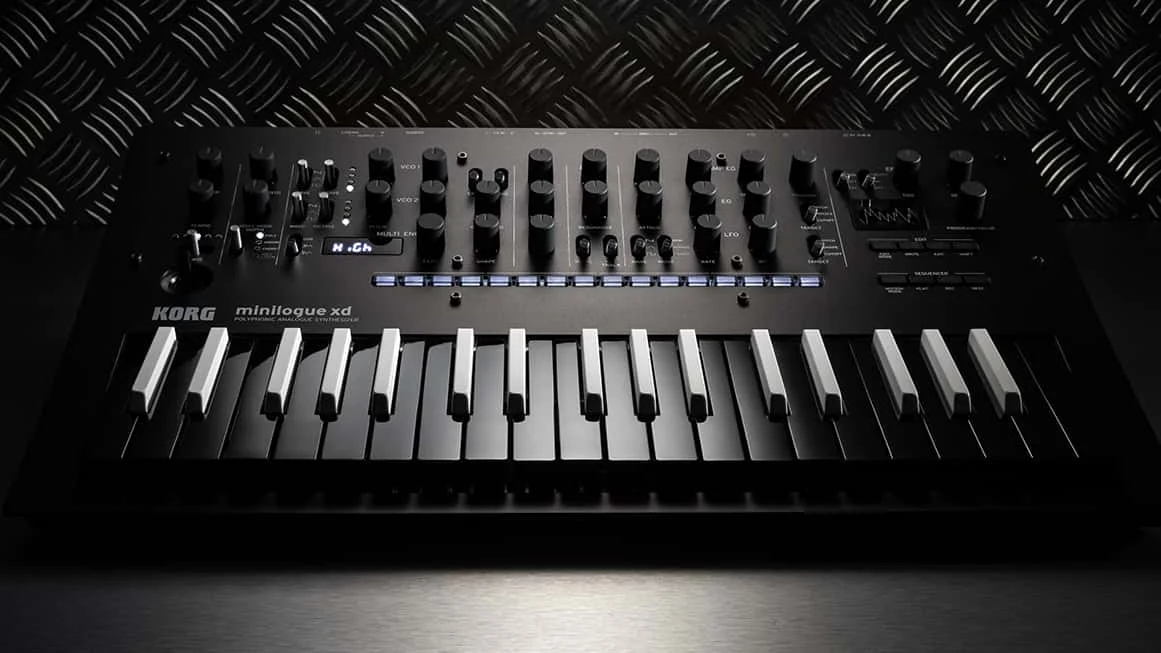
The landscape of modern music production has been fundamentally altered by the convergence of hardware tactile control and the infinite flexibility of digital signal processing. At the center of this evolution is the macro oscillator, a concept that has transitioned from the niche world of modular synthesis into the mainstream hardware market. A recent technical deep dive by Bloom Music, hosted by synthesist Donald Jordan, has brought renewed attention to this technology, specifically focusing on how Korg’s ‘logue series of synthesizers—including the Minilogue XD, Prologue, and NTS-1—have become the premier vessels for these complex digital engines. By integrating the open-source designs of Mutable Instruments into Korg’s proprietary hardware, a hybrid ecosystem has emerged that many industry analysts consider an underrated pinnacle of modern sound design.
The Architectural Philosophy of the Macro Oscillator
To understand the significance of the macro oscillator, one must first examine the traditional constraints of synthesizer architecture. In a standard subtractive synthesizer, a user typically manipulates individual oscillators, choosing basic waveforms like saw, square, or triangle, which are then processed through filters and amplifiers. While effective, this process requires significant manual routing to achieve complex, evolving textures.
The macro oscillator, conversely, operates on a philosophy of "complex synthesis made simple." Instead of providing a single waveform, a macro oscillator contains multiple synthesis models—such as frequency modulation (FM), additive synthesis, physical modeling, and granular synthesis—within a single digital module. The "macro" element refers to the way complex internal parameters are mapped to a limited number of high-level controls, usually labeled as Timbre, Color, and Morph. This allows the user to navigate vast sonic territories without needing to understand the underlying mathematical complexities of the specific synthesis method being employed.
Donald Jordan’s analysis highlights that this abstraction does not signify a loss of depth but rather an increase in efficiency. By streamlining the interface, the macro oscillator allows musicians to stay in a "creative flow state," making it an essential tool for both live performance and studio sound design.
The Legacy of Mutable Instruments and the Open-Source Movement
The current ubiquity of macro oscillators can be traced back to the work of Émilie Gillet, the founder of Mutable Instruments. In 2013, the release of the "Braids" module for the Eurorack format introduced the concept of a multi-model digital oscillator to a wide audience. This was followed in 2018 by "Plaits," which refined the concept further, offering 16 different synthesis models ranging from virtual analog to speech synthesis and physical modeling of percussion.
Crucially, Gillet chose to release the source code for these modules under an open-source license. This decision had profound implications for the industry. It allowed independent developers to port these sophisticated algorithms to other platforms. When Korg released the Prologue and subsequently the Minilogue XD, they included a "Multi-Engine"—a digital oscillator slot that could run custom user code. This created a bridge between the avant-garde world of modular synthesis and the accessible, polyphonic world of Korg’s hardware.
The Bloom Music feature underscores that the integration of Mutable Instruments’ designs into the Korg ecosystem represents a rare moment of synergy in the music technology industry. It allowed a mass-market product like the Minilogue XD to inherit the DNA of high-end, boutique modular gear, effectively democratizing sounds that were previously locked behind expensive and complex modular rigs.
Technical Integration: The Korg ‘logue SDK
The technical foundation that allows the Minilogue XD to host macro oscillators is the Korg ‘logue SDK (Software Development Kit). This is a dedicated development environment that allows programmers to write custom oscillators and effects in C++ and load them onto the hardware via a USB connection.
The Multi-Engine on the Minilogue XD is a high-resolution digital oscillator that sits alongside two traditional analog oscillators. When a macro oscillator—such as a port of "Plaits"—is loaded into this slot, it transforms the synthesizer into a tri-oscillator hybrid powerhouse. The digital engine handles the "exotic" textures, such as metallic FM bells, woody marimba strikes, or vowel-like formant shifts, while the analog oscillators provide the low-end weight and warmth characteristic of voltage-controlled circuits.
Data from third-party developer communities, such as those surrounding Hammondeggs and Tim Shoebridge, indicates that the Korg SDK has become one of the most successful implementations of user-programmable hardware in the history of synthesis. Since 2018, hundreds of custom oscillators have been developed, many of which are based on the macro oscillator philosophy of consolidating complex functions into accessible controls.
Chronology of Development and Market Adoption
The rise of the macro oscillator within the Korg ecosystem followed a specific timeline of hardware and software milestones:
- 2013: Mutable Instruments releases Braids, establishing the "macro" workflow in the Eurorack market.
- January 2018: Korg announces the Prologue at NAMM, debuting the Multi-Engine and the concept of an open SDK for hardware synthesizers.
- February 2018: Mutable Instruments releases Plaits, which becomes the gold standard for macro oscillators.
- January 2019: Korg releases the Minilogue XD, bringing the Multi-Engine to a more affordable, compact, and feature-rich format (including a sequencer and expanded digital effects).
- 2019–2021: Independent developers successfully port the Plaits source code to the ‘logue SDK, allowing Korg users to access the "Genius" of the macro oscillator.
- 2023–2024: Retrospective analyses, such as the video from Bloom Music, highlight the enduring value of this integration as the Minilogue XD remains a best-seller five years after its debut.
Sound Examples and Practical Applications
In the demonstration portion of the Bloom Music video, Donald Jordan showcases the versatility of the macro oscillator by cycling through various models. The sonic palette is notably wider than what is typically expected from a standard polyphonic synthesizer:
- Physical Modeling: By using the Karplus-Strong synthesis model, the Minilogue XD produces realistic plucked string sounds that react dynamically to velocity and the synthesizer’s analog filter.
- FM Synthesis: The macro oscillator simplifies the complex ratio-based programming of FM synthesis into a few knobs, allowing for the quick creation of "glassy" pads and aggressive bass tones.
- Vocal Synthesis: The use of formant filters within the macro engine allows the Minilogue XD to mimic human speech patterns, a feat that would be nearly impossible using only the synthesizer’s analog components.
These examples illustrate why the macro oscillator is often referred to as a "Swiss Army knife" for sound designers. It fills the gaps that traditional subtractive synthesis cannot reach, making the Minilogue XD a more comprehensive tool for modern genres like cinematic scoring, IDM, and experimental electronic music.
Industry Impact and Broader Implications
The success of macro oscillators on the Korg platform has forced other manufacturers to reconsider the value of open-platform hardware. While companies like Arturia (with the MicroFreak) and Elektron (with the Model:Cycles) have embraced "model-based" synthesis, Korg’s approach remains unique due to its user-extensible nature.
Industry experts suggest that the "underrated" status of these oscillators stems from a lack of public awareness regarding the SDK. While many users purchase the Minilogue XD for its analog capabilities, the true potential of the machine is often only realized when the third-party digital engines are utilized. This has led to a thriving secondary market for digital "plugins" for hardware—a concept that was almost non-existent a decade ago.
Furthermore, the longevity of the Minilogue XD in a fast-moving market is largely attributed to this software flexibility. Because the digital engine can be updated with new macro oscillator designs, the hardware does not become obsolete as quickly as fixed-architecture synthesizers. This sustainability model is increasingly important to consumers who are wary of the rapid turnover in consumer electronics.
Conclusion: The Future of Hybrid Synthesis
The analysis provided by Bloom Music serves as a reminder that the most significant innovations in music technology often occur at the intersection of different philosophies. By combining the open-source brilliance of Mutable Instruments with the robust hardware engineering of Korg, the industry has produced a tool that is greater than the sum of its parts.
As digital processing power continues to increase and become more affordable, the macro oscillator is likely to become even more prevalent. The "genius" of the design lies in its ability to hide complexity without sacrificing character, offering a sophisticated palette to the novice and a streamlined workflow to the professional. For the Minilogue XD, the inclusion of these engines has solidified its place in the history of synthesis, proving that the future of the instrument lies in its ability to be whatever the user—or the developer—needs it to be. The macro oscillator is not just a feature; it is a fundamental shift in how we interact with sound, moving away from the microscopic adjustment of parameters toward the macroscopic curation of sonic identity.
