

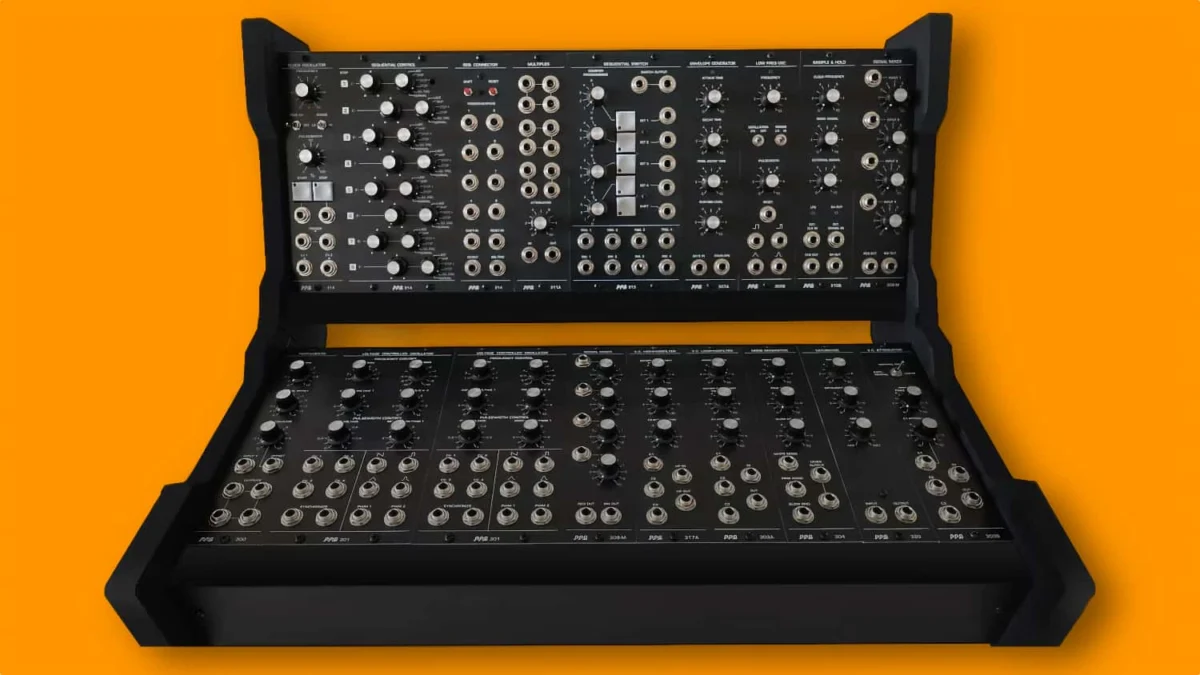
The international electronic music community is preparing for a significant milestone in the preservation of synthesizer history as the reissue of the PPG Modular System 300 is scheduled to debut at SynthFest France, held from April 17 to April 19, 2026. This ambitious project comes from the same specialized development team responsible for the highly acclaimed PPG 1002 reissue, which saw its own successful unveiling at Superbooth 2025. The return of the System 300 represents more than just a product launch; it is a meticulous reconstruction of a pivotal chapter in German electronic instrument design, originally pioneered by Wolfgang Palm in Hamburg during the mid-1970s. By bringing this rare modular environment back into production, the developers aim to provide modern composers and historians with access to the specific sonic architecture that defined the "Berlin School" of electronic music.
The Historical Context of Palm Products GmbH
To understand the significance of the PPG Modular System 300, one must look back to the landscape of 1975. Wolfgang Palm, the founder of Palm Products GmbH (PPG), was a visionary engineer operating out of Hamburg, Germany. While the American market was dominated by Robert Moog and Donald Buchla, Palm was developing a unique European perspective on synthesis. The System 300 was one of his earliest commercial successes, serving as a bridge between the purely analog world of the early seventies and the digitally controlled innovations that would later make PPG a household name in the eighties with the Wave series.
The original System 300 was characterized by its robust build quality and a distinct sonic character that differed from its American counterparts. While Moog systems were known for their warm, creamy filters, the PPG units often possessed a precision and a raw, aggressive edge that appealed to experimentalists. During this era, the acquisition of a modular system was a monumental investment, often reserved for high-profile studios and the elite of the burgeoning electronic scene. The System 300 became a cornerstone for artists seeking to push the boundaries of what was tonally possible, moving away from traditional musical structures toward long-form, evolving soundscapes.
The Influence of Tangerine Dream and Klaus Schulze
The legacy of the PPG Modular System 300 is inextricably linked to the pioneers of the Berlin School. Groups like Tangerine Dream and solo artists like Klaus Schulze were instrumental in bringing the PPG sound to a global audience. These artists required instruments that could handle the rigors of live performance while offering the flexibility of a laboratory-grade tool.
Tangerine Dream, particularly during their mid-70s "Virgin Years," utilized PPG gear to create the dense, sequenced textures found on albums such as Ricochet and Stratosfear. The modular nature of the System 300 allowed them to synchronize multiple oscillators and filters into complex, pulsing rhythms that seemed to breathe and shift over time. Klaus Schulze, known for his massive "walls of sound," integrated PPG modules to add a layer of German engineering precision to his expansive improvisations. For these artists, the PPG was not just a synthesizer; it was a fundamental component of their compositional identity. The reissue aims to capture this exact "DNA," allowing contemporary users to recreate those specific harmonic behaviors that have been difficult to replicate with software or generic hardware clones.
Technical Specifications and Module Engineering
The developers of the reissue have emphasized that the new PPG Modular System 300 is a "faithful recreation," a term that carries significant weight in the boutique synthesizer market. This implies that the circuitry has been designed to match the original schematics developed by Wolfgang Palm, utilizing discrete components where necessary to maintain the authentic voltage characteristics and response times of the 1975 hardware.
While the full list of modules and their specific internal revisions will be detailed during the SynthFest France presentation, the System 300 traditionally comprises a comprehensive suite of analog tools. These include:
- Voltage Controlled Oscillators (VCOs): High-stability oscillators capable of multiple waveforms, known for their tracking accuracy and rich harmonic content.
- Voltage Controlled Filters (VCFs): The "heart" of the PPG sound, these filters offer a unique resonance profile that distinguishes them from the standard 24dB/octave ladder filters of the era.
- Voltage Controlled Amplifiers (VCAs): Essential for shaping the dynamics of the signal path with minimal noise interference.
- Envelope Generators: Providing the necessary control over the attack, decay, sustain, and release of sounds, crucial for both percussive hits and long, swelling pads.
- Sequencers and Control Modules: The original PPG systems were praised for their sequencing capabilities, which allowed for the intricate melodic patterns synonymous with 1970s German electronica.
The reissue team has noted that maintaining the physical aesthetic—large format panels, specific knob types, and the iconic PPG branding—was as much a priority as the internal electronics. This ensures that the tactile experience of patching the system remains consistent with the original user experience.
SynthFest France 2026: The Global Debut
The choice of SynthFest France for the debut of the PPG Modular System 300 underscores the event’s growing reputation as a premier destination for high-end synthesis. Held in Nantes, SynthFest has become a hub for enthusiasts, manufacturers, and performers to gather and share innovations. The April 17-19, 2026 dates will see the PPG reissue as a centerpiece of the exhibition, likely drawing significant attention from the European "synth-fluencer" community and professional studio owners.

Industry analysts suggest that the timing of this release is strategic. Following the successful reception of the PPG 1002 reissue at Superbooth 2025, the development team has established a track record of reliability and historical accuracy. By choosing SynthFest France for the Modular 300, they are targeting a demographic that values the intersection of artisanal craftsmanship and musical heritage. The event will provide the first opportunity for the public to hear the system in person, move the sliders, and experience the weight of the voltage-controlled signals in a live environment.
Industry Reaction and Market Positioning
While official pricing and availability remain "to be announced," the synthesizer industry has already begun to react to the news. Logical inferences suggest that the System 300 reissue will be positioned as a premium, boutique offering. Unlike mass-produced digital recreations, a full-scale analog modular system requires significant manual assembly and high-quality component sourcing.
Collectors and professional musicians have expressed a burgeoning interest in "investment-grade" hardware. In an era where software emulations are ubiquitous, there is a premium placed on physical instruments that offer a tangible connection to music history. "The return of the PPG 300 is a signal that the market for high-end, historically accurate reissues is far from saturated," notes one industry consultant. "There is a specific group of composers who want the exact voltage fluctuations and the specific ‘imperfections’ of 1975 circuitry that digital models still struggle to capture perfectly."
Furthermore, the involvement of the team behind the PPG 1002 provides a level of consumer confidence. Recreating modular systems is notoriously difficult due to the complexity of the power distribution and the need for modules to interact seamlessly without signal degradation. The success of their previous PPG project suggests that the technical hurdles of the System 300 have been met with rigorous engineering standards.
Analysis of Implications: The Future of the PPG Brand
The reissue of the System 300 raises interesting questions about the future of the PPG brand name and its intellectual property. Wolfgang Palm’s work has seen various iterations over the decades, including software versions and collaborations with other hardware manufacturers. However, this specific line of reissues seems focused on the "pure" analog era of the company.
This trend reflects a broader movement within the music technology industry toward "heritage synthesis." Much like the automotive industry’s fascination with "restomod" classics, synth manufacturers are finding success by looking backward to move forward. The PPG Modular System 300 serves as a bridge between the past and the present, offering the stability of modern manufacturing with the soul of a vintage instrument.
For the broader market, this release may encourage other developers to look into the archives of European synth history. While Moog and ARP have seen numerous recreations, the specific German lineage represented by PPG offers a different tonal palette—one that is perhaps more suited to the current resurgence of ambient, drone, and experimental modular music.
Chronology of the PPG Reissue Movement
To understand how we arrived at the 2026 debut of the System 300, a brief timeline of the development team’s efforts is necessary:
- May 2025: The development team debuts the PPG 1002 reissue at Superbooth in Berlin. The 1002, a portable monophonic synthesizer, receives critical acclaim for its build quality and sonic accuracy.
- Late 2025: Rumors begin to circulate within the modular community regarding a larger-scale project. Internal testing of the 300-series modules commences in specialized labs.
- February 2026: Official confirmation is released via Synthtopia and other industry outlets that the PPG Modular System 300 will be the flagship reveal for SynthFest France.
- April 17-19, 2026: The scheduled public unveiling and live demonstrations of the System 300 in Nantes, France.
- Post-April 2026: Expected announcement of production tiers, pricing structures, and shipping schedules for early adopters.
Conclusion and Outlook
The PPG Modular System 300 reissue stands as a testament to the enduring influence of Wolfgang Palm’s engineering. By reviving a system that was once the exclusive domain of electronic music’s elite, the development team is democratizing—to an extent—a legendary sound. As the industry looks toward SynthFest France 2026, the focus will be on whether this reissue can truly capture the lightning in a bottle that was the 1975 original.
If the success of the PPG 1002 is any indication, the System 300 will likely become a highly sought-after centerpiece for modern studios. It represents a commitment to the tactile, the analog, and the historical, ensuring that the pulsing sequences and ethereal filters of the 1970s continue to resonate in the compositions of the future. While the world waits for the final details on pricing and availability, the announcement alone has ensured that the spirit of PPG remains a vibrant and essential part of the electronic music conversation.
