

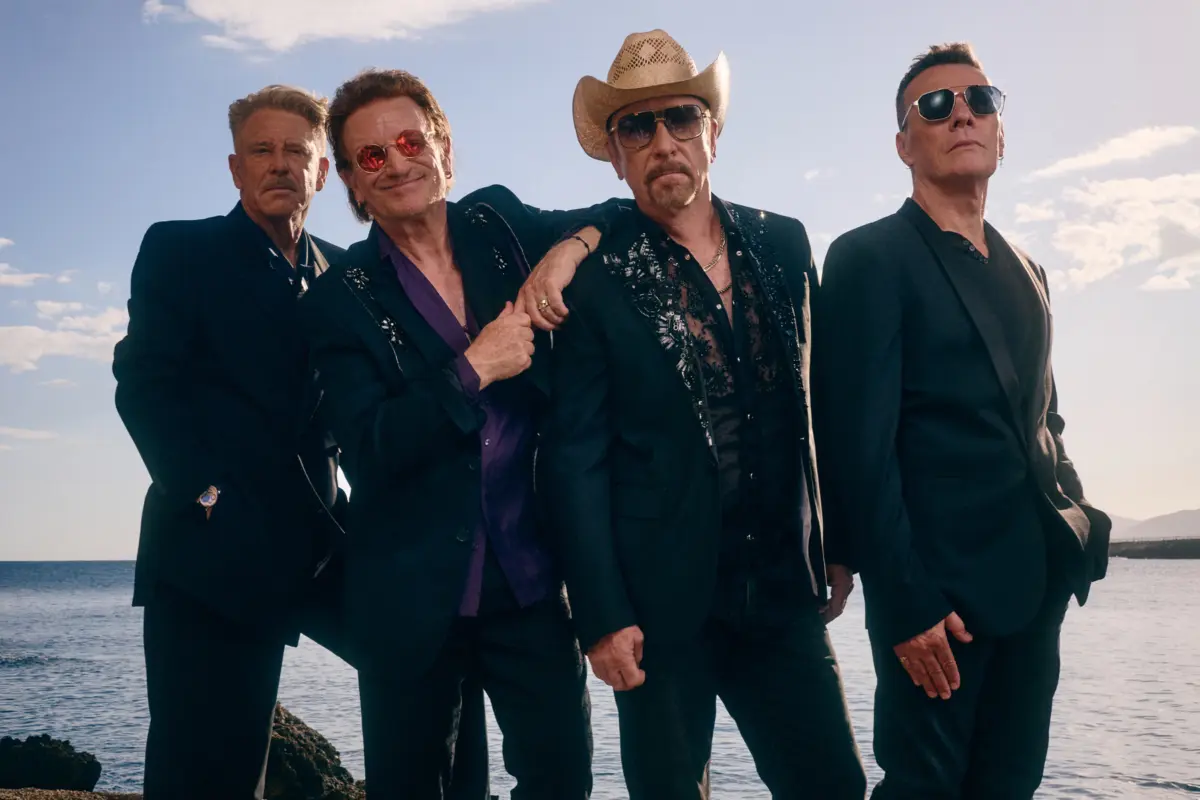
Legendary Irish rock band U2 has publicly weighed in on the contentious removal of rapper Macklemore from Ed Sheeran’s U.S. tour, firmly backing Macklemore’s right to free expression while simultaneously cautioning against the vilification of Sheeran. The incident, which unfolded in September after Macklemore’s outspoken pro-Palestinian comments during his opening sets, has ignited a significant debate within the music industry regarding artistic freedom, commercial pressures, and the role of political activism on stage. U2’s intervention adds considerable weight to the discussion, given their long history of advocacy and commitment to social justice.
The Edge, U2’s iconic guitarist, articulated a nuanced perspective in an interview with BBC News, stating, "We totally support Macklemore’s right as an artist to say what he wanted to say. I don’t think Ed should be vilified." His comments reflect an understanding of the complex position Sheeran found himself in, caught between the actions of his supporting act and the demands of tour promoters and venue owners. The Edge further extended his praise to the artists who subsequently chose to depart Sheeran’s tour in solidarity with Macklemore, framing the entire dispute as a fundamental matter of free expression.
Drummer Larry Mullen Jr. adopted an even more emphatic stance, emphasizing the inherent human right of artists to engage politically. "Artists can choose whether they want to be politically active or not. It’s a human right," Mullen declared. He went on to assert U2’s unwavering commitment to this principle: "But we as a band will fight for the right to speak your mind as long as it doesn’t incite violence. And even if we disagree with it or don’t like it, nobody has a right – no billionaire, no promoter, no owner has the right to censor anybody. They will definitely not be censoring us ever." Mullen’s strong words underscore a core tenet of artistic integrity that U2 has long championed, positioning the band squarely against any form of corporate or political censorship within the creative sphere.
The Genesis of the Controversy: Macklemore’s Stand
The controversy began to unfold in September when Macklemore, known for his politically charged lyrics and activism, joined the North American leg of Ed Sheeran’s highly anticipated Loop Tour. After performing two opening sets at MetLife Stadium in New Jersey, Macklemore used his platform to voice strong support for Palestinians amidst the escalating conflict in Gaza and the West Bank. During his performance, he explicitly stated "Free Palestine," spoke about the humanitarian situation, and performed his protest song "Hind’s Hall."
"Hind’s Hall" itself is a powerful and direct critique of the Israeli military actions in Gaza and a show of solidarity with Palestinian people. The song, released earlier this year, gained significant traction online for its pointed lyrics and sampled audio from protests. Macklemore’s decision to perform such a politically charged piece, coupled with his verbal statements, immediately garnered attention and sparked a polarized reaction, particularly in the United States, where discussions around the Israeli-Palestinian conflict are often deeply sensitive and divisive.
Shortly after these performances, Macklemore was abruptly removed from the remaining dates of Sheeran’s tour. The promoter, Messina Touring Group, issued a statement indicating that venues on the subsequent dates would not permit the shows to proceed with Macklemore on the bill. This decision swiftly brought the issue of artistic freedom versus commercial interests to the forefront.
Corporate Intervention and the Power of Venue Owners
The underlying reasons for Macklemore’s removal became clearer with the direct intervention of Robert Kraft, the billionaire owner of the New England Patriots and Gillette Stadium, one of the venues Macklemore was scheduled to perform at. Kraft publicly confirmed his decision to bar the rapper from Gillette Stadium, explicitly citing Macklemore’s comments and what Kraft termed "a broader history of antisemitic rhetoric and imagery." This statement from a powerful sports team and venue owner highlighted the significant influence that financial stakeholders can wield over artistic expression within their properties.
Kraft’s declaration introduced a layer of complexity, moving beyond simple contractual disagreements to involve accusations of antisemitism, a charge that Macklemore and his supporters vehemently deny, asserting that his criticism is directed at political actions and not at Jewish people. This aspect of the controversy deepened the debate, transforming it into a discussion about the boundaries of political speech, the interpretation of intent, and the responsibilities of artists and venue operators alike.
The involvement of figures like Robert Kraft underscores a growing trend where owners of major entertainment venues, often with significant financial and political interests, are increasingly positioned as gatekeepers of public discourse. Their decisions can directly impact artists’ livelihoods and their ability to connect with audiences, raising questions about who ultimately controls the narrative and the space for free expression in large-scale public events.
Ripple Effects: Sheeran’s Apology and Artist Solidarity
The fallout from Macklemore’s removal was immediate and far-reaching. Ed Sheeran, initially quiet on the matter, found himself in an unenviable position. As the headliner, the decision to remove Macklemore was officially attributed to the promoter and venues, yet Sheeran bore the indirect consequences and public scrutiny. The incident put him in the difficult spot of seemingly endorsing the censorship, or at least being unable to prevent it, of his supporting act.
Sheeran later addressed the situation during a show in Philadelphia, offering an apology for "mistakes" in his handling of the situation. While the exact nature of these "mistakes" was not fully elaborated, his apology was widely interpreted as an acknowledgment of the controversy and a subtle expression of regret for how events transpired, without directly challenging the venue owners or promoters. This public statement from Sheeran, a global superstar known for his affable demeanor, underscored the immense pressure he faced and the sensitivity of the issue.
Crucially, Macklemore’s removal also triggered a wave of solidarity from other artists who were scheduled to perform on Sheeran’s tour. Several acts chose to withdraw their participation, signaling their strong disapproval of the perceived censorship. These included Grammy-winning artist Finneas, popular Danish band Lukas Graham, and the Irish folk band Beoga, who had been performing with Sheeran each night. Their decisions to leave the tour, often at significant personal and financial cost, served as a powerful statement in defense of artistic freedom and against the precedent set by Macklemore’s dismissal. This collective action by fellow musicians highlighted a growing awareness and commitment within the artistic community to protect the right to speak out on political and social issues.
The Broader Context: Artistic Activism and Censorship
The Macklemore incident is not an isolated event but rather a high-profile example within a broader historical and contemporary context of artistic activism and its collision with commercial and political interests. Throughout history, artists have used their platforms to challenge norms, protest injustices, and advocate for change. From Bob Dylan’s anti-war anthems to Nina Simone’s civil rights songs, and U2’s own advocacy for human rights and debt relief, music has frequently served as a powerful vehicle for social commentary.
In the current geopolitical climate, particularly with heightened global awareness and social media amplification, artists are increasingly expected, and often choose, to take stands on complex international issues. The Israeli-Palestinian conflict is one such issue that elicits profound emotional and political responses worldwide. Artists expressing solidarity with Palestinians have, in some instances, faced backlash, accusations of antisemitism (which they often deny, distinguishing anti-Zionism from antisemitism), and commercial repercussions, including tour cancellations or loss of endorsements. Conversely, artists who remain silent or express support for Israel can also face criticism from different factions.
This dynamic places artists in a precarious position, navigating the tightrope between their personal convictions, their desire to use their platform for good, and the commercial realities of the entertainment industry. Promoters and venue owners, on the other hand, often prioritize maintaining a neutral public image, ensuring smooth operations, and avoiding controversies that could alienate sponsors, political figures, or segments of their audience. This tension between artistic integrity and commercial viability is a constant challenge in the modern music landscape.
Macklemore’s Continued Advocacy and U2’s Legacy
Despite his removal from the Sheeran tour, Macklemore did not retreat from his advocacy. Instead, he channeled the momentum into further action, playing three sold-out "Free Palestine" benefit concerts in Dublin, Paris, and London. These events were not only successful in drawing large crowds but also featured an impressive lineup of guest artists, including Hozier, Kneecap, and the aforementioned Beoga, who had left Sheeran’s tour in solidarity. The concerts successfully raised significant funds for organizations dedicated to supporting Palestinians, demonstrating that an artist’s message can resonate and find new avenues even after facing commercial obstacles. This response solidified Macklemore’s commitment to his cause and showcased the power of independent artist-led initiatives.
U2’s vocal support for Macklemore aligns perfectly with their own storied history of leveraging their global platform for political and social causes. From their early anti-apartheid activism to Bono’s tireless work on debt relief and AIDS awareness, U2 has consistently championed human rights and freedom of expression. Their statements are not merely a reaction to a contemporary event but a reaffirmation of principles that have defined their career for decades. The band’s own experiences with censorship and political pressures, particularly in their early days in Ireland, undoubtedly inform their strong stance against any attempts to silence artists.
As U2 prepares for the release of Carnaval De Luz, their 16th studio album and first full-length of new material in nine years, on November 13, their continued relevance in cultural and political discourse remains evident. The album, which notably closes with "Torn," a duet with the late Dolly Parton that the band says was her last recorded vocal performance, signals their enduring artistic output alongside their unwavering commitment to advocacy.
The incident involving Macklemore, Ed Sheeran, and the subsequent response from U2 and other artists serves as a crucial case study in the ongoing battle for artistic freedom in the 21st century. It highlights the complex interplay between artists’ rights, corporate power, geopolitical sensitivities, and the ever-evolving landscape of public opinion. As the music industry continues to navigate these intricate dynamics, the debate over who controls the narrative, and where the line between expression and censorship lies, will undoubtedly persist.
