

Throughout a career spanning more than six decades, Bob Dylan has maintained a reputation as one of the most singular and uncompromising vocalists in the history of popular music. While his vocal delivery has been described by critics with a variety of evocative adjectives—ranging from "sand and glue" to "sneering" and "invigorating"—Dylan’s work is primarily defined by his own phrasing and distinctive timbre. However, at several critical junctures in his recording history, Dylan has integrated the voices of other legendary artists to augment his narratives. These collaborations were not merely commercial maneuvers but strategic artistic choices that provided harmonic depth and stylistic counterpoints to his often-challenging delivery. By examining the contributions of Johnny Cash, Emmylou Harris, the Grateful Dead, and Jennifer Warnes, one gains a clearer understanding of how Dylan’s collaborative efforts have shaped specific eras of his expansive body of work.
The Convergence of Rock and Country: Johnny Cash and the Nashville Skyline Sessions
The late 1960s marked a period of radical stylistic shifts for Bob Dylan. After the dense, surrealist rock of Highway 61 Revisited (1965) and Blonde on Blonde (1966), Dylan retreated to Nashville, Tennessee, to explore a more stripped-down, traditionalist sound. This exploration culminated in the 1969 release of Nashville Skyline, an album notable for Dylan’s "country croon"—a smoother, baritone vocal style that stood in stark contrast to his earlier "nasal" folk delivery.
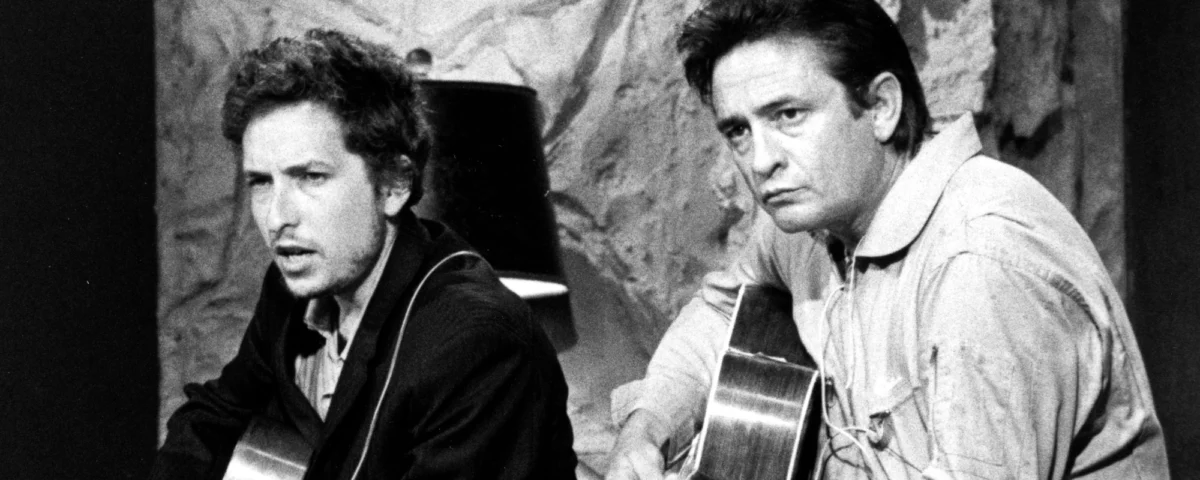
The centerpiece of this era was the collaboration with Johnny Cash on a re-recording of "Girl from the North Country." Originally a solo folk ballad on 193’s The Freewheelin’ Bob Dylan, the 1969 version transformed the track into a country-folk duet. The recording took place on February 17 and 18, 1969, at Columbia’s Studio A in Nashville. Produced by Bob Johnston, the sessions were characterized by an informal, almost improvisational atmosphere.
Data from the recording sessions indicates that Dylan and Cash recorded over a dozen duets during these two days, including covers of "Mystery Train" and "Blue Yonder," though "Girl from the North Country" was the only track to make the final album cut. The impact of this collaboration was profound; it signaled to the counter-culture movement that country music—often associated with conservative politics at the time—was a valid and fertile ground for artistic expression. Cash’s deep, resonant bass provided a foundational weight to Dylan’s lighter, melodic phrasing, creating a bridge between the Nashville establishment and the burgeoning rock scene.
The Rolling Thunder Era: Emmylou Harris and the Theatricality of Desire
By the mid-1970s, Dylan’s career was undergoing another resurgence. Following the critical success of Blood on the Tracks (1975), he began work on Desire (1976), an album defined by its cinematic storytelling and gypsy-violin arrangements. To achieve the haunting, choral quality he envisioned for the record, Dylan recruited Emmylou Harris to provide harmony vocals.
Harris, who had already established herself as a premier harmony singer through her work with Gram Parsons, joined the sessions in July 1975. Unlike many meticulously planned studio albums, the Desire sessions were chaotic and spontaneous. Reports from the studio indicate that Harris was often learning the songs as they were being recorded, following Dylan’s lead in real-time. This lack of rehearsal contributed to the "searching" quality of the harmonies, particularly on tracks like "One More Cup of Coffee (Valley Below)."
The vocal interplay on "One More Cup of Coffee" is especially noteworthy for its minor-key intensity. Harris’s crystalline soprano acts as a ghostly echo to Dylan’s impassioned, slightly nasal delivery. The album was a massive commercial success, spending five weeks at number one on the Billboard 200. Critics have noted that Harris’s presence helped soften Dylan’s sharper edges, making the complex narratives of songs like "Joey" and "Sara" more accessible to a broad audience. This collaboration remains a benchmark for how guest vocals can define the atmospheric "mood" of a long-form work.
Late-Eighties Synthesis: The Grateful Dead and the Silvio Sessions
The late 1980s are often viewed by biographers as a period of transition and struggle for Dylan. His 1988 album, Down in the Groove, was met with mixed reviews, as Dylan appeared to be searching for a new creative direction. However, this era was also defined by a significant live partnership with the Grateful Dead, which translated into the studio for the track "Silvio."
"Silvio" was co-written by Dylan and the Grateful Dead’s primary lyricist, Robert Hunter. The track features Jerry Garcia, Bob Weir, and Brent Mydland on backing vocals. Recorded between 1987 and 1988, the song stands as a rare moment of high-energy, rhythmic playfulness in Dylan’s late-80s catalog. The Grateful Dead members provided a "chorus" effect that bolstered the song’s driving beat, creating a sound that felt more like a collective celebration than a solo performance.
This collaboration was part of a larger chronology that included the 1987 "Dylan & The Dead" stadium tour. While the live album from that tour was panned by critics at the time, the studio collaboration on "Silvio" has aged well, often cited as the highlight of Down in the Groove. The involvement of Garcia and Weir brought a touch of the Dead’s Americana-psychedelia to Dylan’s work, helping him navigate a period where his solo songwriting was in a state of flux. It also cemented a creative bond between Dylan and Hunter that would yield further fruit on the 2009 album Together Through Life.
Vulnerability in the Bootleg Series: Jennifer Warnes and Every Grain of Sand
The fourth significant collaboration is one that remained largely in the archives for a decade before its official release. During the sessions for Shot of Love (1981), Dylan recorded several takes of "Every Grain of Sand," a song widely regarded as one of his greatest compositions from his "religious" period. While the album version is a polished production, an alternate take featuring Jennifer Warnes was eventually released on The Bootleg Series Volumes 1–3 (Rare & Unreleased) 1961–1991.
Jennifer Warnes, known for her hits "Right Time of the Night" and her later Leonard Cohen tribute album Famous Blue Raincoat, provided a delicate, tentative harmony to Dylan’s lead vocal. The recording is notable for its raw, unpolished nature; it captures a moment of genuine musical discovery. In this take, Dylan’s voice is particularly vulnerable, and Warnes’s ability to follow his idiosyncratic timing adds a layer of human connection to a song about divine providence.
A notable piece of trivia often cited by Dylanologists regarding this specific take is the audible sound of a dog barking in the background during the recording. Rather than marring the performance, the inclusion of this take in the Bootleg Series highlights Dylan’s preference for emotional authenticity over technical perfection. Warnes’s contribution, though subtle, serves to ground the high-minded spiritual themes of the song in a tangible, intimate reality.
Chronology of Key Collaborative Milestones
To understand the trajectory of these collaborations, it is helpful to view them within the broader timeline of Dylan’s career:
- 1963: Dylan releases the original "Girl from the North Country" as a solo artist.
- February 1969: Dylan and Johnny Cash record their duets in Nashville, marking Dylan’s definitive move into the country-rock sphere.
- July 1975: Emmylou Harris joins the Desire sessions, providing the harmonic backbone for one of Dylan’s most successful albums.
- May 1981: Dylan records the alternate "Every Grain of Sand" with Jennifer Warnes at Clover Recorders in Los Angeles.
- 1987: Dylan tours with the Grateful Dead, leading to the recording of "Silvio" with Garcia, Weir, and Mydland.
- 1988: Down in the Groove is released, featuring "Silvio."
- 1991: The release of the first Bootleg Series brings the Jennifer Warnes collaboration to the public.
Broader Impact and Critical Implications
The integration of guest vocalists into Bob Dylan’s discography serves as a testament to his versatility and his willingness to submerge his own ego for the sake of a song’s arrangement. In the case of Johnny Cash, the collaboration was a cultural statement that unified disparate musical factions. With Emmylou Harris, the collaboration was atmospheric, proving that Dylan’s voice could coexist with—and be elevated by—classical beauty.
The Grateful Dead and Jennifer Warnes collaborations represent Dylan’s reliance on community and shared musical language during periods of personal and spiritual searching. Factual analysis of his sales and critical reception during these periods suggests that Dylan often reached his highest peaks of public interest when he allowed other voices to share his stage.
From a journalistic perspective, these four instances represent more than just "guest spots." They are pivotal moments where the most private and guarded songwriter in American history opened his process to others. These collaborations did not dilute Dylan’s brand; rather, they provided the necessary contrast to highlight the enduring power of his own unique, "sneering, croaking, and mewling" voice. By analyzing these sessions, it becomes clear that while Dylan may be a singular force, his most resonant work often occurs when he finds the perfect companion to sing along.
