

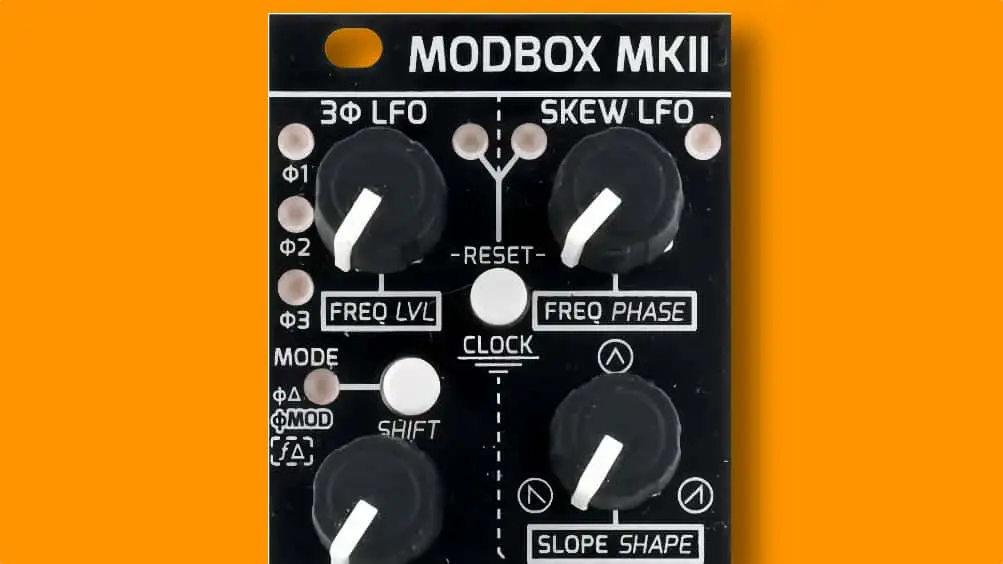
The modular synthesis landscape has seen a significant evolution in utility-focused hardware, and the latest announcement from WMD (William Mathewson Devices) marks a pivotal update to one of the industry’s most versatile tools. The release of the Modbox MKII represents a comprehensive overhaul of the original modulation powerhouse, integrating multiple synthesis functions into a singular, high-density Eurorack module. Designed to serve as a central nervous system for control voltage (CV) generation, the MKII combines a three-phase low-frequency oscillator (LFO), a variable-shape skew LFO, a digital sample-and-hold circuit, and an analog noise generator. Priced at $279 USD, the module is positioned as a critical asset for sound designers seeking synchronized rhythmic movement and complex, evolving modulation patterns within a compact footprint.
Technical Architecture and Functional Core
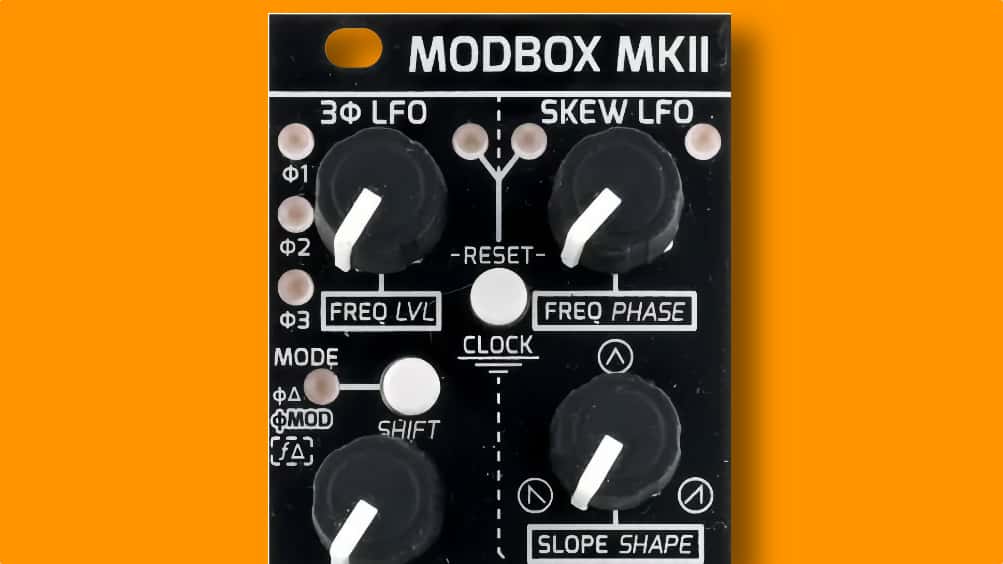
The Modbox MKII is engineered to address the growing demand for "multi-tool" modules that maximize functionality per rack unit (HP). At its heart, the module features two distinct oscillators that diverge from standard LFO designs. The first is a Three-Phase LFO, which outputs three related sine waves offset by 120 degrees. This configuration is particularly valued in modular synthesis for creating circular modulation effects, sophisticated stereo panning, and rhythmic phasing that maintains a consistent relationship between different parameters.
The second oscillator is a variable-shape Skew LFO. Unlike traditional LFOs that provide fixed waveforms, the Skew LFO allows the user to morph between ramp, triangle, and sawtooth shapes. This flexibility is essential for tailoring the "feel" of modulation, such as creating sharp percussive decays or slow, swelling builds. Both oscillators are equipped with clock synchronization capabilities, allowing them to lock to a master tempo—a necessity for modern electronic music production. Furthermore, the oscillators support 1V/octave tracking and can be pushed into audio rates, effectively turning the Modbox MKII into a complex sound source or a frequency modulation (FM) operator when required.
Advanced Randomness and Probabilistic Looping
Beyond standard oscillation, the Modbox MKII integrates a sophisticated randomness section. The digital sample-and-hold (S&H) circuit is paired with an internal analog noise generator, providing a classic source for "stepped" random voltages. However, WMD has expanded upon this traditional concept by introducing probabilistic looping functions. This feature allows the module to capture a sequence of random voltages and repeat them, creating semi-generative patterns that feel intentional yet organic.
By utilizing these internal loops, users can generate changing modulation sequences that do not require an external sequencer. This "self-contained" logic is a hallmark of the MKII’s design philosophy, aimed at reducing the complexity of patches while increasing the depth of the resulting sound. The inclusion of an analog noise source also provides a dedicated output for "white noise" or "colored noise," which can be used as an audio signal for percussion synthesis or as a jitter source for other CV inputs.
Chronology of Development and WMD’s Market Return
The release of the Modbox MKII is significant not only for its technical specifications but also for its place in WMD’s corporate timeline. WMD, founded by William Mathewson, has long been a staple of the Eurorack community, known for high-build quality and aggressive, industrial-leaning designs. The original Modbox was developed in collaboration with Steady State Fate (SSF), a partnership that defined a specific era of modular utility design.
In late 2022, WMD surprised the synthesizer community by announcing a cessation of operations, citing supply chain challenges and the shifting landscape of the post-pandemic electronics market. However, after a brief hiatus, the company returned to active production in 2023, refocusing its efforts on refining its most popular circuits. The Modbox MKII is a product of this "second era" of WMD. It retains the core concepts of the WMD/SSF collaboration while updating the internal components and firmware to meet contemporary standards of precision and reliability. The transition from the original MK1 to the MKII involves a more streamlined interface and expanded digital logic, reflecting the company’s commitment to evolving with the needs of modern performers.
Supporting Data and Comparative Analysis
In the competitive Eurorack market, modulation sources are often categorized into "function generators" (like the Make Noise Maths) or "multiphase LFOs" (like the Alm Busy Circuits Tangle Quartet or the Batumi by Xaoc Devices). The Modbox MKII occupies a unique middle ground. By offering both three-phase outputs and a dedicated skew LFO, it provides more specialized movement than a standard quad LFO, while its integrated S&H and noise generator offer more "chaos" potential than a simple function generator.
From a value perspective, the $279 price point places the Modbox MKII in the mid-range of the utility market. When compared to purchasing separate modules for noise ($80–$120), sample-and-hold ($100–$150), and a multi-phase LFO ($200–$300), the MKII offers a significant cost and space saving. The inclusion of 1V/octave tracking is a data point of particular interest to technical users; it ensures that as the pitch of a sequence changes, the modulation speed can stay in a musical ratio, a feature often omitted from budget LFO modules.
Official Statements and Industry Response
While WMD has traditionally let its hardware speak for itself, the introductory materials for the Modbox MKII emphasize the module’s role as a "modulation powerhouse." In technical briefings, WMD representatives have highlighted that the MKII was designed to be "the only modulation source a small system needs." The integration of the probabilistic looping function was specifically noted as a response to the "generative" music trend, where performers look for modules that can provide "controlled randomness" rather than purely chaotic noise.
The industry response has been largely positive, with early reviewers noting the module’s high output density. Synthesis experts have pointed out that the ability to sync the Three-Phase LFO to a clock while simultaneously using the Skew LFO as a free-running modulator allows for complex "polyrhythmic modulation" that is difficult to achieve with less integrated units.
Broader Impact on Modular Synthesis Workflows
The introduction of the Modbox MKII reflects a broader trend in the synthesizer industry toward "density of function." As the popularity of small-format "skiff" cases grows, musicians are increasingly looking for modules that can perform four or five tasks simultaneously. The MKII addresses this by serving as:
- A primary LFO for rhythmic filter sweeps.
- A stereo image generator via its three-phase outputs.
- A random voltage source for pitch or timbre "humanization."
- An auxiliary audio-rate oscillator for grit and FM textures.
This "Swiss Army Knife" approach reduces the need for extensive "clutter" in a rack, allowing for more ergonomic performance setups. Furthermore, the move toward digital-analog hybrid designs—using digital clocks and loops to control analog noise and oscillators—represents the current gold standard for modular stability. By grounding the MKII in this hybrid architecture, WMD ensures that the module remains "in tune" and "in time," even in demanding live performance environments.
Implications for Future Product Cycles
The Modbox MKII is likely a precursor to further "MKII" updates from WMD as they continue to refresh their legacy catalog. For the consumer, this indicates a period of stabilization in the Eurorack market where established brands are focusing on refining proven concepts rather than chasing experimental, often unstable, new technologies. The emphasis on 1V/octave tracking and clock synchronization suggests that the modular community is moving away from "purely experimental" noise toward "musical integration," where modular systems are expected to play nicely with DAWs (Digital Audio Workstations) and external hardware sequencers.
In conclusion, the WMD Modbox MKII stands as a testament to the enduring relevance of well-designed utility modules. By combining historical design cues with modern probabilistic features, WMD has provided a tool that is as capable of subtle movement as it is of total sonic destruction. At $279, it represents a strategic investment for both novice users looking to expand their first system and veteran synthesists seeking to optimize their modulation chains. The module is available for immediate purchase through WMD’s official website and authorized global retailers, signaling a robust return to form for the Colorado-based manufacturer.
