

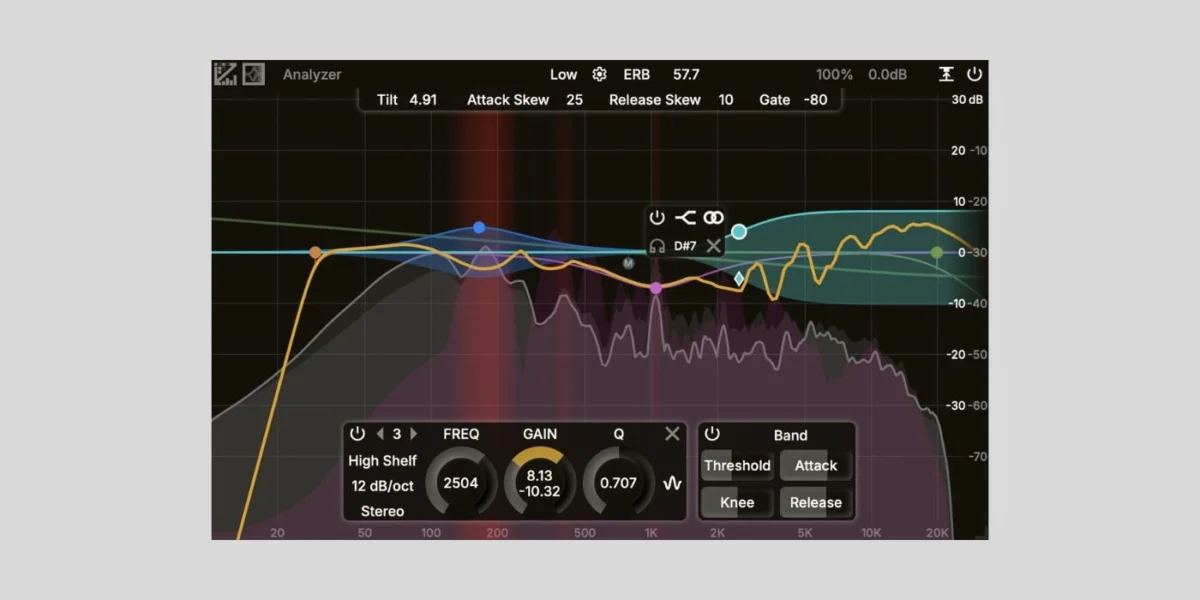
ZL Audio, a developer lauded for its commitment to high-quality, accessible audio tools, has officially released ZL Spectrum Equalizer, a groundbreaking free and open-source dynamic spectrum equalizer plugin. This advanced tool is immediately available across major operating systems, supporting Windows, macOS, and Linux platforms, marking a significant stride in the realm of professional-grade audio processing made available to a global community of producers and engineers without financial barriers. The release underscores a growing trend in the audio software industry where sophisticated functionalities, once exclusively the domain of commercial products, are increasingly being offered under open-source licenses, fostering innovation and democratizing access to powerful creative instruments.
ZL Audio’s Established Pedigree and the Evolution of Free Audio Tools
The introduction of ZL Spectrum Equalizer was met with a degree of anticipation within the audio production community, largely owing to ZL Audio’s established reputation. The developer has previously garnered significant acclaim for its preceding offerings, notably ZL Equalizer 2 and ZL Compressor. These plugins have consistently received enthusiastic feedback from prominent audio communities, including the readership of Bedroom Producers Blog (BPB), highlighting ZL Audio’s capability to deliver high-performance, stable, and sonically superior processing tools. ZL Equalizer 2, released in November 2025, quickly became a benchmark in the free equalizer category, demonstrating a level of sophistication that challenged many commercial alternatives. Preceding it, the ZL Compressor, introduced in June 2025, set a similar standard for dynamic range control. This consistent track record has cultivated a loyal user base and positioned ZL Audio as a key innovator in the open-source audio software landscape.
Industry analysts have observed a distinct shift in the market over recent years, where the gap between free and paid equalizer plugins, in particular, has narrowed considerably. This evolution means that many contemporary producers and sound engineers can now achieve professional results using entirely free suites of tools, thereby reducing the financial entry barrier into audio production. ZL Equalizer 2 was previously cited alongside other exemplary free EQs such as TDR Nova (first reviewed by BPB in June 2023) and the consistently updated Jeesonic EQ Pro (with a significant update noted in July 2026), as plugins that redefine expectations for cost-free solutions. ZL Spectrum Equalizer is poised to elevate this paradigm further, introducing a level of spectral manipulation that pushes the boundaries of what is expected from open-source offerings.
Distinguishing Features: A Deep Dive into ZL Spectrum Equalizer’s Core Technology
While sharing a lineage with ZL Equalizer 2, ZL Spectrum Equalizer is not merely an incremental update; it represents a fundamental shift in processing methodology. ZL Equalizer 2 operates by applying broad filter curves based on wide-band audio triggers, typical of traditional dynamic equalizers. In stark contrast, ZL Spectrum Equalizer dives directly into the frequency domain, leveraging Fast Fourier Transform (FFT) processing. This distinction is critical: the audio signal is meticulously split into numerous discrete frequency bins, allowing for granular, independent dynamic adjustment of each bin. Crucially, these adjustments can be contingent on the matching level of a corresponding side-chain frequency bin, enabling highly sophisticated and reactive spectral shaping that goes beyond conventional dynamic equalization.
This FFT-based approach allows for an unprecedented level of precision and control over the spectral balance of a track. It empowers users to address specific resonant frequencies, manage intricate masking issues between instruments, or sculpt complex tonal characteristics with surgical accuracy. The side-chain functionality, especially when applied at the frequency-bin level, opens up possibilities for advanced ducking, de-essing, and transient shaping, where the dynamics of one element precisely influence the spectral content of another.
Comprehensive Control and Advanced Functionality
The ZL Spectrum Equalizer boasts an impressive array of features designed to provide extensive control over its dynamic processing capabilities. Users can configure up to 24 linear-phase frequency bands, ensuring high-fidelity audio manipulation without introducing phase distortion, which is critical for mastering and intricate mixing scenarios. A comprehensive selection of nine filter types is available, catering to a wide spectrum of equalization needs:
- Peak: For boosting or cutting specific frequencies.
- Low Shelf: For adjusting the gain of frequencies below a certain point.
- Low Pass: For attenuating frequencies above a cutoff point.
- High Shelf: For adjusting the gain of frequencies above a certain point.
- High Pass: For attenuating frequencies below a cutoff point.
- Notch: For surgical removal of very narrow frequency bands.
- Band Pass: For isolating a specific range of frequencies.
- Tilt Shelf: A unique filter that tilts the entire frequency spectrum around a pivot point.
- Flat Tilt: A variant of the tilt shelf, providing a more linear spectral tilt.
Beyond basic frequency shaping, the plugin incorporates five distinct stereo modes, providing flexible options for processing stereo signals:
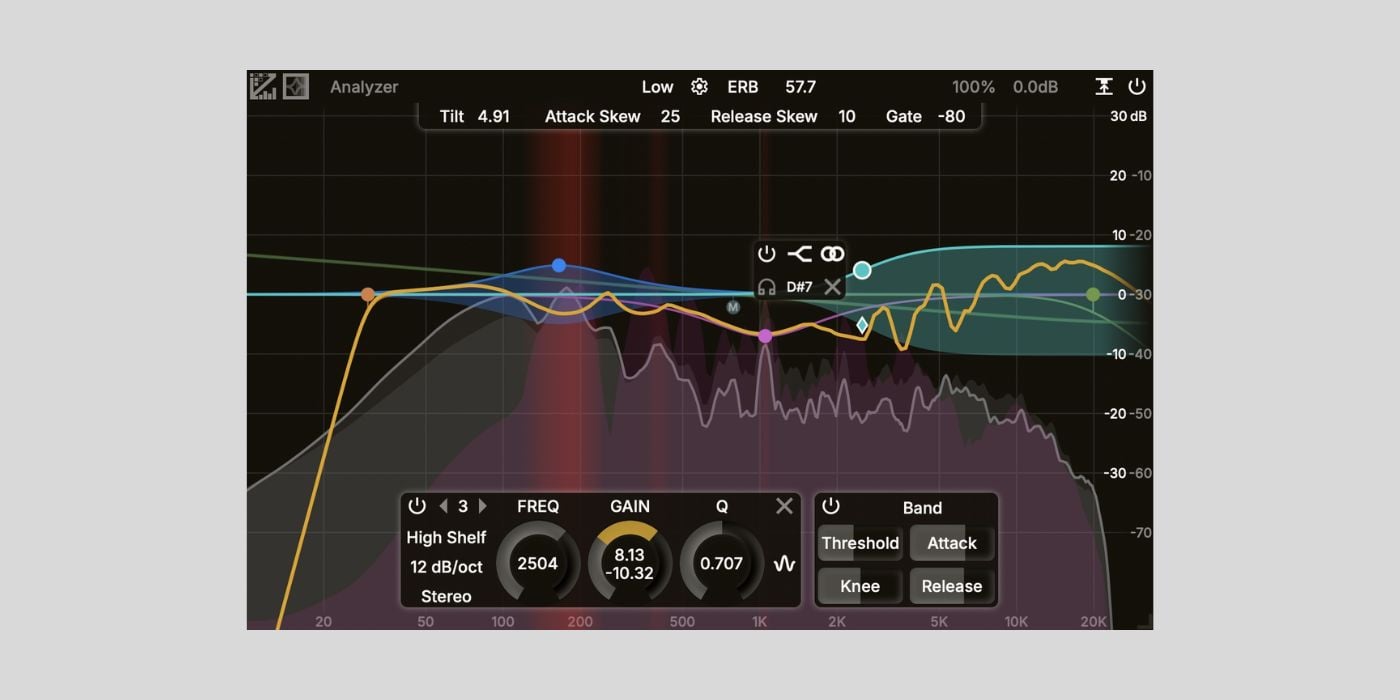
- Stereo: Processes both channels uniformly.
- Left/Right: Allows independent processing of the left or right channel.
- Mid/Side: Enables classic mid-side processing, crucial for stereo imaging and width control.
Each band within the ZL Spectrum Equalizer can have dynamic behavior enabled, offering granular control over how the plugin reacts to the audio signal. Standard dynamic controls are present, including:
- Threshold: The level at which the dynamic processing begins.
- Knee: Determines the transition curve between unaffected and affected audio.
- Attack: Controls how quickly the processing responds to a signal exceeding the threshold.
- Release: Dictates how quickly the processing returns to its idle state after the signal falls below the threshold.
Further enhancing this dynamic flexibility are three distinct dynamic modes:
- Absolute: The threshold is calculated against the absolute level of the signal.
- Band: The threshold is calculated specifically for the individual frequency band.
- Relative: The threshold is calculated relative to the overall input signal level, offering context-aware processing.
Navigating Latency and Precision: The Spectrum Resolution Control
One of the plugin’s most critical and nuanced controls is "Spectrum Resolution." This parameter directly influences the trade-off between frequency precision and processing latency. Lower resolution settings yield lower latency, starting around 12 milliseconds, making them suitable for real-time tracking or situations where minimal delay is paramount. Conversely, increasing the Spectrum Resolution enhances frequency precision, allowing for finer spectral adjustments, but at the cost of higher latency. At its "Extreme High" setting, latency can extend up to approximately 743 milliseconds. This design choice provides users with the flexibility to optimize the plugin’s performance for specific tasks, from mixing where higher latency might be acceptable for surgical precision, to live sound applications where low latency is critical. Understanding this balance is essential for effective deployment of the ZL Spectrum Equalizer in various production environments.
Advanced Processing Capabilities and Workflow Enhancements
Beyond its core dynamic equalization, ZL Spectrum Equalizer integrates a suite of advanced features that further augment its utility and sophistication:
- Side-chain Smoothing Options: To prevent undesirable artifacts from rapid side-chain level changes.
- Frequency-Dependent Attack and Release Skewing: Allows for different attack and release times across the frequency spectrum, providing highly nuanced dynamic control.
- Spectrum Gate: A powerful tool for noise reduction or creative gating based on spectral content.
- External Side-chain Support: Enables the plugin to react to an external audio source, expanding its creative applications significantly.
- Static Gain Compensation: Maintains consistent output levels regardless of dynamic processing.
- Loudness-Based Output Gain Matching: Ensures perceived loudness remains consistent, crucial for A/B comparisons and mastering.
The user interface of ZL Spectrum Equalizer adheres to the intuitive and visually informative design language established by ZL Audio’s previous plugins. It features an interactive spectrum graph that provides real-time visual feedback of the audio signal and the applied processing. Draggable filter nodes allow for quick and precise adjustments directly on the graph. Multiple analyzer views (pre-processing, post-processing, and side-chain) offer comprehensive insight into the signal flow. Additional UI features include optional collision detection for filter nodes, FFT freezing for detailed analysis, custom color schemes for personalization, adjustable control behavior, and UI scaling options, all contributing to a highly customizable and efficient workflow.
Open-Source Philosophy, Community Engagement, and Future Outlook
ZL Spectrum Equalizer is distributed as free and open-source software under the AGPLv3 license. This commitment to open source is a cornerstone of ZL Audio’s development philosophy, promoting transparency, collaborative development, and widespread accessibility. The current release, designated as version 0.0.1, signifies an initial public offering. ZL Audio, in a testament to its transparency, openly acknowledges that users may encounter bugs in this early version and recommends initial testing in an empty Digital Audio Workstation (DAW) session to mitigate potential workflow disruptions. This proactive communication fosters a sense of trust and invites community participation in the refinement process.
The download page provides builds for Windows, macOS, and Linux, with separate packages optimized for different CPU architectures. ZL Audio specifically recommends utilizing the AVX2 version for systems supporting this instruction set, promising enhanced performance. Looking ahead, the developer has outlined a clear roadmap, with AAX support planned for integration around version 0.1.0, which will significantly broaden its compatibility within professional studio environments predominantly using Avid Pro Tools.
This release represents more than just a new plugin; it symbolizes the continued maturation and increasing sophistication of the free and open-source audio software ecosystem. By providing a tool of this caliber, ZL Audio not only empowers individual creators but also contributes to a broader movement that challenges traditional commercial models, stimulates innovation, and fosters a collaborative environment for audio technology development. The ZL Spectrum Equalizer is poised to become an indispensable tool for producers and engineers seeking advanced spectral manipulation without the prohibitive costs often associated with such sophisticated capabilities. Its open-source nature further ensures its longevity and potential for community-driven enhancements, solidifying ZL Audio’s role as a vanguard in accessible audio innovation.
