

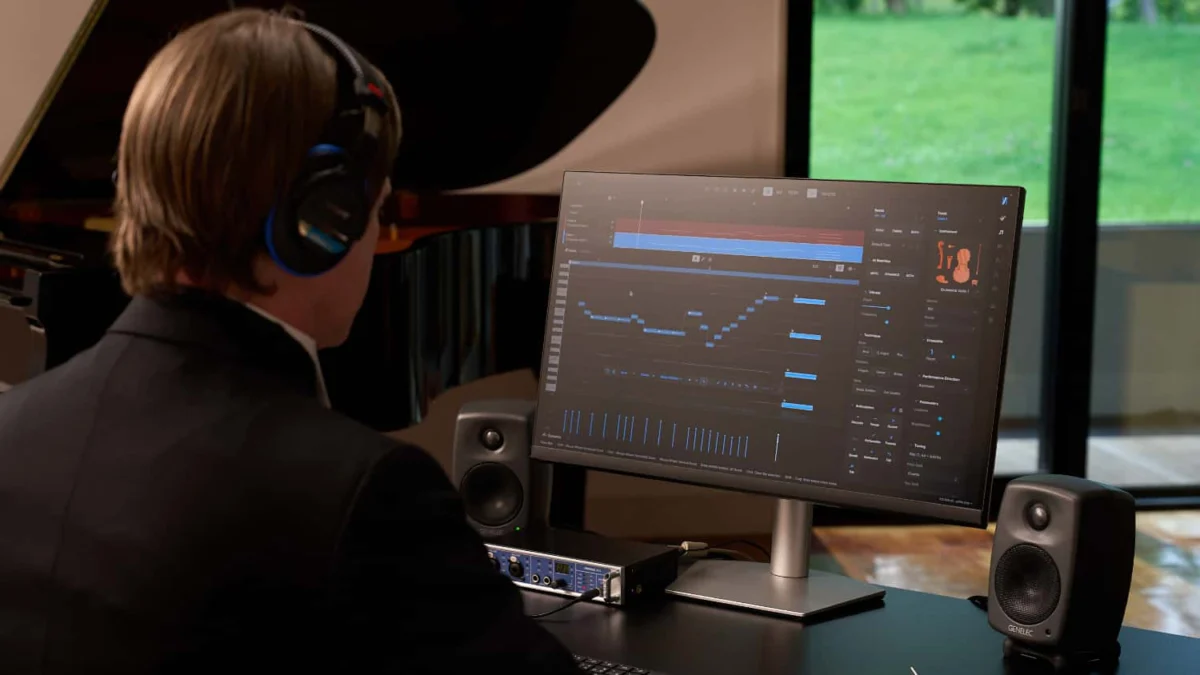
Dreamtonics, the developer behind the acclaimed Synthesizer V vocal synthesis software, has officially announced the launch of Instrument X, a transformative virtual instrument platform that leverages neural acoustics modeling to generate sound. Moving away from the industry-standard reliance on multi-gigabyte sample-playback libraries, Instrument X utilizes artificial intelligence to translate musical notation directly into sound waves in real-time. This technological shift allows composers and music producers to achieve organic articulations—including bow pressure, breath control, and key strikes—directly from a MIDI keyboard without the need for static loops or massive storage requirements. The platform represents a significant departure from traditional Pulse Code Modulation (PCM) sampling, which has dominated the digital music production landscape for over three decades.
A Paradigm Shift in Virtual Orchestration
The introduction of Instrument X marks a critical juncture in the evolution of Virtual Instrument Software (VST). Traditionally, high-end orchestral libraries have relied on "sampling," a process where thousands of individual notes are recorded at various velocities and styles, then triggered by the user. While effective, this method often results in "sample bloat," with some professional libraries exceeding 500 gigabytes in size. Furthermore, samples are inherently static; once a note is recorded, its expressive potential is limited to the parameters captured during the recording session.
Instrument X bypasses these limitations by using neural networks trained on vast datasets of acoustic performances. Instead of searching for a pre-recorded file that matches a MIDI command, the software’s engine synthesizes the sound wave from scratch based on the physics and tonal characteristics of the instrument. This allows for seamless transitions between notes, realistic vibrato, and dynamic changes that feel continuous rather than stepped. By eliminating the reliance on "round-robin" samples—where multiple recordings of the same note are cycled to avoid the "machine gun effect"—Dreamtonics aims to provide a more fluid and responsive playing experience.
Technical Foundations and Neural Acoustics Modeling
At the core of Instrument X is the Neural Acoustics Engine, a proprietary technology developed by Dreamtonics to simulate the complex interactions within acoustic instruments. Acoustic sounds are not merely a collection of frequencies; they are the result of physical energy interacting with materials like wood, metal, and air. Neural modeling attempts to replicate these interactions by predicting how a sound wave should behave based on input parameters such as pitch, pressure, and duration.
One of the primary advantages of this approach is the reduction in hardware overhead. While sample libraries require high-speed Solid State Drives (SSDs) and massive amounts of Random Access Memory (RAM) to load audio files into a workstation, Instrument X relies more heavily on the Central Processing Unit (CPU) or Graphics Processing Unit (GPU) to calculate sound in real-time. This shift mirrors the transition seen in the visual effects industry, where pre-rendered assets are increasingly being replaced by real-time procedural generation and ray-tracing.
The platform’s ability to interpret notation directly into sound waves means that "legato"—the smooth connection between notes—is calculated dynamically. In traditional libraries, legato is often simulated using "transition samples," which can sound disjointed if the tempo or interval does not match the original recording. Instrument X’s neural approach ensures that the "glide" or "portamento" between notes is mathematically consistent with the instrument’s physical properties.
The Launch Lineup: Fifteen Diverse Expansions
To demonstrate the versatility of the new platform, Dreamtonics has released 15 distinct instrument expansions at launch. These instruments are categorized into core collections designed to cover the fundamental needs of modern scoring and production. The collections include:
- The Orchestral Series: High-fidelity strings, woodwinds, and brass instruments designed for cinematic composition. These instruments focus on the nuances of orchestral performance, such as the "bite" of a cello bow or the "chiff" of a flute.
- The Keyboard Collection: Acoustic pianos and electric keys that utilize neural modeling to replicate the sympathetic resonance of strings and the mechanical noise of internal hammers.
- Specialized Soloists: Instruments intended for lead melodies, where the expressive capabilities of the neural engine are most apparent. This includes solo violin and woodwind instruments that require high levels of vibrato control.
Each expansion is built to integrate within a unified ecosystem, ensuring that the user interface remains consistent regardless of the instrument being played. This standardization is a direct inheritance from the "elite workspace DNA" of Synthesizer V, Dreamtonics’ flagship vocal product.
Performance Controls and Emotional Execution
A standout feature of Instrument X is the inclusion of five style-shaping performance instructions accessible via a single interface. These controls allow users to adjust the "global emotional execution" of an arrangement without diving into complex MIDI CC (Continuous Controller) mapping. These parameters include:
- Articulation Intensity: Controls the sharpness or softness of the initial attack, from aggressive staccato to gentle sustains.
- Vibrato Depth and Rate: Allows for real-time manipulation of pitch modulation, simulating the natural hand movements of a string player or the diaphragmatic control of a wind player.
- Timbre Variance: Adjusts the "brightness" or "darkness" of the sound, mimicking the way an acoustic instrument’s harmonic profile changes at different volume levels.
- Mechanical Noise: Users can dial in the amount of "organic" noise, such as the sound of keys clicking or the intake of breath, to increase the sense of realism.
- Dynamic Response: Maps the sensitivity of the instrument to the user’s touch, ensuring that the software responds naturally to different keyboard controllers.
By centralizing these controls, Dreamtonics has addressed a common pain point for composers: the need to manage dozens of different faders to achieve a single realistic phrase.
Chronology of Development and Market Context
The development of Instrument X follows several years of research by Dreamtonics into the field of deep learning and digital signal processing. The company first gained international recognition with Synthesizer V, which utilized a "Neural Synthesizer" to produce human-like vocals that were indistinguishable from real singers. The success of Synthesizer V proved that neural networks could handle the complexities of the human voice, leading many in the industry to speculate when the company would apply similar technology to acoustic instruments.
The launch comes at a time when the music technology industry is rapidly adopting AI-driven tools. Competitors like Native Instruments and Spitfire Audio have dominated the market with sample-based products for years, but the rise of physical modeling (seen in products like Modartt’s Pianoteq) and now neural modeling (Instrument X) suggests a shift in consumer preference toward smaller, more flexible software solutions.
Industry analysts suggest that the move toward neural acoustics is driven by the increasing demand for "mobile" production setups. As more producers work on laptops with limited storage, the prospect of an entire orchestral suite that takes up megabytes instead of gigabytes is highly appealing.
Pricing, Availability, and Accessibility
Dreamtonics has adopted a flexible pricing model to encourage adoption among both professionals and hobbyists. The Instrument X core editor is free to download, provided the user purchases at least one instrument expansion. This "modular" approach allows creators to build a custom library tailored to their specific genre, whether they are writing epic film scores or lo-fi hip-hop.
To lower the barrier to entry, Dreamtonics is offering a 14-day free trial for the core editor and 7-day trials for individual instrument expansions. This "try before you buy" strategy is relatively rare in the high-end virtual instrument market, where products are often protected by stringent digital rights management (DRM) and non-refundable licenses.
The software is available now through the Dreamtonics Store and is compatible with major Digital Audio Workstations (DAWs) including Ableton Live, Logic Pro, Cubase, and FL Studio, supporting VST3, AU, and AAX formats.
Broader Implications for the Music Industry
The implications of Instrument X extend beyond mere convenience. By democratizing access to high-quality, expressive instruments, Dreamtonics is potentially leveling the playing field for independent composers. Historically, the "Hollywood sound" required an investment of thousands of dollars in high-end samples and the hardware to run them. If neural modeling can deliver comparable results with a fraction of the resources, the cost of entry for professional-grade production will drop significantly.
Furthermore, the technology opens new doors for "generative" music. Because Instrument X understands notation as a set of instructions rather than a trigger for a file, it can be integrated more easily with AI-driven composition tools. This could lead to a future where music software not only suggests a melody but also determines the most emotionally appropriate way to perform it on a virtual cello or trumpet.
However, the shift to AI-driven synthesis also raises questions about the future of recording musicians. While Instrument X is a tool for creators, its ability to replicate the nuances of a live performer may reduce the demand for session players in mid-tier commercial productions, such as advertising or indie gaming.
Conclusion and Future Outlook
With the launch of Instrument X, Dreamtonics has positioned itself as a leader in the next generation of music production technology. By combining the ease of use found in their vocal synthesis software with a sophisticated neural engine for acoustic instruments, they have created a platform that challenges the status quo of the VST market.
As the platform matures, Dreamtonics is expected to expand the library further, potentially including more esoteric or world instruments that are difficult to sample traditionally. For now, Instrument X stands as a bold statement on the future of sound: a future where the line between synthetic and acoustic becomes increasingly blurred, powered by the predictive capabilities of neural networks. Composers and producers looking to streamline their workflow while maintaining a high degree of expressive control will likely find Instrument X to be a pivotal addition to their digital arsenal.
