

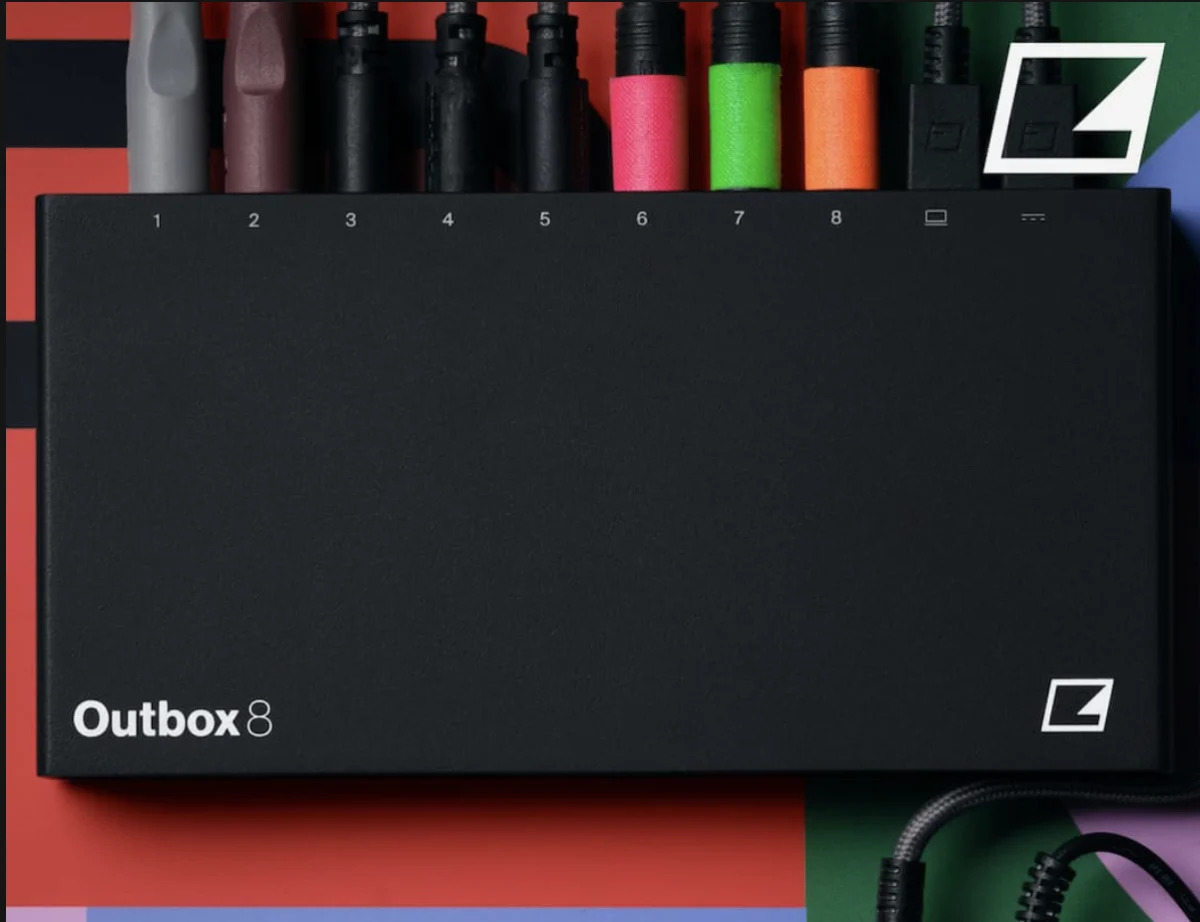
The Swedish music hardware manufacturer Elektron has officially announced the release of the Outbox 8, a sophisticated eight-channel audio and Control Voltage (CV) breakout box designed to serve as a central hub for modern hybrid studio environments. This new hardware peripheral expands the physical output capabilities of Elektron’s existing instrument lineup and other class-compliant USB devices, offering users a versatile solution for routing audio and control signals to external mixers, effects processors, and modular synthesizer systems. By providing eight fully configurable outputs, the Outbox 8 addresses a long-standing demand for increased connectivity in compact hardware setups, effectively transforming a single USB connection into a multi-channel distribution point for sound and modulation.
Technical Specifications and Connectivity Architecture
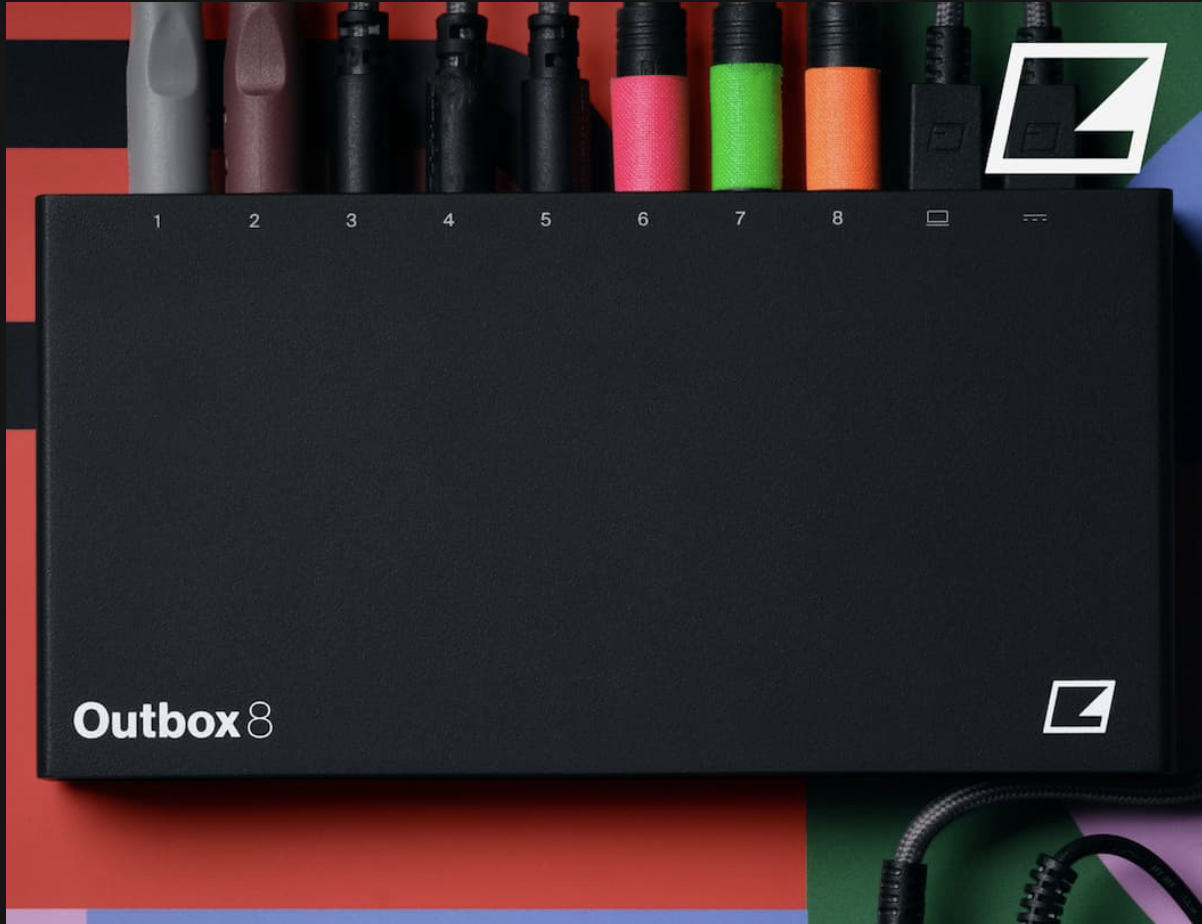
The core functionality of the Outbox 8 revolves around its ability to handle both high-quality audio signals and precision Control Voltage. The device features eight 1/4-inch outputs that can be individually assigned to various tasks based on the user’s requirements. When utilized for audio, these outputs allow for the discrete routing of individual tracks from a drum machine or synthesizer—such as the Digitakt II or Syntakt—to an external analog mixer or a series of outboard effects pedals. This capability is particularly significant for performers and studio engineers who prefer tactile control over their final mix rather than relying solely on internal digital summing.
Beyond audio, the Outbox 8 is engineered to function as a high-resolution USB MIDI-to-CV converter. Each of the eight outputs can be configured to transmit different types of CV signals, including pitch (1V/octave), gate, trigger, linear values, and clock signals. This makes the Outbox 8 an essential bridge for musicians integrating modular gear into their workflow. By connecting a MIDI controller to the Outbox 8, users can directly play and modulate Eurorack modules, effectively merging the precision of MIDI sequencing with the organic sound generation of analog voltage-controlled oscillators (VCOs) and filters.
The device operates as a USB host and device, ensuring broad compatibility across different platforms. It is class-compliant, meaning it does not require specialized drivers to function with macOS, Windows, iOS, or Android devices. When connected to a computer, the Outbox 8 is recognized as an eight-output audio interface, allowing Digital Audio Workstation (DAW) users to stream audio directly to hardware monitors or external processing chains with minimal latency.
A New Era for the Elektron Ecosystem
The introduction of the Outbox 8 represents a strategic expansion of Elektron’s "Overbridge" philosophy, which seeks to blur the lines between hardware and software. For years, Elektron users have utilized the Overbridge software suite to stream individual tracks via USB into their DAWs. However, the Outbox 8 provides a physical manifestation of this flexibility, allowing those same individual tracks to be sent into the physical world without the need for a traditional, bulky multi-channel audio interface.
Industry analysts suggest that the Outbox 8 is a direct response to the "DAW-less" movement, where musicians seek to minimize their reliance on computer screens during live performances and creative sessions. By allowing an Elektron machine—often referred to as the "brain" of a setup—to control an entire rack of modular gear and output multiple audio streams simultaneously, Elektron has solidified its position as a leader in integrated music production ecosystems.
Chronology of Innovation: The Path to Outbox 8
The development of the Outbox 8 can be traced back to Elektron’s history of prioritizing connectivity. In the early 2000s, the Machinedrum and Monomachine set the standard for hardware sequencing and internal routing. With the release of the Analog Four and Analog Keys in 2012, Elektron introduced dedicated CV/Gate outputs, signaling their commitment to the burgeoning modular synth market.
The launch of Overbridge in 2015 revolutionized how hardware interacted with computers, providing a digital pipeline for multi-channel audio. As the "Digi" line of products (Digitakt, Digitone, Syntakt) gained massive popularity for their compact form factor, the limitation of having only two main physical outputs became a common point of discussion among professional users. The Outbox 8 serves as the chronological successor to these innovations, providing the physical breakout capability that completes the "hub" functionality of the modern Elektron sequencer.
Detailed Feature Breakdown and Workflow Integration
The Outbox 8 is designed with a rugged, studio-ready chassis that matches the aesthetic of Elektron’s current product line. Its interface is streamlined, focusing on reliability and ease of use in high-pressure live environments.
Audio Routing and External Processing
For the studio producer, the Outbox 8 allows for a "parallel processing" workflow. A user can send the kick drum from a Digitakt to one output for dedicated compression, the snare to another for hardware reverb, and the melodic elements to a third for analog saturation. This level of granularity was previously only possible with much larger instruments like the Analog Rytm MKII, which features individual outputs for each voice. The Outbox 8 effectively brings this professional-level routing to the more portable units in the Elektron catalog.
MIDI-to-CV and Modular Synchronization
In a modular context, the Outbox 8 eliminates the need for expensive and space-consuming MIDI-to-CV modules within a Eurorack case. Because the outputs are "DC-coupled," they can maintain the steady voltage levels required for pitch and modulation control. This allows a sequencer like the Octatrack to send complex LFO shapes or intricate melodic sequences directly to an analog system. The inclusion of clock output also ensures that all hardware in a setup—from vintage drum machines to modern sequencers—stays in perfect synchronization.
Portable DAW Integration
As mobile music production on tablets and smartphones continues to grow, the Outbox 8 offers a portable solution for multi-channel monitoring. Field recorders and mobile performers can use the device to split their iPad’s output into multiple channels for a live PA system, ensuring a professional sound stage without the need for a laptop.
Market Impact and Competitive Landscape
The Outbox 8 enters a market where "hybrid" tools are increasingly in demand. Competitors such as Expert Sleepers have long offered DC-coupled interfaces (like the ES-8 and ES-9) specifically for modular users, but these often require a Eurorack power supply and case. The Outbox 8 stands out as a standalone, desktop-friendly unit that caters to both the modular enthusiast and the traditional hardware performer.
At a price point of $349 USD, the Outbox 8 is positioned as a premium but accessible utility. When compared to the cost of purchasing multiple high-end MIDI-to-CV converters and a multi-channel interface, the Outbox 8 offers significant value by consolidating these functions into a single, specialized device.
Official Responses and User Reception
While official statements from Elektron emphasize the "octopus-like connectivity" of the device, early feedback from the synthesizer community has been overwhelmingly positive. Beta testers and early adopters have noted the transparency of the audio outputs and the stability of the CV clocking.
"The Outbox 8 is the missing link for anyone who has felt restricted by the stereo outputs of their compact gear," noted one industry commentator during a preview event. "It acknowledges that the modern musician doesn’t work in a vacuum; they are constantly moving between their DAW, their Elektron boxes, and their modular wall."
Elektron has also indicated that firmware updates for their existing machines may further enhance the integration with Outbox 8, potentially allowing for even more complex routing configurations and "smart" mapping of CV parameters directly from the instrument’s UI.
Broader Implications for the Music Industry
The release of the Outbox 8 highlights a broader trend in the music technology industry toward interoperability. As the lines between digital control and analog sound continue to thin, manufacturers are focusing on products that allow different ecosystems to "speak" to one another. The Outbox 8 is not just a breakout box; it is a signal that the future of music production lies in the seamless integration of disparate technologies.
Furthermore, by making the device class-compliant and compatible with non-Elektron gear, the company is expanding its reach beyond its loyal fanbase. Any musician with a class-compliant USB MIDI controller or a computer can utilize the Outbox 8 to expand their sonic horizons, making it a versatile tool for the wider professional audio market.
Pricing and Global Availability
The Elektron Outbox 8 is available for immediate purchase through the official Elektron website and authorized global retailers. The manufacturer’s suggested retail price is set at 299 EUR, 349 USD, 259 GBP, and 3299 SEK. The package includes the Outbox 8 unit, a high-speed USB cable, and a power supply unit, ensuring that users can integrate the device into their setups immediately upon arrival.
As the demand for flexible, high-quality audio and control solutions continues to rise, the Outbox 8 is poised to become a staple in both professional studios and live performance rigs worldwide. Its ability to bridge the gap between digital precision and analog soul makes it one of the most significant utility releases in the electronic music hardware sector this year.
