

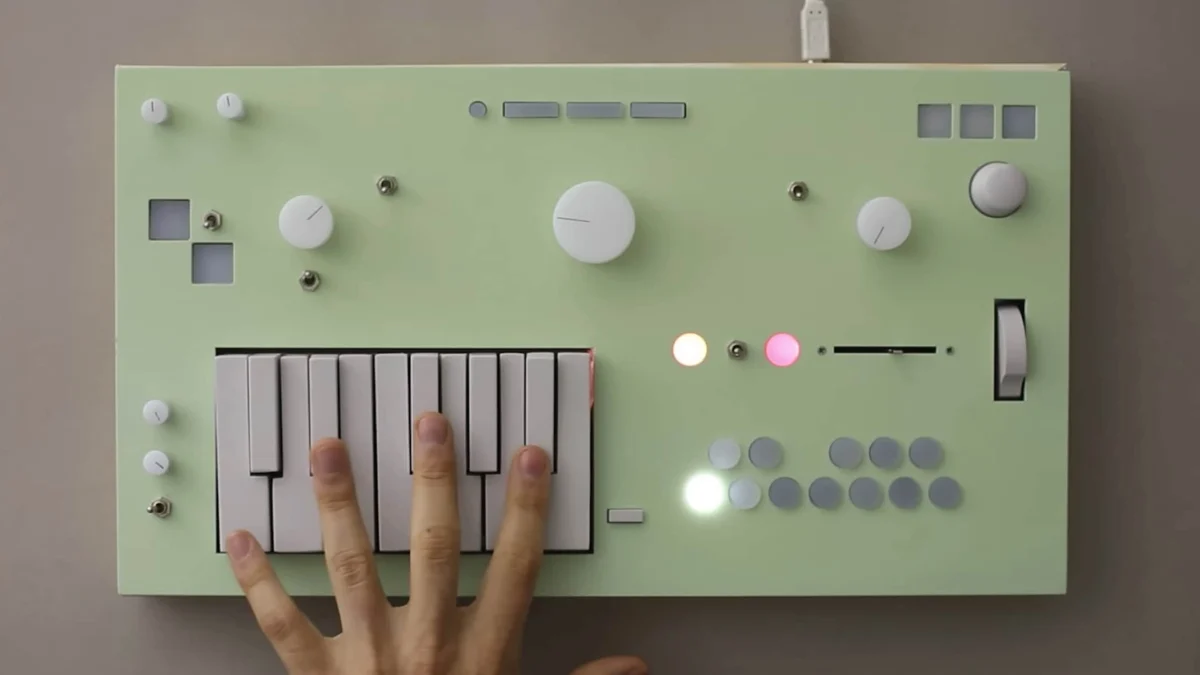
The landscape of modern music production is undergoing a significant transformation as the boundary between complex music theory and intuitive hardware design continues to blur. Martin Grieco, a developer known for his innovative approach to musical interfaces, has unveiled a comprehensive preview of the Nopia, a semi-modular harmony generator that integrates a dedicated sound engine with extensive MIDI connectivity. Designed to streamline the process of chord progression creation and harmonic exploration, the Nopia aims to provide both seasoned composers and novice musicians with a tactile, streamlined workflow for generating sophisticated musical structures. The instrument is positioned as a bridge between traditional keyboard performance and algorithmic composition, offering a unique physical interface that recontextualizes the standard chromatic layout into a functional harmonic toolset.
The Evolution of Harmonic Interface Design
Historically, the mastery of harmony required years of study in music theory, focusing on voice leading, interval relationships, and chordal extensions. While software-based "chord assistants" have existed within Digital Audio Workstations (DAWs) for decades, the physical hardware market has seen a recent surge in demand for dedicated devices that simplify these processes. The Nopia follows in the footsteps of devices like the KordBot and the TheoryBoard but distinguishes itself by including a fully realized internal sound engine and a semi-modular architecture.
The core philosophy of the Nopia revolves around its single-octave layout. Unlike a traditional MIDI controller where each key triggers a single note, the Nopia assigns an entire chord to each key. This design choice is rooted in the concept of "tonal mapping," where the physical keys represent functional degrees within a selected scale. By condensing the harmonic possibilities of a full-size piano into a compact, twelve-key interface, Grieco has created a system that prioritizes the relationship between chords over the physical dexterity required to play them.
Technical Specifications and the Internal Sound Engine
At the heart of the Nopia is a hybrid sound engine that utilizes a combination of sample-based synthesis and virtual-analog modeling. This dual-approach allows the instrument to produce rich, organic textures alongside the precision and flexibility of digital synthesis. The internal architecture is divided into four distinct sound modules: Keys, Bass, Arp (Arpeggiator), and Pad. Each module is designed to handle a specific layer of a musical composition, allowing the Nopia to function as a standalone workstation for harmonic sketching.
The "Keys" module typically handles the primary chordal voicings, while the "Bass" module automatically tracks the root notes or inverted bass lines of the selected chords. The "Arp" module utilizes the harmonic data from the chord builder to create rhythmic melodic patterns, and the "Pad" module provides atmospheric textures that fill out the frequency spectrum. These modules feed into a master effects chain, which includes essential processing tools such as reverb, delay, and modulation, followed by an integrated looper that enables users to build complex, multi-layered arrangements in real-time.
Physical interaction is a cornerstone of the Nopia experience. The device features multitouch capacitive sensors that allow for expressive gestures. Unlike standard mechanical keys, these sensors can detect subtle movements, enabling "strumming" effects—where the notes of a chord are triggered in rapid succession to mimic a guitar—and smooth pitch-bending. An onboard OLED display serves as the central hub for visual feedback, displaying chord names, scale degrees, and parameter values as they are adjusted. This visual reinforcement is critical for users who wish to understand the underlying theory behind the progressions they are creating.
Semi-Modular Architecture and MIDI Connectivity
The "semi-modular" designation of the Nopia refers to its internal routing capabilities and its ability to interface with external hardware. In a modular system, the signal path is determined by the user through patch cables; in the Nopia, this logic is applied to the flow of harmonic data. Users can route the output of the Chord Builder to different internal modules or send that data out via MIDI to control external synthesizers, virtual instruments, or modular racks.
This connectivity ensures that the Nopia is not a closed ecosystem. For professional producers, the ability to use the Nopia’s harmonic intelligence to trigger high-end VSTs or vintage analog hardware is a significant selling point. The device supports MIDI over USB and traditional 5-pin DIN MIDI, making it compatible with both modern computer-based setups and "dawless" hardware configurations.
The Chord Builder and Tonal Selector Logic
The Nopia’s most innovative feature is the synergy between the Tonal Selector, Chord Builder, and Extensions controls. The Tonal Selector allows the user to define the key and scale of the project. Once a scale is selected, the Chord Builder populates the twelve keys with the corresponding diatonic chords. For example, in the key of C Major, the first key would trigger a C Major triad, the second a D minor triad, and so on.
The "Extensions" control allows for the real-time addition of complexity. With the turn of a knob or the press of a capacitive sensor, a simple triad can be transformed into a seventh chord, a ninth chord, or a suspended chord. This allows for a "top-down" approach to composition: the user starts with a basic progression and iteratively adds harmonic density without needing to remap the entire interface. This workflow is particularly effective for genres like jazz, neo-soul, and cinematic scoring, where extended harmonies are a staple.
Launch Timeline and Market Positioning
Martin Grieco has announced that the Nopia will be launched via a Kickstarter crowdfunding campaign starting on September 15 at 9 AM ET. The campaign represents the first opportunity for the public to secure a unit from the initial limited production batch. The "Super Early Bird" pricing is set at $650, excluding taxes and shipping. This price point positions the Nopia in the mid-tier of the boutique synthesizer market, competing with specialized sequencers and desktop grooveboxes.
The decision to use Kickstarter is a common strategy for independent hardware developers, allowing them to gauge market interest and secure the capital necessary for large-scale manufacturing components. Given the current global supply chain climate for semiconductors and high-quality capacitive sensors, the phased rollout via "batches" is a pragmatic approach to ensuring quality control and manageable fulfillment timelines.
Broader Implications for the Music Industry
The emergence of instruments like the Nopia signals a broader shift in the music technology industry toward "intelligent" instruments. As artificial intelligence and algorithmic generation become more prevalent in software, hardware manufacturers are seeking ways to implement similar "smart" features in physical devices. The Nopia does not use AI in the sense of a generative model like GPT, but it does employ algorithmic logic to assist the human creator.
This trend has sparked a debate within the musical community regarding the "democratization" of music theory. Critics argue that such devices may discourage musicians from learning the fundamentals of their craft. However, proponents suggest that by removing the barrier of physical technicality, these tools allow a wider range of creators to focus on the emotional and structural aspects of composition. For film composers working under tight deadlines or electronic producers looking for a spark of inspiration, a device that can instantly provide a harmonically sound foundation is an invaluable asset.
Furthermore, the Nopia’s emphasis on tactile expression through capacitive sensors addresses a common criticism of digital instruments: the lack of "soul" or human imperfection. By allowing users to strum, bend, and slide through chords, the Nopia retains the performative element that is often lost in grid-based sequencing.
Conclusion and Future Outlook
As the September 15 launch date approaches, the Nopia stands as a testament to the ongoing innovation within the independent music tech scene. Martin Grieco’s vision of a semi-modular harmony generator addresses a specific niche in the market—users who want the power of a theory-based sequencer combined with the soul of a standalone instrument.
The success of the Nopia will likely depend on its build quality and the intuitiveness of its firmware. If the transition between the Tonal Selector and the internal sound engine is as seamless as the preview suggests, the Nopia could become a staple in modern production studios. Beyond the initial Kickstarter launch, the framework established by the Nopia’s harmonic engine could potentially be expanded through firmware updates, adding new scales, synthesis models, or even more complex modular routing options. For now, the music world waits to see if this compact harmony generator can live up to its promise of making complex musicality accessible to all.
