

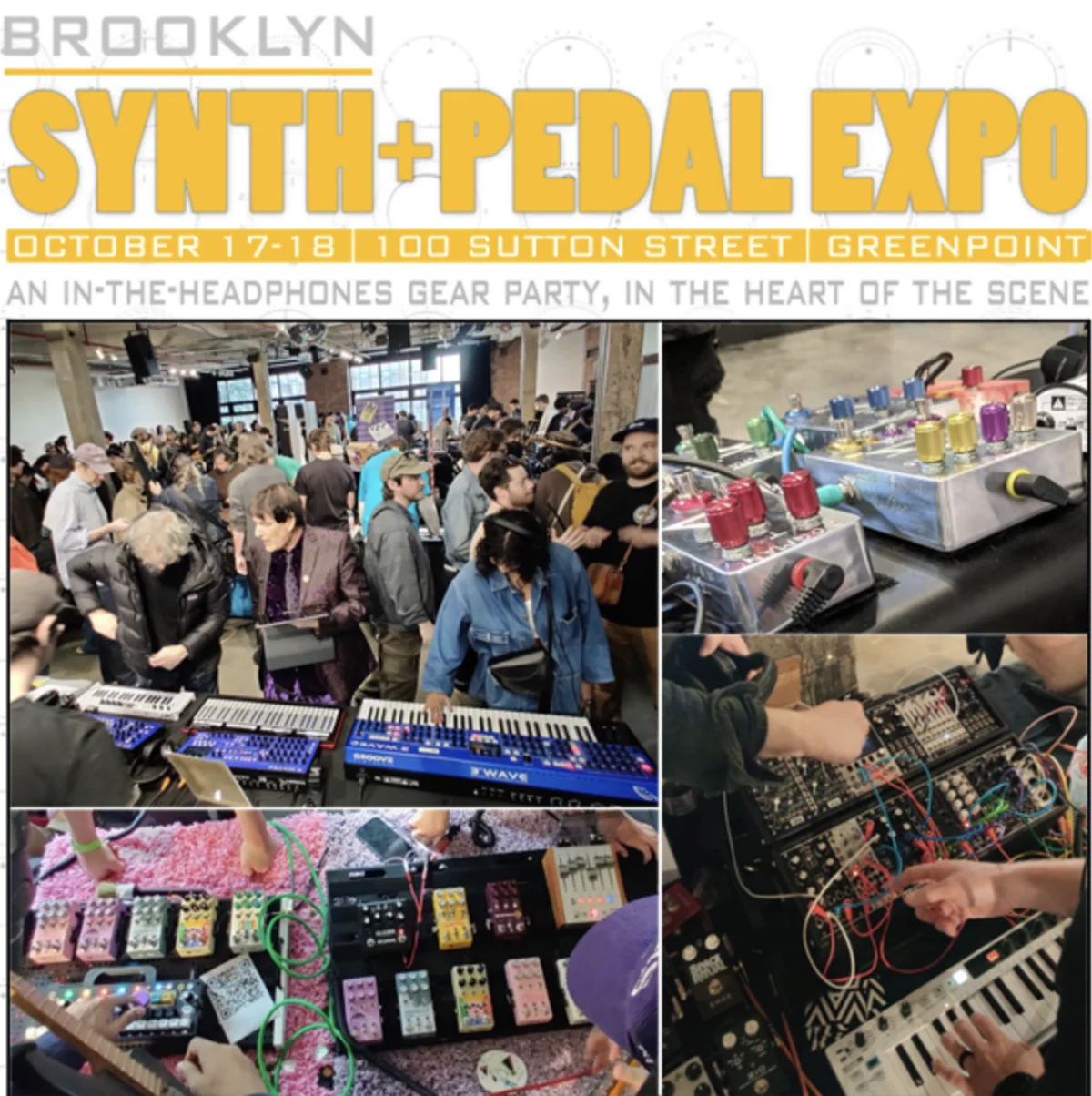
The Deli and Delicious Audio have officially announced the return of the Brooklyn Synth & Pedal Expo, a premier East Coast gathering for electronic musicians, which is set to take place on October 17–18, 2026. Occupying a 7,000-square-foot converted warehouse in the Greenpoint neighborhood of Brooklyn, the event represents a significant expansion of the annual showcase, transforming an industrial space into a high-tech playground for producers, sound designers, and gear enthusiasts. Presented in strategic partnership with Three Wave Music, the 2026 edition of the Expo is designed to bridge the gap between boutique manufacturers and the growing community of home-studio creators.
The Brooklyn Synth & Pedal Expo has carved a unique niche in the music technology circuit by prioritizing a "strictly-in-the-headphones" experience. Unlike traditional trade shows where the cacophony of competing amplifiers and loudspeakers can obscure the subtle nuances of high-end equipment, this event mandates a silent floor. This format allows attendees to engage deeply with the technical intricacies of over 100 participating brands, ranging from global industry leaders to local boutique builders. By providing a noise-friendly environment, the Expo ensures that the sonic character of a granular delay pedal or the complex harmonics of a Buchla-style oscillator can be evaluated with critical precision.
A Strategic Shift Toward Immersive Education
A cornerstone of the 2026 event is the introduction of an expanded educational curriculum. Recognizing a shift in the market where consumers are increasingly seeking "process-oriented" experiences over mere product demonstrations, organizers have unveiled the "Intro to Synthesis" workshops. These sessions are designed to demystify the complexities of sound design, offering a structured entry point for novices while providing deep-dive technical explorations for seasoned professionals.
The workshop schedule, which will be finalized in the coming weeks, is expected to feature hands-on patch-building sessions and modular workflow seminars led by active touring artists and hardware engineers. This move toward pedagogy reflects a broader trend in the music technology industry: as hardware becomes more accessible and affordable, the demand for high-level instruction has surged. By hosting these sessions within the Expo, the organizers are positioning the event not just as a marketplace, but as a vital educational hub for the New York City creative community.
Founder Paolo De Gregorio emphasized the community-centric nature of this approach. "This is an event built for discovery," De Gregorio stated. "The headphone format creates a respectful space where you can truly hear the nuances of a boutique pedal or get lost in a massive modular patch—without the noise of a typical convention. It’s a focused, community-driven experience."
The Evolution of the Brooklyn Gear Scene
The selection of Greenpoint as the host location is no coincidence. Over the past decade, North Brooklyn has solidified its reputation as the epicenter of the American electronic music revival. The neighborhood’s industrial history provides the ideal backdrop for an event that celebrates the intersection of manual engineering and digital innovation. The 7,000-square-foot warehouse selected for 2026 is nearly double the size of some previous venues, a necessary expansion given the projected attendance of over 2,000 visitors.
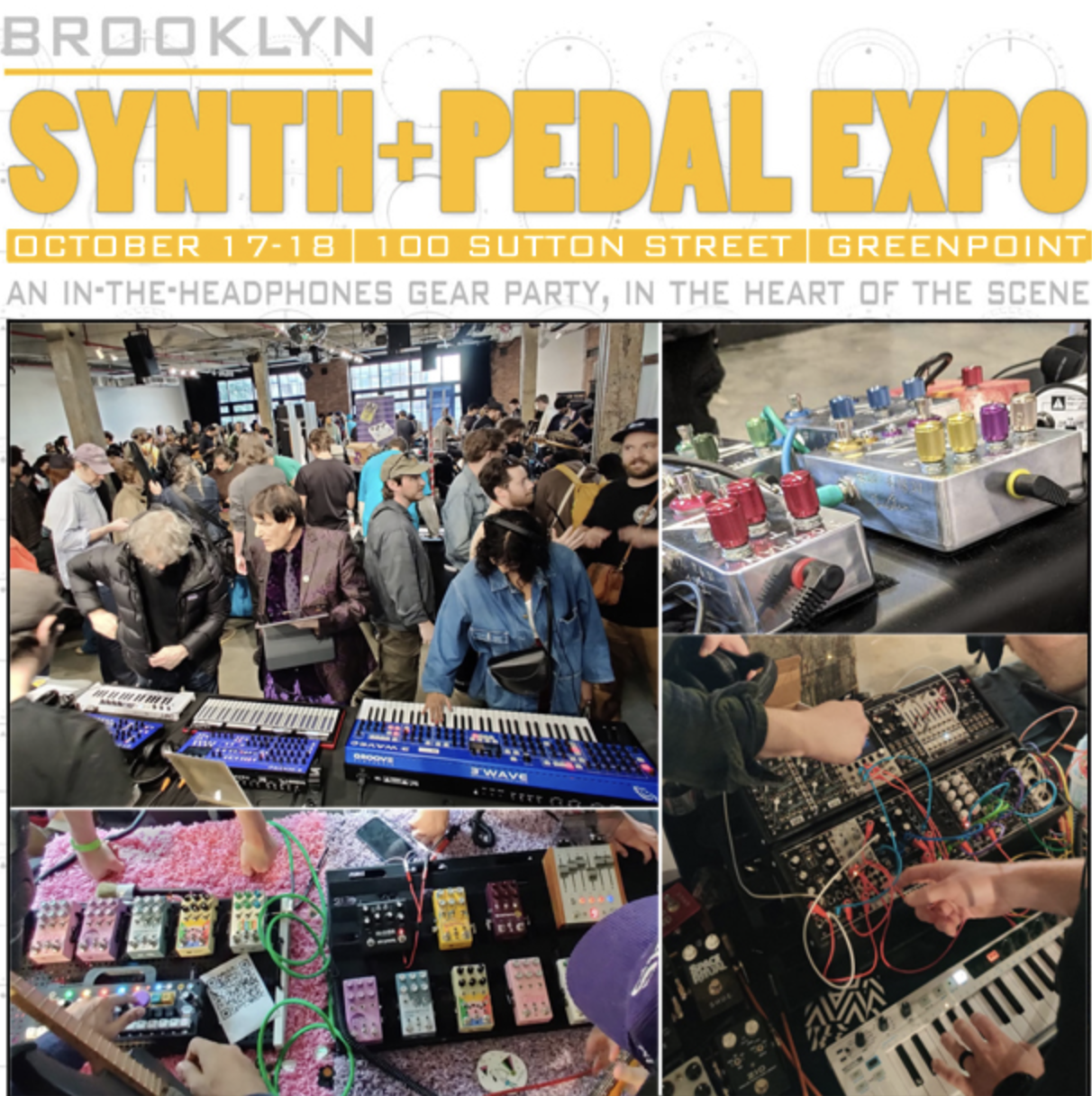
The Expo’s growth mirrors the broader economic trajectory of the music hardware industry. Data from market research firms suggests that the global synthesizer market has seen steady year-over-year growth, fueled by the "DAWless" movement—a trend where musicians move away from computer-based production in favor of tactile, hardware-centric setups. The rise of Eurorack modular systems and the "boutique pedal boom" have also contributed to a diversified market where small-scale manufacturers can compete with legacy brands through innovation and specialized sound palettes.
Logistical Framework and Accessibility
The 2026 Brooklyn Synth & Pedal Expo has implemented a tiered ticketing structure designed to manage floor density and enhance the attendee experience. Early-bird tickets are priced at a highly accessible $5, aimed at ensuring the event remains inclusive for students and local artists. In contrast, the "no crowd" Sunday admission is priced at $25, catering to professional producers and serious buyers who require a more serene environment to test equipment without the high-traffic pressure of peak hours.
In an effort to foster the next generation of sound designers, the organizers have maintained a policy allowing children to attend for free when accompanied by an adult. This "future-proofing" of the industry is a hallmark of The Deli and Delicious Audio’s philosophy, viewing the Expo as a gateway for younger enthusiasts to interact with the physics of sound before they ever open a software-based workstation.
Industry Impact and the Role of Three Wave Music
The partnership with Three Wave Music, a renowned New Jersey-based synthesizer specialist, adds a layer of retail expertise to the event. Three Wave Music has long been a destination for rare vintage gear and cutting-edge digital instruments, and their involvement ensures that the Expo is grounded in the practicalities of the current retail market. For manufacturers, the Expo serves as a vital touchpoint for consumer feedback. In an era where much of the gear research happens via YouTube demonstrations, the ability for 2,000 potential customers to physically interact with the knobs, sliders, and switches of a new product is an invaluable marketing asset.
Market analysts suggest that events like the Brooklyn Synth & Pedal Expo are becoming more critical as traditional large-scale conventions, such as NAMM, see a shift in their central influence. Regional, specialized expos allow for a higher "signal-to-noise" ratio, where exhibitors can engage in meaningful technical conversations with a highly targeted demographic. The 100+ brands expected to exhibit represent a cross-section of the modern audio landscape, including analog purists, digital innovators, and those pushing the boundaries of hybrid technology.
Analyzing the "Headphone Only" Phenomenon
The decision to maintain a strictly headphone-based demo environment is a response to the "volume wars" that historically plagued music trade shows. In a 7,000-square-foot space, the sound of 100 synthesizers and dozens of guitar amplifiers running simultaneously would create an acoustic environment that is not only unpleasant but technically useless for evaluating gear.
The headphone model utilizes high-quality distribution systems, often provided by sponsors, ensuring that the signal chain remains pure. This allows a user to hear the "noise floor" of a vintage-style bucket brigade delay or the aliasing (or lack thereof) in a high-resolution digital oscillator. From a journalistic perspective, this setup provides a rare opportunity to conduct side-by-side comparisons of hardware in a controlled setting, a luxury usually reserved for professional studio environments.
Economic and Cultural Implications
The Expo’s presence in Brooklyn also highlights the borough’s role in the "Maker Movement." Many of the boutique brands featured at the Expo are local operations, often consisting of just a few engineers building pedals in small workshops. By providing a platform for these micro-manufacturers to stand alongside industry giants, the Expo democratizes the music technology sector.
Furthermore, the event stimulates the local Greenpoint economy, bringing in thousands of visitors who frequent local hospitality and retail businesses. The "warehouse-turned-immersive-playground" concept aligns with New York City’s broader urban development strategy of repurposing industrial infrastructure for the creative economy.
Looking Ahead to the 2026 Circuit
As the industry looks toward the late 2026 season, the Brooklyn Synth & Pedal Expo is positioned as a key indicator of the health of the hardware market. With the expansion of workshops and the continued commitment to a high-fidelity, low-noise experience, the event is expected to set a benchmark for regional gear expos globally.
The full exhibitor list and workshop schedule are slated for release in the coming weeks. Industry insiders expect a mix of surprise product launches and exclusive "show-only" prototypes, as manufacturers often use the Brooklyn crowd—known for being technically savvy and trend-conscious—as a litmus test for new designs.
For the musicians and producers of the Tri-State area and beyond, October 17–18 represents more than just a shopping opportunity; it is a weekend dedicated to the craft of sound. Whether a hobbyist looking for their first $50 distortion pedal or a film composer looking to invest in a $10,000 modular rig, the Expo offers a rare, focused environment to explore the tools that will define the music of tomorrow.
Detailed information regarding the complete exhibitor list, workshop registration, and ticket purchases can be found on the official Brooklyn Synth & Pedal Expo website. As the event nears capacity, organizers recommend early registration, particularly for the "no crowd" Sunday sessions, which are expected to sell out first.
