

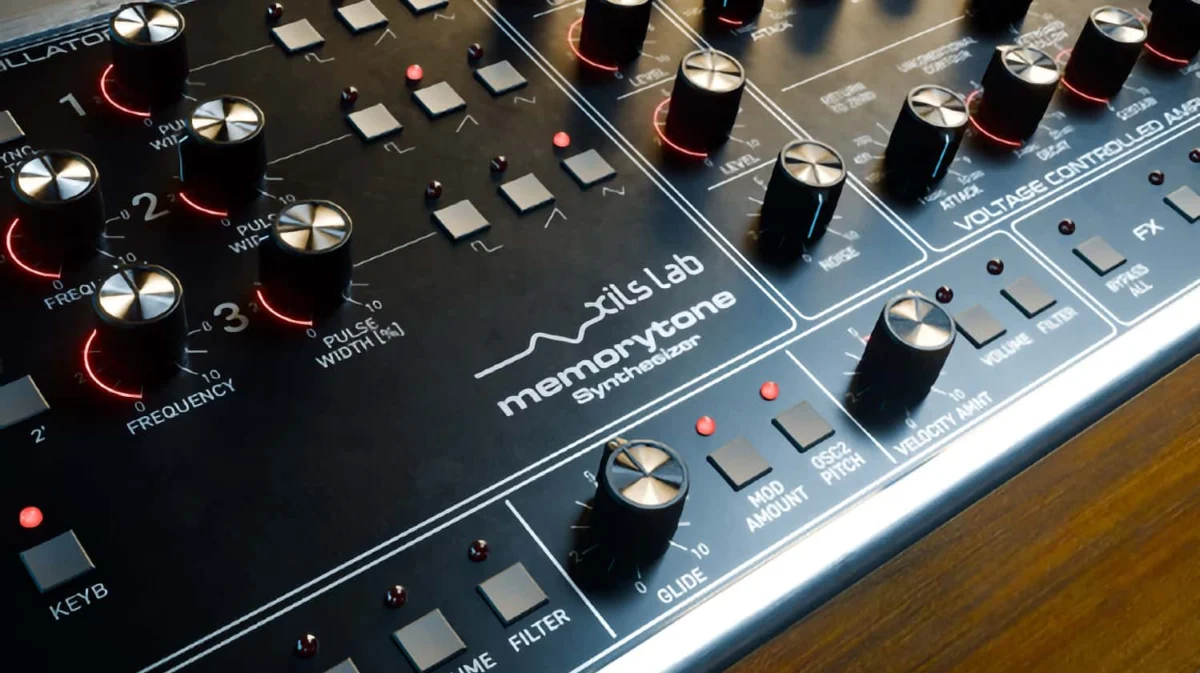
The digital audio workstation landscape has seen a significant expansion with the arrival of MemoryTone, a sophisticated software emulation developed by XILS-lab that meticulously recreates the synthesis architecture of the legendary 1982 Memorymoog. Available for both macOS and Windows platforms, this new virtual instrument seeks to bridge the gap between the volatile, high-energy character of vintage hardware and the precision required by modern music production environments. By moving beyond simple signal path replication, XILS-lab has implemented a component-level modeling approach designed to capture the complex interactions between oscillators, voice variations, mixer saturation, and the iconic ladder filter behavior that defined the original hardware’s sonic signature.
Historical Context: The Legacy of the 1982 Memorymoog
To understand the significance of the MemoryTone release, one must look back to the early 1980s, a pivotal era for Moog Music Inc. and the synthesizer industry at large. Released in 1982, the Memorymoog was often described as "six Minimoogs in one box." It arrived at a time when the industry was transitioning from monophonic synthesis to polyphonic capabilities, following the success of the Sequential Circuits Prophet-5 and the Roland Jupiter-8.
The original Memorymoog featured six voices of polyphony, with each voice boasting three voltage-controlled oscillators (VCOs). This 18-oscillator architecture provided a massive, harmonically rich sound that remains sought after by collectors and producers today. However, the hardware was notoriously difficult to maintain; the heat generated by its internal components often led to tuning instabilities, and the complexity of its circuitry made it a challenge for technicians. By digitizing this architecture, XILS-lab aims to provide the "Memorymoog sound" without the logistical burdens of 40-year-old hardware maintenance.
Technical Architecture and Oscillator Design
At the core of MemoryTone is a faithful recreation of the triple-oscillator-per-voice structure. Each of the six virtual voices provides a selection of pulse, sawtooth, and triangle waveforms. A critical component of the original’s charm was the ability to vary pulse width and utilize hard sync between oscillators, features that XILS-lab has prioritized in the MemoryTone interface.
The third oscillator in the MemoryTone architecture serves a dual purpose, mirroring the flexibility of the 1982 original. It can function as a standard audio-rate oscillator or be disconnected from keyboard tracking to act as a low-frequency modulation source. In this mode, it can operate approximately five octaves lower than the primary oscillators, allowing for complex frequency modulation (FM) and rhythmic textures. The inclusion of extended tuning options ensures that users can replicate the subtle "slop" or pitch drift associated with vintage analog components, or maintain the perfect pitch stability of modern digital systems.
The Iconic Ladder Filter and Mixer Saturation
The filter section of a Moog-style synthesizer is arguably its most defining characteristic. MemoryTone features a 24 dB/octave self-oscillating ladder filter, a design synonymous with the "warmth" and "punch" of the Moog brand. XILS-lab has modeled the filter’s cutoff, emphasis (resonance), keyboard tracking, and envelope contour controls to respond dynamically to input levels.
A notable technical achievement in MemoryTone is the oscillator mixer. Unlike many digital synthesizers that use linear summing, the MemoryTone mixer includes level-dependent drive and saturation. As the levels of the three oscillators are increased within the mixer, the virtual circuitry introduces non-linear harmonic distortion. This behavior accurately reflects how the original hardware’s internal gain staging would "push" the filter, resulting in a thicker, more aggressive tone when the mixer levels are maximized.
Modern Enhancements: MPE and Advanced Modulation
While the primary goal of MemoryTone is historical accuracy, XILS-lab has integrated several contemporary features to meet the demands of today’s performers. Perhaps the most significant addition is support for MIDI Polyphonic Expression (MPE). MPE allows for per-note control of parameters such as pitch bend, timbre, and pressure, enabling a level of expressiveness that was impossible on the original 1982 hardware.
In addition to MPE, MemoryTone incorporates:
- Velocity and Aftertouch Control: Users can map velocity and pressure to various parameters, including filter cutoff and volume, enhancing the playability of the instrument.
- Advanced Arpeggiator: A programmable arpeggiator that extends the rhythmic capabilities of the synth beyond the original’s basic features.
- Integrated Effects Suite: Six built-in effects processors allow users to polish sounds within the plugin. These typically include spatial effects like delay and reverb, alongside modulation effects like chorus and phaser, which were often paired with the Memorymoog in 1980s studio sessions.
- Preset Management System: A modern browser allows for the quick categorization and retrieval of sounds, a far cry from the limited patch storage of the early 80s.
Chronology of Development and Release
The development of MemoryTone follows a long line of successful analog emulations by XILS-lab, a company that has established a reputation for "deep modeling." Their previous work on the PolyKB and the XILS 4 (an EMS VCS3 emulation) set the stage for tackling the Memorymoog architecture.

The project began with a comprehensive analysis of the original 1982 schematics. XILS-lab engineers focused specifically on the "voice variation" phenomenon. In original analog units, no two voices sounded exactly alike due to component tolerances; MemoryTone simulates this by introducing slight, controllable variations in filter response and oscillator timing across the polyphonic spread.
The official release was announced in late 2024, with a strategic introductory pricing period intended to capture the interest of the global synthesis community. The move comes as part of a broader industry trend where high-end software developers are revisiting "unstable" classics and stabilizing them for professional studio use.
Market Positioning and Pricing
XILS-lab has positioned MemoryTone as a premium professional tool. The software is currently available with an introductory price of €79, a significant reduction from its standard retail price of €199. This pricing strategy places it in direct competition with other high-profile Moog emulations, such as Arturia’s Mini V or Softube’s Model 72, though MemoryTone’s specific focus on the polyphonic Memorymoog architecture gives it a unique niche.
Industry analysts suggest that the lower entry price is designed to build a user base quickly before the software moves to its permanent MSRP. The availability on both VST, AU, and AAX formats ensures compatibility with all major digital audio workstations (DAWs), including Ableton Live, Logic Pro, Pro Tools, and Cubase.
Impact on the Professional Audio Industry
The release of MemoryTone is expected to have a notable impact on film scoring and electronic music production. The Memorymoog was a staple for artists like Jan Hammer, Jean-Michel Jarre, and Rick Wakeman, contributing to the "cinematic" sound of the 80s. By providing a reliable, MPE-capable version of this instrument, XILS-lab allows modern composers to access those specific textures without the risk of hardware failure during a session.
Furthermore, the addition of MPE support aligns with the growing popularity of controllers like the Roli Seaboard and the LinnStrument. By combining 1982 synthesis with 2024 control protocols, MemoryTone represents a hybrid approach to instrument design that values both heritage and innovation.
Technical Specifications and Requirements
To ensure a smooth user experience, XILS-lab has optimized MemoryTone for modern operating systems. The software requires:
- Windows: Windows 7 or higher (64-bit).
- Mac: macOS 10.9 or higher (Intel and Apple Silicon M1/M2/M3 native support).
- Format: VST2, VST3, Audio Unit, AAX.
- Protection: iLok (USB dongle or machine activation).
The inclusion of Apple Silicon native support is particularly relevant for the current market, as it ensures low-latency performance and high voice counts on the latest MacBook and Mac Studio hardware.
Conclusion and Future Outlook
MemoryTone stands as a testament to the enduring appeal of Bob Moog’s engineering legacy. By focusing on the interactions between components rather than just the output signal, XILS-lab has provided a tool that captures the "breathing" quality of analog hardware. As digital signal processing (DSP) continues to evolve, the line between hardware and software becomes increasingly blurred.
For the professional producer, MemoryTone offers a powerful palette of 18-oscillator polyphony, enhanced by the flexibility of modern modulation and effects. Whether used for thick basslines, ethereal pads, or complex rhythmic sequences, the instrument provides a bridge to a classic era of synthesis while remaining firmly rooted in the requirements of the contemporary studio. The introductory offer of €79 represents a tactical opportunity for musicians to acquire a high-fidelity recreation of one of the most powerful analog synthesizers ever built.
