

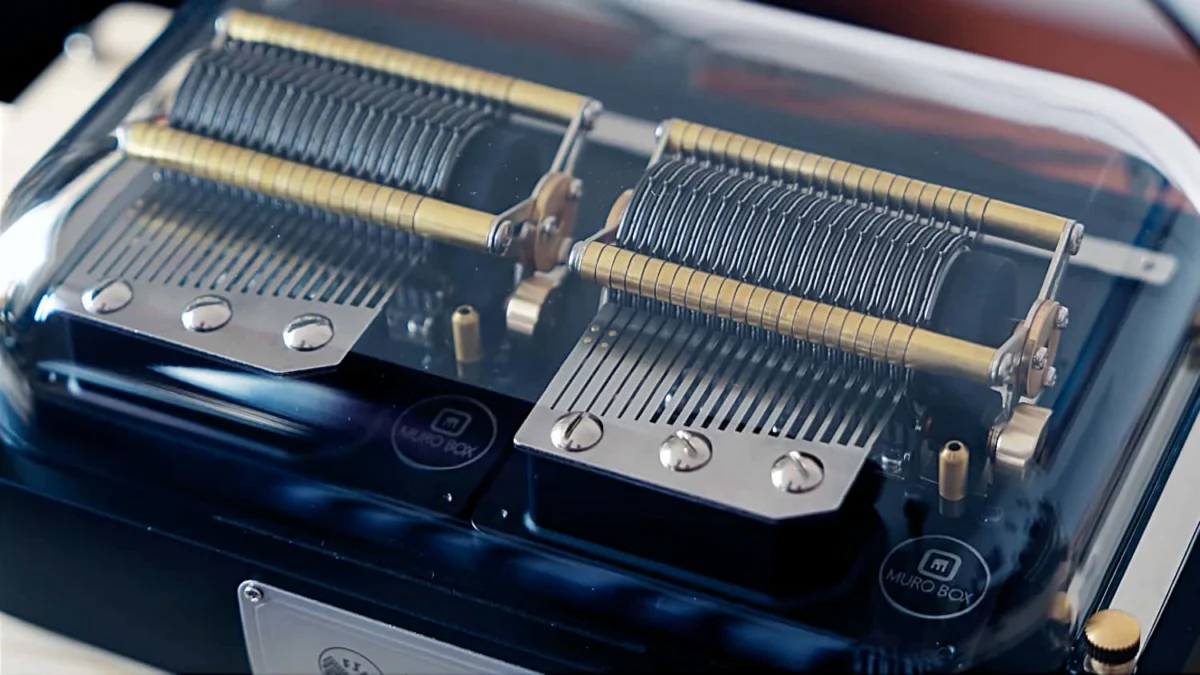
The intersection of traditional mechanical engineering and modern digital protocols has reached a significant milestone with the release and subsequent critical review of the Muro Box N40. This device, a chromatic, MIDI-controlled music box, represents a sophisticated evolution of a musical instrument that has remained largely unchanged for over two centuries. In a recent detailed evaluation by renowned synthesist Floyd Steinberg, the N40 was scrutinized for its technical capabilities, its integration into modern studio workflows, and its unique position in the contemporary hardware market. As musicians increasingly seek tactile and organic sounds to complement digital synthesis, the Muro Box N40 emerges as a bridge between the physical craftsmanship of the 19th century and the programmable precision of the 21st.
The Technical Architecture of the Muro Box N40
The Muro Box N40 is the successor to the original Muro Box (now referred to as the N20), which gained international attention for being the world’s first app-controlled music box. While the original model featured a limited 20-note scale, the N40 expands this significantly, offering a 40-note chromatic range. This expansion is not merely a quantitative upgrade; it fundamentally changes the instrument’s utility, allowing for complex harmonic structures, key changes, and the performance of classical and contemporary repertoire that was previously impossible on a standard music box.
At its core, the N40 utilizes a patented mechanical structure that replaces the traditional fixed-pin cylinder with a dynamic, solenoid-driven striking mechanism. In a standard music box, a metal comb is plucked by pins set permanently into a rotating drum, meaning one box can only play one song. The Muro Box replaces this static system with a programmable cylinder that can trigger any note at any time based on digital input. The N40’s 40-note comb is tuned to a chromatic scale, providing composers with a three-octave range (typically spanning from A3 to C7, though custom tunings have been noted in various production runs).
A critical addition to the N40 model is the inclusion of a built-in pickup and an audio output jack. This feature addresses one of the primary limitations of traditional mechanical instruments: the difficulty of amplification and clean recording. By integrating a transducer directly into the resonance chamber, the N40 allows for direct connection to audio interfaces, effects pedals, or amplifiers, effectively turning a mechanical acoustic instrument into an electro-acoustic hybrid.
Chronology of Development and Market Entry
The journey of the Muro Box began in 2018 when Tevofy Technology, a Taiwan-based startup founded by Dr. Shiao-Chen Feng and his wife, launched a crowdfunding campaign. The project was born from a desire to modernize the music box, which the founders viewed as a "dying art" restricted by the limitations of physical cylinders.
- 2018–2020: The N20 Prototype and Launch. The company successfully raised over $350,000 on Indiegogo, delivering the first N20 units. This model proved the concept of a cloud-connected, app-controlled mechanical instrument.
- 2021–2022: Market Expansion. As the N20 gained traction among collectors and hobbyists, the professional music community requested a larger range and MIDI compatibility to facilitate studio integration.
- 2023: The Announcement of the N40. In October 2023, Tevofy announced the N40, specifically targeting the professional "Prosumer" market. This model introduced the chromatic scale and the MIDI-IN capability as standard features.
- 2024: Global Distribution and Critical Review. The N40 began reaching the hands of prominent synthesis and music technology influencers, such as Floyd Steinberg, whose recent analysis has highlighted the device’s performance in a professional "DAW-less" and DAW-integrated environment.
Insights from the Floyd Steinberg Evaluation
Floyd Steinberg’s review provides a practical look at how the N40 functions outside of a controlled marketing environment. His analysis focused on several key areas: assembly, latency, and integration.
Mechanical Assembly and Aesthetic Design
The N40 is delivered with a focus on high-end materials, featuring a wooden resonance box that is essential for the instrument’s acoustic projection. Steinberg noted the assembly process, which emphasizes the "kit" nature of boutique hardware, allowing users to appreciate the internal clockwork and the movement of the solenoids. The visual appeal of the device—watching the mechanical strikes align with MIDI data—adds a performative element that digital plugins cannot replicate.
The Challenge of Mechanical Latency
One of the most significant technical hurdles discussed in the review is the issue of latency. Unlike a digital synthesizer, where the "note on" command results in near-instantaneous sound, the Muro Box N40 is subject to the laws of physics. There is a physical delay between the moment the MIDI signal is received, the solenoid is activated, and the metal tooth is plucked. Steinberg noted that this latency requires "compensation" within a sequencer or Digital Audio Workstation (DAW). Musicians must shift their MIDI tracks forward by several milliseconds to ensure the mechanical plucks align with other digital instruments in a mix. This characteristic highlights the "organic" nature of the device, reminding the user that they are commanding a physical machine rather than a software algorithm.
MIDI and Ecosystem Integration
The N40 supports MIDI over USB-C and traditional MIDI-IN, allowing it to be triggered by external hardware such as an MPC, a Squarp Hapax, or a computer. Steinberg demonstrated this by connecting an MPC to the N40, showing how the music box can function as an external "voice" in a complex arrangement. Furthermore, the accompanying Muro Box app provides a cloud-based library where users can upload, share, and download arrangements, effectively creating a global community of music box composers.
Supporting Data and Technical Specifications
To understand the N40’s position in the market, it is necessary to examine the hardware specifications that differentiate it from both toys and traditional high-end music boxes (such as those produced by Reuge).
- Note Count: 40 Chromatic notes.
- Connectivity: MIDI-IN (3.5mm), USB-C (Power and Data), Wi-Fi (for App connectivity).
- Audio Output: 6.35mm (1/4 inch) line out via internal pickup.
- Dimensions: Approximately 190mm x 125mm x 90mm.
- Materiality: High-grade walnut or maple wood options for the resonance chamber; zinc alloy and steel for the internal movement.
- Power Requirement: 5V/2A via USB-C, making it portable via power bank.
The N40’s 40-note range covers the most frequent melodic frequencies found in music box compositions, whereas the previous 20-note model was often forced to transpose notes or skip accidentals, limiting it to simple folk melodies or specifically arranged pieces.
Official Responses and Industry Positioning
Tevofy Technology has positioned the Muro Box N40 not just as a luxury gift, but as a legitimate studio tool. In statements regarding the development of the N40, the company emphasized that the "chromatic" aspect was the most requested feature from their user base. By moving away from the diatonic scale (which is limited to a single key), the company has opened the door for film composers and experimental musicians.
Industry analysts suggest that the Muro Box occupies a "blue ocean" in the music technology market. On one side, traditional music boxes are expensive, non-programmable heirlooms. On the other side, MIDI synthesizers are purely electronic. The Muro Box N40 sits in the middle, offering the "prestige" and acoustic purity of a mechanical heirloom with the flexibility of a modern synthesizer.
Broader Impact and Implications for Modern Music
The emergence of the Muro Box N40 reflects a broader trend in the music industry: the "New Analog" movement. Despite the convenience of software instruments, there is a growing demand for physical sound generation. This is seen in the resurgence of modular synthesizers, vinyl records, and now, programmable mechanical instruments.
The "Humanization" of MIDI
In digital production, "humanization" is often achieved through software randomization of velocity and timing. With the N40, humanization is inherent. The slight variations in the metal teeth’s vibration, the resonance of the wood, and the mechanical noise of the solenoids provide a "texture" that is difficult to synthesize. For film and game composers, this provides an "instant atmosphere" often used in horror, fantasy, or nostalgic scores.
Educational and Therapeutic Applications
Beyond professional music production, the N40 has implications for music education and therapy. The visual nature of the mechanical strikes makes it an excellent tool for demonstrating the relationship between MIDI data and physical action. In therapeutic settings, the gentle, high-frequency timbre of a music box is often used for relaxation, and the ability to program custom playlists via MIDI or the app expands its utility in these fields.
The Future of Hybrid Instruments
The success of the Muro Box N40 may encourage other manufacturers to explore "MIDI-fying" other acoustic instruments. We have already seen MIDI-controlled pianos (such as the Yamaha Disklavier) and MIDI-controlled pipe organs, but the N40 brings this technology to a desktop form factor. This democratization of mechanical automation allows independent creators to access sounds that were previously only available in high-end studios or through expensive sample libraries.
Conclusion
The Muro Box N40, as highlighted by Floyd Steinberg’s comprehensive review, stands as a testament to the enduring appeal of mechanical sound. By solving the historical limitations of the music box—specifically its inability to change songs and its limited scale—Tevofy Technology has created a new category of musical instrument. While the challenges of mechanical latency and the premium price point remain factors for potential buyers, the N40’s ability to integrate into a modern MIDI workflow while maintaining its acoustic soul makes it a unique asset in the contemporary musician’s toolkit. As the digital and physical worlds continue to blur, instruments like the N40 provide a tangible reminder of the physics of sound, offering a "beautiful" and functional alternative to the virtual world.
