

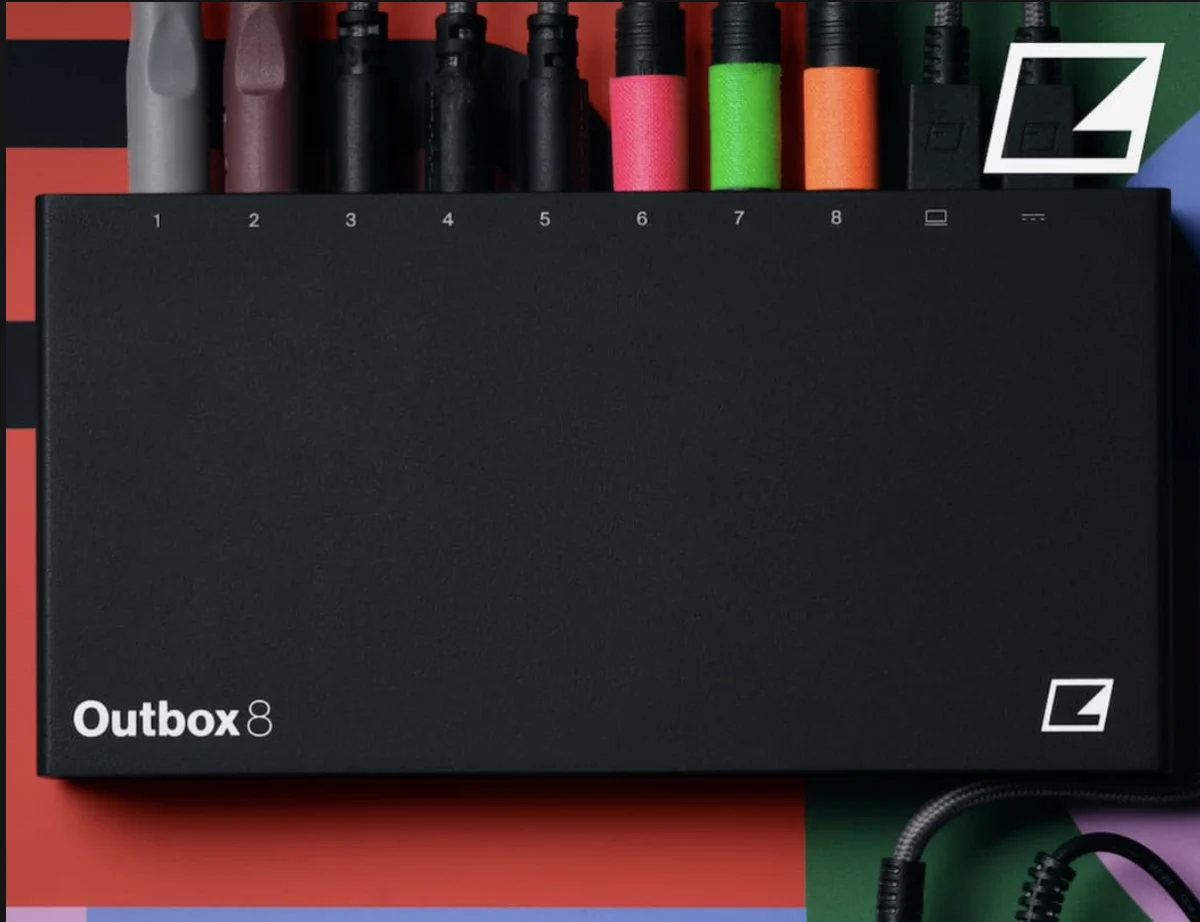
The landscape of professional music production and live electronic performance has seen a significant shift with the official release of the Elektron Outbox 8, a versatile eight-channel audio and Control Voltage (CV) breakout box. Designed to serve as a bridge between digital hardware, modular synthesis, and traditional analog environments, the Outbox 8 represents a strategic expansion of the Elektron ecosystem. The device functions as both a USB host and a USB device, providing eight fully configurable physical outputs that allow users to route audio and control signals with unprecedented flexibility.
The introduction of the Outbox 8 addresses a long-standing demand within the electronic music community for expanded connectivity in compact hardware setups. While Elektron’s flagship instruments, such as the Digitakt and Digitone series, have garnered acclaim for their sequencing and sound design capabilities, their physical output counts have often necessitated the use of a computer and the Overbridge software suite for multitrack recording. The Outbox 8 provides a hardware-centric solution to this limitation, allowing for complex routing without the requirement of a Digital Audio Workstation (DAW) at the center of the performance.
Technical Specifications and Hardware Architecture
The Outbox 8 is engineered to handle a variety of signal types, making it a "Swiss Army knife" for studio integration. The primary hardware feature is the inclusion of eight DC-coupled outputs. DC coupling is a critical technical specification for users of modular synthesizers, as it allows the interface to transmit steady voltage levels rather than just fluctuating audio waveforms. This capability enables the Outbox 8 to send CV, Gate, and Clock signals directly from a compatible digital source to Eurorack modules or other analog hardware.
The device features robust USB-C connectivity and acts as a high-speed interface for data and audio transmission. As a USB host, the Outbox 8 can power and receive data from external MIDI controllers, trackers, or other class-compliant USB MIDI devices. This bidirectional communication is central to its utility, allowing it to translate digital instructions from a master sequencer into physical voltages or discrete audio streams.
In a comprehensive technical demonstration, Matthew Piecora, a recognized specialist in the Elektron workflow, highlighted the device’s physical build and initial setup process. The hardware is designed to be low-latency, ensuring that timing-critical signals—such as triggers for percussion modules or clock synchronization for external sequencers—remain precise during live use.
Bridging Digital Control and Analog Synthesis
One of the most significant implications of the Outbox 8 is its ability to facilitate MIDI-to-CV conversion. In practical applications, this allows a sequencer like the Digitone II to control analog instruments that do not possess MIDI ports. During the hardware walkthrough, Piecora demonstrated this by sequencing a Moog Mavis through the Outbox 8. By routing MIDI data from the Elektron sequencer into the Outbox 8, the device translates that data into CV and Gate signals, effectively turning a digital FM synthesizer into the "brain" of an analog modular setup.
This functionality extends beyond simple pitch and gate signals. Because the eight outputs are fully configurable, they can be assigned to various parameters, such as Low-Frequency Oscillators (LFOs), envelopes, or automation lanes. This allows for complex, generative modulation of analog hardware that was previously difficult to achieve without a dedicated and often expensive MIDI-to-CV converter.
Integration with the Digitone II and Octatrack
The Outbox 8 is particularly optimized for the latest generation of Elektron hardware, including the recently released Digitone II. The integration allows for sophisticated audio routing rules that were previously impossible. Users can now assign individual tracks or voices from the Digitone II to specific physical outputs on the Outbox 8. This is essential for live performers who wish to process different elements of their sound—such as the kick drum, bassline, and lead melodies—through separate external effects pedals or mixing console channels.
However, the integration comes with specific caveats regarding internal effects processing. In the technical analysis of the Digitone II routing, it was noted that when audio is routed to individual outputs, it is typically "dry," meaning it bypasses the internal global reverb and delay of the master instrument. Users must account for this when designing their signal chains, often opting to use the Outbox 8 to send signals to external high-end processors, such as those found in an Octatrack-based "Octacosm" setup.
The Octatrack, Elektron’s legendary sampler and dynamic performance hub, also benefits from the Outbox 8. By utilizing the breakout box, the Octatrack can function as a more effective central processor for external effects. The Outbox 8 facilitates the routing of multiple audio streams into and out of the Octatrack’s four inputs, effectively expanding the "loopback" and processing capabilities of the machine.
Software Configuration and the Web Configurator
To manage the complex routing possibilities of the eight outputs, Elektron has introduced a dedicated Web Configurator. This browser-based tool allows users to define the behavior of each port without installing bloated driver software. Through the configurator, users can set whether an output is intended for audio, CV, or clock signals.
The Web Configurator also handles firmware updates and device profiling. One of the standout features of the Outbox 8 is its "Automatic Device Profiling," which allows the hardware to recognize connected instruments and apply optimized settings for latency and signal levels. This feature was tested using the Dirtywave M8 Tracker, a popular handheld sequencer. The Outbox 8 successfully managed multitracking diagnostics for the M8, demonstrating its compatibility with third-party, boutique hardware beyond the Elektron brand.
Strategic Impact on Live Performance and Studio Workflows
The release of the Outbox 8 signals a broader trend in the music technology industry: the move toward "DAW-less" environments that retain the precision of digital control. By providing eight physical outputs in a compact form factor, Elektron is catering to a professional demographic that values the tactile experience of hardware but requires the multi-channel flexibility of a computer-based setup.
For live performers, the Outbox 8 enables a "Dual-Bus" performance jam style. This involves splitting the audio into two distinct signal paths—typically a "clean" path and a "processed" path. The performer can then use a DJ-style crossfader or a mixer to blend between these two states, creating dynamic tension and release that is difficult to achieve with a simple stereo output.
Furthermore, the Outbox 8 allows for creative "tricks" that push the boundaries of the connected hardware. One such example is the "Pseudo-Delay" trick on the Digitone II, which utilizes the Outbox 8’s routing to create complex rhythmic echoes through a combination of retriggering and volume fading, all while maintaining the ability to process those echoes through external analog filters.
Market Analysis and Industry Reactions
Industry analysts view the Outbox 8 as a direct response to the growing popularity of modular synthesis and the rise of "hybrid" setups. Previously, users looking for this level of connectivity had to rely on specialized modules like the Expert Sleepers ES-8 or ES-9. However, those modules are primarily designed for Eurorack cases. The Outbox 8 offers a standalone, desktop-friendly alternative that appeals to a wider range of musicians, including those who do not own a modular rack but use semi-modular gear like the Moog Mother-32 or the ARP 2600 M.
Initial reactions from the user community have been largely positive, particularly regarding the DC-coupled nature of the outputs. The ability to use the Outbox 8 as an eight-channel audio interface for a laptop while simultaneously using it as a CV controller for a modular synth makes it a high-value proposition for studio owners.
Conclusion and Future Outlook
The Elektron Outbox 8 is more than a simple accessory; it is a foundational tool that redefines how Elektron hardware interacts with the wider world of music technology. By solving the "output bottleneck" of the Digi-line and providing a robust interface for CV control, Elektron has solidified its position at the center of the modern electronic music studio.
As firmware updates continue to refine the Web Configurator and add support for more third-party devices, the Outbox 8 is expected to become a standard component in professional performance rigs. Its ability to bridge the gap between the digital precision of the 21st century and the analog warmth of classic synthesis ensures its relevance for years to come. The device is now available through authorized retailers, marking a new chapter in the evolution of integrated hardware ecosystems.
