

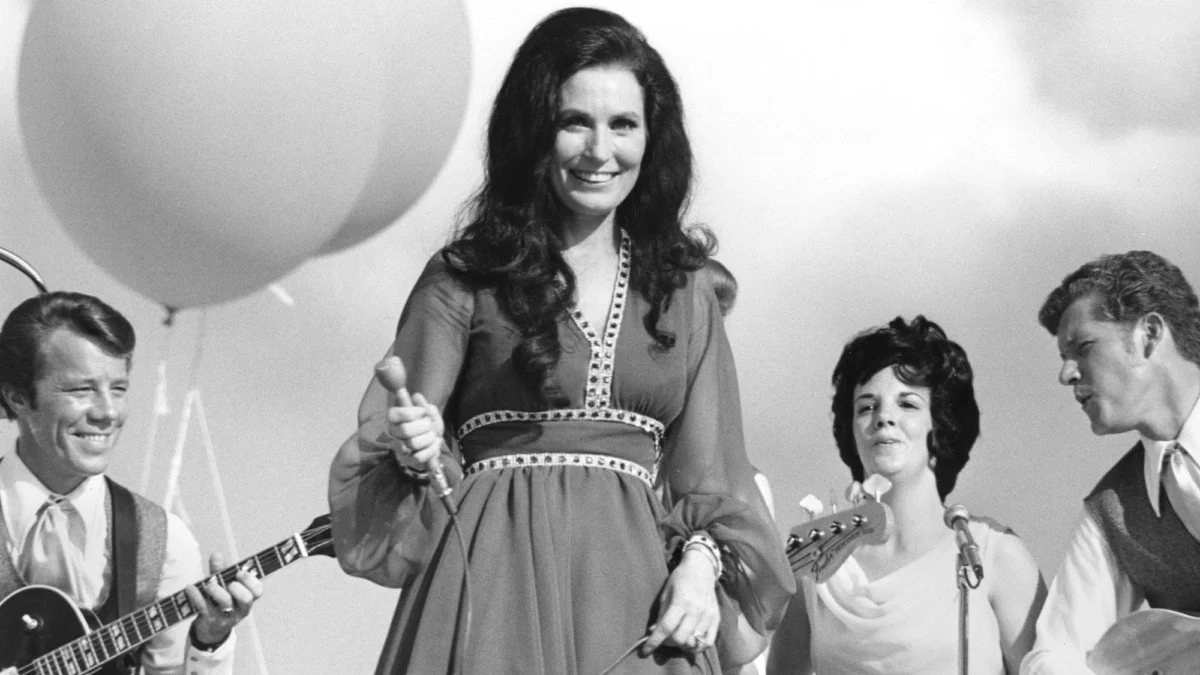
The year 1966 stands as a transformative era in the history of American country music, serving as a bridge between the traditional honky-tonk sounds of the post-war era and the sophisticated "Nashville Sound" that would come to dominate the airwaves. During this twelve-month period, the genre witnessed the rise of assertive female voices, the refinement of the narrative ballad, and the successful crossover of country artists into the mainstream pop charts. Central to this mid-60s renaissance were three specific singles that not only topped the Billboard Country charts but also redefined the thematic boundaries of the genre: Loretta Lynn’s “Don’t Come Home A-Drinkin’ (With Lovin’ On Your Mind),” Bill Anderson’s “I Get The Fever,” and Eddy Arnold’s “I Want To Go With You.” These compositions reflected the shifting social mores of the decade while maintaining the emotional sincerity that has remained the hallmark of country music for a century.
The Rise of the Assertive Female Voice: Loretta Lynn’s 1966 Breakthrough
In the mid-1960s, the female perspective in country music was often relegated to themes of heartbreak, domesticity, or passive endurance. This paradigm shifted significantly in late 1966 when Loretta Lynn released “Don’t Come Home A-Drinkin’ (With Lovin’ On Your Mind).” The song was a stark departure from the "submissive wife" trope, offering instead a blunt, uncompromising ultimatum to a husband returning home intoxicated and seeking affection.
Co-written by Lynn and her sister, Peggy Sue Wright, the track was deeply rooted in the lived experiences of both women. It addressed the reality of rural and working-class domestic life with a frankness that was revolutionary for its time. The lyrical content—specifically the refusal of physical intimacy as a consequence of a partner’s alcoholism—was considered provocative. This led to several radio stations initially banning the track, fearing it was too controversial for the conservative listenership of the era. However, the ban had the opposite of its intended effect, fueling public interest and propelling the song to the top of the charts.
Data from the era confirms the song’s massive impact. Released in October 1966, it reached the Number One spot on the Billboard Country Singles chart in early 1967, becoming Lynn’s first chart-topping hit. The success of the single led to the album of the same name becoming the first by a female country artist to be certified Gold by the RIAA, signifying over 500,000 copies sold. This achievement effectively shattered the "glass ceiling" in Nashville, proving that female artists could carry the commercial weight of an entire LP rather than just individual singles.
Narrative Craftsmanship and the "Whispering Bill" Anderson Era
While Loretta Lynn was challenging social norms, Bill Anderson was refining the art of the country narrative. Known as "Whispering Bill" for his soft-spoken vocal delivery and conversational style, Anderson was already a seasoned songwriter and performer by 1966. His contribution to the year’s musical canon, “I Get The Fever,” demonstrated his ability to blend rhythmic, upbeat instrumentation with themes of profound emotional distress.
Unlike many of his contemporaries who relied on outside writers, Anderson penned “I Get The Fever” entirely on his own. The song explores the psychological phenomenon of "the fever"—a restless, burning desire to flee a familiar environment that has become saturated with memories of a lost love. The track was featured on his 1966 album I Love You Drops, an LP that solidified his standing as one of the most consistent hitmakers in the Decca Records stable.
From a technical perspective, “I Get The Fever” utilized the "Nashville Sound" production techniques pioneered by Owen Bradley. The recording featured polished background vocals and a prominent, walking bassline that gave the song a drive distinct from the slower ballads typical of the time. The single reached Number One on the Billboard Country chart, marking Anderson’s third trip to the summit. It would be three years before he returned to the top spot with “My Life (Throw It Away If I Want To)” in 1969, making the 1966 success a critical milestone in the middle of his career. Anderson’s ability to articulate the internal monologue of the heartbroken through a catchy, radio-friendly format ensured the song’s longevity on country radio for decades.
Eddy Arnold and the Pop-Country Crossover Phenomenon
The third pillar of the 1966 country music landscape was Eddy Arnold, an artist who underwent one of the most successful image transformations in music history. Originally known as "The Tennessee Plowboy," Arnold spent the 1960s shedding his rural image in favor of a sophisticated, tuxedo-clad persona that appealed to urban audiences. His 1966 hit, “I Want To Go With You,” written by the legendary Hank Cochran, was the quintessential example of this "Countrypolitan" style.
Produced by Chet Atkins at RCA Victor, “I Want To Go With You” featured lush orchestral arrangements and choral backing, moving far away from the fiddle and steel guitar of traditional honky-tonk. The song’s lyrics were an elegant admission of romantic devotion, utilizing a melodic structure that felt at home on both country and "easy listening" stations.
The data reflects Arnold’s unique position as a bridge between genres. “I Want To Go With You” spent six weeks at the top of the Billboard Hot Country Singles chart. More impressively, it became a significant crossover success, peaking at Number 36 on the Billboard Hot 100 and reaching the Number One spot on the Adult Contemporary chart. This crossover appeal was instrumental in expanding the demographic reach of country music, bringing the genre into the living rooms of suburban America. Later that same year, Arnold continued his dominant run with another hit, “Somebody Like Me,” further cementing 1966 as one of the most productive years of his multi-decade career.
Historical Context: The Nashville Sound vs. Social Change
To understand why these three songs resonated so deeply in 1966, one must consider the broader historical context of the United States. The mid-1960s were characterized by the Civil Rights Movement, the escalating Vietnam War, and the early ripples of the second-wave feminist movement. While country music is often perceived as a conservative bastion, the hits of 1966 suggest a genre that was actively processing these societal shifts.
Loretta Lynn’s “Don’t Come Home A-Drinkin’” was a proto-feminist anthem that arrived just as the National Organization for Women (NOW) was being founded. It gave voice to a segment of the population—working-class women—whose domestic frustrations had rarely been addressed so bluntly in popular media. Conversely, the success of Eddy Arnold represented the economic aspirations of the era. As the American middle class grew, so did the desire for "refined" entertainment. Arnold’s music provided a soundtrack for this upward mobility, proving that country music could be sophisticated and "classy."
Furthermore, the technical evolution of recording studios in Nashville during this period cannot be overlooked. The 1960s saw the transition from monophonic to stereophonic recording, allowing for more complex arrangements. The "Nashville Sound" was a deliberate industry response to the rise of Rock and Roll; by incorporating strings and professional session musicians (the famous "A-Team"), Nashville producers ensured that country music remained commercially viable in a rapidly changing market.
Chronology of 1966 Country Chart Success
The timeline of 1966 reveals a steady drumbeat of hits that kept the genre at the forefront of the American consciousness.
- First Quarter (January–March): Eddy Arnold’s “I Want To Go With You” begins its ascent, dominating the late winter airwaves and signaling the continued strength of the Countrypolitan movement.
- Second Quarter (April–June): Bill Anderson’s “I Get The Fever” enters the charts, providing a rhythmic contrast to the ballads of the early year. During this time, the industry began to see the influence of the "Bakersfield Sound" from California, though Nashville remained the undisputed production capital.
- Third Quarter (July–September): The industry prepares for the autumn releases. Loretta Lynn’s profile continues to rise following the success of her previous single, “Dear Uncle Sam,” which addressed the Vietnam War—one of the first country songs to do so.
- Fourth Quarter (October–December): Loretta Lynn releases “Don’t Come Home A-Drinkin’ (With Lovin’ On Your Mind).” The song’s rapid rise and the subsequent radio controversy dominate industry headlines as the year closes.
Industry Impact and the Birth of the Modern Country Era
The implications of these 1966 hits extended far beyond the chart positions. The success of Loretta Lynn, in particular, paved the way for future female superstars like Dolly Parton and Tammy Wynette, who would further explore the complexities of womanhood in their songwriting. Lynn’s willingness to tackle "taboo" subjects created a blueprint for the "outlaw" and "truth-telling" movements of the 1970s.
Bill Anderson’s success in 1966 reinforced the importance of the "songwriter-artist" in Nashville. His ability to maintain a high-profile career while writing hits for others (such as Connie Smith) established a model for the multifaceted industry professionals who define the Nashville music scene today. Meanwhile, Eddy Arnold’s crossover success demonstrated the immense "middle-of-the-road" market potential, a strategy that would later be utilized by artists like Kenny Rogers and Garth Brooks to achieve global superstardom.
In retrospect, the country music of 1966 was not merely a collection of "timeless tunes" for a specific generation. It was a sophisticated body of work that addressed the human condition—alcoholism, heartbreak, and devotion—with a level of craft and commercial savvy that elevated the genre. The enduring popularity of Lynn, Anderson, and Arnold serves as a testament to a year when country music found its modern voice, balancing tradition with a bold new vision for the future. As these songs continue to be covered by modern artists and streamed by new generations, their status as foundational texts of the American songbook remains undisputed.
