

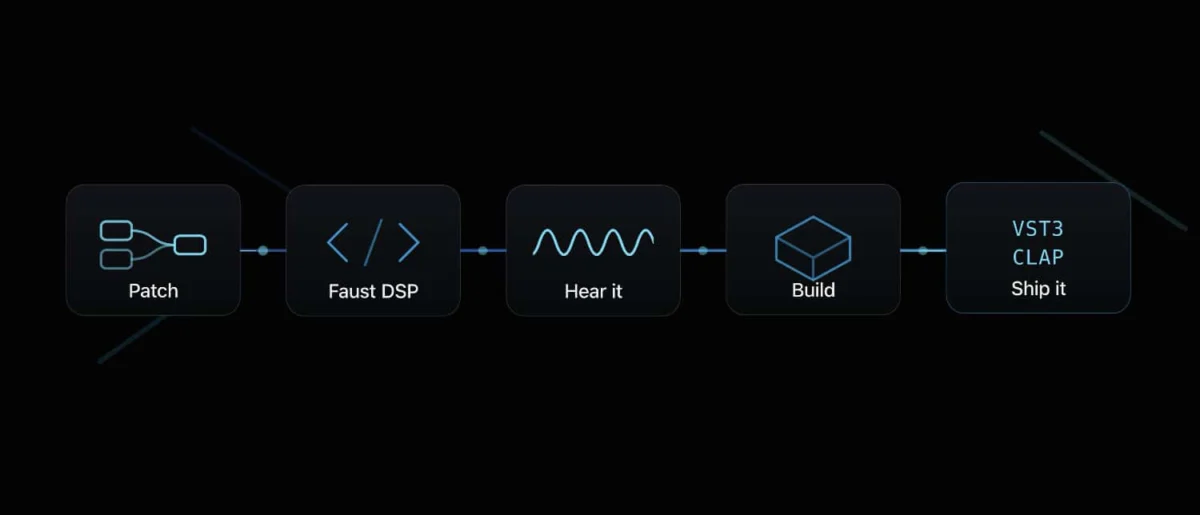
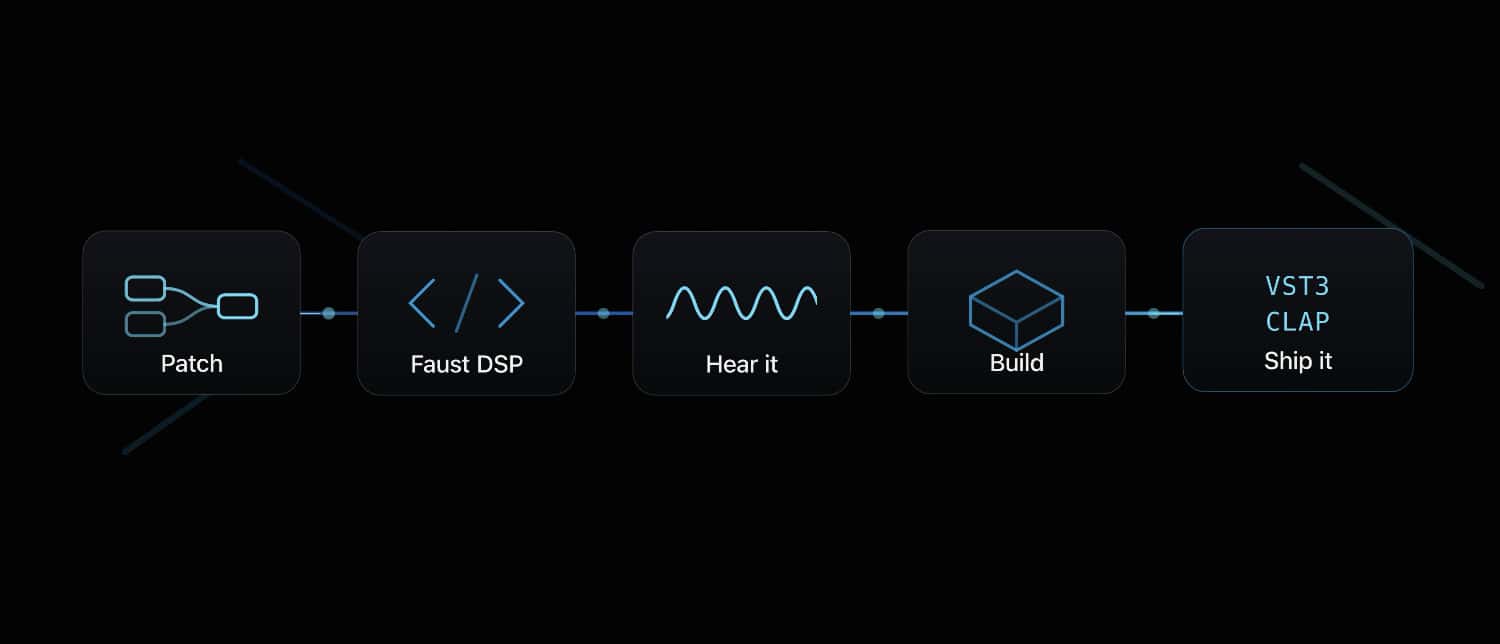
Nagi represents a significant shift in the landscape of music technology by offering a comprehensive desktop environment designed to democratize the creation of professional-grade audio plugins. Developed as a bridge between high-level creative intent and low-level digital signal processing (DSP) code, the application eliminates the traditional requirement for mastery over complex programming languages like C++. By integrating a visual node-based workflow with the Faust functional programming language and generative artificial intelligence, Nagi provides a streamlined path for sound designers, musicians, and independent developers to build, test, and export native audio software. The software arrives at a time when the music production industry is seeing an unprecedented surge in demand for bespoke tools, yet the technical barrier to entry for plugin development has historically remained high.
The Architecture of Visual and Functional Programming
At the core of the Nagi ecosystem is a dual-layered approach to DSP design. The primary interface utilizes a visual node editor, a paradigm familiar to users of modular synthesis environments such as Max/MSP, Pure Data, or Bitwig Studio’s The Grid. Within this workspace, users can connect various functional blocks via virtual patch cables to define the signal flow. These nodes encompass a wide range of audio processing essentials, including oscillators, multi-mode filters, dynamic processors, and spatial effects such as reverb, chorus, and flanger. The node editor also supports MIDI and parameter ports, allowing for the creation of complex polyphonic synthesizers and MIDI-controlled effects.
For developers who require precision beyond what pre-configured nodes can offer, Nagi allows for a seamless transition into the Faust (Functional Audio Stream) programming language. Faust is a high-level functional programming language specifically designed for real-time audio processing and synthesis. By allowing users to switch from a visual graph to Faust code within the same environment, Nagi caters to both beginners and advanced engineers. This hybrid workflow ensures that while the "heavy lifting" of audio routing can be handled visually, the nuanced mathematical definitions of a specific filter curve or a unique distortion algorithm can be scripted with surgical accuracy.
Artificial Intelligence and the Rise of Vibe Coding
One of the most modern features of Nagi is its integrated AI assistant, which aligns with the emerging "vibe coding" movement. This feature allows users to generate complex DSP code or user interface (UI) layouts using natural language prompts. For instance, a user could request the assistant to "create a low-pass filter with a resonant peak that reacts to input envelope," and the AI will generate the corresponding Faust code to be inserted into the project. This capability extends to the graphical user interface (GUI) designer, where the AI can suggest layouts and control placements based on the functional requirements of the plugin.
The inclusion of AI-assisted development addresses one of the most significant bottlenecks in software creation: the translation of creative ideas into functional syntax. By leveraging large language models trained on audio programming patterns, Nagi reduces the time spent on troubleshooting syntax errors and allows developers to focus on the "vibe" or character of the sound. This logic is particularly beneficial for rapid prototyping, where a developer can iterate through several iterations of a plugin architecture in a fraction of the time it would take using traditional manual coding methods.
Integrated Development and Real-Time Feedback
A critical component of any development environment is the feedback loop between writing code and hearing the result. Nagi features an integrated audio preview engine that allows for real-time monitoring of the signal path. As users add nodes or modify Faust scripts, the audio engine updates instantly, providing immediate acoustic feedback. This eliminates the need for the lengthy "compile and host" cycles that characterize traditional VST/AU development in environments like JUCE or Xcode.
Complementing the DSP engine is a robust interface designer. Audio plugins are as much about their visual ergonomics as they are about their sound, and Nagi provides a dedicated space for designing knobs, sliders, buttons, and visualizers. The interface designer is linked directly to the parameters defined in the node editor, ensuring that the visual controls are automatically mapped to the underlying DSP. This holistic approach ensures that the final product is a cohesive "native" plugin rather than a collection of disparate scripts.
Historical Context and Market Evolution
To understand the impact of Nagi, one must look at the evolution of audio software development over the last three decades. In the 1990s and early 2000s, plugin development was almost exclusively the domain of software engineers with deep knowledge of C++ and the Steinberg VST SDK. The introduction of frameworks like JUCE in 2004 began to simplify the process by providing a standardized library for GUI and audio handling, but it still required significant coding proficiency.
The 2010s saw the rise of "wrapper" technologies and high-level environments like HISE (Hartman Interface and Synthesis Engine) and Blue Cat’s Plug’n Script, which moved the needle toward accessibility. However, Nagi is part of a new generation of tools that leverage the Faust language’s ability to compile into highly optimized C++ code, offering performance that rivals hand-coded plugins. According to industry data, the global music production software market was valued at approximately $1.2 billion in 2022 and is projected to reach $1.6 billion by 2030. Much of this growth is driven by independent creators who demand specialized tools, a niche that Nagi is positioned to fill.
Pricing, Availability, and Beta Phase
Nagi is currently in a public beta phase, a strategic move often used by software developers to stress-test the application across diverse hardware configurations and user workflows. During this period, the core application is free to download, allowing users to build and test plugins without financial commitment or the requirement of a user account. This "low-friction" entry model is designed to build a community of early adopters and collect feedback on the AI assistant’s performance.
The "Nagi Pro" evaluation license is also currently listed at $0 and supports installation on up to three machines. While the final pricing structure has not yet been finalized, the developers have indicated a commitment to keeping the entry-level functionality accessible. This pricing strategy mirrors the "freemium" models seen in other successful creative software, where the basic tools are free, and advanced features—such as commercial export rights or advanced AI tokens—are behind a subscription or a one-time purchase.
Industry Implications and Technical Analysis
The release of Nagi has sparked discussions among the audio engineering community regarding the future of the "boutique" plugin market. With the barrier to entry lowered, there is a potential for a surge in "micro-developers"—individuals who create highly specialized, niche plugins that larger companies like Waves or Universal Audio might find commercially unviable. This could lead to a more diverse and experimental sonic landscape, similar to the explosion of the Eurorack modular synthesizer market.
From a technical standpoint, the choice of Faust as the underlying engine is a major advantage. Faust code is platform-agnostic and can be compiled to run on Windows, macOS, Linux, and even embedded hardware like the ELK Audio OS or Teensy microcontrollers. This means that a plugin designed in Nagi could theoretically be ported to various formats with minimal redesign. Furthermore, because Faust compiles to efficient C++, the CPU overhead of Nagi-built plugins is expected to be significantly lower than those built in interpreted environments like Reaktor.
Future Outlook and Conclusion
As Nagi moves toward its version 1.0 release, the roadmap is expected to include expanded support for third-party libraries and more robust export options for industry-standard formats such as VST3, Audio Units (AU), and AAX. The success of the platform will likely depend on the strength of its community and the reliability of its AI-assisted features. If the AI can consistently produce high-quality, bug-free DSP code, Nagi could become the standard prototyping tool for the industry.
In conclusion, Nagi is more than just a new piece of software; it is a manifestation of the broader trend toward the democratization of technology. By combining visual programming, functional coding, and artificial intelligence into a single, cohesive desktop application, it empowers a new generation of creators to build the tools they use. While professional software engineering will always have its place for high-end, complex commercial products, Nagi provides an essential middle ground, proving that the distance between a musical idea and a functional plugin is shorter than it has ever been. The ongoing public beta serves as an invitation for the global audio community to participate in the refinement of a tool that may very well redefine how we think about sound design and software development.
