

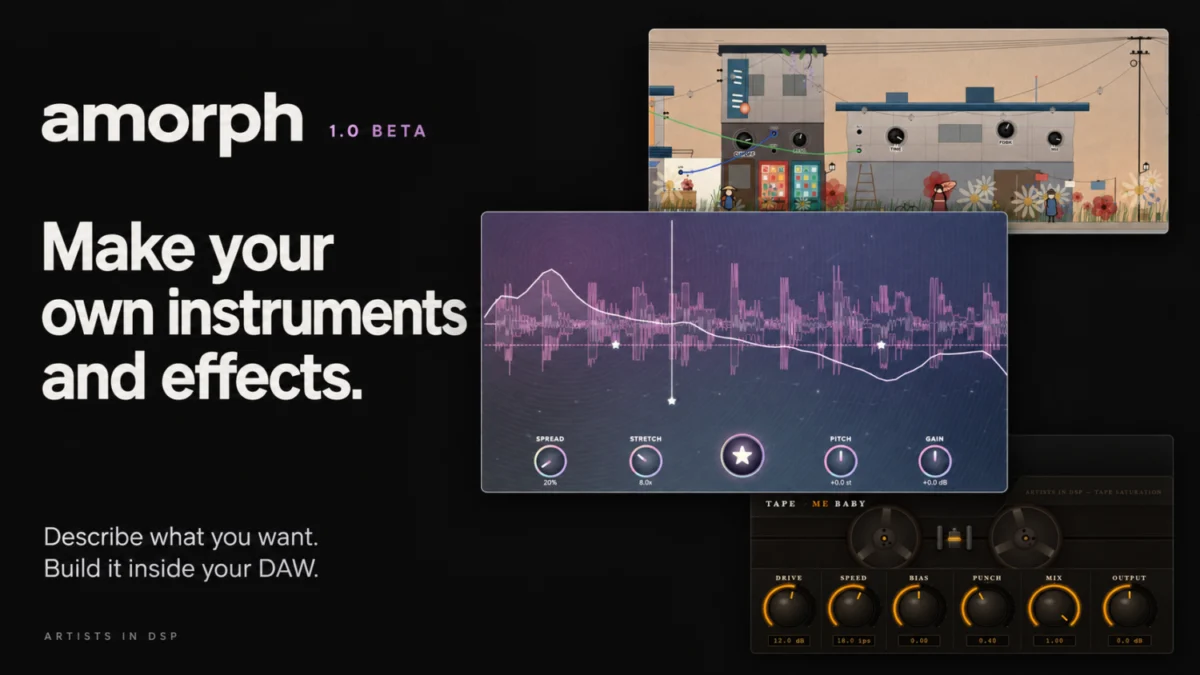
Artists in DSP has officially announced the launch of the public beta for Amorph 1.0, a pioneering software application designed to bridge the gap between natural language processing and complex digital signal processing (DSP). Available as a free download for both macOS and Windows, Amorph 1.0 is a versatile plugin compatible with VST3 and Audio Unit (AU) formats. It allows musicians, sound designers, and software engineers to transform written descriptions of audio tools—ranging from synthesizers and effects units to MIDI utilities—into functional, compiled DSP code that can be operated directly within a Digital Audio Workstation (DAW).
The release marks a significant milestone in the democratization of music technology. Traditionally, the creation of high-performance audio plugins required extensive knowledge of low-level programming languages such as C++ and familiarity with specialized frameworks like JUCE or Steinberg’s VST SDK. Amorph 1.0 aims to bypass these technical barriers by leveraging the power of Large Language Models (LLMs) to handle the heavy lifting of code generation and compilation in real-time.
Technical Architecture and Core Functionality
Amorph 1.0 functions as a host environment that interprets user prompts and translates them into executable audio code. The software is built to handle the rigorous demands of real-time audio, ensuring that the generated code is optimized for low-latency performance. Unlike simple script interpreters, Amorph compiles the code, allowing it to run with the efficiency expected of professional-grade plugins.
The public beta arrives with a robust library of over 40 pre-built patches. These patches serve as both functional tools and educational resources, as each includes open-source code that users can read, modify, and repurpose. This community-centric approach is intended to foster a collaborative environment where users can learn the nuances of DSP by observing how AI translates conceptual ideas into mathematical algorithms.
One of the most notable technical features in this build is the integration of an AI assistant that operates directly within the plugin interface. To facilitate this, users can integrate their own API keys from leading AI providers, allowing for a personalized and high-speed development experience. Furthermore, the software supports voice input, enabling a "hands-free" approach to plugin design where a user can describe a sound or a functional change verbally, and the AI responds by updating the underlying DSP architecture.
Advanced Integration and the Model Context Protocol
In a move toward professional-grade software development workflows, Artists in DSP has implemented support for the Model Context Protocol (MCP). This allows Amorph 1.0 to connect with sophisticated coding agents such as Claude Code and Cursor. By establishing this link, developers can utilize external Integrated Development Environments (IDEs) to manage more complex projects while using Amorph as the real-time testing and execution environment.
This integration is particularly significant for power users who require more than just basic prompt-to-code functionality. It positions Amorph not just as a creative toy, but as a legitimate prototyping tool for professional audio developers. The ability to iterate on DSP algorithms using advanced AI coding assistants could drastically reduce the development cycle for new audio products, moving from concept to a playable prototype in minutes rather than weeks.
Mobile Connectivity and Remote Control
Amorph 1.0 introduces a novel approach to hardware-software interaction by allowing any loaded patch to be controlled via a smartphone. By establishing a local network connection, users can map parameters of their custom-built plugins to a mobile interface. This effectively turns any smartphone into a dedicated hardware controller for the user’s AI-generated instruments and effects.
This feature addresses a common pain point in modern music production: the lack of tactile control over software parameters. By leveraging the sensors and multi-touch capabilities of modern mobile devices, Amorph provides a flexible bridge between the digital code and the physical performance space.
Sharing and the Open Source Ecosystem
The distribution of custom tools is a central pillar of the Amorph ecosystem. Patches can be shared easily via direct links or file transfers. To protect the intellectual property of creators who may wish to commercialize their designs or keep their specific algorithmic "secret sauce" private, the software includes an optional source-locking feature. This allows developers to share a functional plugin while preventing the end-user from viewing or editing the underlying code.
Conversely, the "no-key, no-account" workflow ensures that the software remains accessible to hobbyists. Users who do not wish to set up API keys can still utilize the system by copying and pasting code generated from external AI chat interfaces. This flexibility ensures that the tool remains useful regardless of the user’s technical setup or financial commitment to AI services.
Case Study: The Modular Town Synth
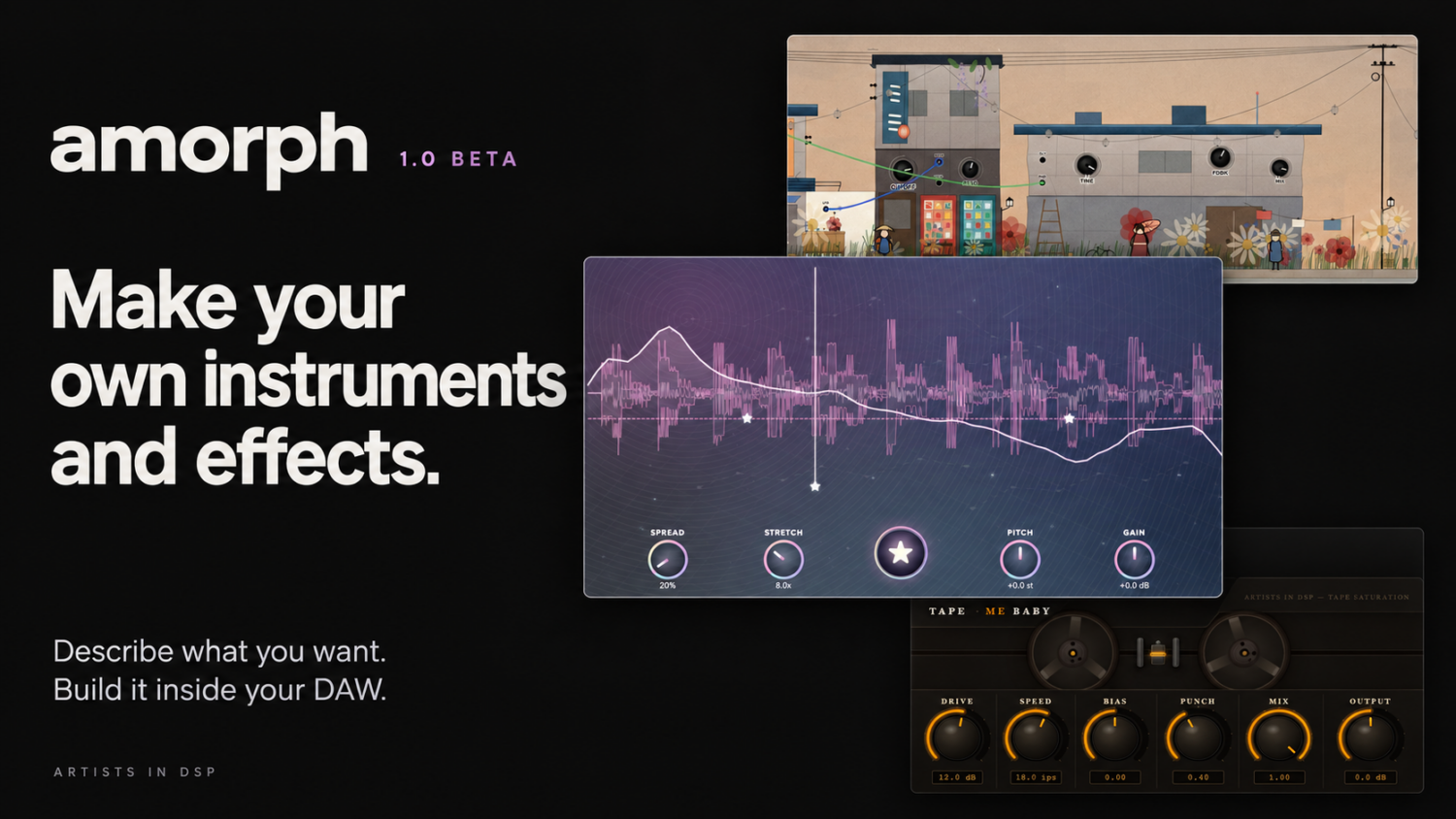
To demonstrate the creative potential of the platform, the development team highlighted "Modular Town," a community-built synthesizer that utilizes a unique visual metaphor. In this patch, the synthesizer’s components are represented as buildings and infrastructure within a virtual village. This project showcases Amorph’s ability to handle not just the audio engine, but also complex, custom Graphical User Interfaces (GUIs) that deviate from traditional slider-and-knob layouts.
Modular Town serves as a proof of concept for the "gamification" of sound design, suggesting that the future of plugin interfaces may be limited only by the user’s imagination and the AI’s ability to render creative visual assets alongside functional code.
Historical Context and Industry Implications
The release of Amorph 1.0 occurs during a period of rapid transformation within the music software industry. For decades, the barrier to entry for plugin development remained high. The early 2000s saw the rise of visual programming environments like Cycling ’74’s Max/MSP and Native Instruments’ Reaktor, which allowed users to build tools using modular blocks. While these were revolutionary, they still required a deep understanding of logic and signal flow.
The advent of generative AI represents the next logical step in this evolution. By moving from "visual patching" to "natural language description," Artists in DSP is tapping into a trend seen across the broader software industry, where "no-code" and "low-code" platforms are becoming standard.
Industry analysts suggest that tools like Amorph could lead to a surge in "micro-plugins"—highly specialized, niche tools created for a single project or a specific sound that would otherwise be too commercially unviable for a major developer to produce. This could lead to a more fragmented but highly personalized landscape of audio software.
Safety, Ethics, and the Future of DSP
As with all generative AI technologies, the rise of AI-assisted DSP development brings questions regarding copyright and the "black box" nature of AI-generated code. Artists in DSP has addressed some of these concerns by emphasizing the open-source nature of their community patches and providing tools for source locking. However, the broader industry continues to grapple with the implications of AI models trained on existing codebases.
Furthermore, the stability of AI-generated code in a live performance environment remains a topic of scrutiny. While Amorph’s compilation process is designed to ensure efficiency, the inherent unpredictability of LLMs means that rigorous testing is still required for mission-critical applications. The "public beta" status of Amorph 1.0 allows the developers to gather data on these edge cases and refine the engine for a more stable version 1.0 release.
Availability and System Requirements
Amorph 1.0 is currently available as a free download through the Artists in DSP Gumroad page. It supports macOS (Intel and Apple Silicon) and Windows systems. As a VST3 and AU plugin, it is compatible with most major DAWs, including Ableton Live, FL Studio, Logic Pro, and Reaper.
The developers have indicated that while the beta is free, future iterations or specialized modules may follow a different pricing model as the platform matures. For now, the focus remains on community growth and the refinement of the AI-to-DSP pipeline.
In conclusion, Amorph 1.0 represents a bold step into the future of music production. By combining the accessibility of natural language with the power of professional DSP compilation, Artists in DSP is not just releasing a new plugin; they are offering a new way to think about the relationship between the musician and their tools. As the beta progresses, the feedback from the community will likely determine whether this "no-code" approach becomes a mainstay in the studios of tomorrow.
