

The global independent music sector has undergone a seismic shift over the last decade, transitioning from a peripheral segment of the industry into a dominant force that generated approximately $21.1 billion in 2023, according to industry analysts at Midia Research. As the "DIY" era matures, the primary challenge for independent artists has shifted from production to discovery and professional integration. In an environment where over 100,000 tracks are uploaded to streaming platforms daily, the ability to network and collaborate effectively has become the most significant predictor of long-term career sustainability. While traditional networking often carried a stigma of transactional social climbing, the modern paradigm emphasizes "community-driven growth," where creative partnerships serve as the primary engine for audience expansion and artistic evolution.
The Evolution of the Independent Music Ecosystem
Historically, networking for musicians was a gatekeeper-oriented process, centered on securing the attention of A&R executives at major labels. However, the decentralization of the music industry has placed the power of connection directly in the hands of the creator. This evolution has created a new chronology of career development. In the early 2010s, social media was used primarily as a broadcasting tool; by the 2020s, it has transformed into a collaborative workspace. This shift necessitates a multifaceted approach to professional relationships, moving beyond simple "gig-swapping" to integrated, cross-disciplinary partnerships.
Industry data suggests that collaborative tracks often perform 30% to 50% better on streaming algorithms than solo releases, as they allow artists to "cross-pollinate" their respective fanbases. This statistical reality is driving independent musicians to seek unconventional avenues for connection, moving away from saturated digital spaces and toward high-impact, localized, and specialized environments.

Cross-Disciplinary Integration: The Local Art Scene as a Strategic Hub
One of the most underutilized resources for independent musicians is the broader local arts community. While many artists focus exclusively on music-centric venues, the intersection of visual arts, theater, and performance poetry offers a "blue ocean" of networking opportunities. Local galleries, art openings, and theater productions are frequently in search of original soundscapes and soundtracks to enhance their physical installations or performances.
Engaging with a sculptor or a digital artist, for instance, can lead to synchronization opportunities—where music is paired with visual media—which remains one of the most lucrative revenue streams for independent creators. From a professional standpoint, these cross-disciplinary collaborations often result in "immersive experiences" that attract a diverse demographic, thereby expanding the musician’s reach into audiences that may not frequent traditional music venues. This strategy aligns with the "Creative Cities" movement, where urban centers prioritize the integration of various art forms to stimulate local economies, providing a fertile ground for musicians to establish themselves as essential components of the cultural fabric.
The Sonicbids Model: Institutionalizing Peer Feedback and Collaboration
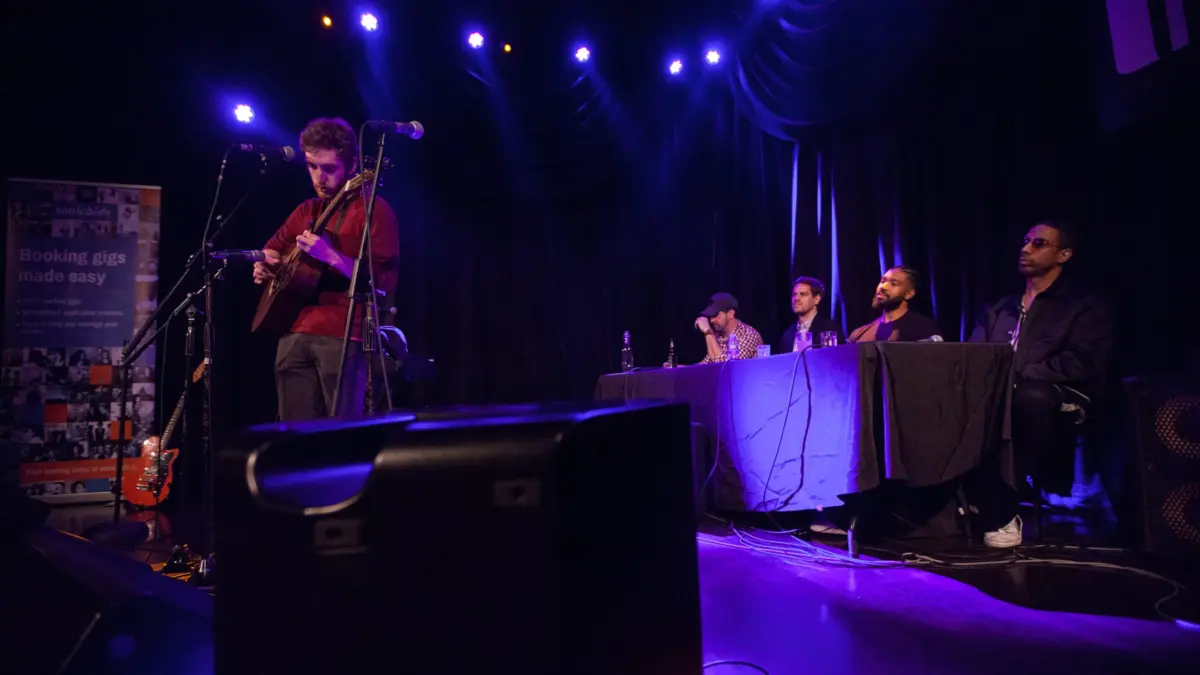
The role of structured workshops and jam sessions has gained prominence as a formal method for professional development. Organizations such as Sonicbids have pioneered initiatives like the "Feedback Collective," which includes panel discussions and songwriting workshops designed to dismantle the isolation often felt by independent artists. These events serve a dual purpose: they provide high-level industry insights and facilitate a "neutral ground" for musicians of disparate genres to interact.
The "Feedback Collective Panel Discussion" model demonstrates the value of curated interaction. By bringing together rock guitarists, jazz saxophonists, and electronic producers in a structured environment, these workshops foster "serendipitous innovation"—the accidental discovery of new sounds through the collision of different musical backgrounds. For the independent artist, hosting or participating in such events serves as a "talent showcase" that bypasses the traditional pressure of a live performance, allowing for the building of rapport and professional trust. Participants in these workshops often report a higher rate of subsequent collaborative projects, as the shared educational experience creates a baseline of mutual respect.

Digital Collaboration Platforms: Beyond Mainstream Social Media
While platforms like Instagram and X (formerly Twitter) are essential for brand visibility, they are often suboptimal for deep creative collaboration. The rise of specialized platforms such as BandLab and SoundCloud has changed the technical landscape of networking. BandLab, which surpassed 60 million users in 2023, provides a cloud-based Digital Audio Workstation (DAW) that allows musicians to collaborate on tracks in real-time across different continents.
This technological advancement has created a new "chronology of creation." An artist in London can record a vocal track and immediately share it with a producer in Tokyo, who can then add instrumentation. Professional analysis indicates that this "borderless" networking is particularly beneficial for niche genres, such as synth-wave or lo-fi hip-hop, where the global community is more significant than the local scene. By leaving thoughtful, technical feedback on other artists’ tracks and proposing specific collaborative elements, musicians can build a global network that is based on technical merit rather than social media metrics.
The Backstage Economy: Strategic Volunteering at Festivals
Music festivals represent the highest density of industry professionals, from booking agents and managers to high-profile performers and production specialists. For the independent musician, volunteering at these events offers a "behind-the-scenes" education that cannot be replicated in a studio. Festivals like SXSW (South By Southwest) or Glastonbury rely on thousands of volunteers, many of whom are aspiring professionals.
The "backstage economy" is built on the principle of shared labor. By working alongside event organizers, musicians gain insight into the logistical requirements of large-scale touring and performance. More importantly, it provides access to the "green room" and production areas where industry gatekeepers congregate. A strategic volunteer role—such as artist relations or stage management—places a musician in direct contact with established artists and their teams. Statements from industry veterans often highlight that many long-term professional relationships began not through a formal demo submission, but through a chance encounter or a helpful gesture during a high-stress festival environment.

Fan-Powered Networking: Leveraging the "Superfan" Metric
The concept of "1,000 True Fans," popularized by Kevin Kelly, remains a cornerstone of independent music strategy. However, the role of the fan has evolved from a passive consumer to an active participant in the artist’s professional network. Modern independent musicians are increasingly utilizing their fanbase as a decentralized "A&R department."
Through surveys, polls, and interactive platforms like Discord, artists can engage their audience in the decision-making process. Fans often possess deep knowledge of their local music scenes and can act as conduits for introductions to other artists, venues, or local media outlets. For example, a fan who is also a graphic designer might offer to create album art, or a fan with connections to a local radio station might facilitate an interview. This "crowdsourced career" model not only strengthens the bond between the artist and the audience but also uncovers networking opportunities that would be invisible to the artist working in isolation. Data from platforms like Patreon suggests that "superfans" are 40% more likely to promote an artist’s work to their own personal networks, effectively serving as a grassroots marketing and networking team.
Implications and Future Outlook for Independent Collaboration
The shift toward a more collaborative, community-focused industry has significant implications for the future of music. As AI-generated music and algorithmic curation continue to saturate the market, the "human element" of collaboration becomes a primary differentiator. A brief fact-based analysis suggests that "human-centric" music—work that features live collaboration and a clear narrative of community involvement—is becoming a premium product in an increasingly automated landscape.
Furthermore, the rise of "micro-communities" indicates that the future of networking may lie in smaller, highly engaged groups rather than broad, superficial social media followings. For the independent musician, the "lone wolf" mentality is no longer a viable path to success. The integration of local art events, institutional workshops, digital collaboration tools, festival volunteering, and fan engagement creates a robust ecosystem that supports both creative and commercial growth.

In conclusion, networking for the modern independent musician is an exercise in strategic diversification. By treating every interaction as a potential creative spark, artists can navigate the complexities of the 2024 music market with resilience. The data is clear: those who build communities are those who endure. The transition from being a solitary creator to a community leader is the defining challenge—and opportunity—of the independent music era. As the industry continues to evolve, the ability to forge meaningful, cross-disciplinary, and technology-enabled partnerships will remain the ultimate "amplification" tool for any artist seeking to leave a lasting impact on the musical landscape.
