

The evolution of American popular music is frequently characterized by its most visible commercial successes, yet the foundational architecture of the folk-rock movement was largely constructed by artists whose immediate impact was measured in critical influence rather than chart dominance. While the 1970s are often cited as the golden age of the singer-songwriter and the folk-rock fusion, the mid-1960s served as a crucial experimental laboratory for this sound. During this period, several pioneering tracks emerged that bridged the gap between the traditional acoustic structures of the early 1960s folk revival and the electric, introspective rock that would soon dominate the airwaves. These compositions, though overlooked by the mainstream audience of their time, provided the stylistic blueprint for a generation of musicians who would eventually bring the genre to the forefront of the global music industry.
The Genesis of a Hybrid: Socio-Political and Musical Context
To understand the emergence of underrated gems like Judy Henske’s "High Flying Bird" or Phil Ochs’ "Changes," one must examine the cultural landscape of the early-to-mid 1960s. The decade began with a rigid separation between "pure" folk music—often associated with the Newport Folk Festival and political activism—and the burgeoning rock and roll scene. However, by 1963, a shift was underway. The assassination of John F. Kennedy and the escalating involvement in the Vietnam War created a demand for music that possessed both the lyrical depth of folk and the visceral energy of rock.
The "folk-rock" label itself did not gain widespread traction until 1965, following The Byrds’ electric cover of Bob Dylan’s "Mr. Tambourine Man." Yet, the seeds had been sown years earlier. Musicians were beginning to experiment with minor-key melodies, sophisticated metaphors, and, eventually, subtle instrumentation that transcended the simple "three chords and the truth" philosophy of traditional balladry. The following three tracks represent the "missing links" in this evolution, each serving as a testament to the creative risks taken by artists who prioritized innovation over commercial viability.
Judy Henske and the 1963 Precursor: High Flying Bird
The 1963 release of "High Flying Bird" by Judy Henske stands as one of the earliest indicators of the impending folk-rock shift. Written by Billy Edd Wheeler, the song was recorded by Henske for her self-titled debut album on Elektra Records. At a time when the "girl group" sound and surf rock dominated the charts, Henske’s delivery offered something significantly darker and more robust.
Henske, often referred to by critics as the "Queen of the Beatniks," possessed a powerful, blues-inflected voice that challenged the delicate soprano style prevalent among female folk singers of the era. "High Flying Bird" is a brooding meditation on mortality and freedom, utilizing a bird as a metaphor for an escape from the terrestrial struggles of the human condition. Despite its profound lyrical content and Henske’s commanding performance, the song was relegated to the B-side of her single "Till the Real Thing Comes Along" and failed to achieve any significant chart presence.
Chronology of Influence for High Flying Bird
The significance of Henske’s recording is best measured by its subsequent adoption by the folk-rock elite. The timeline of the song’s covers illustrates its status as a foundational text for the genre:
- 1963: Judy Henske releases the original version, establishing the song’s minor-key gravity.
- 1964: The Au Go Go Singers, a group featuring a young Stephen Stills and Richie Furay (later of Buffalo Springfield and Poco), record a version that emphasizes vocal harmony.
- 1965: The We Five include the track on their debut album, You Were on My Mind, further popularizing the arrangement.
- 1966: Jefferson Airplane records the song for their debut album, Jefferson Airplane Takes Off, cementing its place in the San Francisco psychedelic folk-rock scene.
- 1969: Richie Havens performs a definitive version of the song at the Woodstock Festival, bringing its message to the counterculture masses.
Industry analysts note that while Henske did not reap the financial rewards of the song’s success, her interpretation provided the "grit" that allowed folk music to transition into the more aggressive rock sounds of the late 60s.
Phil Ochs and the Introspective Shift: Changes (1966)
By the mid-1960s, the folk movement was grappling with its identity. Phil Ochs, a contemporary of Bob Dylan and a central figure in the Greenwich Village scene, was primarily known as a "singing journalist." His early work was strictly topical, focusing on civil rights and anti-war protests. However, by 1966, Ochs began to move toward a more poetic, internal style of songwriting, a transition perfectly encapsulated in the song "Changes."
Released on the album Phil Ochs in Concert, "Changes" marked a departure from the overt political messaging of his previous work. The song is a lyrical masterpiece that explores the fluid nature of time, memory, and identity. With lines like "Scenes of my young years were music in my mind," Ochs demonstrated a sophistication in songwriting that rivaled the emerging "baroque pop" and folk-rock movements.
Statistical and Critical Context of Phil Ochs
Despite the brilliance of Phil Ochs in Concert, the album’s commercial performance was modest. It peaked at No. 150 on the Billboard 200, reflecting Ochs’ status as a cult figure rather than a mainstream star. However, the internal "official response" within the music community was profound. Fellow musicians recognized Ochs as a lyricist who could bridge the gap between the protest era and the upcoming "Me Decade" of the 1970s.
Tragically, Ochs’ career and life were cut short by mental health struggles and a sense of disillusionment with the political landscape, leading to his death in 1976. Retrospective analysis by musicologists often cites "Changes" as the moment Ochs proved that folk-rock could be as much about the internal landscape of the soul as the external landscape of the state. The song has since been covered by artists ranging from Gordon Lightfoot to Cher, proving its enduring structural integrity.
Tim Buckley and the Baroque Folk Frontier: Morning Glory (1967)
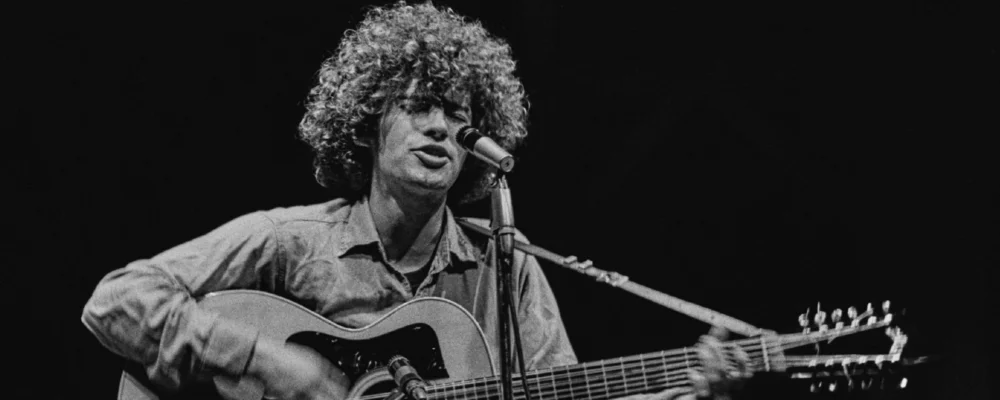
The year 1967 is synonymous with the "Summer of Love" and the explosion of psychedelic rock. Amidst this colorful chaos, Tim Buckley released Goodbye and Hello, an album that pushed the boundaries of folk-rock into the realm of the avant-garde and the baroque. The standout track, "Morning Glory," co-written with poet Larry Beckett, serves as a prime example of the genre’s untapped potential.
"Morning Glory" is characterized by its ethereal atmosphere, Buckley’s multi-octave vocal range, and a production style that incorporated orchestral elements. It was a far cry from the simple acoustic guitar accompaniment of the early 60s. The song tells the story of a dialogue between a "vagrant" and a "hermit," exploring themes of isolation and the transient nature of beauty.
Market Data and Chart Analysis
The commercial data for Goodbye and Hello highlights the "underrated" status of Buckley’s work during his lifetime:
- Peak Chart Position: No. 171 on the US Billboard Top LPs.
- Duration on Charts: The album spent only a few weeks on the lower rungs of the Top 200.
- Label Dynamics: Released on Elektra Records, Buckley was often overshadowed by label mates like The Doors, who achieved massive commercial success in the same year.
While "Morning Glory" did not receive significant radio play in 1967, it became a cornerstone of Buckley’s legacy. The song’s intricate melody and sophisticated structure influenced the burgeoning singer-songwriter movement in Southern California, particularly the artists congregating in Laurel Canyon. Buckley’s willingness to experiment with jazz and folk-rock fusions paved the way for later artists like Joni Mitchell and, eventually, his own son, Jeff Buckley, whose 1990s work carried the torch of his father’s adventurous spirit.
Broader Impact and Implications for the Music Industry
The lack of immediate commercial success for these three tracks—"High Flying Bird," "Changes," and "Morning Glory"—speaks to a larger phenomenon in the music industry: the "pioneer’s penalty." Often, the artists who innovate and define a new sound do so before the infrastructure of radio and retail is ready to support them.
The implications of these underrated songs are visible in several key areas:
- Genre Fluidity: These tracks proved that folk music was not a static museum piece but a living, breathing foundation that could support rock, jazz, and classical influences.
- Lyrical Maturity: By moving away from simple "A-B-A-B" rhyme schemes and exploring complex metaphors and internal psychology, these artists raised the bar for what a "pop" song could communicate.
- The Rise of the Independent Spirit: The fact that these songs were released on labels like Elektra—which prioritized artistic vision over immediate hits—set the stage for the independent music movements of subsequent decades.
Legacy and Retrospective Recognition
In the decades following the 1960s, the music industry has undergone a process of "archaeological" rediscovery. Reissue labels, digital streaming services, and music documentaries have brought renewed attention to the pioneers of the folk-rock movement. Today, Judy Henske is recognized as a formidable vocal stylist, Phil Ochs is hailed as a tragic poet of the American experience, and Tim Buckley is studied as a vocal virtuoso.
The trajectory of these three songs suggests that the true value of a musical composition is rarely found in its initial week of sales. Instead, its value lies in its "long tail"—the way it continues to inspire, provoke, and influence musicians long after the original recording sessions have ended. As the 1960s folk-rock era continues to be analyzed by historians, these underrated gems serve as essential chapters in the story of how American music found its voice during a decade of unprecedented change.
By examining the data, the timeline, and the creative risks associated with these tracks, it becomes clear that the 1970s folk-rock explosion did not happen in a vacuum. It was the direct result of the groundwork laid by Henske, Ochs, and Buckley—three artists who, while perhaps not household names in their time, changed the sound of popular music forever.
