

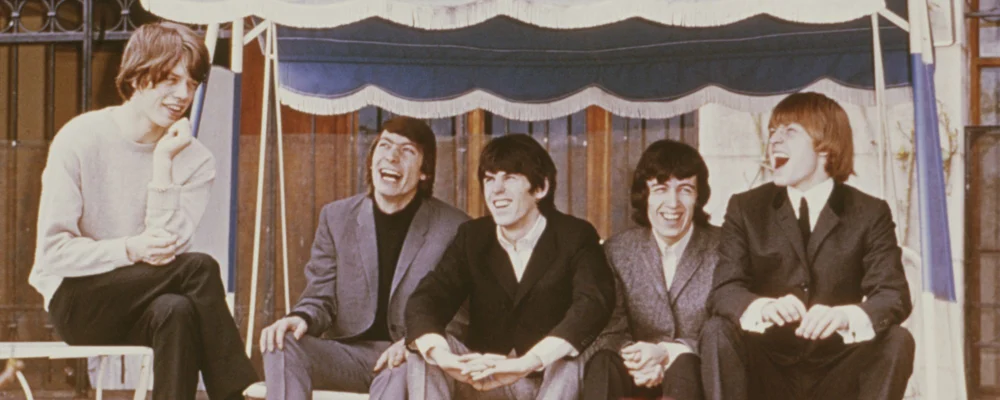
The year 1965 stands as a watershed moment in the history of global popular music, marking the point where the "British Invasion" transitioned from a novel cultural phenomenon into a dominant industry force. While the initial breach of the American market occurred in February 1964 with the arrival of The Beatles, it was during the following year that the floodgates truly opened, allowing a diverse array of United Kingdom-based acts to seize control of the Billboard Hot 100. This era was characterized by a rapid evolution in songwriting, recording technology, and fashion, as British artists exported a reimagined version of American rhythm and blues, rock and roll, and music hall traditions back to the United States.
By the midpoint of 1965, the British influence was so pervasive that it fundamentally altered the trajectory of the American recording industry. The dominance of these acts was not merely a matter of chart positions; it represented a shift in the demographic focus of the music business toward a burgeoning youth culture. Four specific tracks from 1965—"I’m Telling You Now," "The Game of Love," "Mrs. Brown, You’ve Got a Lovely Daughter," and "(I Can’t Get No) Satisfaction"—serve as essential case studies in how British artists leveraged distinct styles to captivate the American public and redefine the sonic landscape of the decade.
The Manchester Sound and the Rise of Freddie and the Dreamers
In the spring of 1965, the American charts were increasingly receptive to the "Manchester Sound," a bright, upbeat variation of the Merseybeat style popularized in Liverpool. Leading this charge were Freddie and the Dreamers, a group that provided a lighthearted, comedic alternative to the more brooding rock acts of the time. Their breakthrough hit, "I’m Telling You Now," reached the No. 1 spot on the Billboard Hot 100 in April 1965, illustrating the American appetite for accessible, danceable pop.
The success of Freddie and the Dreamers was rooted as much in their visual presentation as in their musicality. Lead singer Freddie Garrity was known for his eccentric stage presence, which included high-energy leaps and a signature "Freddie" dance that fans across the United States mimicked. This emphasis on performance helped the band bridge the gap between traditional variety show entertainment and the new rock era.
Musically, "I’m Telling You Now" was a collaboration between Garrity and Mitch Murray, a prolific songwriter who became a central figure in the British Invasion. Murray had a keen instinct for the "Tin Pan Alley" style of songwriting, focusing on catchy hooks and straightforward lyrical structures. The song’s success was bolstered by its heavy rotation on American radio stations, which were increasingly prioritizing high-energy British tracks to maintain listener engagement among teenagers. The track’s ascent to the top of the charts signaled that the British Invasion was not a monolithic movement but one that could accommodate both serious artistry and pure novelty.
Wayne Fontana and the Mindbenders: From R&B to Pop Precision
While Freddie and the Dreamers occupied the lighter end of the spectrum, Wayne Fontana and the Mindbenders represented the more polished, soul-influenced side of the British movement. Their 1965 hit "The Game of Love" showcased the band’s ability to blend American R&B sensibilities with a crisp, British production style. Released in early 1965, the song climbed to No. 1 on the Billboard Hot 100 in April, briefly displacing the Supremes’ "Stop! In the Name of Love."
The song was penned by Clint Ballard Jr., an American songwriter who found a unique synergy with British acts. Ballard’s ability to write hits that resonated on both sides of the Atlantic was further evidenced by his later success with "You’re No Good," which became a major hit for Linda Ronstadt. "The Game of Love" was characterized by its driving beat and Fontana’s assertive vocal delivery, which helped establish the Mindbenders as a formidable force in the mid-60s pop scene.
However, the internal dynamics of the band were volatile. Shortly after the success of "The Game of Love," Wayne Fontana famously walked off stage during a performance, leaving the Mindbenders to continue as a trio. This transition led to a surprising second act for the group. In 1966, the revamped Mindbenders released "A Groovy Kind of Love," a ballad that reached No. 2 in the U.S. and later became a global No. 1 hit for Phil Collins in the 1980s. The trajectory of the Mindbenders underscores the resilience of British Invasion acts and their capacity for reinvention in a rapidly changing market.
Herman’s Hermits and the Popularity of the "Clean-Cut" Aesthetic
In terms of pure commercial volume, few acts in 1965 could rival Herman’s Hermits. Fronted by the charismatic Peter Noone, the band offered a wholesome, "boy next door" image that appealed to a wide demographic, including younger children and their parents. This strategic positioning allowed the band to coexist with the more rebellious acts of the era while maintaining a consistent presence at the top of the charts.
"Mrs. Brown, You’ve Got a Lovely Daughter" became one of the defining hits of the year, reaching No. 1 in May 1965. Interestingly, the song was not originally intended for the American market; it was written by Trevor Peacock for a 1963 British television play titled The Lads. The Hermits’ version was characterized by its prominent use of a muted rhythm guitar and Noone’s exaggerated, music-hall-influenced English accent.
Industry data from 1965 reveals that Herman’s Hermits were, for a time, more commercially successful in the United States than even The Beatles. The band’s ability to churn out hits—including "I’m Henry VIII, I Am," which also hit No. 1 later that year—demonstrated the power of a well-managed brand in the mid-60s music industry. Their success highlighted a specific niche of the British Invasion that celebrated traditional Englishness, often leaning into nostalgia and folk-inspired melodies.
The Rolling Stones and the Transition to Rock Maturity
If 1964 belonged to the "mop-top" pop of The Beatles, 1965 marked the emergence of The Rolling Stones as the definitive voice of a more cynical and rebellious generation. The release of "(I Can’t Get No) Satisfaction" in the summer of 1965 was a transformative moment for the band and for rock music as a whole. It was the song that finally allowed the Stones to match the chart dominance of their rivals, The Beatles, spending four consecutive weeks at No. 1 in July.
The creation of the song has become a central piece of rock lore. Guitarist Keith Richards reportedly conceived the iconic three-note riff in his sleep, recording it onto a portable tape player before falling back to rest. While Richards originally envisioned the riff being played by a horn section, the use of a Gibson Maestro Fuzz-Tone pedal during the recording session at RCA Studios in Hollywood created a distorted, gritty sound that defined the track’s identity.
Lyrically, Mick Jagger captured the zeitgeist of mid-60s youth, articulating a sense of frustration with consumerism and social mores. The song’s blatant honesty and aggressive sound were a departure from the polite pop of the early 60s. Industry analysts point to "Satisfaction" as the moment when "rock and roll" began its transition into "rock," a genre more focused on artistic expression and social commentary. The success of the track ensured that the Rolling Stones would remain fixtures on the American charts for decades to come, following up later that year with another No. 1 hit, "Get Off of My Cloud."
Chronology of the 1965 British Takeover
To understand the scale of the British Invasion in 1965, one must look at the chronological progression of the Billboard charts throughout the year:
- January-February: Acts like Petula Clark ("Downtown") and The Beatles ("Eight Days a Week") set the stage for a British-dominated year.
- April: Freddie and the Dreamers and Wayne Fontana & The Mindbenders secure back-to-back No. 1 spots, signaling the strength of the Manchester scene.
- May-June: Herman’s Hermits dominate the airwaves with "Mrs. Brown, You’ve Got a Lovely Daughter," while The Beatles return to No. 1 with "Ticket to Ride."
- July: The Rolling Stones release "(I Can’t Get No) Satisfaction," which becomes the "song of the summer" and a cultural touchstone.
- August: Herman’s Hermits hit No. 1 again with "I’m Henry VIII, I Am," solidifying their status as the year’s top-selling singles act.
- September-December: The year closes with a mix of British hits from The Beatles ("Help!", "Yesterday") and The Rolling Stones ("Get Off of My Cloud"), interspersed with the rise of American folk-rock responses like The Byrds and Barry McGuire.
Data and Market Impact
The statistical dominance of British acts in 1965 was unprecedented. In 1963, British artists accounted for virtually 0% of the No. 1 hits on the Billboard Hot 100. By 1965, that number had surged to over 50%. This shift had profound economic implications for the American music industry. Domestic record labels, such as Capitol and RCA, scrambled to sign British talent or find American "answers" to the British sound.
This era also saw the rise of the "long-play" (LP) record as a primary consumer product. While the four songs discussed were massive singles, they also drove the sales of albums, which began to be produced with higher production values and more cohesive artistic visions. The success of British acts forced American radio stations to adopt "Top 40" formats more aggressively, creating a feedback loop that kept British music at the forefront of the public consciousness.
Industry Reactions and Broader Implications
The American response to the British Invasion was twofold. Initially, there was a sense of panic among established American artists and labels. However, this soon gave way to a creative renaissance within the United States. Motown Records, led by Berry Gordy, refined its "Sound of Young America" to compete with the British imports, resulting in legendary hits by The Supremes and The Four Tops. Meanwhile, in California, Brian Wilson of The Beach Boys felt a direct competitive pressure from the British acts, which pushed him to reach new heights of composition and production.
From a sociological perspective, the 1965 British Invasion facilitated a "reverse colonization" of culture. The United Kingdom, still recovering from the economic hardships of the post-WWII era, found a lucrative export in its youth culture. This period also saw a softening of traditional social barriers, as music became a unifying language for a generation that was increasingly vocal about civil rights, political transparency, and personal freedom.
The legacy of these four songs—and the dozens of others that followed them across the Atlantic—is found in the DNA of modern popular music. They established the guitar-driven band as the standard unit of musical production and proved that pop music could be both a massive commercial product and a vehicle for cultural identity. As 1965 drew to a close, the British Invasion had moved past being a mere trend; it had become the foundation upon which the future of global entertainment would be built.
