

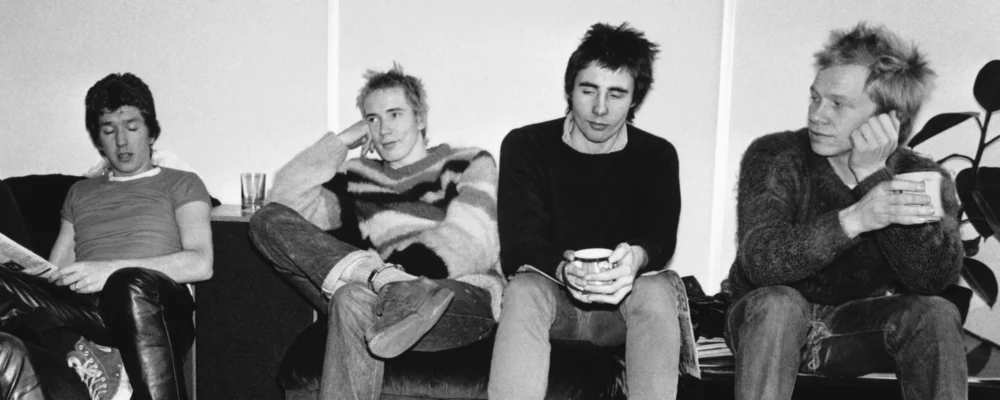
In the summer of 1977, the United Kingdom was a nation deeply divided by economic hardship, social unrest, and a rigid class structure that many felt was increasingly out of touch with the realities of modern life. As the country prepared to celebrate the Silver Jubilee of Queen Elizabeth II, marking her 25th year on the throne, a radical cultural counter-force was coalescing in the streets of London. This tension culminated in the release of "God Save The Queen," the second single by the Sex Pistols, a track that would become the definitive anthem of the punk rock movement and one of the most controversial recordings in the history of the music industry. While the title was identical to the British national anthem, the song’s content offered a blistering critique of the monarchy and the state of the nation, sparking a national debate that resonated far beyond the confines of the music charts.
The historical significance of "God Save The Queen" lies not only in its provocative lyrics but also in its timing. The year 1977 was characterized by high inflation, rising unemployment, and a sense of stagnation within the British Empire’s post-war identity. For the establishment, the Silver Jubilee was an opportunity to foster national unity and celebrate tradition. For the burgeoning punk subculture, however, the lavish celebrations were seen as an affront to the working class and the youth who faced a bleak future. When the Sex Pistols released their single through Virgin Records on May 27, 1977, it served as a direct challenge to the prevailing narrative of national pride.
The Lyrical Confrontation and the Fascist Regime Charge
The controversy surrounding the song was immediate, driven largely by the opening verse. John Lydon, known then as Johnny Rotten, sang: "God save the Queen / The fascist regime / They made you a moron / A potential H-bomb." By equating the British government and the institution of the monarchy with a "fascist regime," the band touched a raw nerve in a country that still held the memory of World War II as a cornerstone of its national identity. The lyrics further asserted that the Queen "ain’t no human being" and concluded with the nihilistic refrain, "There is no future / In England’s dreaming."
From a sociological perspective, these lyrics were less an attack on the individual person of the Queen and more a critique of the "monarchy-as-system." The band argued that the institution reduced the citizenry to passive "morons" and that the traditional social order offered no prospects for the younger generation. Despite the inflammatory nature of the words, the band members have frequently maintained that the song was a call to awareness rather than a literal call for revolution. Nevertheless, the public and political reaction was one of swift condemnation.
Institutional Censorship and the Chart Mystery
The British establishment responded to the provocation with a near-total media blackout. Both the British Broadcasting Corporation (BBC) and the Independent Broadcasting Authority (IBA) refused to play the song. The BBC’s ban was particularly significant, as it prevented the song from receiving daytime radio play and barred it from being performed on the influential television program Top of the Pops. Retailers also faced pressure; major chains such as Woolworths and Boots refused to stock the record, and some printers even refused to handle the sleeve artwork, which featured a defaced image of the Queen designed by artist Jamie Reid.
However, the attempt to suppress the song appeared to have the opposite effect on the public. In its first week of release, "God Save The Queen" sold over 200,000 copies. The demand was so high that it reached the number two spot on the official UK Singles Chart. To this day, a cloud of suspicion remains over the chart rankings for the week of the Jubilee. While the official chart listed Rod Stewart’s "I Don’t Want to Talk About It / First Cut Is the Deepest" at number one, many industry insiders and historians believe the Sex Pistols had actually outsold Stewart. Rumors persisted that the British Phonographic Industry (BPI) or the chart compilers manipulated the results to prevent the Sex Pistols from occupying the top spot during the Queen’s official celebration week. In the NME (New Musical Express) chart, which used a different data collection method, "God Save The Queen" was indeed listed at number one.
Chronology of the 1977 Conflict
To understand the full impact of the song, it is necessary to examine the timeline of the Sex Pistols’ activities leading up to and during the Jubilee summer:
- March 1977: The Sex Pistols sign with A&M Records in a highly publicized ceremony outside Buckingham Palace. However, due to the band’s disruptive behavior and the controversial nature of their upcoming material, the label terminates the contract just six days later.
- May 1977: Virgin Records, led by Richard Branson, signs the band and prepares for the release of "God Save The Queen."
- May 27, 1977: The single is officially released, coinciding with the lead-up to the Silver Jubilee weekend.
- June 7, 1977: On the day of the Jubilee, the band and Virgin Records staff charter a boat called the Queen Elizabeth to sail down the River Thames. The band performs the song loudly as they pass the Houses of Parliament. The event ends in chaos as police intercept the boat at the pier, leading to several arrests and a flurry of negative press coverage.
- June 1977: Despite the radio ban, the song remains at the top of the independent charts and maintains its position as the fastest-selling single in the country.
Perspectives from the Band: Intention vs. Perception
In the decades following the release, the surviving members of the Sex Pistols have offered various insights into the song’s origins. Paul Cook, the band’s drummer, has noted that the timing of the release was more of a marketing decision by their manager, Malcolm McLaren, than a pre-meditated political strike by the musicians themselves. In the book Rotten: No Irish, No Blacks, No Dogs, Cook stated, "God Save The Queen wasn’t written specifically for the Queen’s Jubilee. We weren’t aware of it at the time. It wasn’t a contrived effort to go out and shock everyone."
John Lydon has also clarified his stance on the monarchy in later years. In a notable interview with broadcaster Piers Morgan, Lydon sought to distinguish between his critique of the institution and his feelings toward the Queen as an individual. "I’ve got to tell the world this. Everyone presumes that I’m against the royal family as human beings, I’m not," Lydon remarked. He further surprised many by expressing a sense of admiration for Queen Elizabeth II’s longevity and dedication, stating, "I’m actually really, really proud of the Queen for surviving and doing so well."
This evolution in perspective suggests that "God Save The Queen" was, for Lydon, an act of "tough love" toward his country—a demand for a better, more honest Britain rather than a simple expression of hatred.
Current Dynamics and Internal Rifts
While the song remains a staple of rock history, the internal relationships within the Sex Pistols have deteriorated significantly. The band has reunited for several tours since their initial 1978 breakup, but recent years have been marked by legal battles and personal animosity. In 2021, a legal dispute arose over the use of the band’s music in the biographical series Pistol, directed by Danny Boyle. Steve Jones and Paul Cook sued Lydon to allow the music to be used, eventually winning the case based on a majority-rule agreement signed by the band in the 1990s.
Steve Jones, the band’s guitarist, has been vocal about the lack of communication between the members. In an interview with Rolling Stone, Jones revealed that he had not spoken to Lydon since 2008. These personal fractures highlight the volatility that fueled the band’s brief but explosive career, suggesting that the same energy that created "God Save The Queen" also made the band’s long-term survival impossible.
Broad Impact and Cultural Legacy
The legacy of "God Save The Queen" extends far beyond the 200,000 copies sold in its first week. It signaled a shift in British culture where the youth were no longer willing to defer to traditional authority figures. The song democratized music, proving that raw energy and social commentary could be just as powerful—if not more so—than polished production and mainstream approval.
Furthermore, the song’s impact on the music industry was transformative. It forced the BBC and other institutions to grapple with the limits of censorship in a democratic society. The "blank space" on the charts where the song’s title should have been became a powerful symbol of state suppression, arguably giving the punk movement more credibility than a number-one ranking ever could have.
Today, "God Save The Queen" is frequently cited in lists of the greatest songs of all time. It is preserved in the cultural archive as a moment of pure iconoclasm. In 2022, following the death of Queen Elizabeth II, the song saw a resurgence in interest, reflecting its permanent status as the "alternate" national anthem. While the "fascist regime" lyrics remain as shocking today as they were in 1977, the song is now viewed by historians as a vital artifact of a nation in transition—a loud, distorted, and ultimately honest reflection of a pivotal moment in British history.
