

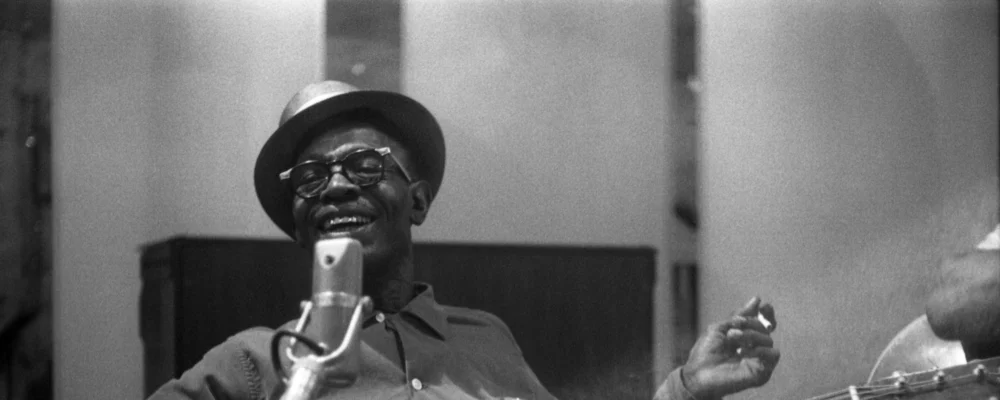
The history of American music is often viewed through the lens of its most visible stars, yet the foundations of genres like rock and roll, country, and modern blues were built by a select group of pioneers whose influence is as vast as the Texas plains. Among these titans stands Samuel John "Lightnin’" Hopkins, a man whose career bridged the gap between the rural "country blues" of the early 20th century and the electrified urban sounds that would eventually captivate the world. Born on March 15, 1912, in Centerville, Texas, Hopkins’ journey from a child playing a homemade cigar-box guitar to a global icon performing at Carnegie Hall serves as a definitive chronicle of the African American musical experience in the 20th century. While the names of his disciples—Stevie Ray Vaughan, Townes Van Zandt, and ZZ Top—frequently dominate the headlines of music history, none would possess their distinctive sonic DNA without the groundwork laid by Hopkins.
From Cigar Boxes to the Father of Texas Blues
The origins of Lightnin’ Hopkins are rooted in the hard-scrabble reality of East Texas during the early 1900s. The son of sharecroppers, Hopkins was introduced to the harshness of the Jim Crow era and the solace of music simultaneously. At the age of eight, demonstrating a precocious mechanical and musical aptitude, he fashioned his first instrument out of a discarded cigar box, using chicken wire for strings. This humble beginning was not merely a charming anecdote of poverty but a testament to the Necessity of the Blues—a genre born from the need to express the inexpressible with whatever tools were at hand.
The trajectory of Hopkins’ life changed forever in 1920 at a church picnic in Buffalo, Texas. It was there that the eight-year-old met Blind Lemon Jefferson, the legendary "Father of Texas Blues." In a moment that has since become a cornerstone of blues lore, the young Hopkins attempted to play along with Jefferson. While the elder musician initially snapped at the boy to play properly, he quickly recognized a rare, raw talent. Jefferson encouraged the child, reportedly telling him that if he kept at it, he would become a "good guitar player." This encounter provided Hopkins with more than just a musical goal; it gave him a direct link to the oral traditions and technical structures of the blues that he would eventually revolutionize.
The Formative Years: Labor, Law, and the Wandering Minstrel
As a teenager and young man, Hopkins lived the life that many of his songs would later describe. He spent his days laboring in the cotton fields of East Texas, a grueling existence that he later identified as the literal source of the blues. He famously remarked that the genre was born from the "bend down, pickin’ that cotton" and the spiritual cries for help that accompanied the backbreaking work. However, his Saturday nights were spent in a different world: the "juke joints" and barrelhouses of the Brazos River Valley.
During this period, Hopkins frequently performed with his cousin, the blues singer Texas Alexander. Together, they navigated the informal circuit of dances and parties that served as the primary entertainment for Black communities in the rural South. This era of his life was interrupted in the mid-1930s by a stint at the Houston County Prison Farm. While the specific details of his incarceration remain a subject of historical debate, the experience profoundly colored his songwriting, leading to haunting compositions like "Penitentiary Blues." Upon his release, Hopkins returned to the road, eventually making his way to Houston, which would become his lifelong home and the base of his professional operations.
The Houston Explosion and the Birth of "Lightnin’"
By 1946, Hopkins was a fixture on Dowling Street in Houston’s Third Ward, a vibrant hub of African American culture and commerce. It was here that he was discovered by Lola Anne Cullum, a talent scout and pianist for the Los Angeles-based Aladdin Records. Recognizing his potential, Cullum brought Hopkins to California for his first professional recording sessions. It was during these sessions that Samuel John Hopkins became "Lightnin’." To create a marketable duo, the label paired him with a pianist named Wilson "Thunder" Smith. The marketing gimmick stuck, and for the rest of his life, he would be known to the world as Lightnin’ Hopkins.
The late 1940s and early 1950s marked a period of immense productivity. Hopkins was notoriously prolific, recording for over 20 different labels throughout his career, including Houston’s own Gold Star Records. His business model was as unique as his playing style; he often demanded cash up-front for recordings and would record for any label willing to pay, regardless of existing contracts. This resulted in a sprawling discography that captured the evolution of his sound in real-time. In 1950, he achieved significant commercial success with "Shotgun Blues," which climbed to No. 5 on the Billboard R&B charts, solidifying his status as a major player in the post-war blues scene.
The Folk Revival and the Transition to Global Icon
As the 1950s drew to a close, the musical landscape began to shift. The advent of rock and roll and the rise of polished urban R&B threatened to relegate older country-blues artists to obscurity. However, Hopkins experienced a career resurgence that few of his contemporaries enjoyed. In 1959, he was "rediscovered" by musicologist and producer Sam Charters, who recorded Hopkins in his small Houston apartment using a single microphone. The resulting album, released on Folkways Records, presented Hopkins as a "pure" folk artist, playing an acoustic guitar rather than the electric models he had favored in the previous decade.
This transition coincided perfectly with the American folk music revival. Suddenly, Hopkins was being championed by a new generation of white, middle-class listeners who viewed him as an authentic link to a vanishing American past. This period saw Hopkins move from the juke joints of Texas to the prestigious stages of the North. He performed at Carnegie Hall alongside folk luminaries like Pete Seeger and Joan Baez and became a staple of the festival circuit.
The 1960s and 1970s saw Hopkins embrace his role as an elder statesman of the blues. He proved remarkably adaptable, opening for psychedelic rock bands like the Grateful Dead and Jefferson Airplane, who revered him as a foundational influence. His reach extended internationally, culminating in a performance for Queen Elizabeth II in the 1970s. Despite this newfound global fame, Hopkins remained grounded in his Houston roots, frequently returning to the Third Ward to play for the community that had first supported him.
Technical Mastery and Musical Philosophy
What set Lightnin’ Hopkins apart from other bluesmen was his idiosyncratic approach to the guitar. He was a master of the fingerstyle technique, using his thumb to maintain a steady, driving bass rhythm while his fingers executed complex, stinging leads. His playing was percussive and rhythmic, often serving as its own drum section. Perhaps most notably, Hopkins was a master of the "talking blues." He often improvised lyrics on the spot, weaving stories about current events, personal grievances, or the people in the room into his performances.
This improvisational nature made him a challenge for session musicians, as he rarely followed standard 12-bar blues structures. He would add or drop beats and measures at will, following the internal rhythm of his own storytelling. As fellow Texas musician Johnny Winter later observed, Hopkins was a "real blues guy" who could transition seamlessly from an acoustic solo performance to leading a full electric band without losing the core of his identity.
Legacy and the Continuing Influence of the Third Ward
Lightnin’ Hopkins passed away from esophageal cancer on January 30, 1982, at the age of 69. By the time of his death, he had recorded more than 85 albums and left behind a body of work that defined the "Texas Blues" sound—a style characterized by its grit, its independence, and its virtuosic guitar work.
The implications of his career are visible in almost every facet of modern guitar music. Stevie Ray Vaughan’s aggressive, percussive attack was a direct evolution of Hopkins’ style. ZZ Top’s Billy Gibbons has frequently cited Hopkins as a primary influence, particularly in the way he blended rhythm and lead playing. Beyond the technical, Hopkins’ "cool" persona—often seen with his trademark sunglasses and a cigarette—helped define the archetype of the bluesman as a figure of quiet, indomitable strength.
Today, Hopkins is memorialized with a statue in Houston’s Third Ward and a Texas Historical Marker in his hometown of Centerville. However, his true monument is the music itself. In an era where digital perfection is often the standard, the raw, unvarnished, and deeply human recordings of Lightnin’ Hopkins continue to serve as a reminder that the blues is not just a genre, but a lived experience. As he once noted, the blues came from the fields, but through his hands, it traveled the world, ensuring that the voice of the Texas sharecropper would be heard for generations to come.
