

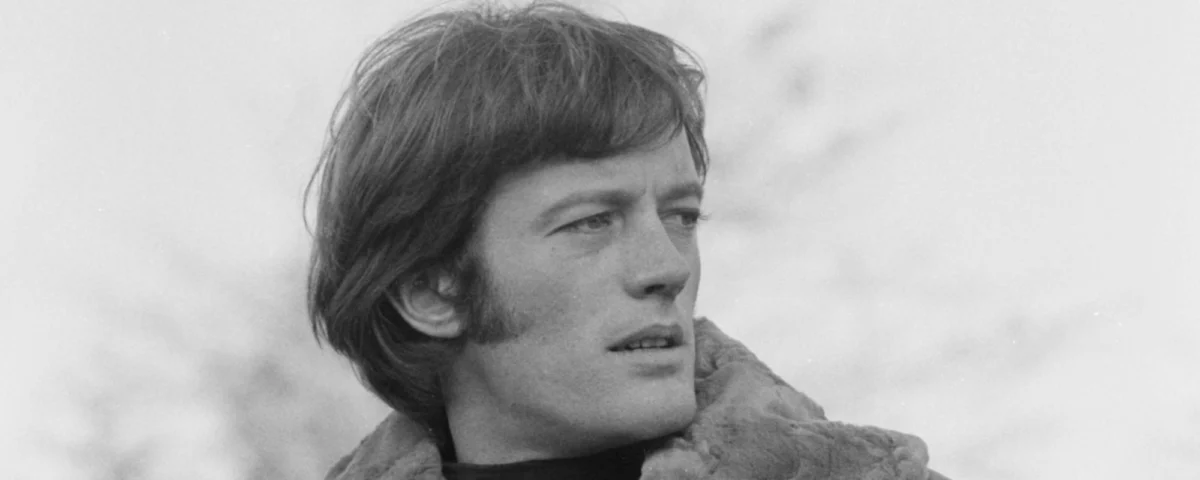
Peter Fonda remains an indelible icon of the American counterculture, primarily recognized for his role in redefining Hollywood through the 1969 masterpiece Easy Rider. However, beneath his cinematic achievements lay a sophisticated and often overlooked musical trajectory that intersected with some of the most influential figures of the 1960s and 1970s. While Fonda is primarily remembered as an actor, producer, and screenwriter, his contributions to the sonic landscape of his films—and his brief, earnest pursuit of a recording career—provide a vital case study in the cross-pollination of the Los Angeles film and music scenes during a period of radical cultural transformation.
The genesis of Fonda’s musical involvement is perhaps most famously tied to the production of Easy Rider, a film that not only changed the business model of Hollywood but also revolutionized the use of popular music in cinema. In 1969, as the film moved into post-production, Fonda envisioned a cohesive, original score. His primary candidates for the task were the folk-rock supergroup Crosby, Stills, Nash & Young (CSNY). Fonda, who moved in the same social circles as the band in Laurel Canyon, believed their harmonies and poetic sensibilities would provide a transcendent backdrop to the journey of Wyatt and Billy.
However, the creative direction of the film was a point of significant contention between Fonda and his co-star and director, Dennis Hopper. While Fonda sought a polished, thematic soundtrack, Hopper advocated for a grittier, more contemporary approach. Hopper eventually vetoed the CSNY proposal, arguing that the band’s sound was too "pretty" and lacked the raw, jagged edge required to mirror the film’s depiction of a fracturing America. Hopper’s decision led to the creation of one of the first "found music" soundtracks, utilizing existing rock and folk tracks to punctuate the narrative. This approach replaced the traditional orchestral score with a curated playlist featuring Jimi Hendrix’s "If 6 Was 9," Steppenwolf’s "Born to Be Wild" and "The Pusher," and The Band’s "The Weight."
The Collaboration with Roger McGuinn and the Lost Album
Despite the rejection of his original soundtrack vision, Fonda remained deeply embedded in the musical community. His most enduring professional relationship in this sphere was with Roger McGuinn of The Byrds. The two had been acquaintances since the early 1960s, a bond solidified during Fonda’s work with Bobby Darin. By the time Easy Rider was in development, McGuinn became a central figure in the film’s musical identity, contributing "Wasn’t Born to Follow" and the iconic "Ballad of Easy Rider." The latter track was famously initiated by a sketch from Bob Dylan, who purportedly scribbled the opening lines on a napkin before handing the task off to McGuinn.
The synergy between Fonda and the members of The Byrds extended beyond film scores. During the late 1960s, Fonda ventured into the business side of the industry, co-owning Chisa Records alongside the legendary South African jazz trumpeter Hugh Masekela and Larry Spector. It was under this banner that Fonda attempted to launch a serious musical career. Collaborating with McGuinn and David Crosby, Fonda recorded a total of 16 tracks intended for a full-length studio album.
This project, however, never reached the public. In a display of creative self-criticism, Fonda chose to shelf the recordings. In his 1999 memoir, Don’t Tell Dad, he reflected on the decision with characteristic bluntness, stating that the material simply did not meet his standards for release. "It simply wasn’t there," Fonda wrote, exercising his right as a producer to protect his artistic legacy from a project he deemed inferior. This "lost album" remains one of the great "what-ifs" of the Laurel Canyon era, representing a moment where the lines between Hollywood royalty and rock-and-roll elite were almost permanently blurred.
Gram Parsons and the Psychedelic Foundations of The Trip
Fonda’s first formal foray into recorded music occurred two years prior to Easy Rider, during the production of Roger Corman’s The Trip (1967). Written by Jack Nicholson, the film was an experimental attempt to capture the LSD experience on celluloid. It was during this production that Fonda met Gram Parsons, the man who would eventually be credited with pioneering the "Cosmic American Music" genre.
Fonda was impressed by Parsons’ talent and suggested that his group, the International Submarine Band, contribute to the film’s soundtrack. While the band’s involvement was limited, the connection led to Fonda’s debut as a recording artist. Encouraged by Hugh Masekela, who had witnessed Fonda’s guitar playing at private gatherings, Fonda entered the studio to record "November Night."

Written by Parsons specifically for Fonda, "November Night" is a quintessential piece of 1960s psychedelic folk. The track, co-produced by Masekela, features Fonda’s earnest vocals and acoustic guitar work. Released as a single with a cover of Donovan’s "Catch the Wind" on the B-side, the song captured the melancholic, introspective mood of the late-sixties folk scene. Fonda’s recollection of the process, documented in Sid Griffin’s 1985 biography of Parsons, highlighted a rare moment of musical mentorship: Parsons taught Fonda the arrangement personally, and Fonda practiced rigorously to ensure he did justice to the songwriter’s vision.
Outlaw Blues and the Shift to Country-Rock
By the mid-1970s, the cultural landscape had shifted from the psychedelic idealism of the sixties to the more rugged, world-weary aesthetics of the outlaw country movement. Fonda’s musical output mirrored this transition. In 1977, he starred in Outlaw Blues, portraying Bobby Ogden, an ex-convict striving for success in the burgeoning Austin, Texas, music scene.
Unlike his previous roles, Outlaw Blues required Fonda to perform as a musician on screen and on the soundtrack. The film’s musical direction was helmed by major industry figures, including John Oates of Hall & Oates, who wrote the title track. Fonda’s performance of "Outlaw Blues" signaled a departure from his earlier folk style, embracing a harder, more rhythmic country-rock sound that aligned with the "Outlaw" persona popular at the time.
The soundtrack also featured contributions from Hoyt Axton, a prolific songwriter and actor who wrote "Water For My Horses." Fonda’s rendition of this track, along with "Jailbird’s Can’t Fly" (penned by Harland Sanders and R.C. O’Leary), showcased a vocal maturity that had developed in the decade since "November Night." These songs were not merely background music; they were integral to the characterization of Bobby Ogden, filmed on location at authentic Austin venues like the Soap Creek Saloon to ensure an atmosphere of realism.
Technical Analysis and Cultural Implications
Fonda’s musical career, though fragmented, reflects a specific phenomenon in mid-century American entertainment: the actor-musician as a conduit for cultural zeitgeist. Technically, Fonda’s vocal style was characterized by a soft, melodic delivery that favored emotional sincerity over technical bravado. This approach was perfectly suited for the folk and country genres, where the narrative of the song often took precedence over vocal gymnastics.
The broader implications of Fonda’s musical endeavors are found in the way he helped bridge the gap between disparate artistic communities. By bringing figures like Gram Parsons and Roger McGuinn into the cinematic fold, Fonda facilitated a dialogue between the record industry and the film industry that had previously been strictly segregated. The rejection of a traditional score for Easy Rider in favor of a curated rock soundtrack set a precedent that remains the standard for modern filmmaking.
Furthermore, Fonda’s decision to shelf his collaborative album with Crosby and McGuinn speaks to a level of artistic integrity often absent in "vanity projects" by high-profile actors. He viewed music not as a marketing tool, but as a discipline that required a specific level of excellence.
Chronology of Musical Milestones
- 1967: Fonda records and releases "November Night," written by Gram Parsons, following their meeting on the set of The Trip.
- 1968-1969: Fonda attempts to recruit CSNY for the Easy Rider soundtrack; Dennis Hopper vetoes the plan.
- 1969: The Easy Rider soundtrack is released, featuring Roger McGuinn and the Byrds, establishing a new paradigm for film music.
- Late 1960s: Fonda, McGuinn, and Crosby record 16 tracks for Chisa Records; the project is eventually shelved by Fonda.
- 1977: Fonda stars in Outlaw Blues, performing a suite of country-rock songs written by John Oates and Hoyt Axton.
Legacy and Conclusion
Peter Fonda’s musical footprint is a testament to a time when artistic boundaries were fluid. While he never achieved the chart-topping success of his collaborators, his influence as a tastemaker and his willingness to experiment with the medium of sound helped define the aesthetic of an era. From the psychedelic folk of "November Night" to the gritty realism of "Outlaw Blues," Fonda’s work remains a vital, if understated, component of the American sonic tapestry. His legacy is not just in the films he made, but in the songs he championed and the artists he brought into the spotlight, forever linking the roar of a motorcycle engine with the strum of an acoustic guitar.
