

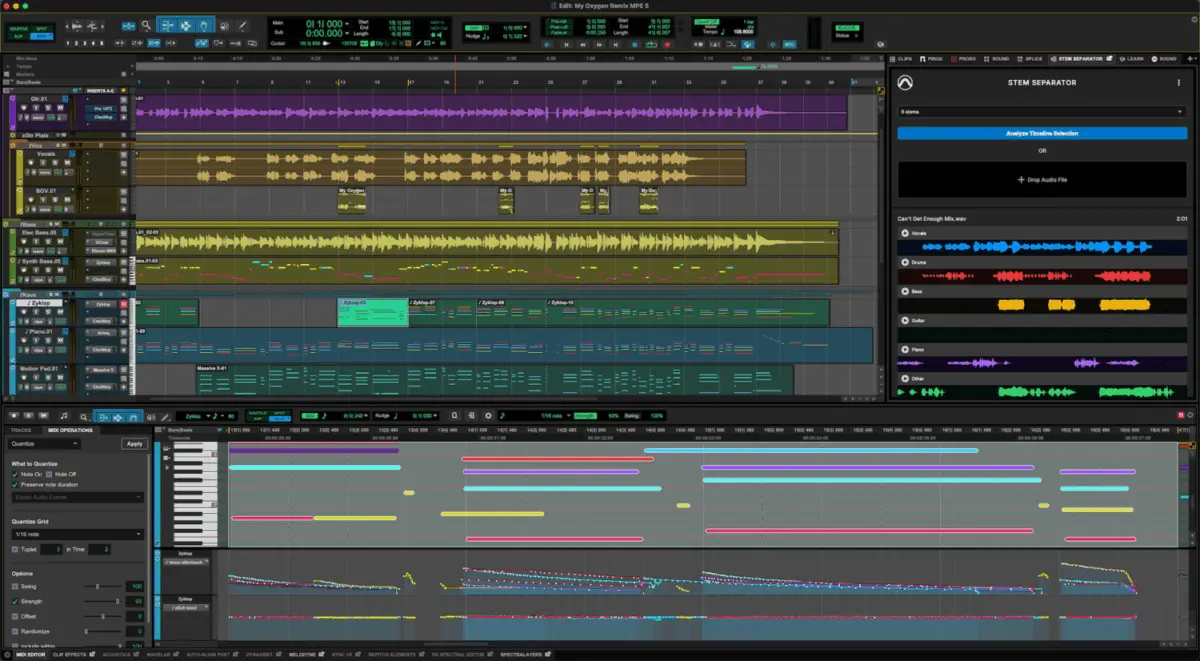
Avid has officially announced the release of Pro Tools 2026.11, a landmark update that introduces a transformative software architecture known as Pro Tools Extensions. This new plug-in format represents a fundamental shift in how third-party developers integrate their tools within the industry-standard digital audio workstation (DAW). Unlike the traditional AAX (Avid Audio Extension) format, which primarily focuses on real-time audio processing at the track level, Pro Tools Extensions are designed to facilitate deep integration for sound libraries, workflow automation, and collaborative services across entire sessions. By breaking the constraints of individual track processing, Avid aims to provide a more cohesive environment for music creators and audio post-production professionals who require high-level management of session data and external assets.
The Architecture of Pro Tools Extensions
The introduction of Pro Tools Extensions marks the most significant evolution in the software’s plugin architecture since the transition from RTAS/TDM to AAX over a decade ago. While AAX remains the primary format for signal processing—such as equalization, compression, and virtual instruments—Extensions provide a secondary layer of functionality that operates at the application level. This allows developers to build tools that can see and interact with the entire Pro Tools environment simultaneously.
Technically, the Extensions format allows third-party applications to run as integrated panels within the Pro Tools user interface. These panels can access global session data, track metadata, and file management systems without requiring the user to switch between different windows or applications. This "persistent" state is a key feature of the new format; Extensions are accessible through a dedicated menu and can remain active and functional even when no session is currently open, allowing users to browse libraries or manage project settings in a pre-production phase.
The shift reflects a broader industry trend toward "all-in-one" creative environments. As modern workflows become increasingly complex—incorporating massive sample libraries and cloud-based collaboration—the friction caused by jumping between the DAW and external software has become a significant bottleneck. Avid’s solution is to bring the external software directly into the Pro Tools workspace, effectively turning the DAW into a central hub for the entire production lifecycle.
Launch Partners and Ecosystem Integration
At launch, Avid has secured several high-profile partnerships to demonstrate the versatility of the Extensions format. These initial integrations focus on three primary areas: asset management, collaboration, and workflow automation.
Pro Sound Effects and Soundly represent the asset management sector. For sound designers in film and television, the ability to search massive databases of foley and ambient recordings and drag them directly into the timeline is critical. The new Extensions allow these libraries to exist as native windows within Pro Tools, synchronized with the session’s metadata. This eliminates the need for manual file importing and ensures that search results are always contextually relevant to the project at hand.
In the realm of collaboration, Pibox has introduced an extension designed to streamline the review and approval process. Pibox allows producers and clients to leave time-stamped comments and feedback directly on a session. With the new extension, these comments can be viewed as markers or annotations within the Pro Tools timeline, allowing engineers to make requested changes without cross-referencing external email chains or messaging platforms.
Furthermore, existing integrations with Splice and SoundFlow, which were initially introduced in 2025 as standalone bridges, have been fully migrated into the Extensions environment. Splice users can now sync their cloud-based loop libraries directly with the Pro Tools tempo map, while SoundFlow users gain more granular control over complex macro-automation routines that can trigger multi-step processes across the entire DAW.
AI-Driven Innovation: The Pro Tools Stem Separator Extension
Alongside the third-party ecosystem, Avid has debuted its own first-party application of the technology: the Pro Tools Stem Separator Extension. This tool utilizes advanced machine learning algorithms to analyze a single polyphonic audio file and decompose it into its constituent elements, such as vocals, drums, bass, and other instruments.
While stem separation technology has existed in standalone software and some competing DAWs for several years, Avid’s implementation focuses on high-fidelity phase coherence and professional-grade output. The Stem Separator operates as an Extension, meaning it can process multiple clips across the timeline simultaneously, rather than requiring the user to apply a plugin to a single track and record the output in real-time.
The implications for this technology are vast, particularly in the fields of remixing, restoration, and audio post-production. For instance, a dialogue editor working with a noisy location recording can use the Stem Separator to isolate a voice from background music or environmental noise with greater precision than traditional noise-reduction tools. In music production, it allows for the "sampling" of specific elements from legacy recordings that were never delivered as multi-tracks.
Enhanced Expression with MIDI Polyphonic Expression (MPE)
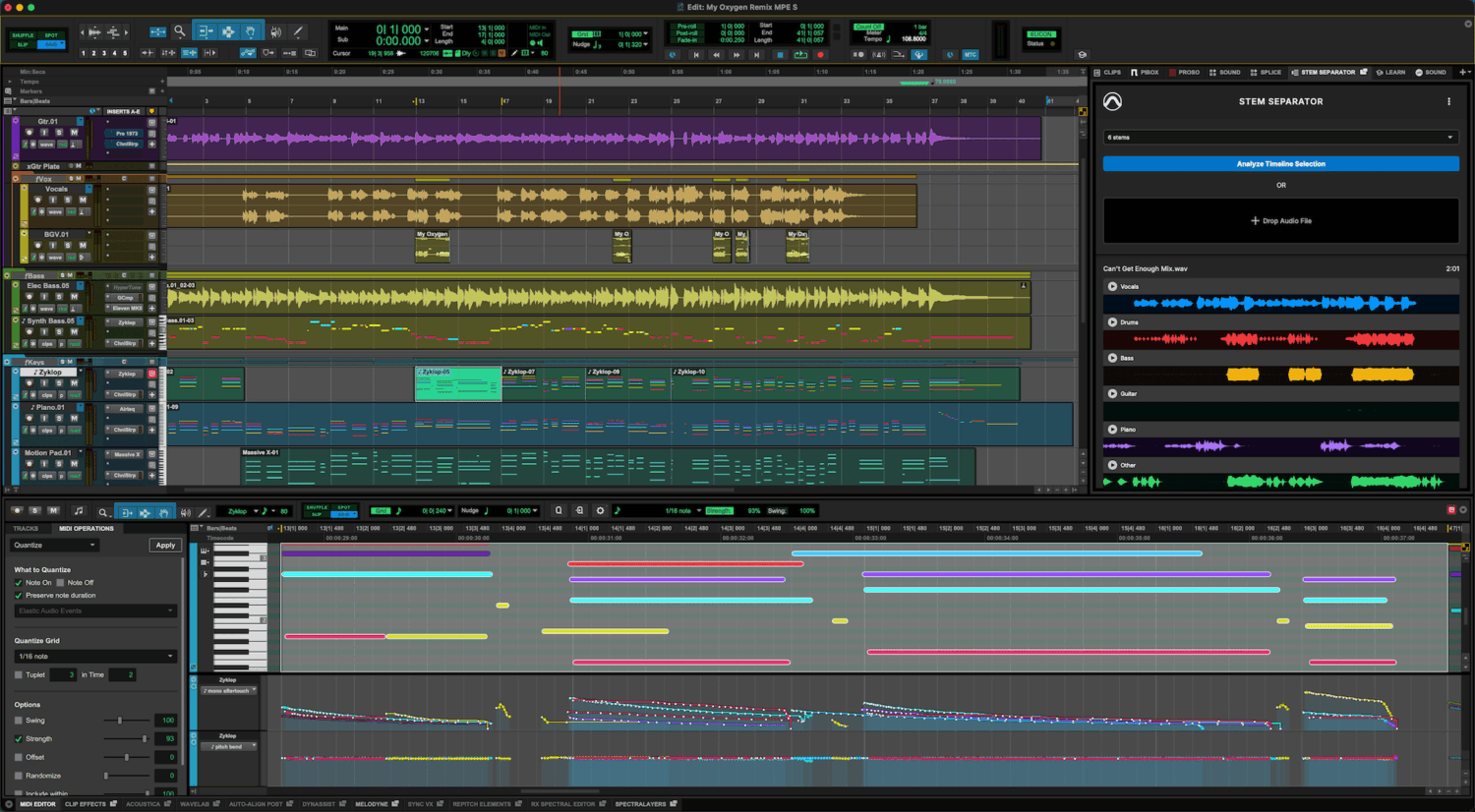
In addition to the Extensions architecture, Pro Tools 2026.11 brings long-awaited support for MIDI Polyphonic Expression (MPE). This update addresses a growing demand from electronic musicians and film composers who use modern controllers like the ROLI Seaboard, Ableton Push 3, or LinnStrument.
MPE allows for per-note control over multiple MIDI parameters simultaneously. In standard MIDI, messages like pitch bend or modulation apply to all notes being played on a specific channel. With MPE, each individual note in a chord can have its own independent pitch bend, pressure, and timbre control. The integration in Pro Tools includes a redesigned MIDI editor that allows users to visualize and edit these polyphonic data lanes with the same precision as standard automation.
To support this feature, Avid has updated several of its native virtual instruments to be MPE-ready and has worked with third-party developers to ensure that MPE-capable plugins (such as those from Spectrasonics and Arturia) function seamlessly within the Pro Tools environment. This move significantly narrows the gap between Pro Tools and other DAWs like Ableton Live and Bitwig Studio, which have historically been favored for electronic music production due to their superior MIDI handling.
Chronology of Development: From Bridge to Integration
The path to Pro Tools 2026.11 began several years ago as Avid sought to modernize its codebase. The following timeline highlights the key milestones leading to the current release:
- 2022-2023: Avid introduces the Pro Tools Scripting SDK, allowing developers to write external scripts to control DAW functions. This served as the conceptual precursor to Extensions.
- Early 2025: Avid announces strategic partnerships with Splice and SoundFlow. These integrations used a "bridge" method that allowed limited communication between the software.
- Mid 2025: Avid begins a private beta for a new SDK (Software Development Kit) internally known as "Project Nexus," which would eventually become Pro Tools Extensions.
- November 2026: The official launch of Pro Tools 2026.11, making the Extensions format available to the public and integrating the first wave of third-party panels.
This chronological progression demonstrates Avid’s cautious but deliberate approach to changing its core architecture. By first testing the waters with scripting and bridges, the company ensured that the full Extensions rollout would be stable enough for the high-stakes environments of major recording studios and film dubbing stages.
Industry Implications and Market Analysis
The introduction of Extensions is a strategic maneuver by Avid to maintain its dominance in the professional market. For years, Pro Tools has faced criticism for being a "closed" system compared to more flexible competitors. By opening the interface to third-party panels, Avid is effectively crowdsourcing the innovation of its workflow.
Industry analysts suggest that this move will particularly benefit the audio post-production sector. In film and TV, the workflow is often fragmented across multiple specialized tools for sound design, ADR (Automated Dialogue Replacement), and mixing. If companies like iZotope or Dolby develop Extensions for their flagship products, Pro Tools could become a truly unified workstation where the user never needs to leave the environment.
Furthermore, the focus on AI with the Stem Separator Extension indicates that Avid is positioning itself to compete in the rapidly evolving landscape of generative and analytical audio AI. Rather than viewing AI as a threat, Avid is integrating it as a utility to speed up the "corrective" aspects of audio engineering, such as cleaning up tracks or creating stems for immersive Atmos mixes.
Availability and Subscription Tiers
Pro Tools 2026.11 is available immediately for all active subscribers. The rollout follows Avid’s current tier-based model:
- Pro Tools Artist: Includes access to basic Extensions and the MPE update. Targeted at independent creators and hobbyists.
- Pro Tools Studio: Includes the full suite of Extensions, including the AI Stem Separator and MPE support. This is the standard for professional music production.
- Pro Tools Ultimate: Provides the most advanced integration features, including support for large-scale post-production Extensions and enhanced automation capabilities.
Perpetual license holders are also eligible for the update, provided they have an active Upgrade and Support Plan. Users without an active plan will need to renew or transition to a subscription to access the new Extensions architecture.
Conclusion
The release of Pro Tools 2026.11 and the debut of the Extensions format represent a pivotal moment for Avid. By moving beyond the track-based limitations of the AAX format, Avid has opened the door to a new era of DAW integration. The combination of AI-powered tools, MPE support, and a growing ecosystem of third-party panels suggests that Pro Tools is evolving from a traditional digital tape machine into a sophisticated, multi-functional creative platform. As the industry continues to demand faster turnarounds and more complex soundscapes, the ability to access an entire world of production tools within a single interface may prove to be the most significant workflow advancement in recent years.
