

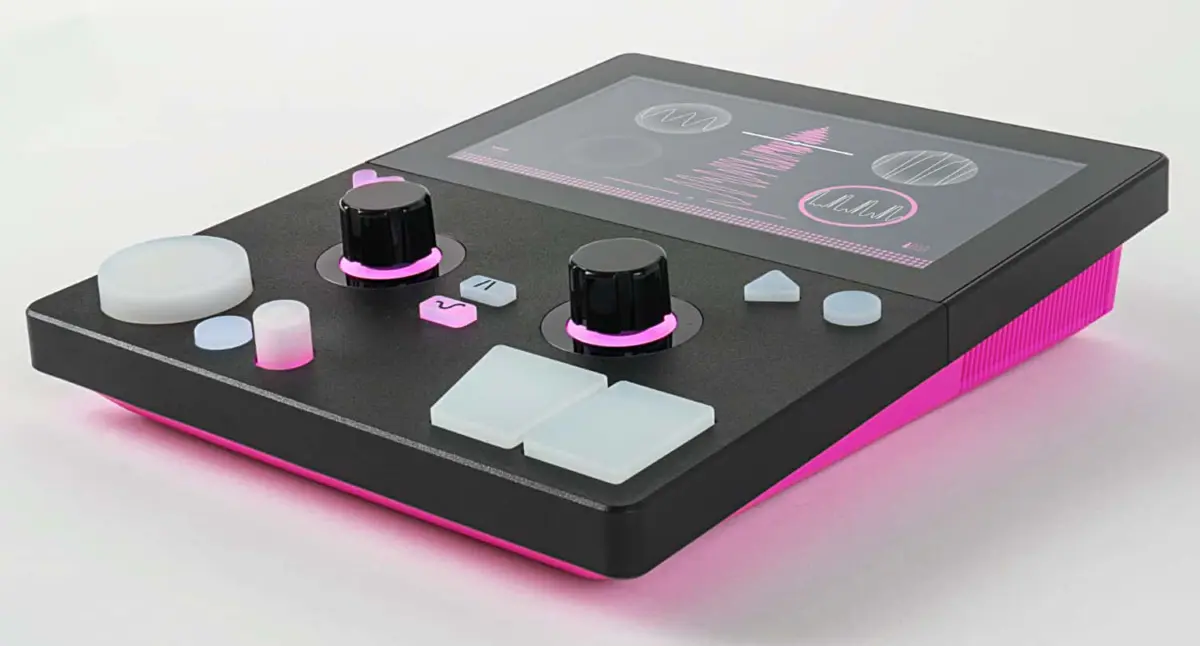
The landscape of modern music production has witnessed a significant shift toward tactile, standalone hardware that prioritizes immediate creative feedback over complex menu-diving. LOVE Synthesizers, a burgeoning player in the boutique electronic instrument market, has officially entered this arena with the launch and commencement of shipping for its flagship product, FIRST LOVE. Marketed as an "exploratory FM synthesizer," the device represents a deliberate attempt to demystify frequency modulation (FM) synthesis—a synthesis method historically noted for its steep learning curve—while offering a deep, multi-timbral engine suitable for both stage performance and studio sound design. Priced at $699 USD, FIRST LOVE enters a competitive segment of the market, positioning itself as a bridge between portable "groovebox" style instruments and high-end professional workstations.
The instrument’s arrival marks a milestone for the company, which has spent several years in the development phase refining the user interface and sonic architecture of the unit. According to Markús Bjarnason, Co-founder and Creative Director of LOVE Synthesizers, the primary objective was to create a tool that balances accessibility with sonic complexity. In a statement accompanying the shipping announcement, Bjarnason noted that the instrument was designed to make the process of creative synthesis more immediate and expressive. This philosophy is reflected in the physical layout of the device, which eschews traditional keyboard keys in favor of pressure-sensitive performance pads that support both velocity and aftertouch, catering to a new generation of performers who favor grid-based or pad-based interaction.
The Architecture of Exploratory FM Synthesis
At its core, FIRST LOVE utilizes a sophisticated four-part multitimbral engine. This allows users to layer up to four distinct sounds simultaneously or assign different sounds to various MIDI channels for complex arrangements. The polyphonic capabilities of the device ensure that it can handle lush pads and intricate chord progressions, while its monophonic mode is optimized for lead lines and percussive bass sequences. The choice of FM synthesis as the primary engine is a bold one; FM synthesis, popularized by the Yamaha DX7 in the 1980s, is known for its ability to produce metallic, bell-like, and harmonically rich textures that are difficult to achieve with traditional subtractive synthesis.
However, LOVE Synthesizers has modified the traditional FM approach by introducing "complex wave shaping" and "morphing envelopes." In traditional FM, operators (oscillators) are typically restricted to sine waves, but the FIRST LOVE architecture allows for more diverse starting points, enabling a wider palette of timbres from the outset. The morphing envelopes allow users to transition smoothly between different modulation states, creating evolving soundscapes that react dynamically to user input. This emphasis on "exploration" suggests that the synthesizer is designed to encourage happy accidents and experimental sound design rather than just the recreation of classic 80s presets.
Technical Specifications and Connectivity
The hardware design of FIRST LOVE reflects a commitment to modern production workflows. The device includes a comprehensive suite of input and output options, ensuring it can function as the "brain" of a larger setup or as a specialized sound module within a computer-based Digital Audio Workstation (DAW) environment. Key connectivity features include:
- MIDI In/Out/Thru: Traditional 5-pin or TRS MIDI connectivity allows for seamless integration with external sequencers, controllers, and other hardware synthesizers.
- USB Connectivity: A dedicated USB port facilitates MIDI-over-USB and potential firmware updates, allowing the device to sync effortlessly with modern software.
- Analog Sync: For users of modular gear or pocket operators, the inclusion of analog sync ensures that the FIRST LOVE’s internal sequencers and effects can remain perfectly timed with external rhythmic clocks.
- Audio Output: High-quality stereo outputs provide the fidelity required for professional recording and live sound reinforcement.
The interface is dominated by the aforementioned pressure-sensitive pads. These pads are not merely triggers; they are integral to the expressive potential of the machine. By incorporating aftertouch, LOVE Synthesizers allows performers to manipulate parameters like filter cutoff, FM index, or effect depth simply by varying the pressure applied to the pads after a note has been struck. This level of physical control is often missing from entry-level FM synthesizers, making FIRST LOVE a more compelling option for expressive performers.
Historical Context and Market Evolution
To understand the significance of the FIRST LOVE launch, one must look at the broader history of FM synthesis and the current "hardware renaissance" in the music industry. When John Chowning first developed FM synthesis at Stanford University in the late 1960s, it was a purely mathematical endeavor. Its commercialization by Yamaha in the 1980s revolutionized music, but the difficulty of programming these machines led to a market saturated with "preset players." For decades, FM was seen as a "cold" or "difficult" technology.

In the last ten years, however, there has been a concerted effort by manufacturers like Korg, Elektron, and Arturia to make FM synthesis more "analog-like" in its tweakability. The Elektron Digitone, for example, combined FM with subtractive-style filters to make it more intuitive. LOVE Synthesizers is following this lineage but placing a heavier emphasis on the "exploratory" aspect. By labeling the device FIRST LOVE, the company hints at a return to the wonder of first discovering synthesis, removing the barriers of complex algorithms and replacing them with a more tactile, immediate interface.
The $699 price point is a strategic choice. It sits above the "toy" or "budget" category (such as the Korg Volca FM or the Sonicware Liven series) but remains more affordable than flagship FM workstations like the Yamaha Montage or the Elektron Digitone Keys. This "prosumer" bracket is currently one of the fastest-growing segments of the music technology market, as hobbyists seek higher build quality and professional musicians seek specialized, portable tools for touring.
Official Responses and Industry Reception
Early reactions from the synthesizer community have been largely positive, particularly regarding the device’s aesthetic and its focus on multitimbrality. The ability to run four separate parts from a single compact unit is a major selling point for live performers who wish to minimize the amount of gear they carry. Industry analysts have noted that the "boutique" nature of LOVE Synthesizers allows for a level of design experimentation that larger corporations might avoid.
In his statement, Bjarnason emphasized that the goal was not just to build another synthesizer, but to build an "inspiring" one. This sentiment resonates with a growing demographic of musicians who feel "screen fatigue" from using software plugins and crave the physical resistance and tactile feedback of hardware. The inclusion of internal effects further enhances this standalone appeal, as it allows for a complete, polished sound to be generated without the need for external processing pedals or mixers.
Broader Impact and Future Implications
The shipping of FIRST LOVE represents more than just a product release; it is a signal of the continued decentralization of the music instrument industry. Small, independent companies are now capable of producing high-quality, complex digital instruments that compete with established giants. This competition drives innovation, forcing larger brands to reconsider their user interfaces and pricing structures.
For LOVE Synthesizers, the success of FIRST LOVE will likely dictate the trajectory of the company. If the "exploratory" workflow proves popular, it could lead to a series of instruments based on other synthesis methods—such as wavetable or physical modeling—utilizing the same tactile interface philosophy. Furthermore, the emphasis on connectivity suggests that the company is looking toward an ecosystem where their devices can talk to one another, potentially leading to a proprietary line of sequencers or expansion modules.
As units begin to reach customers and influencers, the real-world performance of the FM engine will be under scrutiny. The challenge for any FM synth is to provide a "sweet spot" that is wide enough for beginners to find usable sounds quickly, while remaining deep enough for veteran sound designers to stay engaged. If FIRST LOVE delivers on its promise of being "approachable and deep," it may well become a staple in the setups of electronic musicians worldwide.
The release of FIRST LOVE comes at a time when the global electronic musical instrument market is projected to grow steadily over the next five years. With an increasing number of people taking up music production as a hobby and the professional sector demanding more portable and versatile gear, LOVE Synthesizers has positioned itself at the intersection of these two trends. The $699 investment represents a commitment to a specific workflow—one that prioritizes the joy of discovery over the rigidity of traditional programming. As the first units arrive in studios this month, the industry will be watching closely to see if this "exploratory" approach can truly redefine how we interact with the complex world of frequency modulation.
