

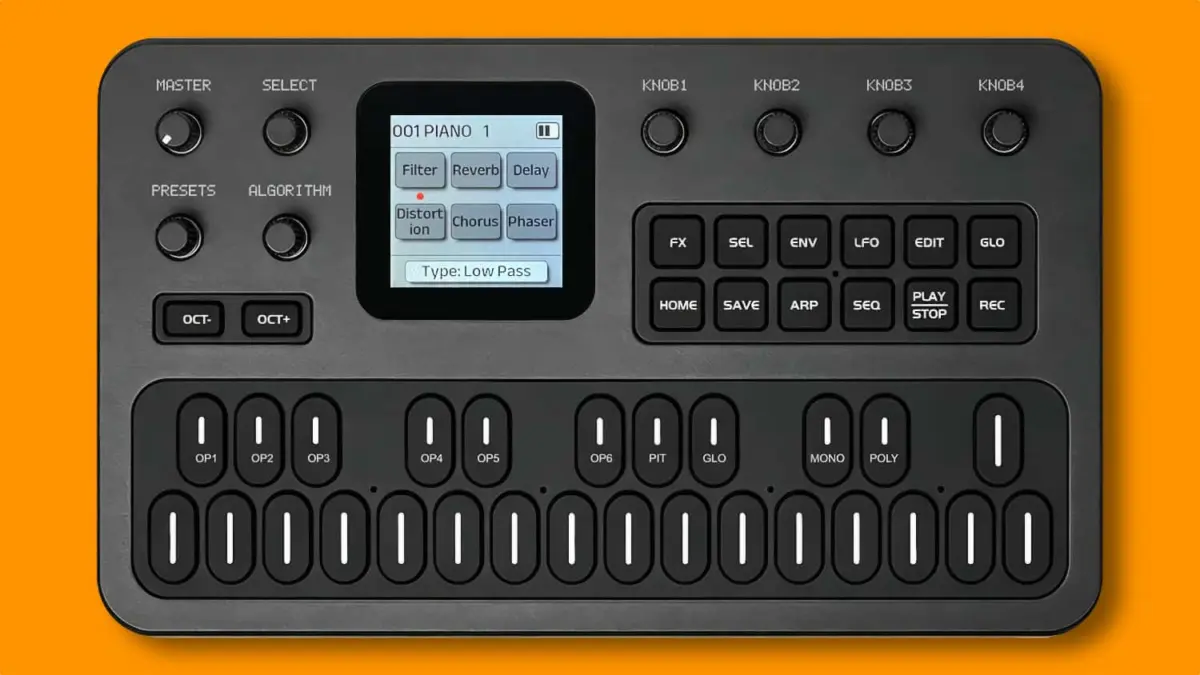
The landscape of affordable digital synthesis has undergone a significant transformation with the introduction of fm1-dock, a sophisticated open-source firmware developed by Joakim Eriksson for the M-VAVE FM-1 hardware synthesizer. This new software layer fundamentally alters the operational capabilities of the budget-friendly device, transitioning it from a dedicated Frequency Modulation (FM) unit into a versatile, multi-engine platform capable of hosting four distinct synth engines simultaneously. By leveraging the untapped potential of the FM-1’s internal hardware, Eriksson’s project provides musicians and developers with a level of flexibility typically reserved for high-end modular systems or expensive digital workstations.
The M-VAVE FM-1, originally marketed as a compact and highly portable FM synthesizer, has gained a reputation in the electronic music community for its accessible price point and solid build quality. However, its factory software often limited users to specific preset architectures. The release of fm1-dock dismantles these barriers, allowing users to swap between different synthesis methods on the fly and even develop their own custom sound modules.
Technical Architecture and Multi-Engine Integration
The core innovation of the fm1-dock firmware lies in its "docking" architecture. Unlike traditional firmware updates that simply refine existing features, fm1-dock creates a containerized environment within the synthesizer’s processor. This allows the hardware to manage up to four independent synth engines. Users can navigate these engines in real-time, enabling a workflow where different sonic textures—ranging from classic FM bells to subtractive virtual analog pads—can be accessed without restarting the device or reloading software.
Eriksson’s preview demonstrations have showcased the firmware’s stability both on the physical M-VAVE FM-1 hardware and within a dedicated software emulator. The emulator serves as a critical tool for developers, allowing them to test code and sound design algorithms in a virtual environment before deploying them to the hardware. This dual-track development approach ensures that the transition from code to audible sound is seamless and reduces the risk of hardware malfunctions during the experimentation phase.
Custom Module Development and USB Deployment
One of the most significant features of the fm1-dock is its accessibility for third-party developers. Eriksson has designed the system so that users can write their own modules and deploy them over a standard USB connection within seconds. This rapid deployment cycle is a departure from the often cumbersome process of flashing firmware on budget hardware, which frequently requires specialized tools or complex command-line interfaces.
By providing an open-source framework on GitHub, Eriksson has effectively invited the global coding community to expand the FM-1’s library. Potential modules could include:
- Virtual Analog (VA) Engines: Emulating the warmth and behavior of classic subtractive synthesizers.
- Wavetable Oscillators: Offering complex, evolving timbres through digital scanning.
- Granular Processors: Fragmenting audio into "grains" for experimental soundscapes.
- Advanced Percussion Engines: Utilizing noise generators and specialized envelopes for drum synthesis.
The ability to write and share these modules fosters a community-driven ecosystem, potentially extending the commercial lifespan of the M-VAVE FM-1 far beyond its original manufacturing cycle.
Enhanced Connectivity: The Addition of BLE-MIDI
Beyond synthesis capabilities, the fm1-dock firmware addresses one of the primary hardware limitations of many compact synthesizers: connectivity. The firmware enables Bluetooth Low Energy MIDI (BLE-MIDI) support, a feature that allows the M-VAVE FM-1 to communicate wirelessly with modern devices.
In a contemporary studio environment, BLE-MIDI is increasingly essential. It allows the FM-1 to be controlled by an iPad, smartphone, or laptop without the clutter of cables. This is particularly advantageous for mobile producers who utilize sequencers or DAW (Digital Audio Workstation) apps to trigger external hardware. By integrating BLE-MIDI, Eriksson has positioned the FM-1 as a viable component of a modern, wireless music production setup, bridging the gap between ultra-portable gadgets and professional studio tools.
The Context of Budget Hardware Hacking
The emergence of fm1-dock is part of a broader trend in the music technology industry where independent developers "unlock" the potential of inexpensive consumer electronics. For years, devices like the Korg Monologue and the Volca series have seen various degrees of community-driven modification. However, the M-VAVE FM-1 represents a new frontier due to its extremely low entry price and the surprisingly capable DSP (Digital Signal Processing) chips found in modern Chinese-manufactured hardware.
Industry analysts note that the hardware inside many "budget" synths is often more powerful than the factory software suggests. Manufacturers frequently limit features to maintain a simple user interface or to segment their product lines. Open-source projects like fm1-dock bypass these artificial limitations, providing the end-user with the full computational power they have already purchased.
Chronology of Development
The development of fm1-dock followed a structured timeline that highlights the rigors of modern firmware engineering:
- Hardware Analysis: Initial phase involving the reverse-engineering of the M-VAVE FM-1’s internal circuitry and processor architecture to identify available memory and clock speeds.
- Kernel Construction: The creation of the "dock" environment capable of handling multiple engine instances and managing the user interface (UI) inputs.
- Engine Porting: The adaptation of existing open-source synthesis algorithms to run efficiently on the FM-1’s specific chipset.
- Emulator Development: Building a software-based replica of the FM-1 to facilitate safer and faster module testing.
- Public Beta and GitHub Release: The transition from a private project to an open-source repository, allowing for community feedback and collaborative bug fixing.
Market Implications and Professional Reception
The release of fm1-dock has been met with significant interest from both hobbyists and professional sound designers. For the hobbyist, it offers a "modular-lite" experience at a fraction of the cost of a traditional Eurorack setup. For the professional, it provides a unique, customizable sound source that can be tailored to specific project needs.
While M-VAVE as a manufacturer has not officially commented on the third-party firmware, the history of such projects suggests a complex relationship. While custom firmware can technically void warranties, it also tends to drive sales of the hardware as the device becomes more desirable to a wider audience. In some instances, manufacturers have even adopted features from community-driven firmware into their official updates, recognizing the value of free research and development provided by the user base.
Broader Impact on the Synthesizer Industry
The implications of fm1-dock extend beyond a single piece of hardware. It serves as a proof-of-concept for the democratization of synthesizer design. As DSP chips become cheaper and more powerful, the value of a synthesizer is increasingly found in its software rather than its physical components. Projects like Eriksson’s highlight a shift toward "software-defined hardware," where the physical device is merely a shell for whatever sonic engine the user chooses to install.
Furthermore, the emphasis on open-source collaboration ensures that the knowledge gained from the fm1-dock project remains accessible. The code shared on GitHub can be studied by aspiring developers, leading to similar projects for other hardware units. This creates a virtuous cycle of innovation that benefits the entire music technology community.
Future Outlook and Availability
As of the current release, fm1-dock is available for download on GitHub. The repository includes the necessary files to flash the firmware, as well as documentation for those interested in developing their own modules. Eriksson has signaled that development is ongoing, with the potential for more engines and optimized performance in future iterations.
The success of the fm1-dock will likely depend on the community’s engagement. If a steady stream of new modules is produced, the M-VAVE FM-1 could become a staple of the "micro-synth" category, rivaling established players in the market. Regardless of its commercial trajectory, the project stands as a testament to the ingenuity of the independent developer community and its ability to transform simple tools into powerful instruments of creativity.
In an era where music technology can often be prohibitively expensive, fm1-dock represents a significant step toward making high-quality, customizable synthesis accessible to everyone. By combining open-source ethics with clever engineering, Joakim Eriksson has given new life to the M-VAVE FM-1, ensuring its relevance in the evolving world of electronic music production.
