

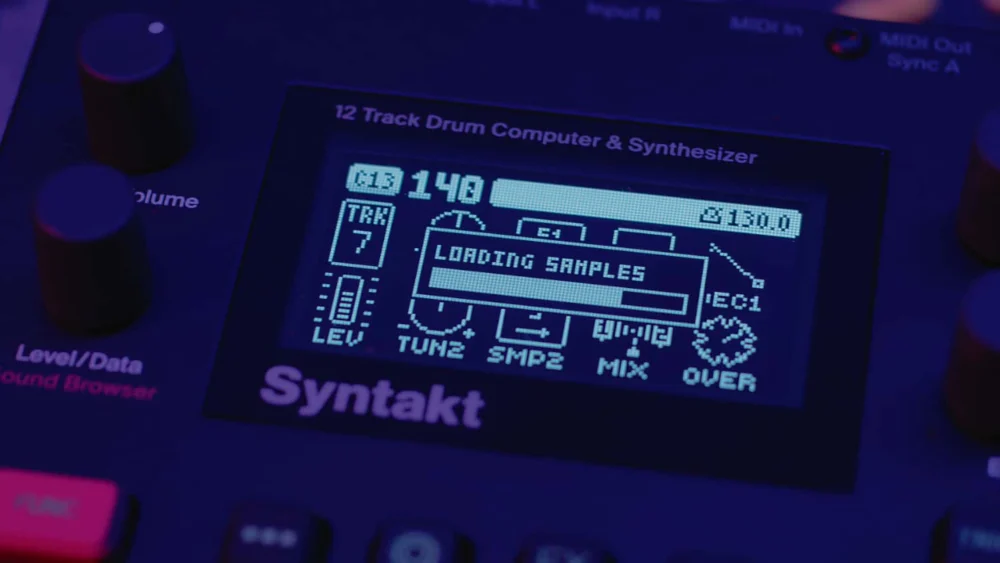
The release of Elektron Syntakt OS 1.40 represents a significant milestone in the lifecycle of the Swedish manufacturer’s hybrid drum computer and synthesizer. Since its initial launch in April 2022, the Syntakt has occupied a unique position within the Elektron "Digi-box" ecosystem, bridging the gap between the sample-based sequencing of the Digitakt and the frequency modulation (FM) synthesis of the Digitone. This latest firmware update introduces a suite of features that refine the device’s utility, most notably through the addition of the "Twinshot" machine, advanced Euclidean sequencing capabilities, and long-requested workflow utilities such as Choke Groups and Key Tracking. Industry expert Matthew Piecora, widely known in the electronic music community as EZBOT, recently provided an exhaustive technical breakdown of these features, highlighting how the update transforms the Syntakt from a percussion-focused instrument into a more versatile melodic and rhythmic powerhouse.
The Strategic Evolution of the Elektron Syntakt
To understand the impact of OS 1.40, it is necessary to examine the Syntakt’s architectural history. Upon its release, the hardware was marketed as a 12-track powerhouse featuring eight digital tracks and four analog tracks. While its internal "machines"—Elektron’s term for specialized synthesis engines—offered a broad palette of percussion and basic melodic tones, some users felt the device lacked the granular control found in the company’s flagship products like the Analog Rytm or the Octatrack.
Over the past two years, Elektron has followed a pattern of iterative development, providing free firmware updates that substantially increase the value of the hardware post-purchase. OS 1.10 and 1.20 introduced new machines and performance modes, but OS 1.40 is arguably the most comprehensive refinement to date. It addresses specific community feedback regarding voice management and rhythmic complexity, ensuring the device remains competitive in a market increasingly crowded by polyphonic workstations and high-end grooveboxes.
Deep Dive into the Twinshot Machine and Sample Playback
One of the primary highlights of the OS 1.40 update is the introduction of the "Twinshot" machine. While the Syntakt is primarily a synthesis-based instrument, the community has long speculated on the potential for expanded sample integration. The Twinshot machine provides a more nuanced approach to sound layering, allowing users to trigger dual-layered sounds that can be manipulated independently or in tandem.
In his technical analysis, Matthew Piecora demonstrates how the Twinshot machine facilitates a more complex harmonic structure than was previously possible on a single track. By allowing for specific tuning offsets and envelope adjustments between the two "shots," users can create rich, evolving pads or aggressive, multi-tonal percussion. This feature is particularly relevant for live performers who operate under the constraint of the 12-track limit; by consolidating complex sounds into a single track, the user frees up additional tracks for melodic counterpoints or secondary percussion.
Euclidean Sequencing: A Mathematical Approach to Rhythm
The integration of Euclidean sequencing into OS 1.40 marks a pivot toward more experimental rhythmic generation. Euclidean rhythms are based on the greatest common divisor of two numbers, distributing a set number of pulses as evenly as possible across a defined sequence length. While this concept has been a staple in modular synthesis and certain high-end sequencers, its inclusion in the Syntakt workflow simplifies the creation of polyrhythms and complex "off-grid" feels.
The implementation within the Syntakt allows users to toggle between the traditional step sequencer and the Euclidean generator on a per-track basis. This dual-mode functionality means a producer can maintain a steady 4/4 kick drum on one track while generating shifting, non-repeating percussion patterns on others. For the modern electronic musician, this reduces the reliance on manual programming for complex hi-hat patterns or glitch-style textures, allowing for a more improvisational approach to composition.
The Importance of Choke Groups and Key Tracking
While new synthesis engines often garner the most attention, the addition of Choke Groups and Key Tracking in OS 1.40 addresses fundamental workflow requirements for professional sound design. Matthew Piecora specifically emphasized the importance of Choke Groups, suggesting that this feature should be standardized across all Elektron hardware.
Choke Groups and Voice Management
In drum programming, a "choke" occurs when one sound immediately terminates the playback of another. This is most commonly seen in hi-hat configurations, where an open hi-hat is silenced the moment a closed hi-hat is struck. Previously, Syntakt users had to rely on clever envelope manipulation or specific track-routing workarounds to achieve this effect. The native implementation of Choke Groups allows for more realistic percussion programming and serves as a vital tool for managing the device’s internal analog and digital voices, preventing frequency masking and cluttered mixes.
Key Tracking Enhancements
Key Tracking allows the parameters of a sound (such as filter cutoff or resonance) to change based on the pitch of the note being played. While basic key tracking existed in previous versions, OS 1.40 expands this capability, allowing for more "musical" behavior from the digital and analog filters. This is crucial for users who utilize the Syntakt as a melodic synthesizer. With refined key tracking, a bass patch can maintain its low-end weight on lower notes while opening up its harmonic content as the melody ascends, mimicking the behavior of classic subtractive synthesizers.
Technical Specifications and Performance Data
The Syntakt’s hardware architecture remains unchanged, but OS 1.40 optimizes the internal DSP (Digital Signal Processing) to handle these new features without increasing latency. The device continues to support:
- 12 Tracks: 8 digital tracks and 4 analog tracks (including 3 drum tracks and 1 cymbal track).
- Overbridge Integration: Allowing for individual track streaming into Digital Audio Workstations (DAWs) via USB.
- Analog FX Block: A dedicated circuit for drive, filtering, and modulation that can be routed to any internal track or external input.
The OS 1.40 update specifically enhances the Analog FX block by allowing for more precise control over how it interacts with the new Euclidean patterns. Data from user forums and beta testers suggests that the update has also improved the stability of the MIDI clock synchronization when the Syntakt is used as a "brain" for larger hardware setups.
Community and Industry Reactions
The reaction from the electronic music community has been overwhelmingly positive, particularly regarding the longevity of the device. Unlike many manufacturers that release "MKII" hardware to introduce new features, Elektron’s commitment to firmware-based evolution has fostered significant brand loyalty.
Matthew Piecora’s hour-long deep dive into the update has served as a primary resource for the community, highlighting the practical applications of these technical changes. His assertion that Choke Groups are a "game changer" reflects a broader sentiment among power users who prioritize functional utility over aesthetic novelty. Producers on platforms such as Elektronauts and various synthesizer subreddits have noted that OS 1.40 makes the Syntakt feel like a "new instrument," potentially cannibalizing sales of the more expensive Analog Rytm for users who do not require extensive sampling capabilities.
Comparative Analysis: Syntakt vs. The Competition
With the OS 1.40 update, the Syntakt strengthens its position against competitors such as the Roland TR-8S and the Akai MPC One. While the Roland TR-8S excels in performance-oriented hands-on control and the MPC One offers a full "studio-in-a-box" experience with high track counts, the Syntakt’s strength lies in its unique sequencing logic and hybrid sound engine.
The addition of Euclidean sequencing gives the Syntakt an edge in the "intelligent" sequencing market, appealing to techno and IDM (Intelligent Dance Music) producers who value generative elements. Furthermore, the integration of analog and digital synthesis within a single compact chassis remains a rarity at its price point, and the refined OS further bridges the gap between hardware "grooveboxes" and professional-grade synthesizers.
Implications for Live Performance and Studio Production
The implications of OS 1.40 extend beyond simple feature additions; they represent a shift in how the Syntakt can be utilized in various environments.
- In the Studio: The enhanced Key Tracking and Twinshot machine allow the Syntakt to function as a primary melodic synth, reducing the need for external VSTs or additional hardware. The ability to layer sounds within the Twinshot engine provides a level of sound design depth previously reserved for more complex FM synths.
- On Stage: The Euclidean sequencer is a major asset for live improvisation. A performer can introduce rhythmic variations on the fly without the risk of losing the "groove," as the mathematical nature of Euclidean patterns ensures they remain rhythmically coherent. The Choke Groups provide the necessary sonic clarity required for loud club environments, ensuring that percussive elements do not wash out the mix.
Chronology of Major Syntakt Updates
- April 2022: Syntakt Launch (OS 1.0). Introduced the 12-track hybrid architecture.
- June 2022: OS 1.10. Added new digital machines and improved MIDI functionality.
- Late 2022: OS 1.20. Introduced "Swarmer" and other melodic-focused engines.
- 2023: Incremental patches (1.21, 1.30) focused on Overbridge stability and bug fixes.
- Current Release: OS 1.40. Introduces Twinshot, Euclidean Sequencing, Choke Groups, and Key Tracking.
Conclusion
Elektron Syntakt OS 1.40 is more than a routine maintenance update; it is a strategic expansion of the device’s core identity. By integrating advanced sequencing techniques and essential workflow tools like Choke Groups, Elektron has addressed the most pressing critiques of the hardware while simultaneously pushing its creative boundaries. The insights provided by experts like Matthew Piecora underscore the depth of this update, suggesting that the Syntakt has finally matured into the versatile, "all-in-one" solution that its initial marketing promised. As the electronic music landscape continues to favor hardware that offers both depth and immediacy, the Syntakt, bolstered by OS 1.40, remains a benchmark for modern instrument design.
