

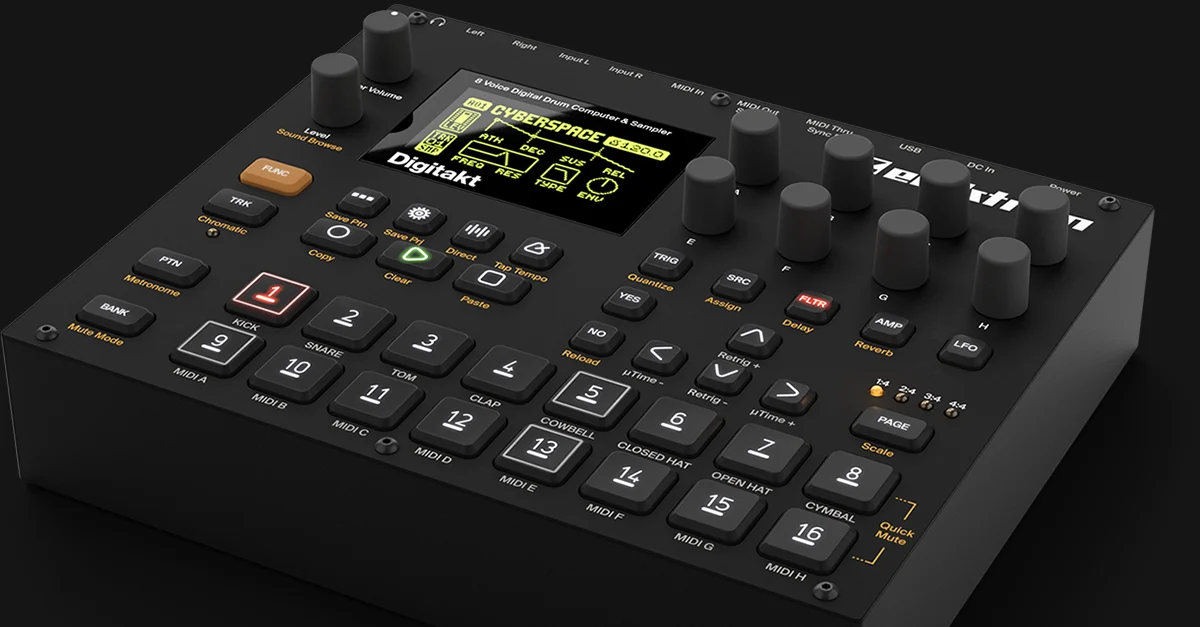
The landscape of music technology and hardware modification has reached a significant turning point with the emergence of Sophie for Digitakt, a sophisticated metallic percussion synthesis machine developed for the original Elektron Digitakt (Mk1). This development arrives at a period of heightened tension within the synthesizer community, following a controversial decision by the Swedish manufacturer Elektron to prohibit the discussion of third-party firmware modifications and hacks on its official community forum, Elektronauts. Despite these corporate restrictions, the independent development community has continued to iterate on the aging hardware, demonstrating the untapped potential of the Digitakt’s internal architecture. Sophie for Digitakt, colloquially referred to as Digisophie, represents a sophisticated adaptation of existing synthesis algorithms, specifically designed to function within the constraints of the Digitakt’s OS 1.53 environment while utilizing its native signal processing path.
Technical Architecture and Synthesis Models
Developed by the coder known as Soejrd, Sophie for Digitakt is not a standalone operating system but a specialized synthesis engine that integrates into the existing framework of the Digitakt Mk1. The project is a fixed-point adaptation of "Sophie for Schwung," an earlier synthesis project by the developer mestela. By porting these algorithms to the Digitakt, the developer has provided users with four distinct synthesis models: FUSE, BOOM, PIPE, and SHARD. Each model is engineered to generate metallic, industrial, and percussive textures that are often difficult to achieve using the standard sampling capabilities of the original hardware.
The FUSE model is designed for high-frequency transients and sparking textures, emulating the sonic characteristics of electrical discharges or micro-percussion. The BOOM model focuses on low-end impact, providing a synthesis-based alternative to traditional kick drum samples, characterized by a resonant, metallic weight. The PIPE model utilizes physical modeling principles to simulate the resonance of hollow structures, producing tubular and bell-like tones. Finally, the SHARD model is dedicated to complex, fractured noise and dissonant metallic hits, ideal for experimental sound design and aggressive rhythmic patterns.
Crucially, these models do not bypass the Digitakt’s internal processing. Instead, they feed directly into the unit’s standard AMP (amplifier), digital filter, mixer, and onboard effects (delay and reverb). This integration ensures that the new synthesis models benefit from the Digitakt’s celebrated sequencer, including parameter locks, trig conditions, and micro-timing, effectively transforming the sampler into a hybrid percussion synthesizer.
Chronology of Digitakt Firmware Development
To understand the significance of the Sophie mod, one must examine the timeline of the Digitakt’s development and the eventual emergence of community-driven firmware.
- May 2017: Elektron releases the Digitakt Mk1. It is marketed as an eight-voice digital drum computer and sampler. For years, it remains strictly a sampler, though its internal power is noted by tech enthusiasts.
- March 2023: Elektron releases Firmware 1.50 for the Digitakt Mk1. This is a landmark update that introduces "Machines"—specific playback engines (such as Repitch, Werp, and Slice) that change how the device handles audio. This architectural shift arguably laid the groundwork for how the system handles different internal "engines," providing a conceptual roadmap for modders.
- Late 2023 – Early 2024: Independent developers begin exploring the "backdoor" of the Digitakt’s firmware. Projects like "E25" and other unofficial patches begin to circulate, adding features that Elektron had not officially sanctioned or had reserved for newer hardware like the Digitakt II.
- September 2024: Elektron officially bans the discussion of firmware hacks and modifications on the Elektronauts forum. The company cites concerns regarding hardware stability, warranty issues, and potential copyright infringement.
- Late 2024: Development of Sophie for Digitakt is finalized. The developer chooses a "build it yourself" distribution method to circumvent legal challenges, releasing the source code rather than a modified binary of Elektron’s intellectual property.
Legal Considerations and Distribution Strategy
The distribution of Sophie for Digitakt highlights a sophisticated approach to the legal complexities of "abandonware" and hardware modification. Rather than distributing a modified version of Elektron’s copyrighted Operating System (OS), the developer provides the source code and a patching tool on GitHub.
Under this "build it yourself" (BIY) model, the user must provide their own copy of the official Elektron OS 1.53 file. The patcher then injects the Sophie synthesis code into the user’s legitimate file. This method is intended to protect the developer from claims of copyright infringement, as they are not distributing Elektron’s proprietary code. However, this process places the responsibility—and the risk—entirely on the end-user. Modifying firmware inherently carries the risk of "bricking" the device (rendering it non-functional) and almost certainly voids any remaining manufacturer warranty.
The developer has been explicit in advising users to perform comprehensive backups of their projects and patterns before attempting the installation. This reflects a broader trend in the "right to repair" and "hardware liberation" movements, where users seek to extend the lifecycle and utility of electronic devices through community-driven software enhancements.
The Influence of the "Sophie" Sound
The naming of the mod and its focus on metallic percussion is a direct homage to the late producer and sound designer SOPHIE, whose work revolutionized electronic music through the use of physical modeling synthesis. SOPHIE was known for eschewing traditional drum samples in favor of synthesized sounds that mimicked the physical properties of latex, metal, and plastic.
By bringing these synthesis capabilities to the Digitakt, the mod addresses a specific aesthetic demand within the electronic music community. While the Digitakt is a powerful sampler, its ability to generate sounds from scratch was historically limited. The Sophie mod effectively bridges the gap between the Digitakt’s workflow and the world of physical modeling synthesis, allowing for highly expressive, "elastic" sounds that react dynamically to sequencer modulation.
Industry Implications and Manufacturer Response
The emergence of Sophie for Digitakt poses a challenge to the traditional business models of hardware manufacturers. In May 2024, Elektron released the Digitakt II, which features significantly expanded memory, stereo sampling, and a more modular "Machine" architecture. By providing new synthesis engines for the Mk1, modders are essentially providing "new" hardware value to a device that the manufacturer may prefer to see phased out in favor of newer models.
Elektron’s decision to ban discussion of these mods on their official platforms suggests a desire to maintain a closed ecosystem. From a corporate perspective, unofficial firmware can lead to an influx of support tickets for issues the company did not create. Furthermore, if a modded device fails, it can damage the brand’s reputation for reliability.
However, industry analysts note that such community interventions often occur when a piece of hardware has reached a "cult" status. Similar movements have been seen with the Roland TB-303 (the "Devil Fish" mods) and the MPC series (JJOS). In many cases, these community-driven improvements eventually influence the official designs of future products. The "Machines" concept in Digitakt OS 1.50 itself felt like a response to the community’s desire for more specialized, synth-like behavior from their samplers.
Technical Limitations and User Experience
While the Sophie mod adds significant functionality, it operates within the hardware limitations of the Digitakt Mk1. The device uses a ColdFire processor, which, while capable, has finite computational cycles. Running complex synthesis models like SHARD or PIPE alongside the Digitakt’s existing effects and sequencer requires efficient code optimization.
The mod utilizes the regular Digitakt signal path, meaning that the synthesized sound is subject to the same 24-bit/48kHz digital-to-analog converters as the rest of the unit. Users have reported that the integration feels seamless, with the new engines appearing as selectable options within the internal menu structure, provided the patch is applied correctly.
Conclusion and Future Outlook
Sophie for Digitakt is more than just a technical curiosity; it is a statement on the longevity of digital instruments. As hardware matures and manufacturers move on to newer iterations, the responsibility for innovation often shifts to the user base. The project demonstrates that the Digitakt Mk1 remains a potent platform for sound design, capable of far more than simple sample playback.
The "cat and mouse" game between manufacturers and modders is likely to continue. As long as developers like Soejrd continue to release open-source tools that respect copyright while expanding functionality, the "modding" scene will remain a vital, albeit unofficial, part of the synthesizer ecosystem. For the owner of a Digitakt Mk1, Sophie offers a glimpse into a parallel reality where the device is not just a sampler, but a cutting-edge percussion synthesizer, proving that in the world of digital audio, the software is often the only limit to what the hardware can achieve.
