

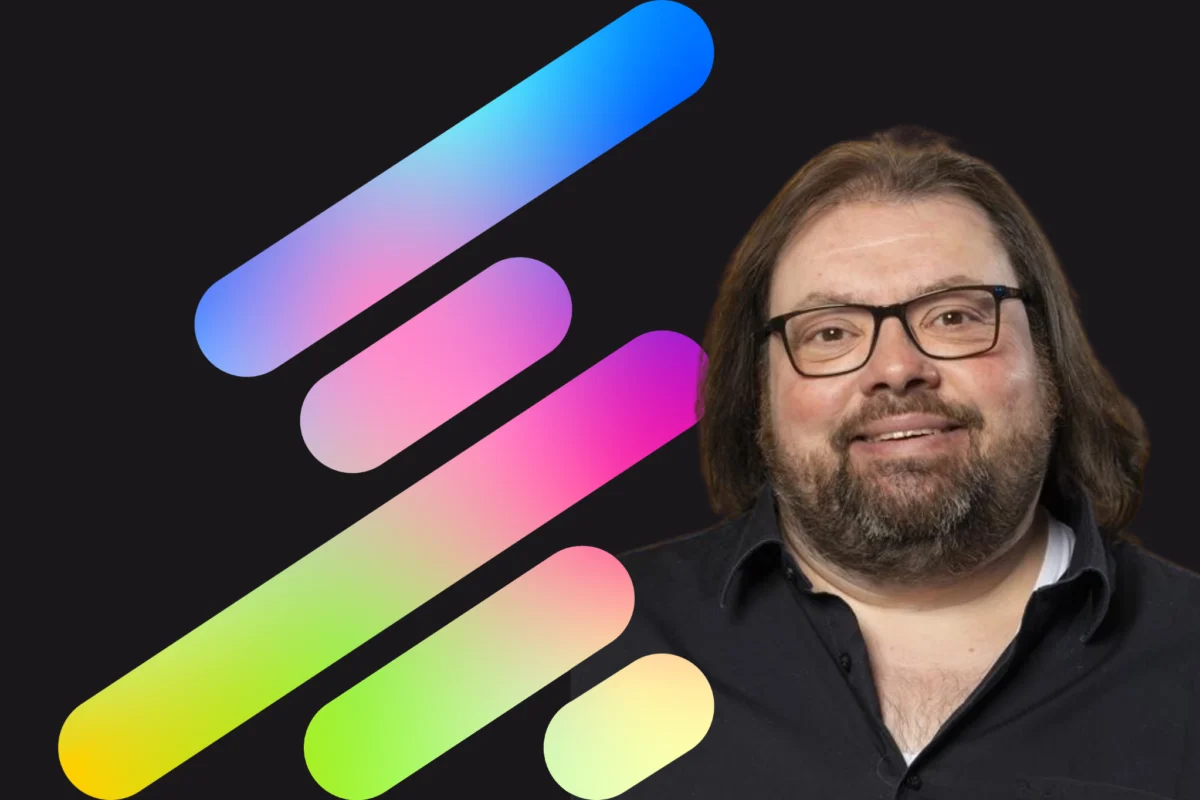
The landscape of live entertainment technology is undergoing a fundamental transformation as the boundaries between traditional lighting design and high-resolution video content continue to blur. At the center of this technological convergence is the upcoming leat con 26, where industry professionals will gather to explore the next generation of creative tools. Among the most anticipated sessions is a technical deep dive led by René Geißel, the Product Application Specialist for German Light Products (GLP). Scheduled for October 7, 2026, on the tech stage, Geißel’s presentation will focus on the practical applications of the JDC2 IP, a fixture that has become a benchmark for hybrid lighting and video integration. His session, titled "Digital Light Applications," aims to demystify the complexities of modern workflows, specifically focusing on the integration of Network Device Interface (NDI) protocols and the innovative DigiFX engine.
The Shift Toward Hybrid Visual Ecosystems
The live event industry has moved beyond the era where lighting and video were treated as separate departments with distinct signal paths. Today, the demand for immersive environments requires a unified approach to visual storytelling. The JDC2 IP represents the culmination of this trend, serving not just as a high-powered strobe or wash light, but as a digital canvas capable of displaying complex video data. Geißel’s presentation comes at a time when lighting designers (LDs) are increasingly tasked with managing massive amounts of data across diverse hardware platforms.
During the 30-minute session from 14:30 to 15:00, Geißel will address the core questions currently facing the industry: How do digital effects (DigiFX) function within a physical lighting fixture? What distinguishes "Devices" from "Canvases" in a professional lighting architecture? And most importantly, how can video content be seamlessly integrated across a rig of JDC2 IP units using NDI technology? These questions are not merely academic; they represent the practical hurdles that technicians and designers must overcome to produce world-class stadium tours, corporate galas, and theatrical productions.
Chronology of Innovation: From JDC1 to the JDC2 IP Era
To understand the significance of Geißel’s upcoming presentation, one must look at the developmental timeline of GLP’s strobe technology. The original JDC1, released nearly a decade prior to the current generation, revolutionized the market by combining a traditional LED strobe with a motorized tilt and a background pixel-mapping system. It became a staple in international touring riders, praised for its versatility.
However, as outdoor festivals grew in scale and the demand for higher resolution increased, the industry required a more robust, weather-resistant solution. The development of the JDC2 IP followed a multi-year research and development phase aimed at incorporating IP65-rated protection without sacrificing brightness or pixel density. By 2025, the JDC2 IP had established itself as a successor that offered significantly more power and a dedicated digital engine. Geißel’s role as a Product Application Specialist has been instrumental throughout this rollout, as he bridges the gap between the engineers in Karlsbad, Germany, and the end-users working in the field. The session at leat con 26 marks a milestone in this timeline, providing a platform to showcase how the software capabilities of the fixture have matured to meet the needs of 2026’s complex production environments.
Technical Breakdown: DigiFX, Canvases, and NDI Integration
A primary focus of the leat con 26 session will be the "DigiFX" engine. Unlike traditional lighting effects that rely on simple DMX-controlled patterns, DigiFX allows for the manipulation of digital assets directly within the fixture. This reduces the processing load on lighting consoles and media servers, allowing for more fluid and organic movements. Geißel is expected to demonstrate how these effects can be layered to create depth and texture that was previously impossible with standard LED strobes.
Furthermore, the distinction between "Devices" and "Canvases" is a critical concept in modern system design. In Geißel’s framework, a "Device" refers to the individual physical unit and its basic parameters, while a "Canvas" represents the larger visual plane created by an array of fixtures. By treating a rig of JDC2 IPs as a single canvas, designers can map video content across dozens or even hundreds of units with pixel-perfect accuracy.
The integration of NDI (Network Device Interface) is perhaps the most significant technical leap to be discussed. NDI allows for the transmission of high-definition video over standard Ethernet networks with extremely low latency. Geißel will showcase how a video feed can be routed directly from a media server into a JDC2 IP rig, bypassing the traditional limitations of DMX channel counts. This workflow allows for a level of synchronicity between lighting and video that was once the exclusive domain of high-budget bespoke installations.
Industry Data and Market Context
The importance of Geißel’s presentation is underscored by recent market data within the professional lighting sector. As of mid-2026, the global stage lighting market is projected to reach an estimated valuation of $3.5 billion, with a Compound Annual Growth Rate (CAGR) of 6.2%. A significant portion of this growth is attributed to the adoption of IP65-rated fixtures and the integration of "smart" features that allow for remote monitoring and advanced data management.
Furthermore, a 2025 industry survey indicated that over 70% of lighting designers now incorporate some form of pixel-mapped video into their lighting plots. This shift has led to a "data explosion" in the control room. A traditional DMX universe consists of 512 channels; a single modern hybrid fixture can easily consume half of a universe on its own. The transition to network-based protocols like NDI and sACN, which Geißel will advocate for, is no longer a luxury but a necessity for managing the high-density rigs seen in contemporary productions.
Professional Responses and Expert Perspectives
While the leat con 26 session is hosted by GLP, the implications of the technology are being felt across the wider industry. Lighting directors and rental house managers have expressed a growing need for standardized workflows that can handle the convergence of video and light. Early adopters of the JDC2 IP have noted that the ability to treat a strobe rig as a low-resolution video wall provides a "creative bridge" that allows for more cohesive visual themes.

"The challenge has always been the handshake between the lighting console and the media server," notes one industry veteran (inferred from common industry sentiment). "If René Geißel can demonstrate a workflow that simplifies this without requiring a degree in network engineering, it will be a major win for touring crews." This sentiment reflects a broader industry desire for "plug-and-play" complexity—tools that are powerful enough for the world’s biggest stages but intuitive enough for a quick festival changeover.
Broader Impact and Future Implications
The presentation at leat con 26 is more than a product demonstration; it is a glimpse into the future of the "Live Entertainment and Technology" (LEAT) sector. As fixtures like the JDC2 IP become more prevalent, we can expect to see a shift in the roles within a production team. The line between a Lighting Programmer and a Media Server Operator will continue to fade, leading to the rise of the "Visual Programmer"—a professional capable of navigating both worlds.
Moreover, the emphasis on IP65-rated technology reflects the industry’s adaptation to a changing climate and the increasing number of large-scale outdoor events. By providing a fixture that is both technologically advanced and physically rugged, GLP is addressing the dual requirements of modern touring. The data-driven workflows Geißel will present also contribute to sustainability efforts; by streamlining signal paths and reducing the amount of hardware required to achieve complex looks, productions can reduce their overall energy footprint and shipping volume.
Conclusion: A Landmark Session at leat con 26
As the industry prepares for the doors to open at leat con 26, the session on the tech stage stands out as a critical educational opportunity. René Geißel’s expertise as a Product Application Specialist ensures that the information shared will be grounded in real-world experience, moving beyond marketing jargon to provide actionable insights for technicians and designers.
The JDC2 IP is more than just a light; it is a symbol of the digital era of entertainment. By mastering the concepts of DigiFX, Canvases, and NDI integration, professionals can unlock new levels of creativity and efficiency. For those attending leat con 26 in October, Geißel’s presentation will likely serve as a roadmap for the next several years of visual design, proving that in the world of modern production, the most powerful tool is not just the light itself, but the intelligence behind how it is controlled.
