

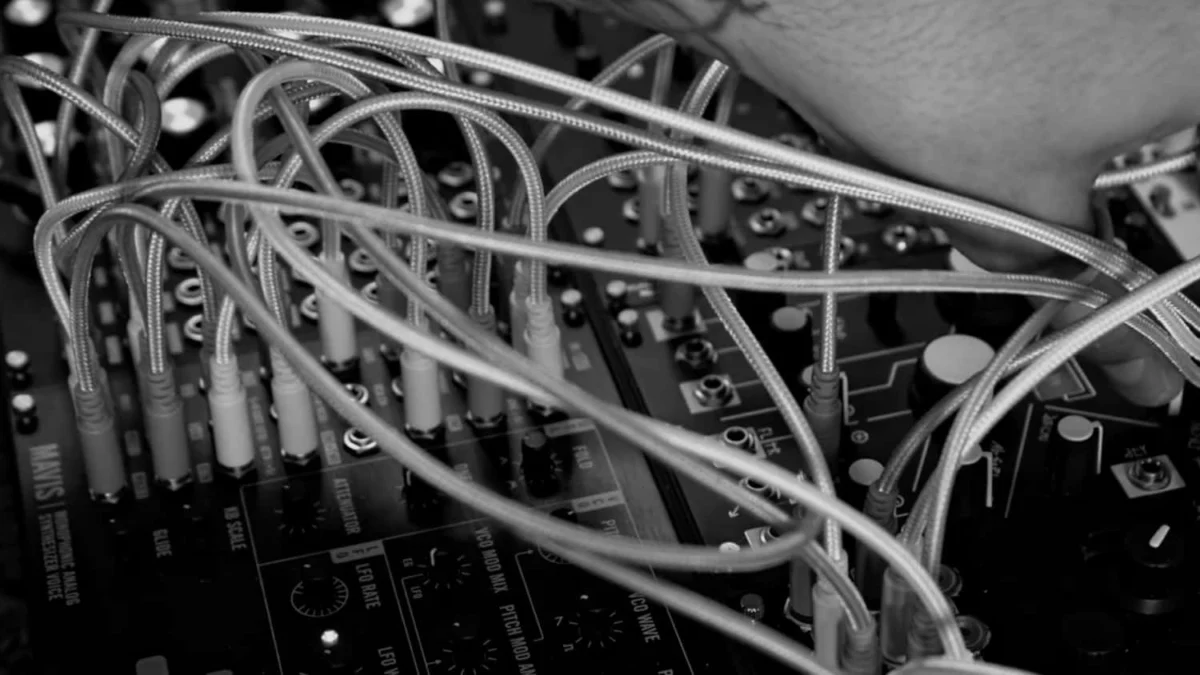
The intersection of semi-modular synthesis and specialized signal processing has reached a new milestone in the ambient electronic community with the release of a performance by synthesist Pipo Ferreira. The performance, which highlights the Moog Subharmonicon and the Make Noise Bruxa, serves as a technical demonstration of how disparate synthesis philosophies—specifically Moog’s mathematical subharmonic approach and Make Noise’s experimental DSP (Digital Signal Processing)—can be harmonized to create complex, evolving textures. This specific configuration utilizes a blend of analog sound generation, digital manipulation via the iPad, and precise rhythmic grounding provided by the Moog Drummer From Another Mother (DFAM).
Technical Overview of the Primary Instruments
The centerpiece of Ferreira’s performance is the Moog Subharmonicon, a semi-modular polyrhythmic analog synthesizer designed to explore the relationships between subharmonic series and polyrhythmic structures. Released as part of Moog’s "Mother" ecosystem, the Subharmonicon derives its inspiration from the Trautonium and the Rhythmicon, two early 20th-century electronic instruments. It utilizes two Voltage Controlled Oscillators (VCOs) and four Subharmonic Oscillators to produce a total of six sound sources. The mathematical precision of these subharmonics allows the user to generate chords that are perfectly in tune with the fundamental frequency, albeit in a non-traditional Western scale structure.
Complementing the Subharmonicon is the Make Noise Bruxa. The Bruxa is a limited-edition collaboration between Make Noise and musician Alessandro Cortini, based on the architecture of the Strega. It is an experimental delay and filter module that specializes in what the manufacturer describes as "alchemical" sound design. Unlike traditional delay pedals or modules that aim for clean repeats, the Bruxa is engineered to introduce degradation, noise, and saturation, allowing the clean signals from the Subharmonicon to be transformed into haunting, atmospheric washes.
The Role of Supporting Hardware and Software
While the Subharmonicon and Bruxa provide the primary tonal and textural elements, the performance relies on a sophisticated supporting cast of hardware. Ferreira integrated the Expert Sleepers Disting NT, a multi-functional digital module that represents the latest evolution in the Disting series. In this specific performance, the Disting NT was utilized to provide melodic piano voices, adding a familiar acoustic timbre to the otherwise synthetic soundscape. The inclusion of the Disting NT showcases the modern modular trend of "multi-tool" modules that can pivot between sampling, synthesis, and utility roles within a single rack space.
Rhythmic structure was maintained by the Moog DFAM. Known for its raw, aggressive analog percussion, the DFAM was used here in a more subdued capacity to provide a consistent pulse that anchored the shifting polyrhythms of the Subharmonicon. Furthermore, Ferreira utilized an iPad to inject field recordings and additional effects processing into the mix. This hybrid approach—combining high-end analog hardware with mobile digital platforms—reflects the growing "DAWless" movement where performers seek to step away from traditional computer screens while still leveraging the processing power of modern software.
Chronology of the Moog Semi-Modular Ecosystem
To understand the significance of this performance, one must look at the timeline of the hardware involved. Moog Music’s semi-modular journey began in earnest with the release of the Mother-32 in 2015, which introduced the 60HP format and the concept of a standalone unit that could also live within a Eurorack system. This was followed by the DFAM in 2018, which focused on percussive synthesis.
The Subharmonicon was originally released as a limited-edition kit for the Moogfest 2018 Engineering Workshop before seeing a wide commercial release in 2020. Its introduction marked a shift in Moog’s design philosophy, moving away from standard subtractive synthesis and toward experimental harmonic theory. Pipo Ferreira’s performance represents the maturation of this ecosystem, demonstrating how these tools, which were once considered niche or experimental, have become staples in the ambient and film-scoring communities.
Analysis of the Sonic Interaction
The "magic" referred to in the performance’s reception stems from the specific way the Subharmonicon’s sequencers interact with the Bruxa’s delay lines. The Subharmonicon features two four-step sequencers that can be clocked by four different rhythm generators. This creates polyrhythms that do not necessarily loop in a standard 4/4 time signature. When these offset rhythms are fed into the Bruxa’s time-based effects, the result is a "generative" feel, where the delays overlap in unpredictable ways, creating new melodies and harmonies that the performer did not explicitly program.
Data from modular synthesis forums and user groups suggest that the Subharmonicon is often criticized for being difficult to "tame" or integrate into standard pop music. However, in the context of ambient performance, its unpredictability is its greatest strength. By utilizing the iPad for field recordings, Ferreira adds a layer of "organic noise" that bridges the gap between the mathematical rigidity of the oscillators and the chaotic degradation of the Bruxa.
Industry Implications and Market Trends
The use of this specific gear combination highlights several key trends in the electronic music industry:
- The Rise of Collaboration-Based Gear: The Make Noise Bruxa, being a collaboration with Alessandro Cortini (of Nine Inch Nails fame), demonstrates the market power of artist-endorsed, specialized hardware. These "boutique" modules often hold their value better than mass-produced synthesizers and drive community engagement through limited releases.
- Hybridization of Analog and Digital: The integration of the iPad and the Disting NT suggests that the "Analog vs. Digital" debate is largely settled in favor of hybrid systems. Modern performers are increasingly willing to use digital modules for complex tasks like piano emulation or granular synthesis while retaining analog oscillators for their unique harmonic character.
- The Accessibility of Ambient Performance: Platforms like YouTube and Synthtopia have democratized the distribution of experimental music. Performance videos function not just as entertainment but as educational resources that demonstrate signal flow and patching techniques to a global audience.
Community and Expert Reactions
While Moog Music and Make Noise have not issued formal statements regarding this specific performance, the reaction within the synthesist community has been overwhelmingly positive. Technical analysts have noted that Ferreira’s use of the Subharmonicon as the primary sequencer for the entire rig—including the external modules—is a testament to the unit’s versatility.
Experts in the field of music technology have pointed out that performances like this validate the "ecosystem" approach taken by manufacturers. By creating instruments that share the same form factor and voltage standards, companies like Moog and Make Noise allow users to build custom instruments that are greater than the sum of their parts. The "Bruxa" effect, specifically, has been praised for its ability to provide "darkness" and "weight" to the often-bright Moog filters, creating a balanced frequency spectrum.
Broader Impact on Electronic Music Composition
The performance by Pipo Ferreira is more than a gear demonstration; it is an exploration of how modern technology can be used to revisit ancient musical theories. The subharmonic series, which the Subharmonicon is built upon, is a concept that dates back to the theories of Zarlino in the 16th century and was later championed by composer Paul Hindemith. By bringing these theories into the 21st century through modular synthesis, performers are expanding the vocabulary of electronic music.
As the industry moves forward, the influence of these experimental setups is expected to bleed into more mainstream productions. The textures created by the Subharmonicon and Bruxa are already becoming common in contemporary television and film scores, where "tension" and "atmosphere" are prioritized over traditional melody.
In conclusion, the integration of the Moog Subharmonicon, Make Noise Bruxa, and supporting digital tools in Pipo Ferreira’s performance serves as a benchmark for contemporary ambient music. It highlights the successful marriage of historical music theory and cutting-edge DSP, proving that the future of synthesis lies in the creative patching of diverse technologies. As modular systems become more integrated with mobile platforms and specialized artist-driven hardware, the boundaries of what can be achieved in a solo live performance continue to expand.
