

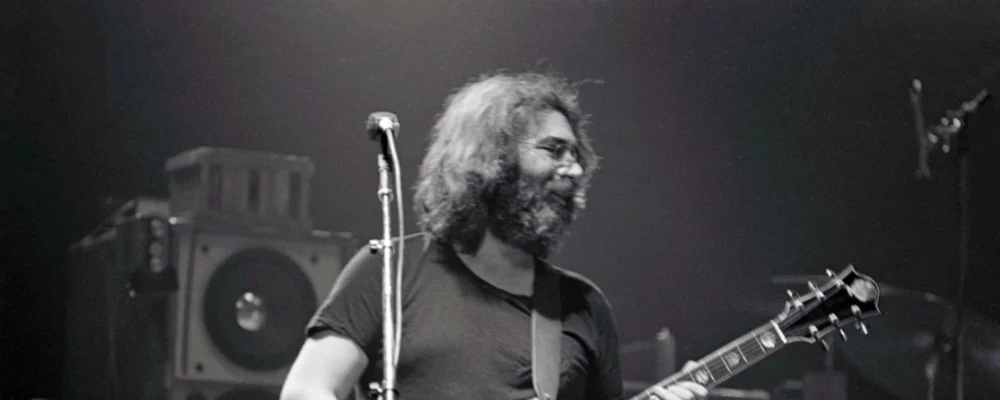
The intersection of musical history, high-stakes memorabilia auctions, and live performance converged this week as one of the most storied instruments in rock history changed hands and immediately returned to the spotlight. Tiger, the custom-built guitar synonymous with Grateful Dead frontman Jerry Garcia, was sold at auction on Thursday, March 12, for a staggering $11.5 million. The sale, conducted through Christie’s as part of a landmark auction of the late Jim Irsay’s extensive collection, marks one of the highest prices ever paid for a musical instrument. However, unlike many high-value artifacts that disappear into private vaults, Tiger was back on a concert stage less than twenty-four hours later, played by slide guitar virtuoso Derek Trucks at New York City’s Beacon Theatre.
The transition of Tiger from a centerpiece of the Jim Irsay collection to its new home with Family Guitars represents a significant shift in the philosophy of instrument curation. The buyer, Bobby Tseitlin, representing the Chicago-based Family Guitars, has stated that the acquisition was driven by a desire to keep the instrument in the public ear. This commitment was realized on Friday, March 13, when Trucks, co-leader of the Tedeschi Trucks Band, utilized the instrument during a sold-out performance, bridging the gap between the Grateful Dead’s improvisational legacy and the modern blues-rock scene.
The History and Craftsmanship of Tiger
To understand the $11.5 million valuation of Tiger, one must look at its origins in the early 1970s. The guitar was the result of a six-year collaboration between Jerry Garcia and luthier Doug Irwin. Garcia had previously played another Irwin creation, known as "Wolf," but in 1973, he commissioned a new instrument with a simple yet daunting directive: "Don’t hold back."
Irwin spent the next several years meticulously crafting what would become a masterpiece of luthierie. Tiger is notable for its immense weight—approximately 13.5 pounds—and its complex construction. The body is a "hippie sandwich" of various woods, including a core of maple and vermillion (padauk), sandwiched between layers of cocobolo. The guitar features intricate brass hardware and a sophisticated internal preamp and effects loop system, allowing Garcia to control his external effects pedals directly from the instrument’s face.
The name "Tiger" comes from the intricate marquetry on the guitar’s preamp cover, depicting a pouncing tiger. Garcia received the instrument in 1979 and it quickly became his primary axe, defining the Grateful Dead’s sound throughout the 1980s. It was the last guitar Garcia played in a public performance, used during the Grateful Dead’s final show at Soldier Field in Chicago on July 9, 1995.
The Auction and the Market for Iconic Instruments
The sale of Tiger was part of a larger liquidation of the music memorabilia amassed by Jim Irsay, the owner of the Indianapolis Colts, who passed away in May 2025. Irsay was renowned for his "The Jim Irsay Collection," a traveling exhibit of historical artifacts ranging from Jack Kerouac’s original "On the Road" scroll to some of the world’s most famous guitars.
While Tiger’s $11.5 million price tag is monumental, it was not the top lot of the Thursday auction. That honor went to David Gilmour’s "Black Strat," the iconic Fender Stratocaster used on Pink Floyd’s The Dark Side of the Moon and The Wall. The Black Strat fetched $14.5 million, maintaining its status as the most expensive guitar ever sold at auction. Nevertheless, the eight-figure sum paid for Tiger underscores the enduring cultural and financial value of Garcia’s legacy.
Industry analysts suggest that the market for "A-list" celebrity instruments is reaching a new plateau. As the generation that grew up with the icons of the 1960s and 70s reaches peak wealth, instruments that were once seen as tools of the trade are now being treated as fine art or historical relics. The $11.5 million sale price is a significant jump from when Irsay originally purchased the guitar in 2002 for roughly $957,000, representing a more than tenfold increase in value over two decades.
A Living Collection: The Philosophy of Family Guitars
The successful bidder, Bobby Tseitlin of Family Guitars, has been vocal about his intent to deviate from the traditional "museum" model of instrument collecting. Based in Chicago, Family Guitars operates under the mantra that these instruments are "not locked away in a vault or hidden behind glass."
"These are part of a living collection," the organization’s mission statement reads. "Guitars that continue to be played, heard, and experienced the way they were meant to be."
This philosophy stands in contrast to the preservationist approach often taken by institutions like the Smithsonian or the Rock & Roll Hall of Fame, where environmental controls and physical security are prioritized over acoustic utility. By putting Tiger back into the hands of a world-class musician like Derek Trucks, Family Guitars aims to maintain the "soul" of the instrument, which many enthusiasts believe is tied to the vibration of the strings and the heat of an amplifier.
Derek Trucks and the Beacon Theatre Performance
The selection of Derek Trucks to re-debut Tiger was viewed by many in the music community as an inspired choice. Trucks, 46, has long been regarded as one of the finest guitarists of his generation. A former member of the Allman Brothers Band and the nephew of founding drummer Butch Trucks, he possesses a deep connection to the roots of American jam-band music.
During the Tedeschi Trucks Band’s performance at the Beacon Theatre on Friday night, Trucks introduced Tiger into the set with a mix of reverence and technical prowess. The instrument, which ironically is the same age as Trucks himself (both originating in the mid-1970s), was used on a variety of tracks that highlighted its versatile electronics.
Trucks utilized the guitar on "Statesboro Blues," the Blind Willie McTell classic popularized by the Allman Brothers, and Frank Zappa’s "Willie the Pimp." The highlight of the evening for many Grateful Dead devotees was a seamless transition from John Prine’s "Angel From Montgomery" into "Sugaree," a staple of Garcia’s solo repertoire and the Grateful Dead’s live shows. Observers noted that while Tiger’s tone is distinctively "Garcia"—characterized by a bright, clean, and percussive attack—Trucks managed to incorporate his signature slide work, creating a unique sonic hybrid.
Chronology of Tiger: From Workshop to Auction Block
The journey of Tiger spans over half a century, marked by key milestones in the history of rock and roll:
- 1973: Jerry Garcia commissions Doug Irwin to build a follow-up to the "Wolf" guitar.
- 1973–1979: The construction phase. Irwin experiments with exotic woods and custom electronics to meet Garcia’s exacting standards.
- August 1979: Garcia debuts Tiger at a Grateful Dead performance at the Oakland Auditorium.
- 1979–1989: Tiger serves as Garcia’s primary instrument for over a decade of touring and recording.
- 1989: Tiger is largely retired in favor of "Rosebud," another Irwin creation, though it remains a backup and is occasionally used.
- July 9, 1995: Garcia plays Tiger during his final concert at Soldier Field.
- August 9, 1995: Jerry Garcia passes away, leading to a legal dispute between Doug Irwin and the remaining members of the Grateful Dead regarding the ownership of the custom guitars.
- 2001: A settlement is reached, returning the guitars to Doug Irwin.
- 2002: Irwin auctions Tiger at Guernsey’s in New York. Jim Irsay purchases it for $957,500.
- 2002–2025: Tiger is part of the Jim Irsay Collection, occasionally displayed in museums and at special events.
- May 2025: Jim Irsay passes away.
- March 12, 2026: Tiger sells for $11.5 million to Family Guitars at Christie’s.
- March 13, 2026: Derek Trucks plays Tiger at the Beacon Theatre.
Impact on the Music Community and Legacy
The reaction from the "Deadhead" community and guitar enthusiasts has been overwhelmingly positive. Social media platforms were flooded with footage of the Beacon Theatre performance, with fans expressing relief that the instrument was being used for its intended purpose. The sentiment that "Jerry is smiling" became a recurring theme among commenters, reflecting the deep emotional attachment fans have to Garcia’s equipment.
From a technical perspective, the performance also served as a testament to Doug Irwin’s engineering. Despite being over 45 years old and having spent significant time in storage or on display, the guitar functioned perfectly in a professional touring environment. This speaks to the durability of the high-end custom builds of the 1970s, which were designed to withstand the rigors of the Grateful Dead’s relentless touring schedule.
The sale and subsequent performance of Tiger also highlight the continued relevance of the Grateful Dead’s musical language. The band’s influence on the "jam" scene and modern Americana is personified by groups like the Tedeschi Trucks Band. By passing the literal torch—or in this case, the guitar—to a musician of Trucks’ caliber, the legacy of Jerry Garcia is preserved not as a static historical fact, but as a living, breathing part of the contemporary musical landscape.
As Tiger moves into its new chapter with Family Guitars, it sets a precedent for how other high-value instruments might be handled in the future. The success of the Friday night performance may encourage other collectors to partner with active musicians, ensuring that the world’s most famous instruments continue to be "played, heard, and experienced" by audiences around the globe.
