

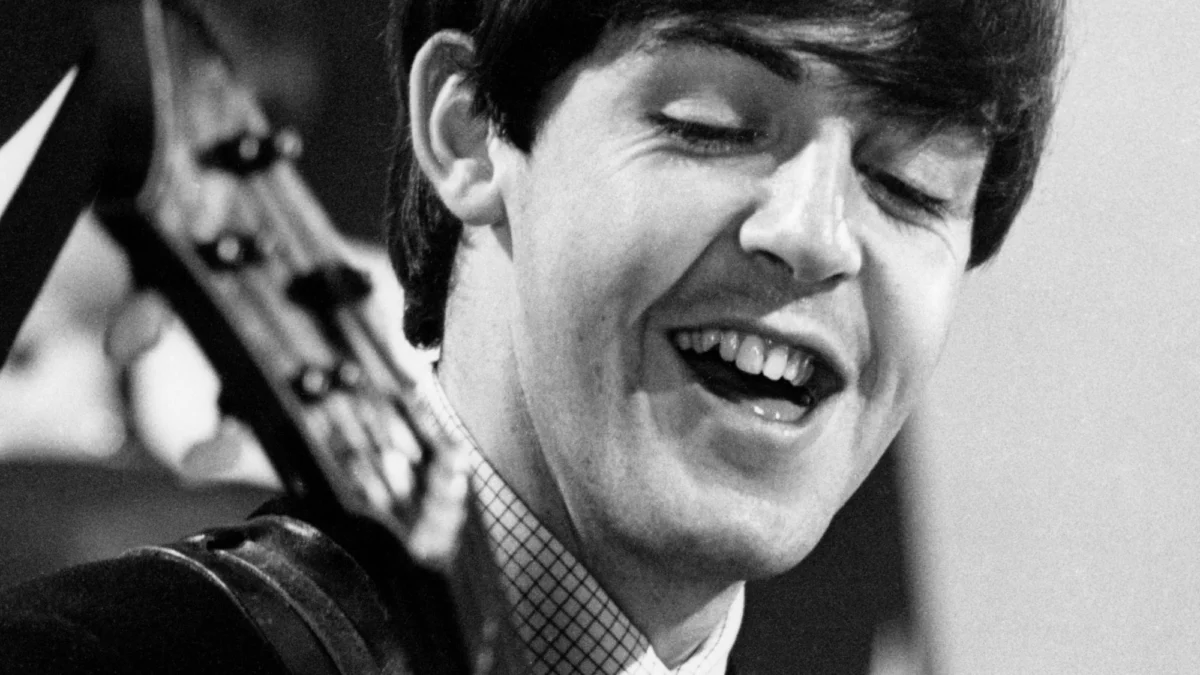
Sir Paul McCartney’s body of work serves as a comprehensive masterclass in musical composition, offering profound insights not only for aspiring songwriters but for anyone engaged in the creative arts. As one of the most commercially successful and critically acclaimed performers of all time, McCartney’s career provides a blueprint for artistic longevity, melodic innovation, and the strategic use of simplicity. By analyzing his discography—spanning his tenure with The Beatles, his work with Wings, and his extensive solo career—several fundamental principles emerge that define his unique contribution to the global cultural landscape. These principles center on the primacy of melody, the strength found in simplicity, and the vital importance of maintaining a creative spark across six decades of professional activity.
The Primacy of Melody in Popular Composition
A defining characteristic of McCartney’s work is the belief that a great melody possesses a value that transcends lyrical content. This philosophy often set him apart from his primary collaborator, John Lennon. While Lennon’s songwriting evolved toward the world-weary, the cynical, and the overtly political, McCartney remained focused on the construction of melodies that could resonate across generational and linguistic boundaries. This focus did not preclude depth; rather, it utilized "pop sensibilities" to make complex emotions accessible to a mass audience.
McCartney’s ability to craft timeless melodies is evidenced by the global ubiquity of his compositions. From "Hey Jude" to "Blackbird," his songs are frequently recognized by their melodic contours even by listeners who may not be fluent in English or familiar with the specific lyrics. This "melodic first" approach has historical roots in the Tin Pan Alley tradition, yet McCartney modernized it with rock and roll energy and avant-garde experimentation. In the professional music industry, this is often cited as the "McCartney Touch"—the ability to create a "hook" that feels both inevitable and fresh.
Statistical data supports the impact of this melodic focus. McCartney is credited as the primary writer of "Yesterday," which remains one of the most covered songs in the history of recorded music, with over 2,200 versions by various artists. This level of saturation is a direct result of a melody so structurally sound that it retains its emotional resonance regardless of the genre or arrangement in which it is placed.
The Power of Structural Simplicity
Beyond melody, McCartney’s career demonstrates that simplicity is often the most effective tool in a songwriter’s arsenal. While he has frequently engaged in complex arrangements—such as the multi-part suite of the "Medley" on the second side of Abbey Road—his most enduring hits often rely on straightforward structures and universal themes.
Songs like "Let It Be" and "The Long and Winding Road" utilize basic chord progressions and direct lyrical imagery to achieve a profound emotional impact. This adherence to simplicity is not a lack of sophistication; rather, it is a deliberate choice to strip away the superfluous. In an era where digital production allows for infinite layering, McCartney’s "less is more" philosophy serves as a reminder that the core of a great song must be able to stand alone with a single instrument and a voice.
This commitment to the "roots" of songwriting allowed McCartney to navigate the transition from the experimental 1960s to the more polished production of the 1970s and 80s. Even during his most experimental phases, such as the "Paul is Live" era or his electronic forays as The Fireman, the underlying simplicity of his songcraft remained the anchor that prevented the work from becoming inaccessible to his audience.
A Chronology of Creative Evolution and Longevity
To understand McCartney’s impact, one must examine the timeline of his creative output, which reflects a refusal to remain static. His career can be categorized into several distinct phases of innovation:
- 1962–1969 (The Beatles Era): A period of rapid evolution from Merseybeat pop to psychedelic rock and orchestral experimentation. McCartney’s role as a multi-instrumentalist became central, particularly his melodic approach to the bass guitar, which revolutionized the instrument’s role in a rock band.
- 1970–1979 (The Wings and Solo Transition): Following the dissolution of The Beatles, McCartney formed Wings. Despite initial critical skepticism, he achieved massive commercial success with albums like Band on the Run (1973), proving his viability outside the "Fab Four" framework.
- 1980–1999 (Global Icon Status): This period saw McCartney collaborating with other icons like Michael Jackson and Stevie Wonder, while also venturing into classical music with the Liverpool Oratorio.
- 2000–Present (The Elder Statesman): In the 21st century, McCartney has focused on maintaining his creative relevance. He has released a string of critically acclaimed albums, including Chaos and Creation in the Backyard (2005) and the "McCartney Trilogy," which concluded with McCartney III in 2020.
His recent activity, including his record-breaking "Got Back" tour and the release of archival projects, highlights a level of creative stamina that is rare in the industry. Unlike many of his contemporaries who rely solely on "nostalgia act" status, McCartney continues to release new material that competes on modern charts, such as his 2018 album Egypt Station, which debuted at number one on the Billboard 200.
Sustaining the Creative Spark in the Modern Era
A significant lesson from McCartney’s later career is the importance of staying curious. He has consistently sought out new collaborators and technologies, ranging from working with producer Nigel Godrich to his 2015 collaboration with Kanye West and Rihanna on "FourFiveSeconds." This willingness to engage with the contemporary music scene has allowed him to remain a "viable artist" rather than a museum piece.
The release of McCartney III during the COVID-19 pandemic serves as a case study in this enduring drive. Recorded in "Rockdown" (his term for lockdown), the album featured McCartney playing every instrument and handling all production duties. This project echoed his 1970 solo debut, McCartney, and 1980’s McCartney II, demonstrating that his creative process remains rooted in a personal, almost artisanal, relationship with music-making.
Industry analysts note that McCartney’s ability to maintain his voice and instrumental proficiency into his 80s is a result of both disciplined practice and an undiminished enthusiasm for the medium. He has frequently stated in interviews that he still finds the process of "pulling a song out of the air" to be a magical experience, a sentiment that prevents his work from becoming mechanical or formulaic.
Cultural Impact and Industry Reactions
The broader impact of McCartney’s work is measured not just in sales but in the testimonial of his peers. Artists ranging from Dave Grohl to Billie Eilish have cited McCartney as a primary influence, particularly regarding his work ethic and his ability to bridge the gap between "art" and "entertainment."
In a statement regarding McCartney’s influence, Brian Wilson of The Beach Boys once remarked that McCartney’s "God Only Knows" was a catalyst for his own creative peaks, illustrating the "creative arms race" that McCartney helped fuel during the 1960s. More recently, critics have pointed to his "stamina" as his most impressive late-career attribute. His three-hour live sets, performed without a break, have become legendary within the touring industry, setting a standard for physical and professional endurance.
Furthermore, McCartney’s business acumen through his company, MPL Communications, has made him one of the wealthiest musicians in the world. By retaining or acquiring the publishing rights to a vast catalog of music (including works by Buddy Holly), he demonstrated early on the importance of artists controlling their own intellectual property—a lesson that continues to resonate in the modern era of streaming and digital rights management.
Conclusion: The Enduring Blueprint
The career of Paul McCartney offers a multifaceted lesson in the sustainability of a creative life. By prioritizing melody, he ensured his work would be universal. By embracing simplicity, he made his art accessible and emotionally resonant. Finally, by maintaining a relentless curiosity and work ethic, he bypassed the traditional trajectory of the aging rock star, remaining a contemporary force in the music industry.
For the modern observer, McCartney’s legacy is a reminder that creativity is not a finite resource that expires with youth. Instead, it is a skill that can be refined and expanded over a lifetime. Whether through the lens of a songwriter seeking the perfect hook or a professional seeking to maintain relevance in a changing field, the "McCartney Method" provides a proven strategy for excellence: value the core idea, keep the execution honest, and never stop creating. As he continues to tour and record, McCartney remains not just a figure of history, but a living demonstration of the power of the creative spirit.
