

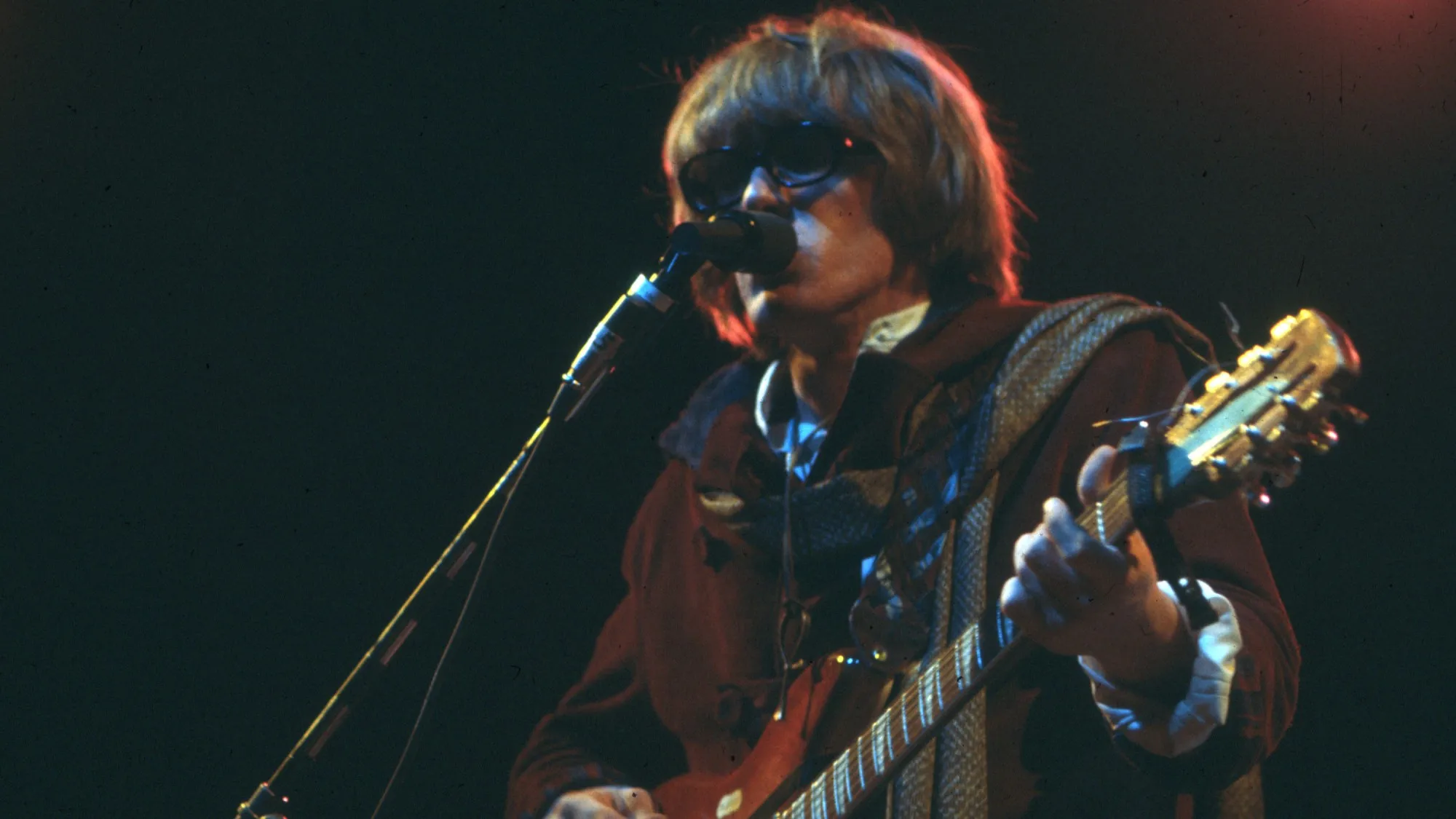
The year 1967 remains a definitive turning point in the history of modern music, characterized by a radical departure from the structured three-minute pop singles of the early 1960s toward a more experimental, multi-genre approach. While psychedelic rock served as the dominant cultural aesthetic during the "Summer of Love," the period was defined less by a singular sound and more by the innovative merging of disparate musical traditions. This era of sonic experimentation saw artists successfully integrate elements of Spanish flamenco, African-American gospel, classical avant-garde, and jazz into the burgeoning psychedelic framework. These hybrid compositions not only challenged the limitations of recording technology at the time but also reshaped the commercial landscape of the Billboard charts and the emerging FM radio format.
The Intersection of Flamenco and Psychedelia: Jefferson Airplane
One of the most prominent examples of successful genre-blending in 1967 was Jefferson Airplane’s "White Rabbit," a track that remains a cornerstone of the San Francisco Sound. Recorded for the album Surrealistic Pillow at RCA Victor’s Music Center of the World in Hollywood, the song was written by Grace Slick while she was still a member of her previous band, The Great Society. Unlike the blues-based rock that dominated the era, "White Rabbit" utilized a distinct bolero rhythm, directly inspired by Maurice Ravel’s "Bolero" and the Spanish-influenced jazz heard on Miles Davis’s Sketches of Spain.
The track’s composition is notable for its use of a Phrygian scale, a hallmark of flamenco music, which provides the song with its haunting, escalating tension. Slick’s vocals do not follow a traditional verse-chorus-verse structure; instead, the song is a continuous crescendo that mirrors the "trip" described in its lyrics, which drew heavily from Lewis Carroll’s Alice’s Adventures in Wonderland.
Upon its release in June 1967, "White Rabbit" achieved significant commercial success, peaking at No. 8 on the Billboard Hot 100. In Canada, the track reached the top spot on the RPM 100 national singles chart. The success of "White Rabbit" demonstrated that mainstream audiences were receptive to complex, non-traditional song structures, paving the way for more experimental compositions to receive airplay on Top 40 radio.
Bridging Soul, Gospel, and Acid Rock: The Chambers Brothers
While San Francisco was the epicenter of the psychedelic movement, the East Coast contributed one of the most aggressive genre fusions of the year with The Chambers Brothers’ "Time Has Come Today." Originally a gospel-soul group, the brothers—George, Willie, Lester, and Joe—integrated the distorted, heavy aesthetics of "acid rock" into their soulful vocal harmonies.
The recording of "Time Has Come Today" for the album The Time Has Come was a radical act of musical synthesis. It featured a prominent, relentless cowbell that functioned as a metronome for the "ticking" of time, while the mid-section of the song dissolved into an extended, chaotic instrumental break characterized by heavy reverb and distorted guitar feedback. Music journalist Chuck Eddy later analyzed the track as an early precursor to dub music, noting its experimental use of space and echo.
The song’s impact was as much social as it was musical. Released during a period of intense civil rights activism and the escalation of the Vietnam War, the lyrics "The time has come today / Young hearts can go their way" resonated as a call for social change. The single reached No. 11 on the Billboard Hot 100 in the fall of 1967 and spent five weeks at No. 1 on the Boston-based WMEX survey. The Chambers Brothers’ ability to blend Black gospel traditions with the predominantly white-associated psychedelic rock genre broke significant cultural barriers, proving that the counterculture’s "trippy" sound was not exclusive to any one demographic.
The Avant-Garde and the Orchestra: The Beatles’ Sophisticated Synthesis
No discussion of 1967’s musical evolution is complete without examining the contributions of The Beatles, particularly their work on Sgt. Pepper’s Lonely Hearts Club Band. While the album is often cited as the pinnacle of psychedelic pop, the closing track, "A Day in the Life," represented a sophisticated fusion of classic pop songwriting, avant-garde orchestral composition, and philosophical lyricism.
The track was a collaborative effort between John Lennon and Paul McCartney, with the two songwriters contributing distinct segments that were bridged by a 40-piece orchestra. Under the direction of producer George Martin and McCartney, the orchestral musicians were instructed to perform an "aleatoric" (random) glissando, moving from their lowest possible note to their highest. This technique, borrowed from contemporary classical composers like Karlheinz Stockhausen and Krzysztof Penderecki, was unprecedented in a pop recording.
The recording sessions for "A Day in the Life" took place in January and February 1967 at Abbey Road Studios. The final product was a sonic collage that included a thunderous E-major piano chord, played simultaneously on three pianos and an organ, which was allowed to ring out for over 40 seconds. Although the song was banned by the BBC upon release due to perceived drug references in the line "I’d love to turn you on," it was hailed by critics as a masterpiece of modern art. It served as the definitive proof that the recording studio itself could be used as a musical instrument, blending the boundaries between "high art" and popular music.
Baroque Pop and the Classical Influence: Procol Harum
The spring of 1967 also saw the emergence of "Baroque Pop," a subgenre that blended rock instrumentation with the melodic and harmonic structures of the Baroque period. Procol Harum’s "A Whiter Shade of Pale" became the most successful example of this trend. Released in May 1967, the song featured a prominent Hammond M-102 organ line played by Matthew Fisher, which was heavily influenced by Johann Sebastian Bach’s "Air on the G String" and "Sleeper’s Awake."
The fusion of soul-inflected vocals by Gary Brooker and the stately, classical organ melody created a unique atmosphere that felt both ancient and contemporary. The song was an immediate global sensation, reaching No. 1 on the UK Singles Chart and No. 5 on the Billboard Hot 100. It sold over 10 million copies worldwide, making it one of the best-selling singles of all time. The success of "A Whiter Shade of Pale" highlighted a growing sophistication among pop music consumers, who were increasingly drawn to tracks that offered more than just a danceable beat.
The Technical and Cultural Context of 1967
The rapid diversification of genres in 1967 was facilitated by several key factors:
- Advancements in Studio Technology: The transition from four-track to eight-track recording allowed for more complex layering of instruments. This enabled bands to bring in orchestral sections or experiment with tape loops and backward recording without losing the clarity of the core rock band.
- The Rise of FM Radio: While AM radio remained the home of the "hit single," the emergence of "underground" FM radio stations allowed for longer, more experimental tracks to be played in their entirety. This gave artists the freedom to move beyond the three-minute format.
- The Monterey International Pop Festival: Held in June 1967, this event served as a major showcase for genre-blending artists. It featured a diverse lineup including the sitar mastery of Ravi Shankar, the blues-rock fusion of Janis Joplin, and the avant-garde guitar work of Jimi Hendrix, further cementing the idea that "pop" was an expansive, all-encompassing term.
Legacy and Implications for the Music Industry
The genre-mashing experiments of 1967 had long-lasting implications for the music industry. They signaled the end of the "tin pan alley" era where songwriters and performers were often separate entities, and heralded the rise of the "album-oriented rock" (AOR) era. By proving that complex, multi-genre songs could be both critically acclaimed and commercially viable, these artists gave future generations the permission to ignore traditional genre boundaries.
The impact is still felt today in the concept of "post-genre" music. The techniques pioneered in 1967—the use of non-Western scales, the integration of classical orchestration into pop, and the use of the studio as a creative tool—became the foundation for progressive rock, heavy metal, and even modern electronic and hip-hop production.
In conclusion, the musical output of 1967 was not merely a byproduct of the psychedelic movement, but a deliberate and sophisticated effort by artists to expand the vocabulary of popular music. Through the innovative works of Jefferson Airplane, The Chambers Brothers, The Beatles, and others, the year became a testament to the power of artistic fusion, forever changing the way music is composed, recorded, and consumed.
