

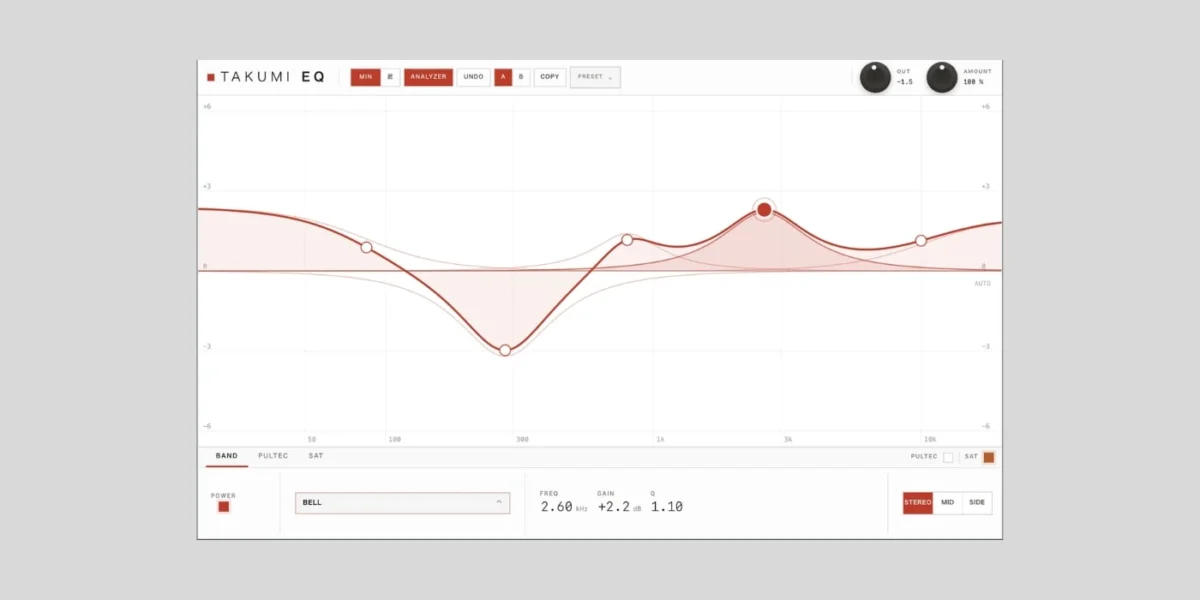
In a significant development for the audio production community, Okina Audio has officially released Takumi EQ, a versatile and feature-rich equalizer plugin offered completely free of charge. This launch marks a notable entry into the competitive landscape of digital audio workstations (DAW) plugins, presenting a sophisticated toolkit that integrates dynamic equalization, a classic Pultec-style tone shaping section, and an advanced multiband saturator into a single, cohesive unit. The release is poised to democratize access to high-end audio processing capabilities, making complex mixing and mastering techniques more attainable for independent artists, home studio enthusiasts, and seasoned professionals alike.
The Dawn of a New Free Standard in Audio Production
The proliferation of high-quality free plugins has been a defining characteristic of the modern music production era. What was once the exclusive domain of expensive hardware or premium software suites is now increasingly accessible, fostering creativity and lowering the barrier to entry for aspiring producers. Okina Audio’s Takumi EQ elevates this trend by offering a suite of functionalities typically found in multiple, often costly, commercial plugins. Its availability as a free tool challenges the traditional market dynamics, pushing the envelope for what users can expect without financial outlay. The strategic decision to offer such a powerful tool without a price tag suggests a commitment from Okina Audio to support the broader creative community, a philosophy that resonates deeply within the independent music production ecosystem. This move not only generates goodwill but also positions Okina Audio as a forward-thinking developer dedicated to innovation and accessibility.
Unpacking Takumi EQ’s Core Innovations
At its core, Takumi EQ is not merely an equalizer but a comprehensive audio processing hub. Its architecture allows it to function simultaneously as a dynamic EQ, a Pultec-style passive EQ emulator, and a granular multiband saturator. This integration is designed to streamline workflows, reduce plugin chain complexity, and potentially minimize CPU strain compared to running multiple individual plugins. The intuitive design, characterized by a clean and modern graphical user interface, further enhances its appeal, ensuring that its advanced capabilities remain user-friendly. The initial product page, while defaulting to Japanese, offers an easy language switch to English, indicating Okina Audio’s intention for global reach and accessibility.
The Precision of Dynamic Equalization and Mid/Side Control
One of Takumi EQ’s standout features is its robust 24-band equalizer, where each individual band possesses dynamic EQ capabilities. This level of granular control is crucial for modern mixing and mastering, allowing engineers to address problematic frequencies with unprecedented precision. Unlike static EQs that apply a fixed cut or boost regardless of the signal level, dynamic EQs respond to the incoming audio, engaging only when a specific frequency range exceeds or falls below a set threshold. This functionality is invaluable for taming harsh resonances that only appear at certain volumes, controlling muddy low-mids that fluctuate, or adding presence only when a vocal drops in level.
Furthermore, each of these 24 bands can be independently set to process stereo, mid, or side information. This mid/side processing capability elevates Takumi EQ beyond many free offerings, providing tools typically reserved for professional mixing and mastering environments. For instance, a producer could use the mid-channel dynamic EQ to subtly reduce a build-up of bass frequencies in the center of a mix, while simultaneously boosting high-end clarity on the side channels to enhance the stereo width of reverbs or cymbals, all without affecting the core elements of the mix. This surgical precision allows for highly refined tonal adjustments that maintain the integrity and balance of the stereo image, making it an indispensable tool for achieving a polished, professional sound.
Takumi Mode: A Paradigm Shift in Phase Processing
Takumi EQ distinguishes itself further with its innovative approach to phase management, offering four distinct phase modes: zero latency, natural, linear phase, and the proprietary "Takumi mode" specifically engineered for mastering. While zero latency is ideal for tracking and real-time mixing, and linear phase is often preferred for mastering due to its phase coherence, it can introduce significant latency. Natural phase modes aim for a balance, offering more transparent phase response than minimum phase EQs without the latency of linear phase.
The "Takumi mode" represents the developer’s most significant innovation. According to Issey Kakuuchi, the visionary developer behind Okina Audio, this mode employs separate processing engines for cuts and boosts simultaneously. Kakuuchi’s design philosophy for Takumi mode centers on overcoming a common challenge in traditional EQ design: how to achieve both surgical precision for cuts and musical transparency for boosts without compromise. He states that cuts are meticulously crafted to remove target frequencies without dulling nearby transients, preserving the punch and clarity of the audio. Conversely, boosts are designed to remain clear and musical, avoiding the muddiness or harshness that can sometimes accompany broad EQ boosts. This dual-engine approach aims to provide the best of both worlds, offering unparalleled control and sonic purity, especially critical in the delicate process of mastering where every subtle adjustment can have a profound impact on the final sound. This sophisticated engineering suggests a deep understanding of the intricacies of audio processing and a commitment to delivering superior sonic performance.
Embracing Analog Warmth with the Pultec-Style Section
Beyond its modern digital capabilities, Takumi EQ pays homage to classic analog gear with its integrated Pultec-style section. The original Pultec EQs are legendary for their ability to impart a unique warmth, weight, and presence to audio, particularly renowned for their distinctive low-end shaping capabilities. This section in Takumi EQ models the classic "Pultec trick," where simultaneous boosting and attenuating of similar low frequencies creates a resonant peak while maintaining tightness and control. This technique is highly valued for adding perceived loudness and impact to kick drums, basslines, and full mixes without introducing muddiness.
The inclusion of this analog-emulating section allows users to perform broad, musical tonal shifts, adding character and depth that complements the surgical precision of the digital dynamic EQ bands. Producers can use the Pultec section for foundational tone shaping, imparting a vintage warmth or punch, and then fine-tune specific issues with the more precise digital bands. This hybrid approach – blending the best of analog emulation with cutting-edge digital control – provides immense flexibility, catering to a wide range of aesthetic and technical requirements. The ability to perform wide tonal moves with an analog-inspired curve and then apply detailed corrections makes Takumi EQ an incredibly versatile tool for shaping sound with both artistry and precision.
Multiband Saturation: Sculpting Harmonic Richness
Completing its comprehensive feature set, Takumi EQ includes a highly flexible multiband saturation section. Saturation, a form of harmonic distortion, is a fundamental tool in audio production for adding warmth, presence, grit, and perceived loudness. However, applying saturation across an entire frequency spectrum can sometimes lead to unwanted artifacts or an overly harsh sound. Takumi EQ addresses this by offering a multiband approach, allowing users to apply saturation selectively across five distinct frequency bands.
This section provides six unique textures, three depth settings, a Dry/Wet control for parallel processing, and three oversampling settings. The multiple textures offer a palette of harmonic flavors, ranging from subtle warmth to aggressive distortion, while the depth settings control the intensity. The Dry/Wet knob is crucial for blending the saturated signal with the original, allowing for nuanced control over the effect’s impact. Furthermore, the inclusion of oversampling settings is a significant detail, as oversampling helps to reduce aliasing artifacts that can occur with digital distortion, ensuring a cleaner and more professional sound. This level of control allows engineers to sculpt the harmonic content of their audio with incredible detail – perhaps adding subtle warmth to the low-mids for bass guitars, introducing aggressive drive to high-frequency drum transients, or imparting a cohesive glue across an entire mix, all without affecting other frequency ranges. This makes the saturation section not merely an add-on but a powerful creative and corrective tool in its own right.
The Developer’s Vision: Issey Kakuuchi and Okina Audio
The development of Takumi EQ is attributed to Issey Kakuuchi, whose expertise and vision are evident in the plugin’s intricate design and innovative features. While details about Okina Audio’s broader history are not extensively publicized, this release strongly suggests a commitment to excellence and a deep understanding of audio engineering principles. The name "Takumi" itself, meaning "artisan" or "master craftsman" in Japanese, subtly reflects a philosophy of precision, dedication, and meticulous attention to detail that Kakuuchi has clearly imbued into the plugin.
Kakuuchi’s direct insights into the functionality of Takumi mode underscore a developer-driven approach that prioritizes solving real-world audio engineering challenges. His focus on creating a tool where "cuts are designed to remove the target frequency without dulling nearby transients, while boosts should stay clear instead of getting muddy" reveals a sophisticated understanding of the delicate balance required in high-fidelity audio processing. This level of technical consideration, combined with the decision to offer such a powerful suite of tools for free, positions Issey Kakuuchi and Okina Audio as significant contributors to the evolution of accessible, professional-grade audio software.
Broader Implications for the Audio Production Community
The release of Takumi EQ carries significant implications for various segments of the audio production community. For independent producers and home studio owners, it democratizes access to a suite of advanced tools that previously might have required substantial investment. This can directly lead to higher quality productions from a wider array of creators, fostering innovation and raising the overall standard of independent music.
For established professionals, Takumi EQ offers a powerful, CPU-efficient alternative or complement to existing paid plugins. Its integrated nature streamlines workflow, reducing the need to juggle multiple plugins for dynamic EQ, analog character, and saturation. This efficiency can be particularly valuable in demanding mixing and mastering sessions.
From a market perspective, Okina Audio’s move sets a new benchmark for free software. It intensifies competition, potentially prompting other developers to enhance their free offerings or re-evaluate the feature sets of their entry-level paid products. This healthy competition ultimately benefits the end-user, driving innovation and value across the entire plugin ecosystem. Furthermore, the plugin’s robust feature set, particularly its Takumi mode and comprehensive mid/side dynamic EQ capabilities, establishes Okina Audio as an innovative force to watch in the audio software industry.
Accessibility and Technical Specifications
To acquire Takumi EQ, users are required to sign up on the official Okina Audio website, a standard practice for many free software releases that helps developers manage distribution and gather user data for future improvements. The plugin is designed for broad compatibility across major operating systems and DAW environments.
It is available in VST3 and AU formats for macOS, supporting macOS 10.13 or later on both Apple Silicon (M1/M2/M3) and Intel-based Macs. For Windows users, Takumi EQ is offered in VST3 format, compatible with 64-bit Windows systems. This wide compatibility ensures that a vast majority of modern audio producers can integrate Takumi EQ seamlessly into their existing setups. The decision to focus on VST3 and AU reflects a commitment to current plugin standards, ensuring stability and optimal performance within contemporary DAWs.
Conclusion: A Landmark Release for Free Software
Takumi EQ stands as a landmark release in the realm of free audio plugins. By consolidating dynamic equalization, Pultec-style tone shaping, and multiband saturation into a single, intuitively designed, and technically advanced tool, Okina Audio has provided an invaluable resource for the global audio production community. Its innovative features, particularly the Takumi mode for mastering and the extensive mid/side dynamic EQ capabilities, position it not just as a competent free offering, but as a genuine contender against many commercial plugins. As the landscape of music production continues to evolve, tools like Takumi EQ underscore the ongoing democratization of high-quality audio processing, empowering creators at every level to achieve professional-grade results without financial barriers. The industry will undoubtedly watch with interest to see how this release influences future developments in the fiercely competitive world of audio software.
