

For decades, the hardware synthesizer industry has operated under a closed-box philosophy where the capabilities of an instrument were strictly defined by the manufacturer’s factory software. This traditional model dictated that while users could customize presets and sequences, adding fundamentally new synthesis engines, effects, or workflow logic was impossible without an official firmware update or the purchase of a new device. However, a significant shift is currently underway as a growing number of manufacturers and independent developers embrace open firmware and community-driven software development. This movement, catalyzed by the success of affordable hardware platforms and the emergence of AI-assisted coding, suggests that the future of electronic music gear may lie in its potential as a flexible software platform rather than a static hardware product.
The Catalyst of Change: M-Vave and the FM-1 Platform
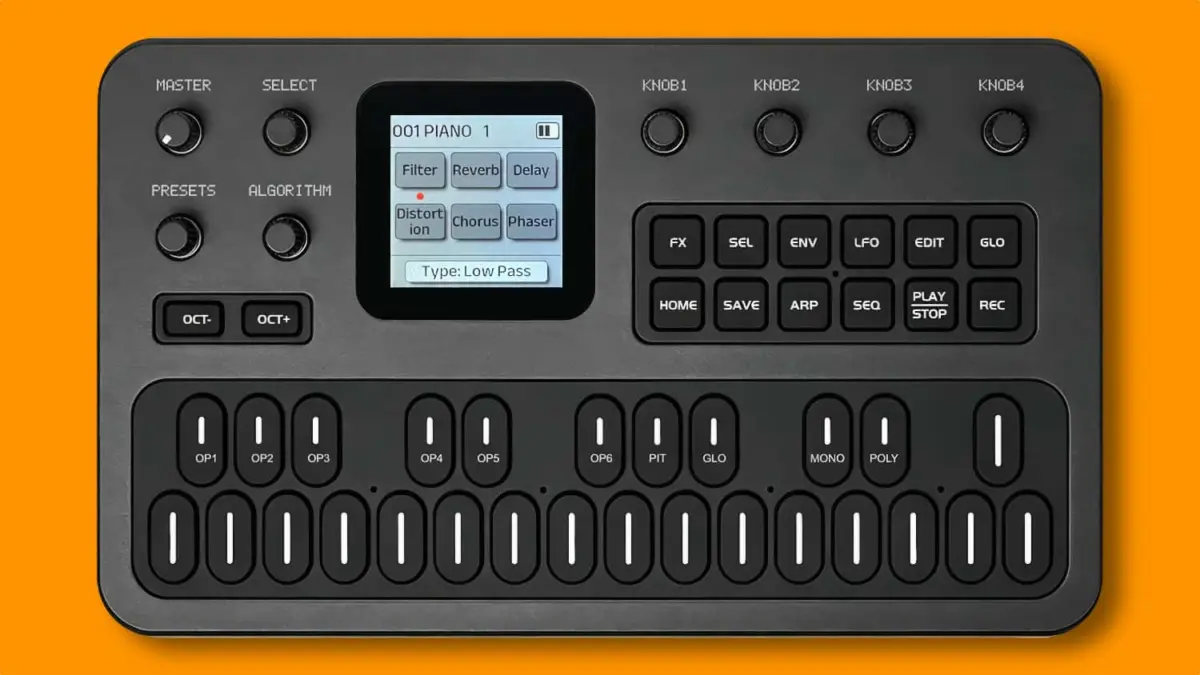
The most prominent example of this paradigm shift is the M-Vave FM-1, a compact and highly affordable FM synthesizer that has transcended its original design. Initially released as a budget-friendly instrument with a fixed feature set, the FM-1 quickly became a target for independent developers who recognized the potential of its internal hardware. The subsequent explosion of community-created alternate firmware options—ranging from new sequencers to entirely different synthesis models—prompted M-Vave to pivot its corporate strategy.
In a move that surprised many industry observers, M-Vave released an official development environment to support this grassroots activity. The FM1 Open GitHub repository now includes a comprehensive software development kit (SDK), source code for various modules, and a browser-based workbench. This workbench allows users to manage projects, samples, and voices with a level of depth usually reserved for high-end boutique instruments. Documented features of the platform now include multitrack sequencing, dedicated sample slots, and full support for importing legacy Yamaha DX7 voices.

However, the FM-1 also highlights the complexities of the "open" label. While the application code is available under General Public License (GPL) terms, the underlying sound-engine library remains a proprietary binary component. This "semi-open" approach allows for significant community innovation while protecting the manufacturer’s core intellectual property, a compromise that may become the standard for the industry.
Major Manufacturers Pivot Toward Open Ecosystems
The success of the M-Vave experiment has not gone unnoticed by the industry’s largest players. Akai Professional, a cornerstone of the sampling and sequencing market, recently previewed the SampleKey. This 25-key portable sampler is designed as a companion to the MPC Sample, but its most significant feature is its software architecture. Akai has demonstrated community-created applications that transform the SampleKey into a variety of different instruments, including chord generators and virtual analog, FM, and wavetable synthesizers.
InMusic, the parent company of Akai, has indicated that it intends to provide community access to hardware through a dedicated SDK and the open-sourcing of specific software components. This initiative suggests that Akai is looking to leverage its massive installed base of users to extend the lifecycle of its products through community-driven updates.
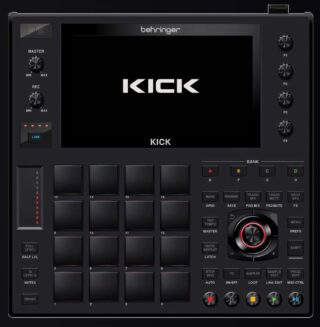
Similarly, Behringer has entered the fray with the announcement of the KICK, a standalone music production device centered on sampling and performance. In a departure from typical industry practice, Behringer’s parent company, Music Tribe, published a substantial software repository on GitHub before the product even reached retail shelves. The KICK repository includes the audio engine, hardware communication code, and a Linux-based build system. By encouraging developers to modify the instrument’s capabilities from day one, Behringer is positioning community development as a core selling point rather than an afterthought.
Chronology of the Open Firmware Movement
The path to the current open-firmware landscape has been marked by several key milestones over the past decade:
- 2018–2019: The Korg ‘logue SDK: Korg introduces the Multi-Engine for the Minilogue XD and Prologue, allowing third-party developers to create custom oscillators and effects. This proved that a "semi-open" model could be commercially successful.
- 2021–2024: The Rise of Unofficial Mods: Independent projects like the "Logue" expansions and early M-Vave hacks begin to gain traction on social media and specialized forums.
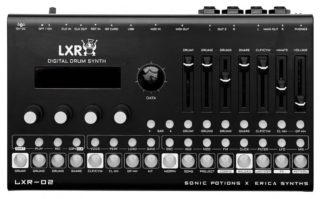
- October 23, 2026: Erica Synths Goes Open Source: Erica Synths announces that the firmware for the LXR-02 digital drum machine is now open source. This marks a significant moment where a high-end, established manufacturer explicitly invites users to modify its flagship digital hardware.
- Late 2026: The Integration of AI Coding: The emergence of "vibe-coding"—the use of Large Language Models (LLMs) to generate and decompile code—lowers the barrier to entry, allowing non-programmers to contribute to firmware projects.
The Role of Independent Developers: DOOM OS and Beyond
While manufacturers are increasingly providing official paths for development, the movement is still heavily influenced by unofficial, independent projects. A prime example is DOOM OS, developed by Klangfeld Labs for the Roland SP-404MKII. The SP-404MKII is a widely successful sampler, yet some users found its original workflow limiting for certain types of composition.
DOOM OS modifies the device’s software to introduce a graphical pattern grid, piano-roll editing, and advanced track mixing—features that were not present in the factory firmware. This project demonstrates the power of community-driven innovation; independent developers can often respond more quickly to niche user requests than large corporations. However, these projects come with risks. Developers often warn that installing modified firmware can void warranties or, in extreme cases, "brick" the device, rendering it unusable if the installation process fails.
Technical Analysis: The Impact of AI and "Vibe-Coding"
The sudden surge in alternate firmware is inextricably linked to the advancement of AI-assisted programming tools. Historically, writing or modifying firmware required deep knowledge of C++, assembly language, and hardware architecture. Today, AI tools allow developers to decompile binary files, analyze hardware-software interactions, and generate new code structures with unprecedented speed.
This phenomenon, often referred to as "vibe-coding," has led to a massive increase in music software releases. While some critics argue that this has resulted in a flood of low-quality "noise," the impact on the hardware sector has been largely positive. Because hardware imposes physical constraints—such as fixed processor speeds and memory limits—developers are forced to write efficient, purposeful code. This discipline has resulted in a new wave of highly optimized firmware that breathes new life into aging or limited hardware.
Economic and Environmental Implications
The move toward open firmware carries significant implications for the longevity and sustainability of electronic music gear. In a traditional consumer electronics model, devices are often discarded when their software becomes obsolete or when a manufacturer ceases support. Open firmware allows a community to maintain and improve a device indefinitely.
From a market perspective, the value of hardware is increasingly being tied to its development community. A synthesizer with a robust library of community-created oscillators and sequencers is objectively more valuable to a consumer than a closed system with similar hardware specs. This creates a competitive environment where manufacturers are incentivized to be as open as possible to attract the best developers to their platform.
Industry Risks and Manufacturer Perspectives
Despite the benefits, the transition to open firmware is fraught with challenges. Manufacturers must balance the desire for community innovation with the need for system stability. Erica Synths, for instance, has been clear that while they provide the source code for the LXR-02, they only officially support the factory firmware. Users who install modified versions do so at their own risk, and repairs necessitated by software failures are typically not covered under warranty.
There are also concerns regarding intellectual property. Many hardware devices rely on licensed third-party algorithms for effects or synthesis. Opening the firmware could potentially expose these proprietary technologies, leading to legal complications. This is why many "open" projects, like the M-Vave FM-1, maintain a hybrid structure where the user interface and sequencer are open, but the core audio engine remains a "black box."
Conclusion: A New Era for Electronic Instruments
The electronic music industry appears to be entering a new era where the distinction between a musical instrument and a computing platform is becoming increasingly blurred. The M-Vave FM-1, Akai SampleKey, Behringer KICK, and Erica Synths LXR-02 represent different points on a spectrum of openness, but they all point toward a future where the user has a greater say in how their instruments function.
Whether open firmware becomes the dominant trend depends on the continued cooperation between manufacturers and the burgeoning community of AI-empowered developers. If the industry can navigate the hurdles of warranty support and intellectual property, the result will be a more diverse, creative, and sustainable ecosystem for electronic musicians worldwide. The question is no longer whether hardware can be modified, but rather how far the community will push the limits of what that hardware can achieve.
