

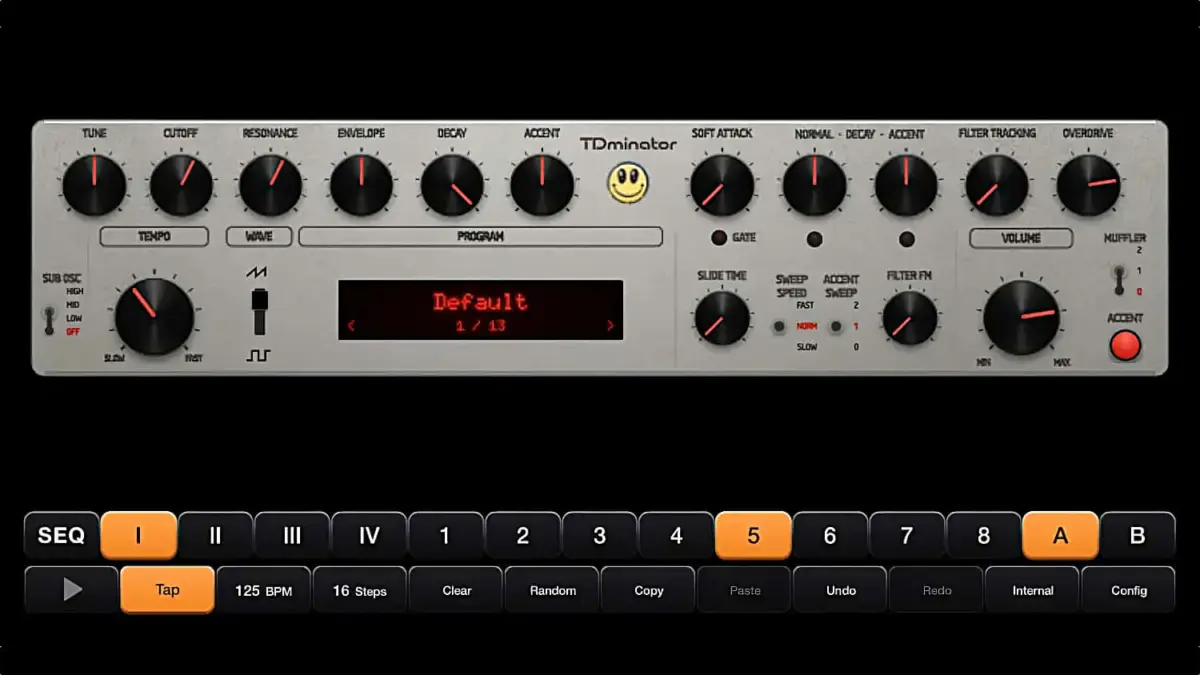
The specialized music software developer discoDSP has officially announced the release of TDminator 2.0, a significant update to its dedicated utility application designed for the iPhone, iPad, and Apple Silicon-based Macintosh computers. Originally conceived as a pattern editor and performance tool for Behringer’s popular TD-3 and TD-3-MO analog synthesizers, the 2.0 iteration marks a fundamental shift in the application’s utility. By integrating a sophisticated internal bassline sound engine modeled after the legendary "Devil Fish" modifications, discoDSP has transformed TDminator from a secondary hardware controller into a fully realized standalone acid instrument. This development reflects a growing trend in the music technology industry where software developers seek to bridge the gap between tactile hardware experiences and the portability of mobile operating systems.
Technical Evolution and the Internal Sound Engine
The most prominent feature of TDminator 2.0 is the introduction of an internal sound engine that replicates the specific sonic characteristics of the Behringer TD-3-MO (Modded Out). The TD-3-MO itself is a hardware clone of the Roland TB-303, incorporating the famous "Devil Fish" modifications originally developed by Robin Whittle in the late 1980s. These modifications are known for expanding the sonic palette of the original 303, adding features such as filter tracking, muffling, and enhanced slide controls.
By modeling this specific voice, discoDSP allows users to generate authentic acid basslines directly within the app without the need for external hardware. This internal engine serves two purposes: it allows for "on-the-go" composition where a user can sketch out patterns while commuting or traveling, and it provides a digital backup or alternative to the analog hardware in a studio environment. The software emulation focuses on the non-linear behavior of the diode ladder filter, a hallmark of the acid sound, ensuring that the squelching resonances and aggressive "growls" associated with the Devil Fish mods are accurately represented in the digital domain.
Seamless Integration with Behringer Hardware
Despite its newfound standalone capabilities, TDminator 2.0 remains a powerful companion for owners of the Behringer TD-3 and TD-3-MO. Historically, one of the primary criticisms of the original Roland TB-303 and its subsequent clones has been the complexity and unintuitive nature of the internal sequencer. Programming a pattern on the hardware often requires a series of button presses that lack visual feedback, making the process of "dialing in" a specific melody tedious for modern producers.
TDminator addresses this friction by providing a graphical user interface (GUI) that simplifies pattern creation. Users can draw notes, adjust gates, and set accents or slides with a few taps on a touchscreen. Version 2.0 enhances the bidirectional communication between the iOS device and the hardware via MIDI. When connected via a compatible USB-MIDI interface or Bluetooth MIDI adapter, the app can transmit patterns directly to the TD-3’s memory or control the hardware in real-time. This functionality is particularly valuable for live performers who need to switch between dozens of patterns without interacting with the hardware’s small buttons and cryptic LED indicators.
Chronology of Development and the Rise of iOS Production
The release of TDminator 2.0 comes at a time when the iOS music production market is experiencing a period of professionalization. The timeline of discoDSP’s involvement in this sector began with their transition of classic desktop plugins, such as the Discovery Pro synthesizer, to the iPad platform.
The first version of TDminator was released as a streamlined editor, responding to a clear demand from the Behringer user community for a more accessible sequencing solution. Within months of the initial release, the developer identified that users were not only using the app to control hardware but were also requesting a way to preview patterns when the hardware was not connected. This feedback loop directly informed the development of the 2.0 update.
The decision to support Apple Silicon Macs further highlights the convergence of mobile and desktop computing. Since the introduction of the M1 chip, the architectural parity between iPads and Macs has allowed developers like discoDSP to offer "universal" apps. This means a producer can start a sequence on an iPhone during a commute, refine it on an iPad in the studio, and eventually host the same app within a desktop Digital Audio Workstation (DAW) like Logic Pro or Ableton Live on a MacBook Pro.
AUv3 Support and Workflow Implications
A critical technical component of TDminator 2.0 is its support for the AUv3 (Audio Units Version 3) format. In the iOS ecosystem, AUv3 is the standard that allows one music app to run as a plugin inside another "host" app, such as AUM, Cubasis, or GarageBand.
By functioning as an AUv3 plugin, TDminator 2.0 can be integrated into complex mobile production setups. A user can run multiple instances of TDminator, each controlling a different hardware unit or utilizing the internal sound engine, all synchronized to a master clock. This level of integration was previously reserved for expensive desktop setups. The ability to automate parameters like filter cutoff or resonance within a host app while TDminator sequences a Behringer TD-3-MO provides a hybrid workflow that combines analog warmth with digital precision.
Industry Context: The "Acid" Renaissance
The release of this software is situated within a broader cultural "Acid" renaissance. The Roland TB-303, originally released in 1981 as a failure in the eyes of its creators, became the backbone of house and techno music in Chicago and London during the late 80s. In recent years, the market for 303 clones has exploded, driven largely by Behringer’s aggressive pricing and manufacturing scale.
However, as hardware becomes more accessible, the demand for sophisticated software to manage that hardware increases. Industry analysts note that while many purists prefer the "all-analog" workflow, the modern producer values efficiency and recall. TDminator 2.0 caters to this by offering pattern storage and naming conventions that are simply impossible on the hardware units themselves. The $9.99 price point is also strategically significant; it positions the app as an essential, low-friction purchase for anyone who has already invested $150 to $250 in a Behringer synthesizer.
Statements and Market Reaction
While official statements from Behringer regarding third-party editors are rare, the community reaction on platforms such as Gearspace and various synthesizer forums has been largely positive. Users have highlighted that the internal sound engine in 2.0 acts as a "safety net" for live performances. If a MIDI cable fails or a hardware unit loses power, the software can take over the audio duties, preventing a total silence during a set.
Producers have also praised the developer’s commitment to the Apple ecosystem. A spokesperson for discoDSP indicated that the move toward internal synthesis was a "natural progression" for the app, aiming to provide a comprehensive toolkit that serves both the hardware enthusiast and the mobile musician. The inclusion of the "Devil Fish" style voice was a deliberate choice to provide a "more aggressive, versatile sound than the standard 303 emulation."
Broader Impact and Future Implications
The success of TDminator 2.0 may signal a shift for other developers. As more affordable analog clones enter the market—ranging from drum machines to polyphonic synthesizers—there is a growing niche for "boutique" software editors. These editors do not just provide a digital interface for hardware; they add features that the original hardware lacks, such as advanced randomization algorithms for pattern generation or cloud-based pattern sharing.
Furthermore, the existence of TDminator 2.0 challenges the traditional distinction between "hardware" and "software" producers. By allowing the two to coexist in a single interface, discoDSP is fostering a more fluid creative process. The implications for music education are also notable; the app provides an affordable way for students to learn the mechanics of subtractive synthesis and step-sequencing without the initial overhead of purchasing physical gear.
Availability and Pricing
TDminator 2.0 is currently available on the Apple App Store for a one-time purchase price of $9.99 USD. This pricing model avoids the subscription-based trends currently prevalent in the software industry, a move that has been welcomed by the user base. The app is compatible with any iPhone or iPad running iOS 12.0 or later, as well as Macs equipped with the M1 chip or newer.
As the music technology landscape continues to evolve, tools like TDminator 2.0 demonstrate the power of specialized software in maximizing the potential of hardware. By bridging the gap between a 40-year-old synthesis concept and modern mobile computing, discoDSP has provided a roadmap for the future of hybrid music production. Whether used as a standalone instrument for creating the next acid techno hit or as a precision tool for managing a rack of Behringer hardware, TDminator 2.0 stands as a testament to the enduring legacy of the silver box that changed electronic music forever.
