

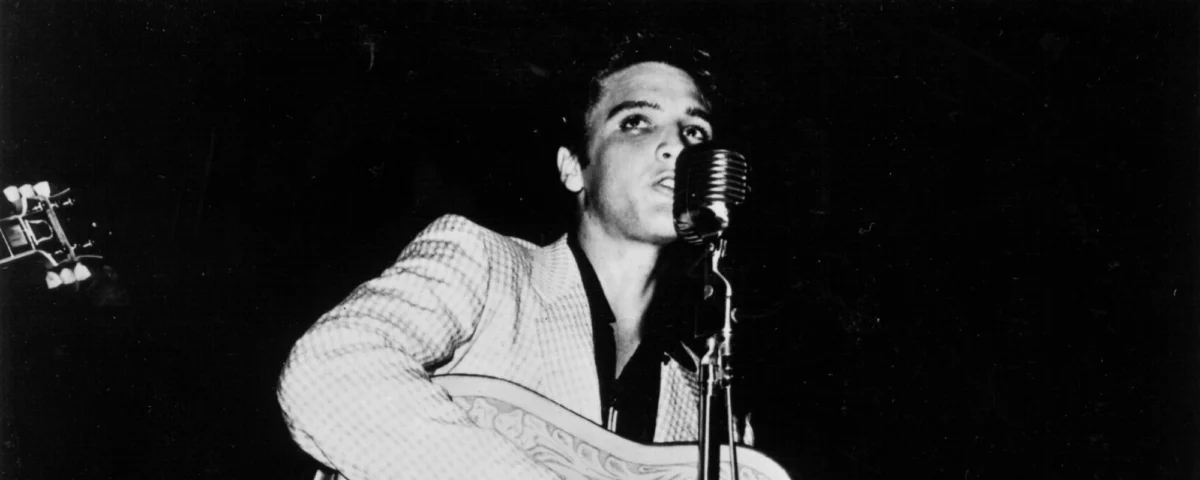
The history of the global music industry was irrevocably altered on March 15, 1955, a date that marks the formal beginning of one of the most successful, controversial, and financially lucrative partnerships in entertainment history. On this day, a former carnival promoter named Colonel Tom Parker officially took the reins of Elvis Presley’s burgeoning career. While the relationship would propel Presley to the heights of "The King of Rock and Roll," it also established a blueprint for the modern celebrity-industrial complex, characterized by aggressive merchandising, media saturation, and a management style that remains a subject of intense scrutiny by historians and legal experts alike.
The signing of Presley was not merely a talent acquisition; it was the convergence of a singular, generational talent with a man whose background in "ballyhoo" and carnival promotion allowed him to see a singer as a multifaceted commodity. Parker’s influence would extend far beyond the recording studio, shaping the trajectory of American pop culture for the remainder of the 20th century.
The Enigmatic Origins of Andreas Cornelis van Kuijk
To understand the man who signed Elvis Presley, one must look back to the Netherlands, where he was born Andreas Cornelis van Kuijk in 1909. In a move that would define his life of secrecy and reinvention, van Kuijk left his native Breda at the age of 20 without a passport or legal documentation. He arrived in the United States as an undocumented immigrant, a fact that many biographers believe dictated his later refusal to allow Presley to tour internationally, fearing that a departure from U.S. soil would lead to his own deportation.
Adopting the name Thomas Andrew Parker, he enlisted in the United States Army, reportedly taking the surname from the officer who interviewed him. His military career was brief and tumultuous; after serving two years, he went absent without leave (AWOL). Upon his capture, he was sentenced to solitary confinement, an experience that led to a mental breakdown and a subsequent discharge from the service on the grounds of "psychosis."
Following his discharge, Parker returned to the world he knew best: the carnival circuit. Working as a "pitchman," he mastered the art of the "snow job"—a term he used to describe the process of overwhelming a mark with fast talk and grand promises. One of his most infamous early ventures was the "Great Parker Pony Circus," which featured "Dancing Chickens." The spectacle was achieved by placing live chickens on a hidden hot plate covered with sawdust; as the plate heated, the birds would hop to the rhythm of the music to avoid the heat, creating the illusion of a choreographed dance. This ruthless pragmatism and focus on the "gimmick" would later be applied to the marketing of rock and roll.
The Transition to Music Management
By the late 1930s, Parker had transitioned into the music business, recognizing that the emotional connection between fans and singers could be exploited far more profitably than carnival attractions. He began working as a promoter for Gene Austin and later moved into country music management. In 1948, he secured a significant client in Eddy Arnold, known as "The Tennessee Plowboy."
Under Parker’s guidance, Arnold became a massive star, but the relationship soured as Parker’s demands for control grew. When Arnold fired him in 1953, Parker demonstrated the aggressive litigation and contract negotiation skills that would become his trademark, demanding and receiving a $50,000 buyout—an astronomical sum for the era. It was during this period that Parker received the honorary title of "Colonel" from Jimmie Davis, the Governor of Louisiana and a former country singer, as a reward for Parker’s assistance in his political campaign.
The 1955 Signing and the Displacement of Bob Neal
By early 1955, the name Elvis Presley was beginning to circulate through the Southern "Chitlin’ Circuit" and the Louisiana Hayride. Presley was then managed by Bob Neal, a Memphis disc jockey who had helped the young singer navigate his early success at Sun Records. However, Parker, alerted to Presley’s potential by associate Oscar Davis, recognized that Neal lacked the infrastructure to take Presley to a national level.
On March 15, 1955, Parker effectively inserted himself into the management structure. He did not immediately replace Neal but instead became a "special advisor" and promoter. Within a year, however, Parker had completely displaced Neal, securing exclusive management rights. His first major move was to negotiate Presley’s release from Sun Records. Sam Phillips, the owner of Sun, was facing financial difficulties and agreed to sell Presley’s contract to RCA Victor for $35,000, plus $5,000 in back royalties for Presley. At the time, this was the highest price ever paid for a recording artist’s contract, a gamble that many in the industry thought was foolhardy.
The Creation of a Global Brand: 1956–1958
The subsequent years saw Parker execute a marketing blitz that was unprecedented in the entertainment world. He understood that Presley’s appeal was as much visual and visceral as it was auditory. To capitalize on this, Parker brokered a series of television appearances that would cement Presley’s status.
The most famous of these were the three appearances on The Ed Sullivan Show in late 1956 and early 1957. Parker negotiated a fee of $50,000 for the three shows, an unheard-of sum. When Sullivan famously insisted that Presley be filmed only from the waist up to avoid his "suggestive" hip movements, Parker utilized the controversy to generate even more press, adhering to the carnival philosophy that there is no such thing as bad publicity.
Simultaneously, Parker launched Elvis Presley Enterprises (EPE). He recognized that fans wanted a piece of the artist, and he moved to license Presley’s name and likeness for everything from charm bracelets to record players. In 1956 alone, EPE-branded merchandise generated an estimated $22 million in sales. In a move of cynical genius, Parker even licensed "I Hate Elvis" badges to ensure he was profiting from the singer’s detractors as well as his supporters.
Financial Structures and Ethical Scrutiny
As Presley’s fame grew, so did the unconventional nature of Parker’s financial arrangements. While the standard managerial commission at the time was 10% to 15%, Parker eventually negotiated a deal that granted him 50% of Presley’s earnings. He justified this by claiming that he was more than a manager; he was a partner who handled every aspect of the brand’s business.
However, historians have pointed to several areas where Parker’s management may have hindered Presley’s artistic and personal growth. Most notably, Parker’s refusal to allow Presley to tour outside of North America—despite massive demand in Europe and Japan—is widely attributed to Parker’s status as an undocumented immigrant. This denied Presley the opportunity to become a truly global touring act during his prime.
Furthermore, Parker’s insistence on "formula" movies during the 1960s is often cited as the reason for the decline in the quality of Presley’s output. Parker prioritized guaranteed box office returns and soundtrack album sales over Presley’s desire to be taken seriously as a dramatic actor.
A Chronology of the Parker-Presley Partnership
- June 26, 1909: Andreas van Kuijk is born in Breda, Netherlands.
- 1929: Van Kuijk enters the U.S. illegally and becomes Tom Parker.
- 1930-1932: Serves in the U.S. Army before being discharged for mental health reasons.
- 1948: Receives the honorary title of "Colonel."
- March 15, 1955: Parker signs a contract to become Presley’s "special advisor," beginning the takeover of his career.
- November 21, 1955: Parker negotiates the $35,000 contract sale from Sun Records to RCA Victor.
- 1956: Presley becomes a national sensation with hits like "Heartbreak Hotel" and appearances on national TV.
- 1958-1960: Presley serves in the U.S. Army; Parker maintains his popularity through a steady stream of pre-recorded releases.
- 1961-1968: The "Hollywood Era," where Parker focuses almost exclusively on profitable but critically panned films.
- 1968: The "Comeback Special" on NBC, which Parker originally wanted to be a traditional Christmas show but which restored Presley’s rock credentials.
- 1969-1977: The Las Vegas residency years, where Parker negotiates massive contracts with the International Hotel (later the Hilton).
- August 16, 1977: Elvis Presley dies at Graceland.
- 1980: An investigation by Judge Joseph Evans reveals Parker’s management practices were "unethical" and "overreaching," leading to a settlement with the Presley estate.
- January 20, 1997: Colonel Tom Parker dies in Las Vegas at the age of 87.
Broader Impact and Industry Implications
The signing of Elvis Presley by Colonel Tom Parker remains a case study in the power of branding. Parker was among the first to realize that in the age of mass media, the "image" of the artist was a product that could be sold independently of the art itself. This philosophy paved the way for the modern music industry’s reliance on merchandising, sponsorships, and multi-platform media presence.
However, the partnership also serves as a cautionary tale regarding the power dynamics between artists and their representation. The 1980 legal investigation into Parker’s dealings highlighted the potential for exploitation when a manager holds total control over an artist’s financial and professional life. The court found that Parker had failed in his fiduciary duty to Presley, particularly regarding the 50% commission and the sale of Presley’s back catalog to RCA in 1973 for a lump sum that deprived the estate of future royalties.
Despite the controversies, the legacy of March 15, 1955, is undeniable. Without Parker’s ruthless promotion and business acumen, Presley might have remained a regional sensation. Conversely, without Presley’s talent, Parker would have likely remained a footnote in carnival history. Together, they created a cultural phenomenon that redefined the American Dream and the nature of fame itself. As the music industry continues to evolve in the digital age, the shadow of the Colonel—and the contract signed on a mid-March day in 1955—continues to loom large over the business of making stars.
