

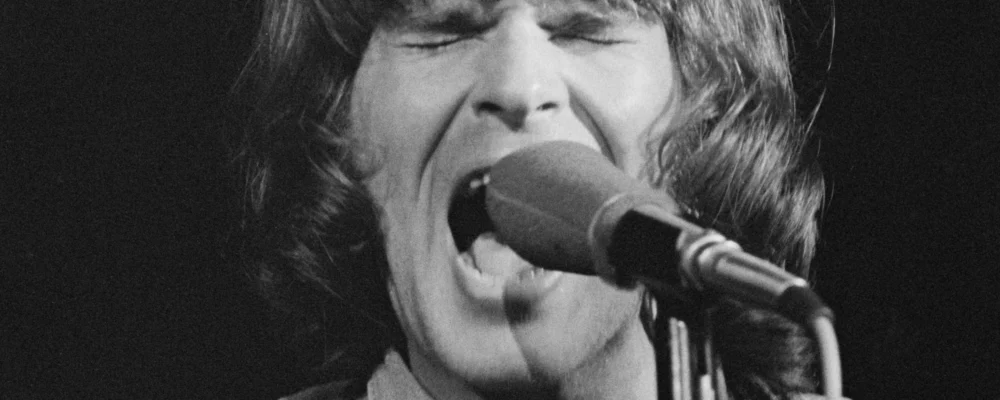
The history of the Billboard Hot 100 is often defined by the dominance of icons like The Beatles, Elvis Presley, and Mariah Carey, yet one of the most prolific and enduring bands in American history holds a paradoxical distinction. On March 8, 1969, the California-based quartet Creedence Clearwater Revival (CCR) saw their seminal hit "Proud Mary" reach the No. 2 spot on the Hot 100, where it remained for three consecutive weeks. While the achievement solidified the band’s status as a commercial powerhouse, it also inaugurated a frustrating trend: Creedence Clearwater Revival would eventually become the artist with the most No. 2 hits in the history of the Billboard Hot 100 without ever securing a No. 1 single.
The narrative of CCR’s chart performance is a study in both incredible consistency and historical misfortune. Led by the songwriting and vocal prowess of John Fogerty, the band produced a string of hits that became the definitive soundtrack to the late 1960s and early 1970s. However, despite their ubiquity on the airwaves and their immense cultural impact during the Vietnam War era, the top spot on the American charts remained perpetually out of reach, often blocked by bubblegum pop, soulful ballads, or rival rock anthems that captured the zeitgeist of a specific week.
The Genesis of Proud Mary and the 1969 Chart Battle
The journey of "Proud Mary" began not in the bayous of Louisiana, as the band’s "swamp rock" sound might suggest, but in the mind of John Fogerty following his discharge from the United States Army Reserves. Fogerty, who had been drafted in 1966, served as a supply clerk, an experience that significantly influenced his perspective on labor, authority, and the American experience. Upon receiving his honorable discharge in 1968, Fogerty experienced a surge of creative liberation.
According to historical accounts and Fogerty’s own recollections in interviews with Guitar World, the songwriter was so elated by his freedom that he literally performed a cartwheel in his driveway before heading inside to his Rickenbacker guitar. Within an hour, he had composed the chords and lyrics to "Proud Mary." The song tells the story of a narrator who leaves a "good job in the city" to find a different kind of fulfillment working on a riverboat. The "Proud Mary" was named after a real-life ship based in Memphis, Tennessee, and the song’s steady, churning rhythm was designed to evoke the movement of a paddlewheel.
When the single was released in early 1969, it climbed the charts rapidly. However, its path to the summit was obstructed by two very different musical forces. During its first week at No. 2, CCR was held back by Sly & the Family Stone’s "Everyday People," a funk-rock masterpiece that preached racial and social harmony. The following week, "Proud Mary" was denied the top spot by Tommy Roe’s "Dizzy," a quintessential piece of bubblegum pop. This juxtaposition highlighted the diverse and often fractured nature of the American music market in 1969, where gritty, roots-oriented rock had to compete with both avant-garde soul and polished commercial pop.
A Chronology of Narrow Misses: The Five No. 2 Hits
The "Proud Mary" experience was not an isolated incident for Creedence Clearwater Revival. Over the next 20 months, the band would repeat this feat four more times, creating a statistical anomaly that remains a point of fascination for music historians.
Following the success of "Proud Mary," the band released "Bad Moon Rising" in June 1969. While the song reached No. 1 in the United Kingdom—the only CCR track to do so—it peaked at No. 2 in the United States. It was kept from the top by Henry Mancini’s "Love Theme From Romeo & Juliet," a soft instrumental piece that reflected the older demographic’s influence on the charts of the era.
In September 1969, the band’s "Green River" hit the runner-up spot. This time, the obstacle was "Sugar, Sugar" by The Archies. The fact that a fictional cartoon band could hold off one of the most respected rock acts in the world was a testament to the strange dynamics of the Top 40 format during the late sixties.
The trend continued into 1970. In March of that year, the double-sided hit "Travelin’ Band" / "Who’ll Stop the Rain" reached No. 2, only to be blocked by Simon & Garfunkel’s monumental "Bridge Over Troubled Water." Simon & Garfunkel’s anthem stayed at No. 1 for six weeks, making it nearly impossible for any other artist to break through.
The final entry in this series of near-misses occurred in October 1970 with "Lookin’ Out My Back Door" / "Long as I Can See the Light." This single was prevented from reaching the top by Diana Ross’s soaring solo debut, "Ain’t No Mountain High Enough." By the time the band dissolved in 1972, they had amassed five No. 2 hits, a record for the most runner-up singles without a No. 1 that they held exclusively until it was later tied by other artists in the digital era.
Data and Commercial Context: The Dominance of Fantasy Records
Despite the lack of a No. 1 single, the commercial data from CCR’s peak years (1969–1971) tells a story of unparalleled dominance. In 1969 alone, the band released three full-length albums: Bayou Country, Green River, and Willy and the Poor Boys. All three were certified Platinum or Multi-Platinum by the Recording Industry Association of America (RIAA).
During this period, CCR reportedly outsold The Beatles in global record sales for a brief window in 1969. Their ability to produce "radio-ready" singles that also appealed to the album-oriented rock (AOR) crowd allowed them to bridge the gap between the counterculture and the mainstream. While the Billboard Hot 100 measures the popularity of a specific song in a specific week, the long-term sales figures for CCR’s catalog suggest a level of "passive" dominance that transcends chart positions. Their 1976 greatest hits compilation, Chronicle: The 20 Greatest Hits, has been certified Diamond (10 million units) and continues to chart on the Billboard 200 decades after its release.
Cultural Impact and the Legacy of Proud Mary
The legacy of "Proud Mary" was further cemented in 1971 when Ike & Tina Turner released a reimagined version of the track. Transforming Fogerty’s mid-tempo folk-rocker into a high-octane R&B explosion, the Turners took the song to No. 4 on the Hot 100. Their version won a Grammy Award for Best R&B Vocal Performance by a Group, marking a rare instance where a cover version achieved a different kind of critical and institutional recognition than the original.
John Fogerty’s reaction to the cover was overwhelmingly positive, acknowledging that the Turners had given the song a new life in a different genre. This cross-pollination of styles helped "Proud Mary" become a standard, covered by hundreds of artists ranging from Elvis Presley to Solomon Burke.
The broader implication of CCR’s chart history is the realization that a No. 1 ranking is often a matter of timing rather than quality. In the case of "Who’ll Stop the Rain" or "Fortunate Son" (which peaked at No. 14 but remains one of the most famous protest songs in history), the songs’ longevity has far outlasted many of the No. 1 hits that superseded them. CCR’s music resonated deeply with the working class and those serving in Vietnam, providing a grounded, "rootsy" alternative to the increasingly experimental psychedelic rock of the late sixties.
Analysis: Why No Number One?
Industry analysts often point to several factors to explain why CCR never reached the pinnacle of the Hot 100. First was the "Double-A Side" phenomenon. During their peak, Creedence frequently released singles where both the A-side and the B-side were major hits (e.g., "Travelin’ Band" and "Who’ll Stop the Rain"). At the time, Billboard’s methodology sometimes split the chart points between the two songs, effectively diluting their power to reach No. 1. If the points had been consolidated into a single entry, several of their hits likely would have reached the top.
Second was the sheer volume of output. By releasing music so frequently, CCR often had multiple songs competing for airplay simultaneously. While this ensured they were always on the radio, it prevented the kind of concentrated, singular push required to topple massive cultural events like "Bridge Over Troubled Water."
Finally, the era in which they operated was perhaps the most competitive in the history of modern music. To reach No. 1 in 1969 or 1970, an artist had to outperform The Beatles, The Rolling Stones, Motown’s finest, and the emerging giants of folk-rock.
Conclusion and Enduring Influence
Creedence Clearwater Revival’s failure to secure a No. 1 hit remains one of the great ironies of the rock era. However, the date of March 8, 1969, serves as a reminder of the band’s incredible peak. "Proud Mary" did not need a No. 1 trophy to become an American anthem; its endurance in films, commercials, and the cultural consciousness is evidence of a success that exceeds numerical rankings.
Today, John Fogerty continues to perform these hits to sold-out crowds, and the band’s influence can be heard in the work of Bruce Springsteen, Tom Petty, and countless Americana artists. While they may have been the "eternal runners-up" on the weekly charts, Creedence Clearwater Revival’s place in the pantheon of rock and roll is undisputed, proving that in the lens of history, the impact of a song is measured not by its peak position, but by its persistence through time.
