

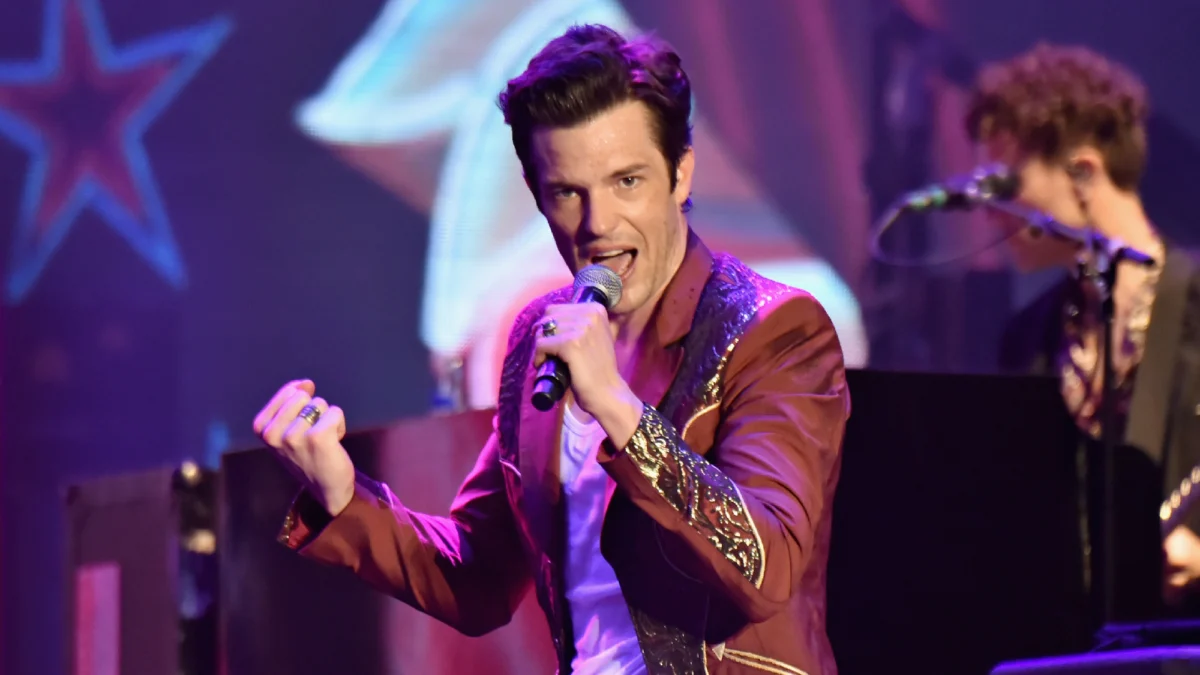
The landscape of popular music in the early 21st century was defined by a transition from physical media to digital downloads, a shift that fundamentally altered how audiences consumed and shared music. Amidst this technological evolution, a specific cohort of tracks emerged that transcended their initial release windows to become permanent fixtures in the global cultural lexicon. Songs such as Usher’s "Yeah!", Beyoncé’s "Crazy In Love," and The Killers’ "Mr. Brightside" represent more than mere commercial successes; they serve as sonic touchstones that bridge generational divides and maintain a consistent presence in modern social environments. These compositions have demonstrated an uncanny ability to unite disparate crowds, functioning as "party staples" that provide a common ground for listeners regardless of their primary musical preferences.
The Architect of the Crunk-n-B Movement: Usher’s "Yeah!"
Released in early 2004 as the lead single from his diamond-certified album Confessions, Usher’s "Yeah!" featuring Lil Jon and Ludacris remains one of the most successful singles in the history of the Billboard Hot 100. The track’s inception was a strategic move by Arista Records and LaFace Records to pivot from the traditional R&B balladry that had defined much of Usher’s previous work toward a more aggressive, club-oriented sound.
The production, handled by Lil Jon, introduced the mainstream to "Crunk," a subgenre of hip-hop originating from the Southern United States. The song is anchored by a persistent, four-note synthesizer riff that has become one of the most recognizable motifs in pop music. According to industry data, "Yeah!" occupied the number one spot on the Billboard Hot 100 for 12 consecutive weeks, making it the longest-running number-one single of 2004. Its commercial dominance was matched by critical acclaim, eventually earning a Grammy Award for Best Rap/Sung Collaboration.
The song’s longevity is attributed to its rhythmic precision and the chemistry between the three performers. While Usher provided the melodic R&B foundation, Lil Jon’s "ad-libs" and Ludacris’s rhythmic verse added layers of energy that made the track indispensable for DJs. In the two decades since its release, the song has achieved multi-platinum status across various territories and remains a high-performing asset in the streaming era, frequently appearing on "throwback" and "party" playlists on platforms like Spotify and Apple Music.
The Definitive Solo Arrival: Beyoncé’s "Crazy In Love"
In 2003, the musical landscape was irrevocably altered by the release of "Crazy In Love," the debut solo single by Beyoncé featuring Jay-Z. While Beyoncé had already achieved massive success as the lead singer of Destiny’s Child, "Crazy In Love" was the definitive statement of her individual artistry and commercial power. The track was built around a horn sample from The Chi-Lites’ 1970 song "Are You My Woman (Tell Me So)," a production choice by Rich Harrison that was initially met with skepticism by some label executives who found the brass-heavy arrangement too abrasive.
Beyoncé’s intuition proved correct as the song surged to the top of the charts globally. It spent eight consecutive weeks at number one on the Billboard Hot 100 and served as the cornerstone of her debut solo album, Dangerously in Love. The track’s impact was not limited to the auditory; the accompanying music video, choreographed by Frank Gatson Jr., introduced iconic imagery that solidified Beyoncé’s status as a visual and performance powerhouse.
Analytically, "Crazy In Love" is often cited by musicologists as a masterclass in tension and release. The driving percussion and blaring horns create an atmosphere of urgency that mirrors the lyrical themes of infatuation and loss of control. The inclusion of a verse by Jay-Z also marked a pivotal moment in the public and professional partnership between the two artists, creating a cultural narrative that has persisted for over twenty years. The song’s enduring popularity is reflected in its consistent use in film, television, and advertising, as well as its status as a "must-play" track at celebrations and sporting events.
The Indie-Rock Cross-Over Phenomenon: The Killers’ "Mr. Brightside"
While the early 2000s were dominated by R&B and hip-hop, The Killers’ "Mr. Brightside" emerged as a representative of the indie-rock revival that took hold in the middle of the decade. Released in 2003 and re-released in 2004, the track serves as the debut single from the Las Vegas-based band’s first album, Hot Fuss. Unlike many of its contemporaries, "Mr. Brightside" did not achieve immediate, explosive chart dominance in the United States; instead, it embarked on a trajectory of unprecedented longevity.
The song is characterized by its bright, arpeggiated guitar riff and Brandon Flowers’ urgent, emotive vocal delivery. Lyrically, it explores themes of jealousy and paranoia, yet the upbeat tempo and anthemic chorus have made it a staple of communal singing. In the United Kingdom, "Mr. Brightside" has achieved a feat of chart endurance that is virtually unmatched. As of 2024, the song has spent over 400 weeks in the UK Top 100, a record for any track that did not reach the number one position.
Data from the Official Charts Company indicates that "Mr. Brightside" is the most-streamed song released before 2010 in the UK. Its popularity spans generations, with younger audiences adopting the track through social media trends and festival culture. The song’s ability to "rev up" a crowd is frequently analyzed by sociologists who point to its communal "shout-along" nature as a key factor in its survival. It represents a rare instance where an indie-rock track has achieved the same level of ubiquity as high-budget pop and R&B productions.
Comparative Analysis and Commercial Trajectories
The success of these three tracks can be contextualized through the lens of the RIAA (Recording Industry Association of America) certifications and digital transition data. During the mid-2000s, the music industry was grappling with the rise of Napster and subsequent legal download services like iTunes. These songs were among the first to capitalize on the "ringtone" market, which was a multi-billion dollar industry between 2003 and 2007.
| Song Title | Release Year | Peak Billboard Position | Key Certification (RIAA) | Primary Genre |
|---|---|---|---|---|
| "Yeah!" | 2004 | #1 (12 weeks) | 13x Platinum | Crunk-n-B |
| "Crazy In Love" | 2003 | #1 (8 weeks) | 6x Platinum | Pop / R&B |
| "Mr. Brightside" | 2003 | #10 | Diamond (10x Platinum) | Indie Rock |
The data reveals that while "Mr. Brightside" had a lower peak on the Hot 100 than the other two tracks, its long-term sales and streaming figures (eventually reaching Diamond status) suggest a "slow-burn" popularity that eventually surpassed many number-one hits of the same era. Conversely, Usher and Beyoncé’s tracks represent the peak of "event" pop music—songs that captured the zeitgeist immediately upon release and maintained that momentum through sheer cultural saturation.
Official Responses and Artistic Legacy
In retrospective interviews, the artists involved have often expressed surprise at the continued relevance of these works. Usher has noted in various press junkets that "Yeah!" was the final song added to Confessions, recorded only because the label felt the album lacked a "lead club single." Similarly, Brandon Flowers of The Killers has remarked on the "supernatural" life of "Mr. Brightside," stating that the band never grows tired of playing it because the audience’s reaction remains as visceral as it was in 2004.
Music critics and historians often point to these songs as the "last of their kind"—tracks that were able to achieve universal recognition before the fragmentation of the music market caused by the explosion of streaming services and niche algorithms. In the current era, where a song can go viral on TikTok without ever achieving mainstream radio play, the 2000s anthems represent a period of centralized "monoculture."
Broader Impact and Social Implications
The social impact of these tracks extends to their role as "social equalizers." In a journalistic context, these songs are often described as having a "uniting" effect. At weddings, sporting events, and university gatherings, the introduction of the opening notes of "Yeah!" or "Mr. Brightside" typically results in a measurable shift in the room’s energy.
Psychologically, this is often attributed to "reminiscence bumps," where music associated with youth and early adulthood becomes deeply embedded in the listener’s identity. However, the unique factor for these 2000s staples is their "cross-generational" appeal. Current teenagers, who were not alive when "Crazy In Love" was released, interact with the song with the same level of enthusiasm as those who remember its premiere on MTV’s Total Request Live.
As the industry moves further into the 21st century, these tracks serve as the benchmark for what constitutes a "modern classic." They have survived the death of the CD, the rise and fall of the digital download, and the transition into the streaming age. Their presence on modern playlists is not merely an act of nostalgia but a testament to their robust construction, innovative production, and the specific cultural moment they continue to represent. In the final analysis, the 2000s party anthems are more than just songs; they are enduring cultural assets that continue to perform their primary function: bringing people together through a shared, undeniable sonic experience.
