

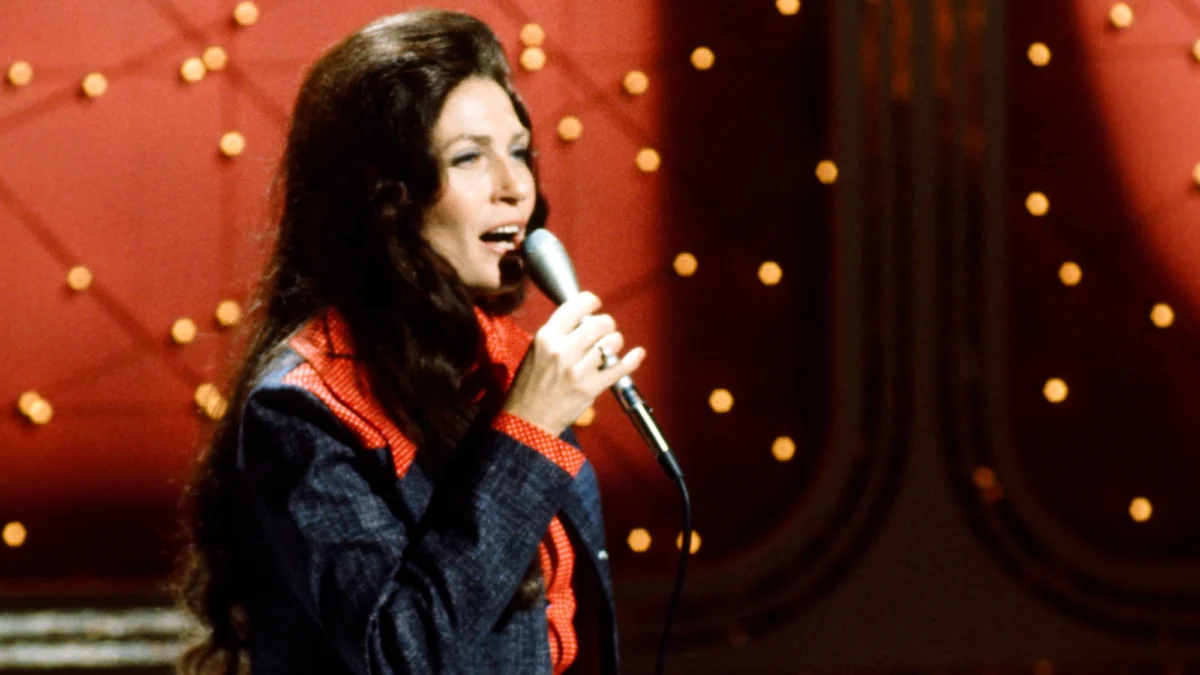
The year 1971 stands as a transformative milestone in the history of American country music, marking a stylistic pivot point between the polished "Nashville Sound" of the 1960s and the burgeoning "Outlaw" and "Countrypolitan" movements that would dominate the decade to follow. During this twelve-month period, the Billboard Hot Country Singles chart reflected a genre in flux, balancing traditional honky-tonk sensibilities with sophisticated songwriting and social commentary. Among the hundreds of releases that year, three specific tracks—Loretta Lynn’s "One’s On The Way," Freddie Hart’s "Easy Loving," and Merle Haggard’s "Carolyn"—emerged as definitive cultural touchstones. These songs did more than reach the top of the charts; they encapsulated the domestic anxieties, romantic aspirations, and complex moral narratives of a demographic navigating a rapidly changing America.
The Domestic Realism of Loretta Lynn’s One’s On The Way
Released in the latter half of 1971 and peaking at No. 1 on the Billboard Hot Country Singles chart in early 1972, "One’s On The Way" solidified Loretta Lynn’s reputation as the "Coal Miner’s Daughter" who spoke directly to the lived experiences of working-class women. The song was penned by Shel Silverstein, an eclectic songwriter and author whose entry into the country music scene brought a unique, often humorous, yet biting perspective to the genre.
The track serves as a vivid piece of social commentary, contrasting the glamorous, headline-grabbing lives of global icons like Elizabeth Taylor, Jackie Onassis, and Princess Margaret with the grueling, unglamorous reality of a housewife in Topeka, Kansas. At the time of the song’s release, the United States was witnessing the second wave of feminism, yet the rural and suburban domestic experience remained largely unchanged for millions. Lynn, who was a mother of six herself, delivered the lyrics with an authenticity that resonated with listeners who felt overlooked by the "Jet Set" culture of the era.
The lyrical structure emphasizes a relentless cycle of chores and child-rearing: "But here in Topeka the rain is a-falling / The faucet is a dripping / And the kids are a-bawling / One of them is toddling / And one is a-crawling / And one’s on the way." By highlighting the mundane—a dripping faucet, a crying child—Silverstein and Lynn created a relatable anthem for the "silent majority" of American mothers. The song’s success was a precursor to Lynn’s more controversial 1975 hit "The Pill," further establishing her as a voice for reproductive realism and domestic honesty in a genre that often romanticized the family unit.
Freddie Hart and the Phenomenon of Easy Loving
While Loretta Lynn represented the voice of the American housewife, Freddie Hart captured the era’s shifting romantic sentiments with "Easy Loving." Released in the summer of 1971, the song became one of the most significant commercial successes in the history of the genre. Before "Easy Loving," Freddie Hart had spent nearly two decades in the industry, recording for various labels with only moderate success. The song, which Hart wrote himself, was originally a B-side and an album track on his California Grapevine LP. Its ascent to the top of the charts is often cited by music historians as a "sleeper hit" that was propelled by overwhelming listener demand rather than initial label promotion.
"Easy Loving" is characterized by its unabashedly romantic and sensual lyrics, which were somewhat progressive for the conservative country charts of 1971. Lines such as "Every time I look you over / So real to life it seems / For upon your pretty shoulders / There’s a pair of angel wings" reflected a softer, more intimate vocal delivery that became a hallmark of the "Countrypolitan" style.
The song’s chart performance was extraordinary. It reached No. 1 on the Billboard Hot Country Singles chart on September 11, 1971. In a rare occurrence, it was knocked out of the top spot for two weeks by Tom T. Hall’s "The Year That Clayton Delaney Died," only to reclaim the No. 1 position for an additional two weeks. This "see-saw" effect on the charts indicated a high level of competition and engagement within the country music audience. The industry’s recognition followed suit; "Easy Loving" won the Country Music Association (CMA) Song of the Year award in both 1971 and 1972, a feat that remains a rarity in the organization’s history. The success of the single revitalized Hart’s career, leading to a string of No. 1 hits including "My Hang-Up Is You," which spent seven weeks at the top of the charts in 1972.
Merle Haggard and the Narrative Depth of Carolyn
In 1971, Merle Haggard was at the absolute zenith of his creative and commercial powers. Having already established himself as the poet laureate of the working man with hits like "Okie from Muskogee" and "The Fightin’ Side of Me," Haggard began to explore deeper, more nuanced emotional territories. "Carolyn," written by Tommy Collins, was released as part of the Someday We’ll Look Back album project. It followed two other major hits from the same year, "Daddy Frank (The Guitar Man)" and the album’s title track, showcasing Haggard’s incredible productivity.
"Carolyn" is a departure from the political and patriotic themes Haggard was known for in the late 1960s. Instead, it is a stark, somber examination of infidelity and domestic neglect. The song’s narrator addresses his wife, Carolyn, attempting to explain the motivations behind a man’s straying. The lyrics suggest that while some men act out of loneliness or spite, the primary driver is often a lack of emotional sustenance at home: "But Carolyn, a man will do that always / When he’s treated bad at home."
The song is a masterclass in the "Bakersfield Sound"—a subgenre of country music characterized by the use of electric instruments and a hard-driving backbeat, which Haggard helped pioneer. However, "Carolyn" utilizes a more subdued arrangement, allowing Haggard’s baritone to convey the heavy moral weight of the lyrics. The song reached No. 1 on the Billboard country charts in early 1972, further cementing the partnership between Haggard and songwriter Tommy Collins, who had been a mentor to Haggard early in his career.
Statistical Context and Market Trends of 1971
To understand the impact of these songs, one must look at the broader industry data of 1971. This was the year that country music began to see a significant increase in its share of the total U.S. music market. According to historical Billboard data, the number of radio stations primary dedicated to country music grew by nearly 15% between 1970 and 1972.
The year was also notable for the diversity of its chart-toppers. In addition to Lynn, Hart, and Haggard, 1971 saw major hits from Jerry Reed ("When You’re Hot, You’re Hot"), Charley Pride ("Kiss an Angel Good Mornin’"), and Conway Twitty ("How Much More Can She Stand"). The demographic reach of the genre was expanding, moving beyond its traditional Southern and Midwestern roots into coastal urban centers, a trend that would eventually lead to the "Urban Cowboy" movement of the late 1970s.
Chronology of Major Country Events in 1971
- January 1971: Sammi Smith’s "Help Me Make It Through the Night" is released, signaling a shift toward more mature, provocative lyrical themes in country music.
- May 1971: The 5th Annual CMA Awards are held, where Ray Price wins Album of the Year for For the Good Times, signaling the industry’s embrace of smoother, string-heavy production.
- August 1971: Freddie Hart’s "Easy Loving" begins its rapid ascent on the charts, eventually becoming a multi-week No. 1 hit.
- September 1971: Merle Haggard releases the Someday We’ll Look Back album, featuring "Carolyn."
- November 1971: Loretta Lynn records "One’s On The Way," which would go on to define her career in the coming year.
Broader Impact and Lasting Legacy
The significance of these three songs extends far beyond their initial chart runs. They represent a period of "High Realism" in country music. Loretta Lynn’s "One’s On The Way" provided a template for the "strong woman" archetype that would later be adopted by artists like Reba McEntire and Miranda Lambert. It proved that country music could be funny, topical, and feminist all at once.
Freddie Hart’s "Easy Loving" demonstrated the power of the "ballad" in the country market. Its success paved the way for the "soft country" sounds of the mid-70s, influencing artists like Don Williams and Anne Murray. It showed that a simple, heartfelt message could overcome a lack of initial industry backing if it resonated with the core audience.
Merle Haggard’s "Carolyn" remains a benchmark for narrative songwriting. It challenged the listener to look past the surface of social transgressions like infidelity to find the underlying human causes. This psychological depth became a hallmark of the 1970s "Outlaw" movement, where artists like Willie Nelson and Waylon Jennings would continue to strip away the artifice of Nashville production in favor of raw, honest storytelling.
As the decade progressed, the foundation laid in 1971 allowed country music to survive the rise of disco and the fragmentation of the rock market. The songs of Lynn, Hart, and Haggard from that year are not merely nostalgic relics; they are the architectural pillars of modern country music, embodying the genre’s unique ability to chronicle the complexities of the human condition with three chords and the truth.
