

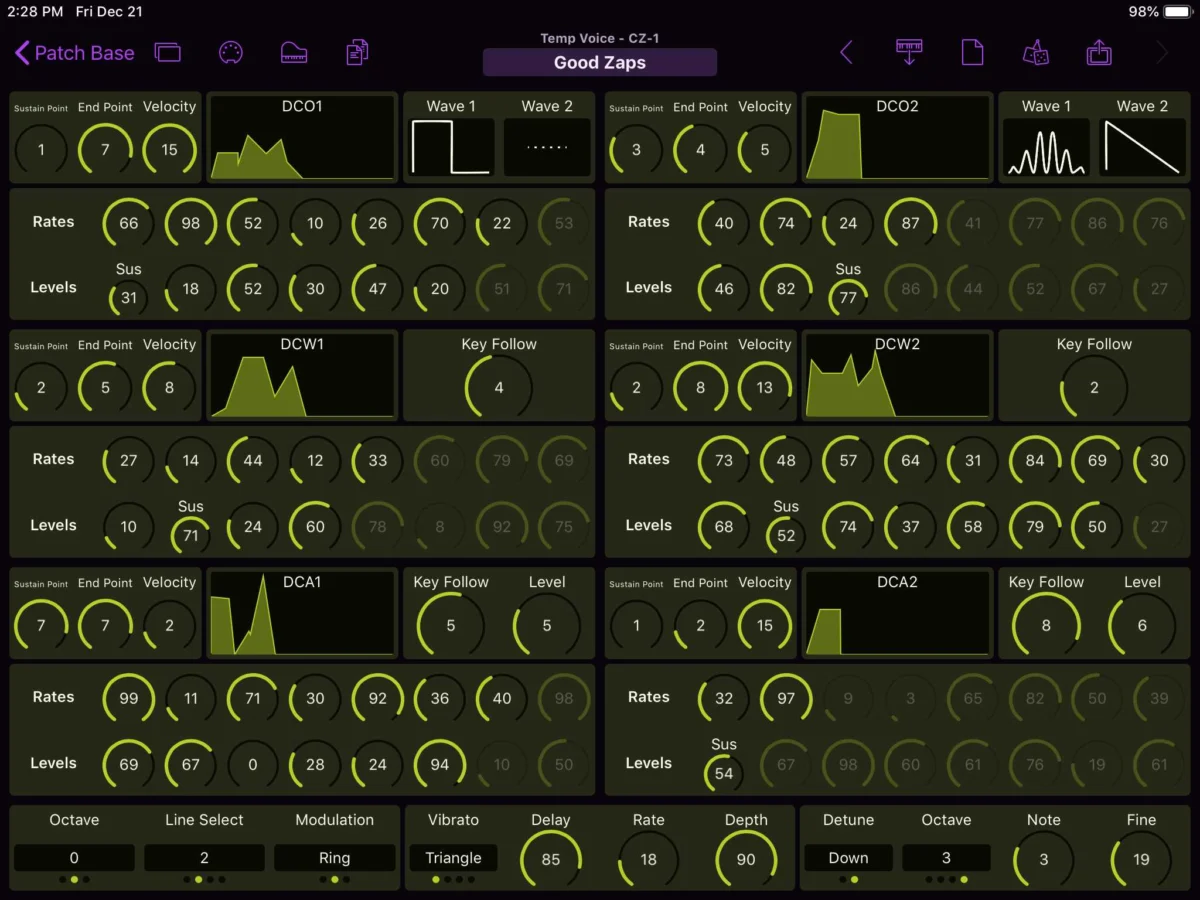
The software development firm Coffeeshopped has officially announced the launch of Patch Base 4 for the Mac platform, marking a significant milestone in the evolution of its comprehensive synthesizer editor and librarian suite. This latest iteration represents a major refinement of the software, which has become a staple tool for electronic musicians, sound designers, and collectors of vintage hardware. According to the developer, the version 4 update focuses on providing a more polished user interface, enhanced system stability, and several new features designed to streamline the complex workflow of programming hardware synthesizers. Patch Base 4 continues to support an extensive library of over 85 hardware synthesizers, ranging from legendary FM units to modern analog recreations, bridging the gap between tactile hardware and the precision of computer-based editing.
The Evolution of Hardware Synthesizer Management
The release of Patch Base 4 comes at a time when the music production industry is seeing a sustained resurgence in hardware synthesizer usage. While digital audio workstations (DAWs) provide limitless internal synthesis options, many producers prefer the unique sonic characteristics of vintage instruments such as the Yamaha DX7, the Roland D-50, or the Korg M1. However, these instruments are often notorious for their difficult user interfaces, which frequently rely on small, non-backlit liquid crystal displays (LCDs) and cumbersome "menu-diving" navigation systems.
Coffeeshopped originally addressed this friction by creating an intuitive touch-based interface for the iPad, allowing users to visualize every parameter of a synthesizer simultaneously. The expansion to the Mac platform allowed for a more integrated studio experience, and version 4 represents the culmination of years of feedback from the professional audio community. By providing a graphical user interface (GUI) for instruments that were designed before the era of modern computing, Patch Base effectively modernizes legacy hardware, making deep sound design accessible to a new generation of musicians.
Technical Specifications and New Features in Version 4
Patch Base 4 is not merely a cosmetic update; it includes fundamental changes to the software’s architecture to ensure compatibility with the latest Apple hardware and operating systems. One of the primary focuses of this release is stability. In an environment where MIDI (Musical Instrument Digital Interface) System Exclusive (SysEx) data is being transmitted back and forth between a computer and decades-old hardware, timing and data integrity are paramount. Patch Base 4 introduces an overhauled MIDI engine that minimizes data loss and ensures that complex patch transfers are executed without interruption.
While the core functionality remains the editing and organization of patches, version 4 introduces several workflow enhancements:
- Native Apple Silicon Support: The software is now fully optimized for Apple’s M1, M2, and M3 chips, ensuring low CPU overhead and rapid response times even when managing large libraries of sounds.
- Refined User Interface: The visual layout has been polished to provide better clarity on high-resolution Retina displays. Knobs, sliders, and buttons have been redesigned to feel more responsive to mouse and trackpad input.
- Enhanced Librarian Functionality: The librarian aspect of the software, which allows users to organize thousands of sounds into banks and categories, has been updated for faster searching and more reliable backup of hardware memory.
- Improved Connectivity: The software features better detection of MIDI interfaces and USB-equipped synthesizers, reducing the setup time required when adding new instruments to a studio configuration.
A Chronology of Patch Base Development
The journey of Patch Base began as a response to the technical limitations of 1980s and 1990s hardware. When Yamaha released the DX7 in 1983, it revolutionized the industry with FM synthesis, but it also introduced a generation of musicians to the difficulty of programming via a tiny screen and a few buttons. For decades, musicians relied on "editor/librarian" software that often became obsolete as computer operating systems evolved.
- 2016–2018: Coffeeshopped established itself on the iOS platform, proving that the iPad was an ideal surface for synthesizer editing.
- 2019: The first version of Patch Base for Mac was released, bringing the same ease of use to desktop users who wanted to integrate hardware editing directly into their studio workstations.
- 2021–2022: The software expanded its library rapidly, adding support for boutique manufacturers and more obscure vintage units, eventually crossing the threshold of 50 supported editors.
- 2023–2024: Development shifted toward version 4, focusing on the transition to Apple Silicon and the need for a more robust professional-grade application that could handle the complexities of modern macOS versions (Sonoma and beyond).
Supporting Data: The Scope of the Patch Base Ecosystem
The sheer scale of Patch Base 4 is evidenced by its support for 85 different synthesizer models. This is not a "one size fits all" application; rather, each of the 85 editors is a custom-coded interface tailored to the specific architecture of the target hardware. The supported list includes instruments from the industry’s most influential manufacturers:
- Yamaha: Extensive support for the DX series (DX7, DX7II, DX11), the TX series (TX81Z, TX802), and modern entries like the Reface series.
- Roland: Support for the "D" series (D-50, D-10, D-110), the "JV" and "XP" series (JV-1080, XP-80), and the Juno/Jupiter boutique ranges.
- Korg: Coverage for the M1, Wavestation, Volca series, and the Minilogue/Monologue lines.
- Oberheim & Sequential: Editors for the Matrix series and modern Dave Smith Instruments/Sequential hardware.
- Casio: Specialized editors for the CZ series (CZ-101, CZ-1, CZ-5000), which utilize Phase Distortion synthesis.
This broad support is critical because each of these synthesizers uses a unique dialect of MIDI SysEx. Managing these differences requires a deep understanding of the original technical manuals and implementation charts provided by manufacturers decades ago.
Pricing Structure and Market Availability
Coffeeshopped has maintained a flexible pricing model for Patch Base 4 to accommodate both hobbyists with a single synthesizer and professional studios with vast collections. The software is available immediately through the Coffeeshopped website and the Mac App Store.
The entry point for the software is $49.99, which includes one full editor of the user’s choice. For musicians who own multiple hardware units, additional editors can be purchased individually for $24.99. This modular approach allows users to pay only for the instruments they actually own. For "power users" and commercial studios, Coffeeshopped offers an all-access subscription option. This subscription provides immediate access to all 85 current editors as well as any new editors released in the future. This model has become increasingly common in the pro-audio world, as it funds the ongoing development required to keep legacy hardware compatible with ever-changing computer hardware.
Professional Reactions and Industry Implications
The release of Patch Base 4 has been met with positive early reactions from the synthesizer community. Sound designers have noted that the "polished" nature of the update solves several minor UI lag issues that were present in earlier versions when running on newer versions of macOS.
Industry analysts suggest that the continued success of Patch Base points to a broader trend in the music technology market: the "Hybrid Studio." While the industry predicted the death of hardware synths in the early 2000s due to the rise of software plugins (VSTs), the opposite has occurred. Musicians are increasingly buying hardware for its tactile feel and specific sound, but they demand the convenience of software for patch management.
"The challenge with vintage gear is never the sound; it’s the interface," says one industry observer. "Software like Patch Base 4 essentially gives a 1987 Yamaha TX81Z the user interface of a 2024 software plugin. It preserves the hardware while removing the barrier to creativity."
Analysis: The Significance of Stability in MIDI Environments
The emphasis on stability in the version 4 announcement is particularly relevant for professional environments. In a live performance or a high-stakes recording session, MIDI "hangs" or buffer overflows can disrupt the creative process. By optimizing the code for Apple Silicon and refining the data transmission protocols, Coffeeshopped is positioning Patch Base 4 as a mission-critical tool rather than just a utility.
Furthermore, the "librarian" aspect of the software serves a vital role in data preservation. Many vintage synthesizers rely on internal batteries to maintain their memory. When these batteries fail, decades of custom-created sounds can be lost instantly. Patch Base 4 allows users to easily "dump" their entire synth memory to a Mac, creating a digital backup that can be restored to the hardware at any time.
Conclusion and Future Outlook
With the release of Patch Base 4, Coffeeshopped reinforces its position as a leader in the synthesizer utility market. By combining a massive library of supported instruments with a modern, stable, and high-performance Mac application, the company has provided a vital bridge between the history of electronic music and its future. As more "new-vintage" instruments are released and the secondhand market for classic gear continues to thrive, the need for sophisticated editors like Patch Base 4 is expected to grow.
The update is currently available for download, and existing users of Patch Base for Mac are encouraged to update to version 4 to take advantage of the performance improvements on the latest Apple hardware. As the platform continues to expand, the music production community looks forward to seeing which classic and modern synthesizers will be added to the Patch Base ecosystem next.
