

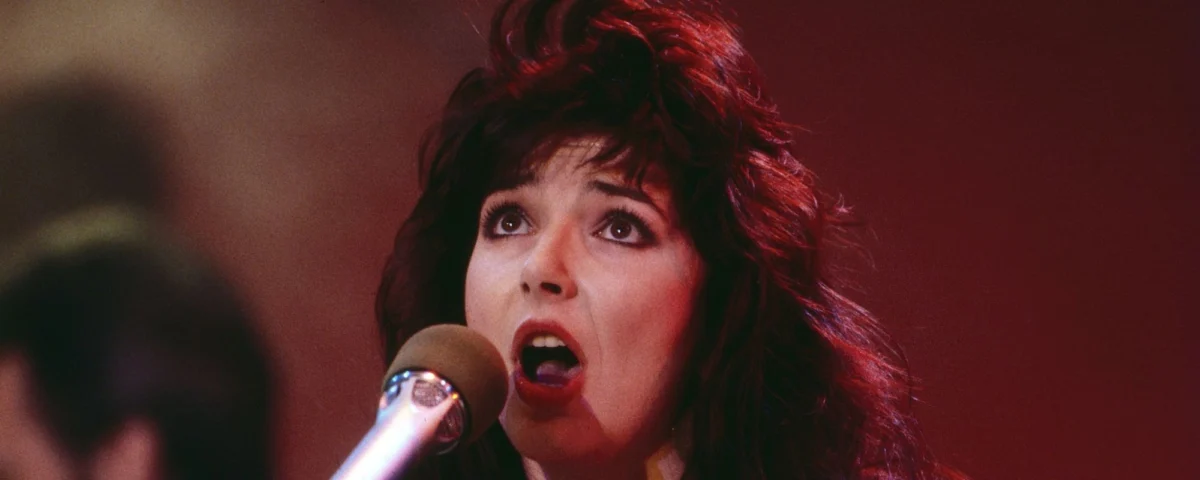
The decade of the 1980s is frequently characterized by the rise of MTV, the dominance of synthesizers, and the emergence of high-concept music videos. However, beneath the polished production and neon aesthetics lay a period of profound lyrical evolution where the boundaries between popular music and literature became increasingly blurred. While the 1960s and 70s established the "singer-songwriter" as a cultural archetype, the 1980s allowed for a more avant-garde and complex approach to lyricism, blending high art with mass-market appeal. Within this era, three specific tracks—Leonard Cohen’s "Hallelujah," Kate Bush’s "Running Up That Hill," and Prince’s "When Doves Cry"—stand as pillars of poetic achievement. These songs moved beyond the standard tropes of rock and pop, utilizing religious iconography, psychological depth, and abstract metaphors to challenge the listener’s intellect. The enduring relevance of these tracks is not merely a product of their melodies but a testament to their status as pieces of modern literature that continue to be analyzed by scholars and fans alike.
The Evolution of the Lyrical Landscape in the 1980s
To understand the impact of these three songs, one must examine the socio-cultural environment of the mid-1980s. The music industry was undergoing a digital revolution, with the introduction of the Fairlight CMI and digital recording techniques. While many artists used these tools to create escapist dance music, others leveraged the new technology to create atmosphere for more introspective and complex narratives.
The chronology of this lyrical renaissance is marked by a shift from the observational storytelling of the 1970s to a more internal, psychological exploration. In 1984 and 1985, the music industry witnessed a rare alignment where commercially successful records also possessed high-level artistic merit. This period saw the release of Prince’s Purple Rain and Leonard Cohen’s Various Positions in 1984, followed by Kate Bush’s Hounds of Love in 1985. These three albums represent a peak in the "poet-rockstar" era, where the written word was given as much weight as the rhythmic arrangement.
Leonard Cohen and the Sacred Secularism of Hallelujah
Released in December 1984 as part of the album Various Positions, Leonard Cohen’s "Hallelujah" is arguably the most analyzed lyric in the history of classic rock. The song did not achieve immediate success; in fact, Columbia Records initially refused to release the album in the United States, with label executive Walter Yetnikoff reportedly telling Cohen, "Leonard, we know you’re great, but we don’t know if you’re any good." This dismissal stands in stark contrast to the song’s eventual status as a global anthem.
The poetic depth of "Hallelujah" is the result of Cohen’s legendary work ethic. It is documented that Cohen wrote approximately 80 drafts of the song over several years, at one point sitting in his underwear at the Royalton Hotel in New York, banging his head against the floor in frustration. The resulting lyrics are a complex tapestry of biblical references—specifically the stories of King David and Bathsheba, and Samson and Delilah—intertwined with themes of human frailty, sexual desire, and spiritual longing.
Cohen’s use of the "broken Hallelujah" serves as a metaphor for the human condition. Unlike traditional hymns that celebrate divine perfection, Cohen’s poetry celebrates the holiness of the struggle itself. The verse "Your faith was strong but you needed proof / You saw her bathing on the roof / Her beauty and the moonlight overthrew you" demonstrates a masterful use of internal rhyme and imagery to depict the intersection of the spiritual and the carnal.
The song’s trajectory from a rejected album track to a cultural phenomenon is supported by significant data. Following John Cale’s 1991 cover and Jeff Buckley’s 1994 rendition, the song entered the mainstream consciousness. According to music industry reports, "Hallelujah" has been covered by over 300 artists and has appeared in dozens of film soundtracks and television shows. Its presence in the digital era is equally formidable, with billions of collective streams across various platforms, cementing its place as a cornerstone of poetic songwriting.
Kate Bush and the Metaphysical Bargain of Running Up That Hill
In 1985, Kate Bush released "Running Up That Hill (A Deal with God)," the lead single from her magnum opus, Hounds of Love. At a time when pop lyrics were often criticized for being superficial, Bush presented a sophisticated exploration of gender dynamics and empathy. The song’s central conceit—making a deal with God to swap places with a partner—is a high-concept poetic device that examines the inherent difficulty of truly understanding another person’s perspective.
The background of the song’s title reflects the tensions between artistic vision and commercial viability. Bush originally titled the track "A Deal with God," but representatives at EMI Records expressed concern that the title might be blacklisted in religious territories, specifically the United States and several European markets. Bush reluctantly agreed to the change to "Running Up That Hill," though the original title remained in parentheses.
Lyrically, the song utilizes the metaphor of the "hill" and the "road" to represent the arduous journey toward emotional clarity. The lines "And if I only could / I’d make a deal with God / And I’d get Him to swap our places" suggest a desire for a metaphysical solution to the limitations of human communication. Bush’s use of the Fairlight CMI to create a haunting, percussive bed for these lyrics allowed the poetry to feel both ancient and futuristic.
The song’s impact was revitalized in 2022 following its prominent placement in the Netflix series Stranger Things. This resurgence provided concrete data on the song’s enduring appeal. Upon its re-entry into the charts, "Running Up That Hill" reached number one in the United Kingdom and number three on the Billboard Hot 100, nearly 37 years after its original release. According to Luminate data, the song saw an 8,700% increase in global streams during the first week of the show’s fourth season, illustrating how high-quality poetic lyricism can transcend generational divides.
Prince and the Surrealist Imagery of When Doves Cry
While Cohen and Bush utilized traditional poetic structures, Prince’s "When Doves Cry," released in 1984, introduced a form of psychedelic surrealism to the top of the charts. As the lead single from the Purple Rain soundtrack, the song was a daring departure from the conventions of R&B and rock. Most notably, Prince made the radical decision to remove the bassline from the track, forcing the listener to focus on the stark, mechanical beat and the vivid, evocative lyrics.
The poetry of "When Doves Cry" is characterized by its ability to conjure intense visual imagery. The opening lines—"Dream, if you can, a courtyard / An ocean of violets in bloom / Animals strike curious poses / They feel the heat / The heat between me and you"—read more like a modernist poem than a pop song. Prince uses color ("violets") and nature ("doves," "animals") to frame a deeply personal narrative about family trauma and the fear of repeating the mistakes of one’s parents.
The refrain, "How can you just leave me standing? / Alone in a world that’s so cold? / Maybe I’m just too demanding / Maybe I’m just like my father, too bold," shifts the song from abstract imagery to raw, vulnerable confession. This juxtaposition of the surreal and the literal is a hallmark of Prince’s lyrical genius.
From a data perspective, "When Doves Cry" was a commercial juggernaut. It spent five weeks at number one on the Billboard Hot 100 and was the top-selling single of 1984. It has been certified Platinum by the RIAA, representing over two million units shifted in the U.S. alone. Critics at the time, including those from Rolling Stone and The Village Voice, noted that the song’s lyrical complexity was a primary driver of its success, proving that the American public was hungry for music that offered more than just a danceable rhythm.
Comparative Analysis and Official Industry Responses
The common thread among these three tracks is their refusal to simplify the human experience. Industry analysts have often pointed to these songs as evidence that "intellectual rock" could be highly profitable. In retrospective interviews, record executives from the 1980s have admitted that the success of artists like Prince and Bush changed the way labels scouted talent, leading to an increased focus on artists who could maintain creative control over their writing.
Official responses from the artists themselves further illuminate the poetic intent behind the music. Leonard Cohen often spoke of his songs as "prayers" or "investigations," while Kate Bush described her writing process as a form of "character acting" where the lyrics provided the script. Prince, known for his enigmatic persona, frequently asserted that his music was channeled from a higher power, emphasizing the spiritual and poetic nature of his compositions.
The critical reception of these works has remained consistently high over four decades. Musicologists frequently cite "Hallelujah" as a masterclass in prosody—the study of the meter and rhythm of verse. Similarly, "Running Up That Hill" is studied for its use of the "androgynous voice," and "When Doves Cry" is analyzed for its deconstruction of the traditional song structure.
Broader Impact and Implications for Modern Songwriting
The legacy of these three 1980s tracks extends far beyond the confines of "classic rock" radio. They established a precedent for the "alternative" movement of the 1990s and the "indie" scene of the 2000s. Artists such as Tori Amos, Björk, and Radiohead have all cited the lyrical depth of 1980s icons as a primary influence on their own work.
The transition of these songs from pop hits to cultural artifacts suggests that lyrics are the primary vehicle for a song’s longevity. While production styles and drum sounds may date a track to a specific year, a well-crafted metaphor remains timeless. The data supports this: songs with high "lyrical density" and emotional resonance tend to have higher "recurrent" airplay and streaming numbers than tracks that rely solely on contemporary production trends.
In conclusion, the works of Leonard Cohen, Kate Bush, and Prince during the mid-1980s represent a high-water mark for poetic expression in popular music. By integrating religious themes, psychological exploration, and surrealist imagery, they elevated the medium of the four-minute song to the level of high art. As the music industry continues to evolve in the age of algorithms and short-form content, these three tracks serve as a reminder that the human desire for meaning—found through the precise and poignant use of language—remains the most powerful force in music. The enduring power of "Hallelujah," "Running Up That Hill," and "When Doves Cry" confirms that when rock music embraces poetry, it achieves a form of immortality that transcends charts and sales figures.
