

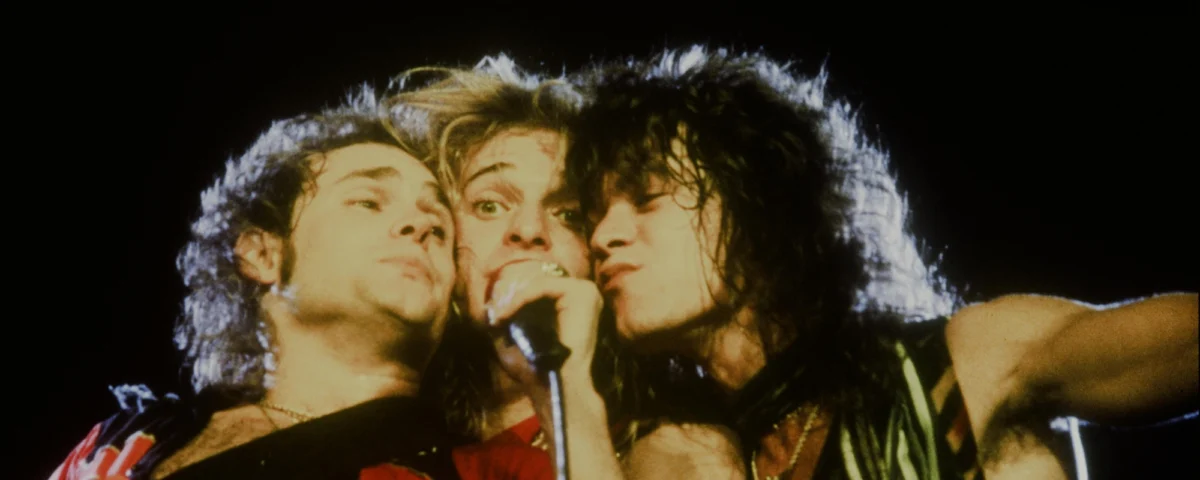
The decade of the 1980s is often characterized by its larger-than-life personalities, flamboyant fashion, and the rise of the music video as a dominant cultural force. In this era, the lead singer was the undisputed focal point of the musical ensemble, serving as the visual and emotional conduit for the audience. However, a select group of compositions challenged this hierarchy, allowing instrumental arrangements to transcend their traditional supporting roles and claim the spotlight. While vocalists like David Lee Roth, Axl Rose, and Michael Jackson were global icons of charisma, their performances in specific landmark tracks were, in many ways, secondary to the technical innovations and melodic hooks provided by the instruments behind them. This phenomenon represents a pivotal moment in music history where the "hook" shifted from the lyrical refrain to the sonic texture of the arrangement itself.
The Synth Revolution and Van Halen’s Pivotal Shift
In 1984, the rock world experienced a seismic shift with the release of Van Halen’s lead single, "Jump." For a band built on the foundation of Eddie Van Halen’s revolutionary "tapping" guitar technique and David Lee Roth’s acrobatic vocal showmanship, the decision to lead a track with a synthesizer was both a risk and a revelation. The song’s opening—a triumphant, brassy chord progression played on an Oberheim OB-Xa synthesizer—became an instant cultural shorthand for 1980s optimism.
Historical Context and Internal Conflict
The genesis of "Jump" dates back to 1981, several years before its eventual release on the album 1984. Eddie Van Halen had written the keyboard part much earlier, but the band’s internal dynamics delayed its recording. David Lee Roth, the quintessential rock frontman, was famously resistant to the inclusion of synthesizers. Roth’s philosophy was rooted in the "hard rock" purity of the 1970s, fearing that a move toward electronic textures would be perceived as "selling out" to the burgeoning synth-pop trend dominated by British New Wave acts.
However, Eddie Van Halen, often confined by the expectations of being a "guitar hero," sought greater creative autonomy. He constructed his own home studio, 5150, specifically to experiment with sounds away from the immediate veto power of his bandmates and producer Ted Templeman. By the time the 1984 sessions began, Eddie’s persistence won out. The resulting track did not just include a synthesizer; it was defined by it.
Technical Analysis and Market Impact
The synth line in "Jump" is notable for its percussive quality. Unlike the ethereal pads common in the era, Eddie played the Oberheim with the rhythmic sensibility of a guitarist. This approach allowed the instrument to drive the song’s energy in a way a vocal melody alone could not.
Data from the period illustrates the success of this instrumental-forward approach:
- Chart Performance: "Jump" reached No. 1 on the Billboard Hot 100 on March 24, 1984, remaining there for five weeks.
- Commercial Success: The album 1984 went on to sell over 10 million copies in the United States alone, achieving Diamond status.
- Critical Reception: While some purists balked, the majority of critics noted that the synth line gave the band a "pop" accessibility that expanded their demographic reach without sacrificing their arena-rock power.
The instrumental break in the middle of the song further emphasizes this shift, as Eddie seamlessly transitions from a synthesizer solo to a guitar solo, proving that the two textures could coexist as the primary drivers of a rock hit.
The Accidental Genius of Slash’s "Sweet Child O’ Mine" Riff
If "Jump" was a calculated move toward a new sound, Guns N’ Roses’ "Sweet Child O’ Mine" was a stroke of serendipity. Released in 1987 as part of the seminal album Appetite for Destruction, the song is widely considered to feature one of the most recognizable guitar riffs in the history of Western music.
The Chronology of a "Circus Riff"
The creation of the song occurred during a jam session at a house the band shared in Los Angeles. Lead guitarist Slash was reportedly practicing a "string-skipping" exercise—a technical drill designed to improve coordination—which he jokingly referred to as a "circus riff." He was making fun of the melody even as he played it.
The timeline of the song’s development is as follows:
- Late 1986: Slash begins playing the riff as a joke during rehearsals.
- The Intervention: Rhythm guitarist Izzy Stradlin joins in with chords, and bassist Duff McKagan develops the low-end groove.
- The Lyrical Layer: Axl Rose, listening from upstairs, begins writing lyrics based on a poem he had written for his then-girlfriend, Erin Everly.
- The Studio Session: Producer Mike Clink encouraged the band to keep the riff as the intro, despite Slash’s initial disdain for its "poppy" nature.
Analysis of Instrumental Dominance
What makes "Sweet Child O’ Mine" a case study in instrumental dominance is the way the riff functions as a recurring character throughout the song. While Axl Rose’s vocal performance is objectively iconic—ranging from tender low registers to his signature high-pitched wail—the guitar work provides the song’s emotional architecture.
The technical complexity of the intro, played on a 1958 Gibson Les Paul replica, creates a sense of tension and release that the lyrics merely supplement. In a 2005 poll by Guitar World, the riff was voted the greatest of all time. This sentiment is echoed by the song’s performance data:
- Billboard Performance: It became the band’s first and only No. 1 single on the Billboard Hot 100 in September 1988.
- Streaming Longevity: As of 2024, the song has surpassed 1.5 billion streams on Spotify and over 1.6 billion views on YouTube, with heatmaps indicating that listener engagement peaks during the opening riff and the extended closing solo.
The "Where do we go now?" bridge serves as a moment where the vocals and instruments collide, but it is Slash’s wah-pedal-infused solo that ultimately resolves the song’s musical narrative, overshadowing the lyrical conclusion.
Louis Johnson and the Rhythmic Foundation of "Billie Jean"
Michael Jackson is perhaps the only artist in history whose physical presence and vocal tics could rival any instrument. Yet, on the 1983 hit "Billie Jean," the instrumentation—specifically the bassline—is so potent that it transformed the landscape of pop production.
The Crafting of a "Stinky" Groove
Produced by Quincy Jones and engineered by Bruce Swedien, "Billie Jean" was a masterclass in sonic engineering. The heart of the track is a repetitive, pulsing bassline performed by Louis "Thunder Thumbs" Johnson. Jones and Jackson famously clashed over the song’s intro; Jones felt the 29-second instrumental opening was too long and would discourage radio play. Jackson insisted on keeping it, famously stating that the intro "makes me want to dance."
Jackson’s instinct was rooted in the power of the groove. The bassline, doubled by a synthesizer, creates a sense of "sonic personality" that is immediate and undeniable. To achieve the specific sound, Swedien recorded Jackson’s vocals through a long cardboard tube to create distance, while the drums and bass were kept remarkably "dry" and upfront in the mix.
Impact and Cultural Implications
"Billie Jean" was more than just a pop song; it was a tool for social change. It was one of the first videos by a Black artist to receive heavy rotation on MTV, effectively breaking the "color barrier" of the network. While Jackson’s Moonwalk during the Motown 25 special is the visual most associated with the song, that dance was choreographed specifically to the rhythm of the bass and drums.
Key data points regarding "Billie Jean" include:
- Grammy Recognition: The song won two Grammy Awards, including Best R&B Song, largely credited to its innovative arrangement.
- Production Influence: The "Billie Jean" drum beat and bass interaction became a blueprint for the "New Jack Swing" era and modern R&B.
- Market Dominance: The single sold over 10 million copies worldwide and helped Thriller become the best-selling album of all time.
The instrumentation in "Billie Jean" creates a psychological "loop" that captivates the listener before a single word is spoken. The bassline is so foundational that it has been sampled and imitated across genres, from hip-hop to indie rock, proving its status as the song’s primary hook.
Broader Implications for the Music Industry
The success of these three tracks signaled a shift in how music was produced and consumed. In the 1980s, the "instrumental hook" became as valuable as the lyrical chorus. This led to several industry-wide changes:
- The Rise of the "Super-Producer": Figures like Quincy Jones, Ted Templeman, and Mike Clink became as famous as the artists they recorded, as their ability to craft "sonic signatures" became the key to Top 40 success.
- Instrument Sales Trends: Following the success of "Jump," sales of polyphonic synthesizers skyrocketed. Similarly, Slash is often credited with single-handedly reviving the popularity of the Gibson Les Paul in an era dominated by "Super-Strats."
- The Evolution of Songwriting: Songwriters began to compose with "visual" and "textural" elements in mind, knowing that a memorable instrumental motif was essential for a song to translate well to the medium of music video.
Conclusion: The Enduring Legacy of the Eighties Hook
The enduring popularity of "Jump," "Sweet Child O’ Mine," and "Billie Jean" suggests that while vocalists provide the "face" of a song, the instrumentation provides its "soul." In these instances, the synthesizer, the guitar, and the bass were not merely accompaniment; they were the lead performers.
Decades later, these songs remain staples of radio and digital playlists because their instrumental moments are etched into the collective memory of the public. They represent a rare alignment of technical proficiency, production genius, and pop sensibility. When the opening notes of these tracks play, the listener does not wait for the singer to begin; they are already fully immersed in the musical world created by the instruments. This legacy confirms that in the high-stakes world of 1980s rock and pop, the most powerful voice in the room wasn’t always the one behind the microphone.
