

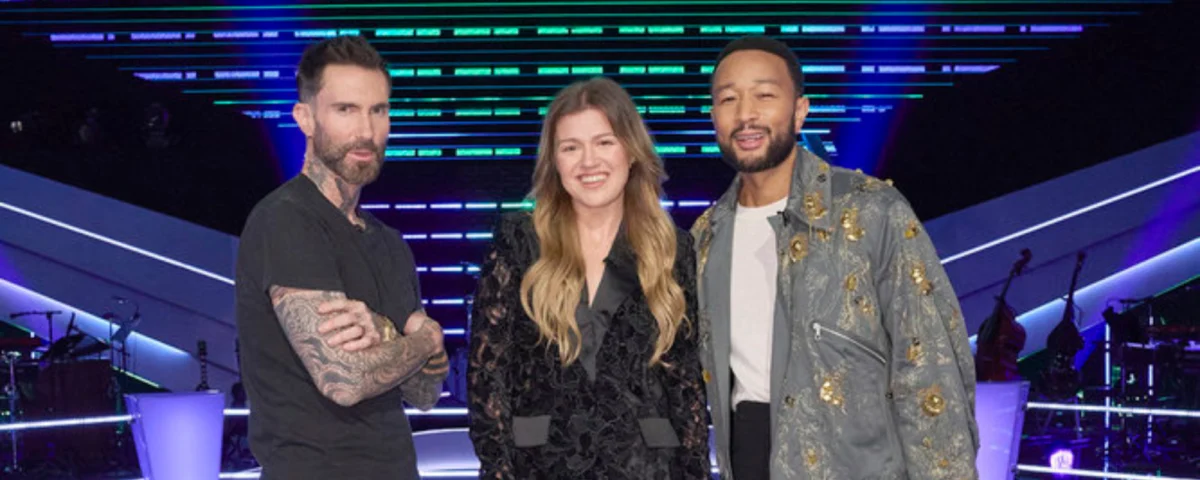
The long-running NBC vocal competition The Voice has officially concluded its Season 29 Battle Rounds, setting the stage for a transformative Knockout Round that introduces several historic changes to the show’s format. Following a rigorous series of head-to-head duels, coaches Adam Levine, Kelly Clarkson, and John Legend have successfully narrowed their rosters to six contestants each. As the production moves into the final weeks of the spring 2026 season, the remaining 18 artists face a restructured path to the finale, characterized by the absence of traditional safety nets and the introduction of a specialized alumni competition.
The conclusion of the Battle Rounds has historically served as a pivot point for the series, but Season 29 marks a departure from recent years. Most notably, the upcoming Knockout Round will proceed without the "Steal" or "Save" options that have previously allowed coaches to rescue eliminated contestants. This strategic shift increases the pressure on the remaining vocalists, as each coach is mandated to reduce their team by half, leaving only three representatives per team for the semi-final stage. This streamlined approach is designed to heighten the stakes of the individual performances, as contestants will now sing songs of their own choosing to prove their artistry and viability as a commercial recording artist.
Chronology of Season 29 and the Road to the Knockouts
Season 29 premiered in early February 2026, marking the high-profile return of original coach Adam Levine to the panel alongside series mainstays Kelly Clarkson and John Legend. The Blind Auditions saw a record number of four-chair turns, leading to what industry analysts have described as one of the most technically proficient talent pools in the show’s history.
Following the Blinds, the Battle Rounds took place throughout the first three weeks of March. During this phase, coaches paired their team members for shared performances, selecting a winner to advance while utilizing limited "Steals" to acquire talent from opposing teams. The conclusion of this phase on March 23 has left the following 18 contestants as the definitive contenders for the
Team Adam: Alexia Jayy (31), Bay Simpson (26), Jaali Boyd (25), Jared Shoemaker (32), Jeremy Keith (40), and Mike Steele (28). Notably, Mike Steele was acquired by Levine via a steal from Team Legend, a move that many viewers believe solidified Levine’s team as the one to beat in the upcoming rounds.
Team Kelly: Abigayle Oakley (25), Houston Kelly (20), Jonah Mayer (31), JW Griffin (25), Liv Ciara (16), and Mikenley Brown (19). Clarkson utilized her "Super Steal" on the 16-year-old Liv Ciara, signaling her intent to mentor younger, developmental talent into powerhouse performers.
Team Legend: Grace Humphries (18), K.J. Willis (35), Lucas West (26), Moses G. (31), Natasha Blaine (27), and Syd Millevoi (23). Legend’s roster remains diverse, though he lost Mike Steele to Team Adam and gained Moses G. in a reciprocal steal during the Battle phase.
The In-Season All-Star Competition and the Return of CeeLo Green
In a move to bolster viewership and celebrate the show’s legacy, NBC has announced the "In-Season All-Star Competition," a secondary bracket that will run concurrently with the Knockout Rounds. This segment features six former artists from previous seasons of The Voice, each hand-selected by their former coaches to return to the stage. These alumni will not compete for the Season 29 title but will instead represent their coaches in a series of head-to-head "All-Star Showdowns."
The implications of this sub-competition are significant for the main roster. The coach whose all-stars achieve the most wins during these sing-offs will be granted a strategic advantage: a guaranteed second finalist in the season finale. This effectively bypasses a portion of the standard elimination math, ensuring that the winning coach has a 50% representation in the Top 4, regardless of the semi-final results.
Adding to the nostalgic weight of the segment, original coach CeeLo Green will return to the program to serve as the sole arbiter of the All-Star Showdowns. Green’s involvement marks his first major return to a judging role on the series in several years, providing a bridge between the show’s origins and its current iteration.
Radical Shifts in Voting: The Super Fan and Alumni Block
Perhaps the most significant structural change for Season 29 involves the methodology of the public vote. For the first time in the history of the franchise, the power to determine the winner will shift away from the general home-viewing audience during the semi-finals and finale. Instead, a new voting block has been established, comprised entirely of "super fans"—individuals with a documented history of engagement with the brand—and past artists from the previous 28 seasons of The Voice.
This specialized group will make up the live studio audience and will cast their votes in real-time during the broadcast. According to internal production memos, this shift is intended to provide a more "expert-driven" outcome, balancing the emotional appeal of the contestants with a technical appreciation for vocal ability and stage presence. By involving alumni in the voting process, the show seeks to create a self-sustaining ecosystem where former contestants help shape the future of the brand.
Analysis of Team Dynamics and Strategic Implications
As the Knockouts begin, the coaches’ strategies have become increasingly transparent. Adam Levine’s team is characterized by veteran experience, with half of his team aged 30 or older. This suggests a reliance on seasoned performers who can handle the pressure of the new live-voting format. Jeremy Keith, at 40, represents the oldest contestant in the current top 18, bringing a mature perspective that often resonates with the "super fan" demographic.
In contrast, Kelly Clarkson has leaned into a "youth-and-potential" strategy. With three contestants under the age of 21, including the 16-year-old Liv Ciara, Clarkson is positioning herself as the premier developer of new talent. Her use of the "Super Steal" on Ciara suggests she views the teenager as a potential frontrunner who can capture the audience’s imagination through rapid growth over the course of the season.
John Legend’s team appears to be the most stylistically diverse, ranging from the indie-pop sensibilities of Natasha Blaine to the soul-heavy vocals of K.J. Willis. Legend’s ability to navigate the Knockouts will depend on his song choices, as the "no steal" rule means he cannot afford a single tactical error. If Legend can secure the All-Star victory, his path to the finale becomes considerably easier, allowing him to protect his top talent even if the audience vote is split.
Broader Impact on the Reality Competition Landscape
The modifications introduced in Season 29 of The Voice reflect a broader trend in reality television toward "gamification" and the integration of legacy elements. By bringing back CeeLo Green and former contestants, NBC is leveraging nostalgia to maintain its core audience while simultaneously experimenting with the voting mechanics to ensure the "quality" of the winner.
Industry analysts suggest that the removal of Steals and Saves in the Knockouts is a response to criticisms that previous seasons felt "too safe" or "drawn out." By forcing a 50% elimination in a single round, the producers are ensuring that the semi-finals feature only the most elite performers. Furthermore, the real-time voting by a studio audience of experts and alumni could set a new standard for how talent competitions handle the "popularity vs. skill" debate that has plagued the genre for decades.
As the 18 remaining contestants prepare their self-selected songs for the Knockout stage, the atmosphere at the Universal Studios Hollywood set is reportedly one of intense focus. The semi-finals will see the pool narrowed to nine, eventually culminating in a Top 4 finale. With the added layer of the All-Star Competition and the high-stakes judging of CeeLo Green, Season 29 is positioned to be a defining chapter in the history of the franchise.
The Voice continues its broadcast on Mondays on NBC, with the Knockout Rounds scheduled to begin next week. As the competition intensifies, the eyes of the music industry remain on these 18 hopefuls, one of whom will eventually join the ranks of the alumni now tasked with deciding their fate.
