

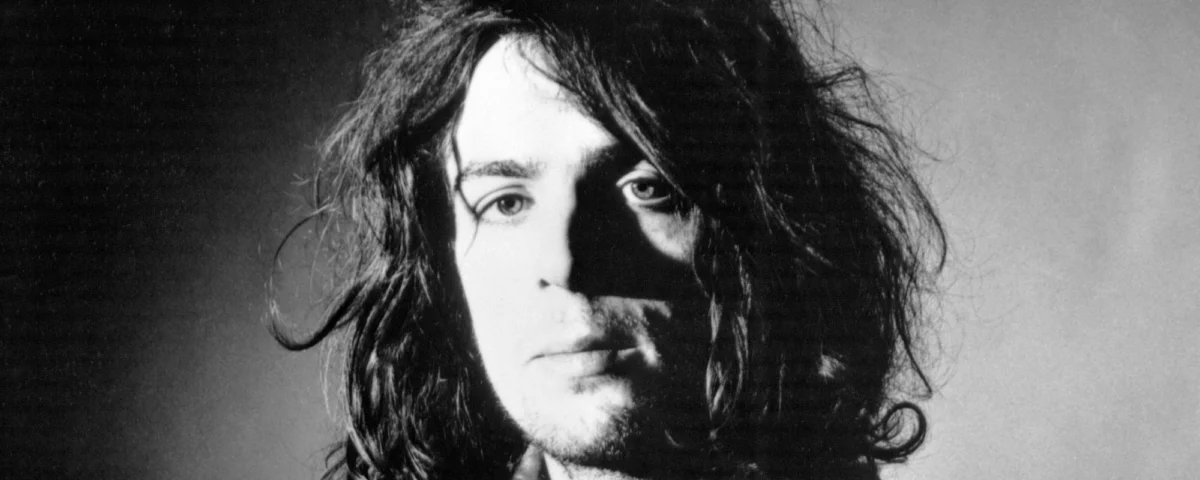
The history of rock music is punctuated by figures whose creative trajectories were severed at the height of their artistic ascent. While the industry frequently celebrates the longevity of icons who have performed for decades, a distinct and somber category exists for those whose contributions were brief but transformative. The stories of Randy Rhoads, Syd Barrett, and Jim Sullivan represent three distinct archetypes of loss: the tragic accident, the psychological withdrawal, and the inexplicable physical disappearance. Each artist possessed the technical or conceptual prowess to redefine their respective genres, yet each vanished from the public eye before their full potential could be realized, leaving behind a legacy defined as much by what they achieved as by the mystery of what might have been.
The Technical Prodigy: The Brief Ascent of Randy Rhoads
Randy Rhoads is widely regarded as one of the most influential guitarists in the history of heavy metal, despite a professional career that lasted less than a decade. Born in 1956, Rhoads combined a deep foundation in classical guitar with the aggressive energy of late-1970s hard rock. His tenure with the band Quiet Riot, spanning two albums released primarily in Japan (Quiet Riot in 1977 and Quiet Riot II in 1978), established his local reputation in the Los Angeles club scene. However, it was his recruitment by former Black Sabbath vocalist Ozzy Osbourne in 1979 that catalyzed his rise to international prominence.
Chronology of a Rising Star
Between 1980 and 1981, Rhoads recorded two landmark albums with Osbourne: Blizzard of Ozz and Diary of a Madman. These recordings revolutionized the genre by introducing neo-classical elements—complex scales, intricate arpeggios, and a level of technical precision that had rarely been applied to heavy metal. Tracks such as "Crazy Train" and "Mr. Crowley" became foundational texts for aspiring guitarists.
By early 1982, Rhoads was consistently winning "Best New Guitarist" polls in major music publications. Despite his success, Rhoads reportedly expressed a desire to leave the rock touring lifestyle to pursue a degree in classical guitar at UCLA, indicating a person more interested in artistic mastery than the trappings of fame.
The Tragedy at Leesburg
The trajectory of Rhoads’ career was ended on March 19, 1982. While on tour in Florida, the band’s tour bus stopped at a private airfield in Leesburg. The bus driver, Andrew Aycock, took a Beechcraft F35 Bonanza aircraft without authorization. During a series of low-level passes intended to "buzz" the tour bus, the plane’s wing clipped the vehicle, causing the aircraft to spiral into a nearby mansion. Rhoads, Aycock, and makeup artist Rachel Youngblood were killed instantly. Rhoads was 25 years old.
Legacy and Industry Impact
The sudden loss of Rhoads devastated the metal community. Ozzy Osbourne has frequently stated in interviews that Rhoads’ death was the most traumatic event of his professional life, noting that the guitarist was the catalyst for his successful solo career. In 2021, Rhoads was posthumously inducted into the Rock and Roll Hall of Fame with the Award for Musical Excellence. His technical innovations paved the way for the "shred" guitar movement of the 1980s, influencing a generation of musicians including Zakk Wylde and Yngwie Malmsteen.
The Architect of Psychedelia: The Withdrawal of Syd Barrett
Unlike Rhoads, whose departure was forced by tragedy, Syd Barrett’s exit from the music industry was a slow, painful dissolution. As the primary songwriter, lead guitarist, and founding member of Pink Floyd, Barrett was the creative engine behind the band’s early success and the architect of the London psychedelic scene in the mid-1960s.
The Genesis of Pink Floyd
Barrett wrote most of the band’s debut album, The Piper at the Gates of Dawn (1967), an experimental work that combined whimsical lyrics with avant-garde sonic structures. Under his leadership, Pink Floyd became the house band for the UFO Club and a symbol of the "Summer of Love." However, as the band’s fame grew, Barrett’s behavior became increasingly erratic, a decline widely attributed to a combination of heavy psychedelic drug use (specifically LSD) and underlying mental health issues, possibly schizophrenia.
Timeline of Decline and Departure
By late 1967, Barrett often became catatonic on stage, staring into space or playing a single chord for an entire set. The band eventually recruited David Gilmour to cover Barrett’s guitar parts. For a brief period in 1968, Pink Floyd functioned as a five-piece unit, but the arrangement proved untenable. In April 1968, Barrett was officially asked to leave the group.
He attempted a solo career, releasing The Madcap Laughs and Barrett in 1970, both of which featured contributions from his former bandmates. However, his ability to function in a studio environment continued to deteriorate. After a final, abortive attempt to form a band called Stars in 1972, Barrett effectively retired from the public eye at the age of 26.
The Quiet Years and Cultural Resonance
Barrett spent the remainder of his life living in his mother’s basement in Cambridge, pursuing painting and gardening under his birth name, Roger Barrett. He famously appeared at Abbey Road Studios in 1975 during the recording of "Wish You Were Here"—a song written about him—but he was so physically transformed that his former bandmates did not initially recognize him.
Barrett died of pancreatic cancer in 2006 at the age of 60. His story remains a cautionary tale regarding the intersection of genius, drug culture, and mental illness. Pink Floyd’s most successful works, including The Dark Side of the Moon and The Wall, are deeply informed by the trauma of Barrett’s decline and the theme of absence.
The Desert Mystery: The Disappearance of Jim Sullivan
The most literal disappearance in the history of classic rock belongs to Jim Sullivan, a folk-rock singer-songwriter who vanished without a trace in the New Mexico desert in 1975. Sullivan was a fixture of the Los Angeles music scene in the late 1960s, performing at the prestigious Raft club where he counted celebrities like Rock Hudson and Lee Marvin as fans.
Artistic Profile and "U.F.O."
Sullivan released his debut album, U.F.O., in 1969 on the small Monnie Records label. The album featured a sophisticated blend of folk, rock, and country, backed by members of the legendary "Wrecking Crew" session musicians. His lyrics often dealt with themes of isolation, the desert, and extraterrestrial life—elements that would later take on a haunting significance. Despite critical acclaim, the album failed to achieve commercial success, as did his 1972 self-titled follow-up on Capitol Records.
The Events of March 1975
Frustrated by his lack of a breakthrough in California, Sullivan decided to move to Nashville to seek work as a songwriter. On March 4, 1975, he left Los Angeles in his Volkswagen Beetle. On March 5, he was stopped by highway patrol in Santa Rosa, New Mexico, for driving erratically, but was released after a sobriety check. He checked into the La Familia Guest Ranch but reportedly did not sleep in his room.
The following day, Sullivan’s car was found abandoned at a remote ranch 26 miles from the motel. Inside the vehicle were his wallet, his guitar, his clothes, and a box of his unsold records. There was no sign of a struggle, yet Sullivan was nowhere to be found. Extensive search parties combed the desert, but no remains or evidence of his whereabouts were ever discovered.
Theories and Posthumous Recognition
The mystery of Sullivan’s disappearance has fueled decades of speculation. Theories range from a fatal encounter with local law enforcement or the "mob," to Sullivan intentionally walking into the desert to perish. Given the title of his first album, some fringe theorists have even suggested alien abduction.
In 2010, the record label Light in the Attic reissued U.F.O., sparking a massive resurgence in interest. Critics now view Sullivan as a "lost" master of the Americana genre. His family, including his son Chris Sullivan, has cooperated with investigators over the years, but as of the present day, the case remains one of the music industry’s most enduring cold cases.
Comparative Analysis and Broader Implications
The disappearances of Rhoads, Barrett, and Sullivan highlight the fragility of artistic momentum. From a journalistic and industry perspective, these cases underscore several recurring themes:
- The Impact of Environment: Rhoads’ death was a byproduct of the chaotic nature of 1980s touring; Barrett’s decline was exacerbated by the lack of mental health support in the 1960s drug culture; and Sullivan’s disappearance reflects the isolation of the American West.
- Posthumous Valuation: In all three instances, the artists’ work gained significantly more value and critical respect after they were gone. This "mythologizing" process often obscures the human tragedy involved but ensures the preservation of the art.
- Unfinished Narratives: The "what if" factor remains a powerful driver of classic rock fandom. Musicologists suggest that had Rhoads lived, he likely would have bridged the gap between heavy metal and neoclassical music decades before it became a mainstream subgenre. Similarly, Sullivan is now viewed as a precursor to the "outlaw country" movement.
The legacies of these three men are cemented not by the quantity of their output, but by the profound void their departures created. Whether through a tragic accident, a retreat into silence, or a vanishing act in the desert, they remain frozen in time—perpetually on the verge of the superstardom that their talent suggested was inevitable.
