

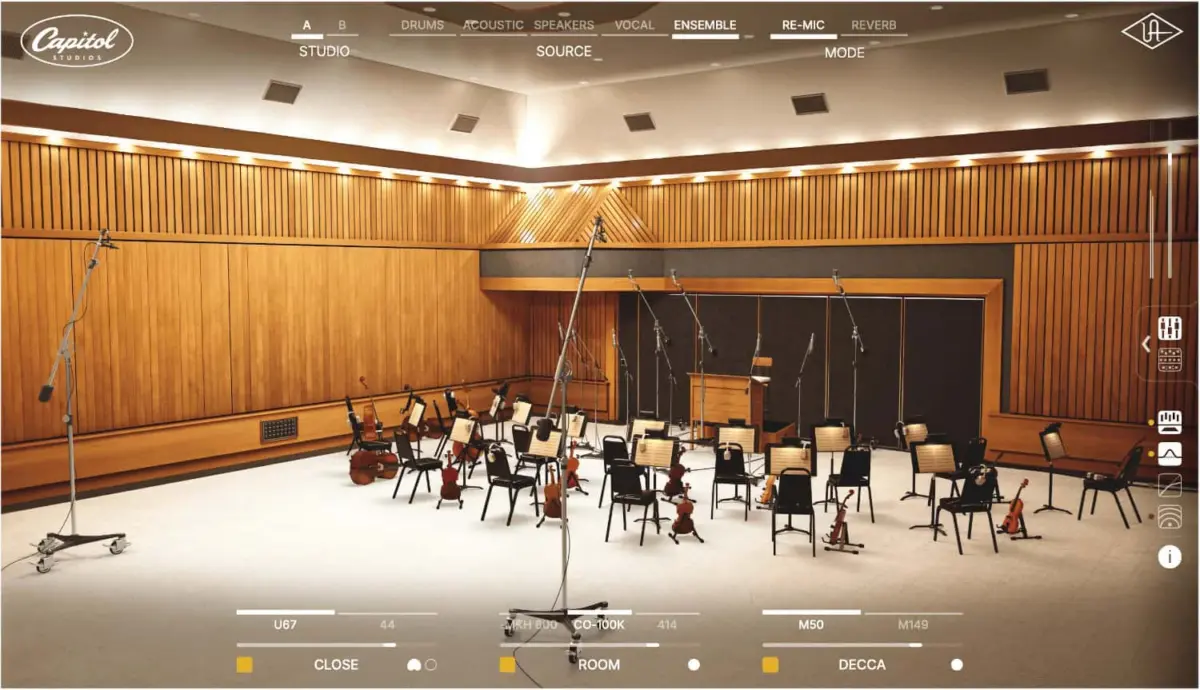
Universal Audio (UA) has officially announced the release of Capitol Studios, a comprehensive native room-modeling and reverb plug-in designed for macOS and Windows platforms. This new software offering marks a significant milestone in digital audio workstation (DAW) technology by providing producers, mixing engineers, and composers with a precise digital recreation of the legendary recording environments found within the Capitol Records Building in Hollywood. By integrating the acoustic signatures of Studio A and Studio B, along with the facility’s world-renowned underground echo chambers and vintage outboard equipment, Universal Audio aims to democratize access to one of the most prestigious recording spaces in music history. The plug-in is available as a native license, meaning it does not require UA’s proprietary hardware to operate, reflecting the company’s ongoing shift toward broader accessibility for the global music production community.
A Legacy Refined: The History of Capitol Studios
To understand the significance of this software release, one must look at the history of the Capitol Records Building. Completed in 1956, the 13-story circular tower on Vine Street in Hollywood was the world’s first circular office building. Designed by Welton Becket, the structure was specifically intended to house a state-of-the-art recording facility. Since its inauguration, Capitol Studios has served as the creative home for a diverse array of legendary artists, including Frank Sinatra, Nat King Cole, The Beach Boys, and Ray Charles. In more recent decades, the studios have hosted contemporary icons such as Paul McCartney, Sam Smith, and Arcade Fire.
Studio A and Studio B are the cornerstones of this legacy. Studio A is recognized for its massive floor space and variable acoustics, making it a premier destination for orchestral film scores and large ensemble recordings. Studio B, while slightly smaller, offers a punchier, more intimate acoustic character that became the signature sound for countless classic rock and pop records. The preservation of these acoustics in a digital format represents a massive undertaking in audio engineering, requiring years of research and acoustic mapping to ensure that the software response mirrors the physical reality of the Hollywood landmark.
Technical Innovation: Dynamic Room Modeling
At the core of the Capitol Studios plug-in is Universal Audio’s proprietary Dynamic Room Modeling technology. Unlike traditional convolution reverbs, which rely on static "snapshots" or impulse responses (IRs) of a room, Dynamic Room Modeling uses complex algorithms to simulate the physical movement of sound waves within a space. This allows users to virtually reposition microphones within Studio A or Studio B and hear the tonal balance, phase relationships, and ambient reflections change in real time, just as they would in the physical room.
This technology addresses a common limitation in digital mixing: the static nature of room samples. By providing a fluid environment, the plug-in allows engineers to find the "sweet spot" for a specific instrument. For instance, moving a virtual microphone closer to the sound source increases the direct signal, while pulling it back introduces more of the room’s natural diffusion and late reflections. This level of control is essential for creating depth and dimension in a mix, particularly for users working in small home studios or "dry" recording environments.
The Iconic Underground Echo Chambers
Perhaps the most sought-after feature of the Capitol Studios plug-in is the inclusion of four underground echo chambers: Chambers 1, 3, 5, and 8. These chambers were designed by sound pioneer Les Paul and are located 30 feet beneath the Capitol Tower. They are concrete-reinforced, trapezoidal rooms built to provide a lush, natural reverberation that is nearly impossible to replicate with electronic hardware or standard digital effects.
For the first time, Universal Audio has modeled these specific chambers with high fidelity, allowing users to adjust parameters such as pre-delay, stereo width, and decay time. Historically, these chambers have been used on thousands of hit records to provide a sense of "air" and "shimmer" to vocals and strings. By providing access to four distinct chambers, the plug-in offers a range of textures, from the dense and dark reflections of Chamber 1 to the brighter, more modern resonance of Chamber 8.
Curated Microphone Collections and Signal Chains
Universal Audio collaborated closely with Capitol Studios’ senior staff engineer, Steve Genewick, to curate the microphone setups and signal paths included in the software. Genewick, a three-time Grammy-nominated engineer with over 20 years of experience at the facility, ensured that the virtual setups reflect the actual techniques used by professionals in the building.
The plug-in features a historic collection of microphones, each modeled with its specific frequency response and polar pattern characteristics. These include:
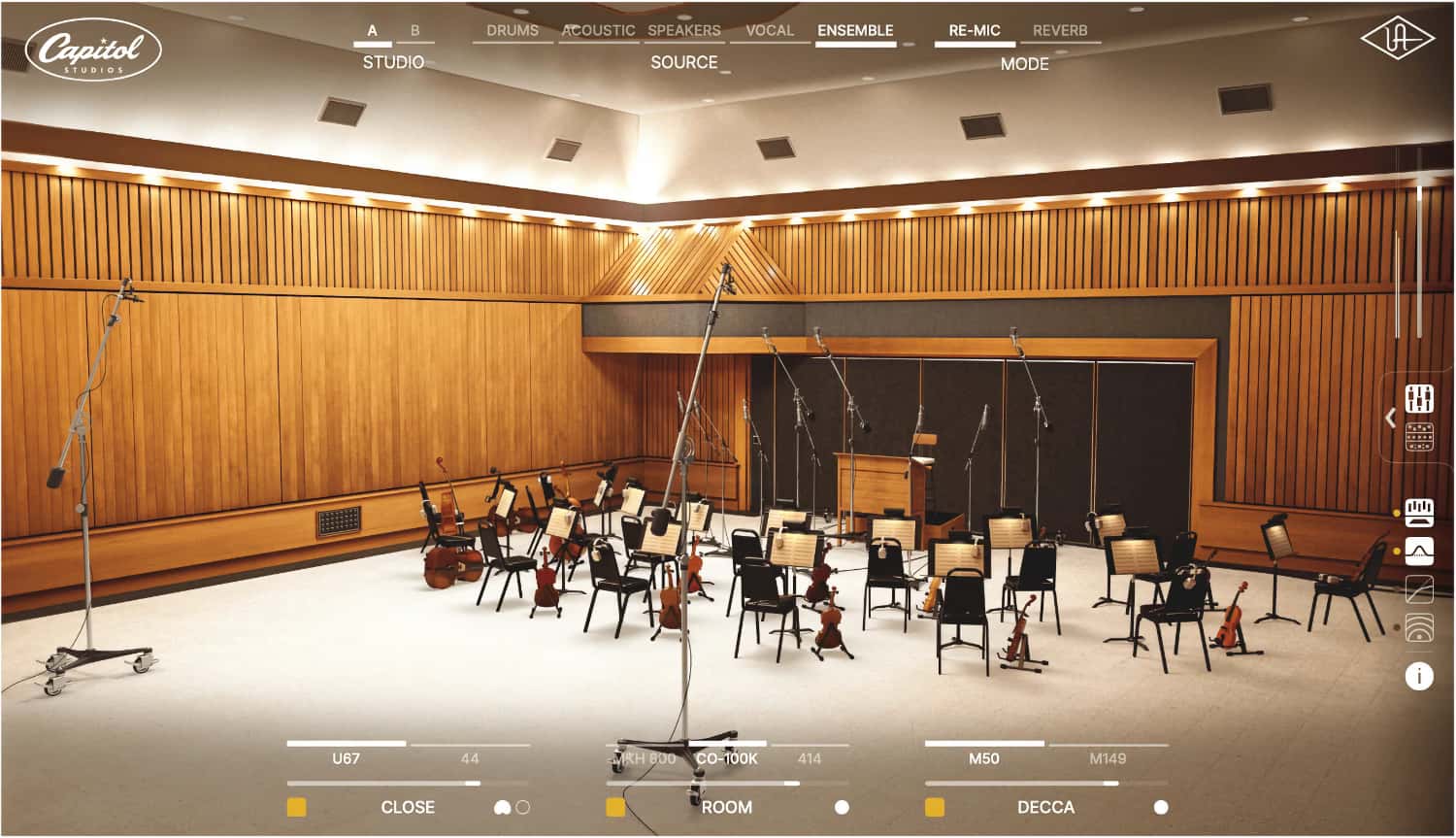
- Neumann U48 and U67: Essential for warm, mid-forward vocal and instrument capture.
- AKG C12: Known for its "silky" high-end, often used on overheads and acoustic guitars.
- Neumann M50: A classic choice for orchestral "Decca Tree" configurations.
- Sony C800G: A modern standard for high-fidelity vocal clarity.
Beyond the microphones, the plug-in simulates the entire signal chain, including the custom Neve and EMI consoles found at Capitol. Users can apply console-specific EQ and dynamics, as well as legendary outboard gear such as the 1176LN Limiting Amplifier, the LA-2A Leveling Amplifier, and the Capitol Mastering Compressor. This holistic approach ensures that the "Capitol sound" is not just about the room, but about the specific synergy between the acoustics and the vintage electronics.
Applications in Orchestral and Ensemble Production
For composers and arrangers, the Capitol Studios plug-in includes specialized configurations for orchestral work. One of the standout features is the implementation of the Decca Tree microphone arrangement. This three-microphone setup, traditionally positioned above the conductor’s podium, is the industry standard for capturing a balanced, wide stereo image of an orchestra.
In the software environment, users can independently control the center and side microphones of the Decca Tree, allowing for precise adjustment of the ensemble’s width and focus. This makes the plug-in an invaluable tool for film scoring, where the goal is often to create a "larger-than-life" cinematic sound. By applying the Studio A modeling to virtual instruments or dry MIDI-based samples, composers can achieve a level of realism that was previously only possible by booking an expensive recording session at a major studio.
Industry Impact and Market Implications
The release of the Capitol Studios plug-in arrives at a time when the music industry is increasingly shifting toward "in-the-box" production. As commercial studio budgets fluctuate and more professional-grade music is produced in home environments, the demand for high-quality acoustic modeling has surged. Universal Audio’s decision to offer this as a native plug-in—meaning it runs on the computer’s CPU rather than requiring UAD hardware—is a strategic move to capture a larger share of the producer market.
Industry analysts suggest that this release places Universal Audio in direct competition with other premium reverb and room-modeling software, such as Audio Ease’s Altiverb and IK Multimedia’s T-RackS Sunset Sound Studio Reverb. However, the exclusive partnership with Capitol Studios and the inclusion of the Les Paul-designed echo chambers give UA a unique competitive advantage. The branding associated with Capitol Records carries significant weight in the audio world, symbolizing a gold standard of quality that spans nearly seven decades.
Official Responses and Engineering Perspectives
In statements regarding the development of the plug-in, Universal Audio emphasized the meticulous nature of the project. Engineers spent hundreds of hours measuring the impulse responses and physical properties of the rooms, working during the quietest hours of the night to ensure no external Hollywood traffic noise contaminated the data.
Steve Genewick noted that the goal was to provide a tool that felt "musical" rather than just technical. "We wanted to make sure that when a user opens this plug-in, they feel the same inspiration we feel when we walk into Studio A," Genewick remarked during a technical briefing. "It’s about the way the room breathes and how it interacts with the microphones. We’ve captured that essence."
Specifications, Pricing, and Availability
The Universal Audio Capitol Studios plug-in is available immediately through the UA online store and authorized retailers. It is priced at $249 USD for a perpetual license. The software is compatible with macOS (10.15 Catalina or newer, including Apple Silicon) and Windows 10/11. It supports standard plug-in formats, including VST3, AU, and AAX, ensuring compatibility with all major DAWs such as Pro Tools, Logic Pro, Ableton Live, and Cubase.
As part of the UAD ecosystem, the plug-in also includes a variety of presets designed by top-tier engineers, providing users with instant starting points for vocals, drums, pianos, and full orchestral mixes. This accessibility ensures that even those unfamiliar with the specific acoustics of Capitol Studios can achieve professional results quickly.
Conclusion: The Future of Virtual Environments
Universal Audio’s Capitol Studios plug-in represents more than just a new reverb effect; it is a digital preservation project that bridges the gap between the golden age of analog recording and the modern digital era. By making these legendary spaces available to anyone with a laptop, Universal Audio is contributing to a broader trend of "virtual tourism" in music production, where the physical constraints of geography and budget no longer limit the creative potential of artists. As DSP technology continues to evolve, the line between physical and virtual recording environments will likely continue to blur, with Capitol Studios serving as a primary example of how history can be captured and utilized in the digital age.
