

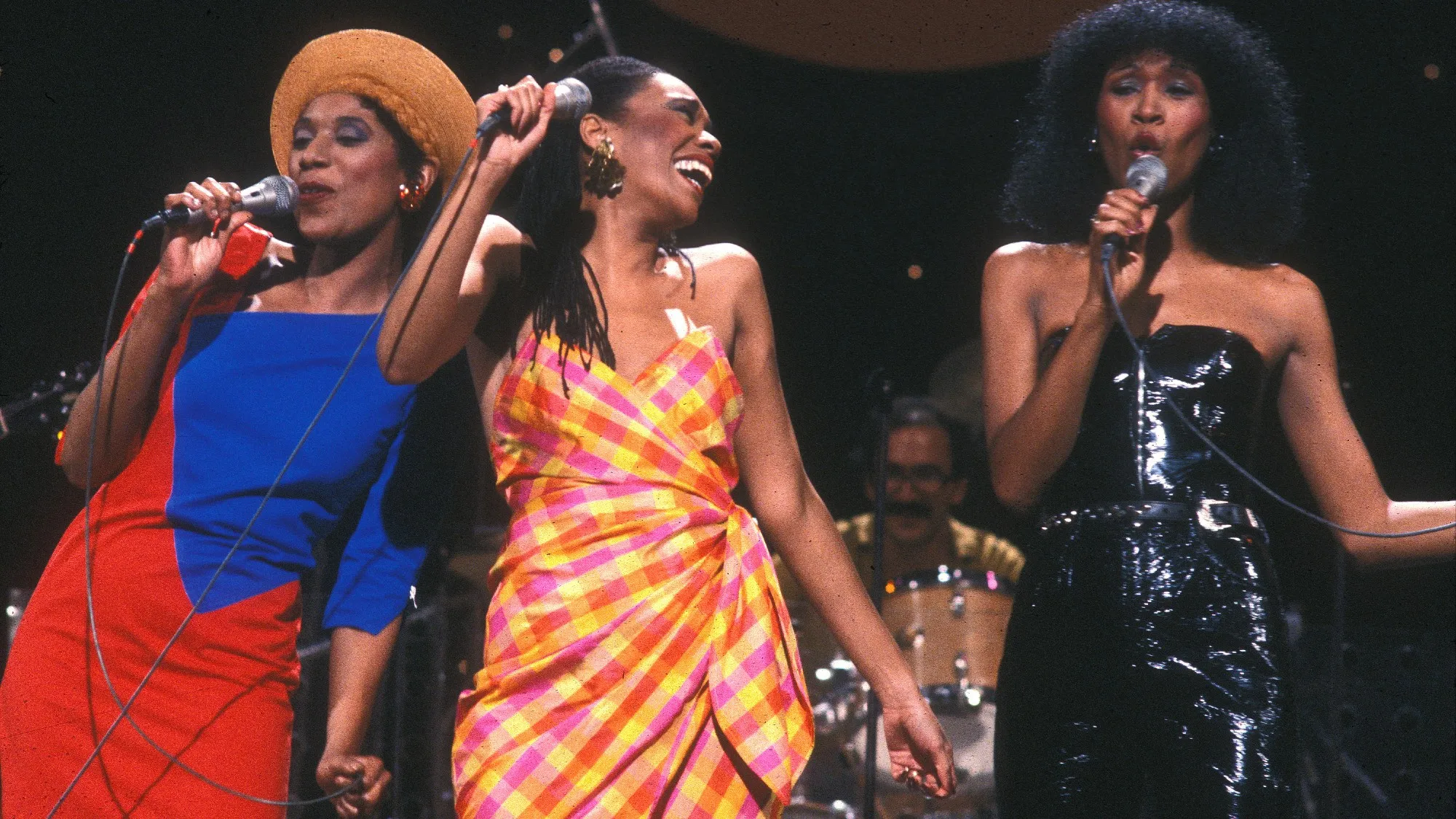
The Pointer Sisters stand as one of the most versatile and enduring acts in the history of American popular music, transitioning seamlessly across genres including bebop, country, funk, rock, and ultimately, the high-energy dance-pop that defined the 1980s. Originally hailing from Oakland, California, the group—consisting of siblings Ruth, Anita, Bonnie, and June Pointer—began their professional journey in the early 1970s, rooted in the gospel traditions of their parents’ church. Over the course of three decades, they achieved a level of chart consistency and stylistic fluidity that few of their contemporaries could match. While their early career was marked by a nostalgic, 1940s-inspired aesthetic and a Grammy-winning foray into country music, it was their pivot to a synth-heavy, rhythmically driven sound in the mid-1980s that cemented their status as icons of the dance floor. Their repertoire from this period remains a staple of radio airplay and cinematic soundtracks, characterized by sophisticated vocal arrangements and a relentless, driving energy.
The Architectural Shift to Dance-Pop and the Success of Break Out
The group’s commercial zenith arrived with the 1983 release of their tenth studio album, Break Out. Produced by Richard Perry, the album represented a strategic move toward the burgeoning electronic sounds of the decade. By incorporating synthesizers and drum machines while maintaining the sisters’ signature intricate harmonies, Perry and the Pointers created a sound that was both radio-friendly and club-ready. The album eventually earned a triple-platinum certification from the Recording Industry Association of America (RIAA), yielding four consecutive Top 10 hits on the Billboard Hot 100. This era redefined the group’s public image, moving them away from their eclectic roots and into the center of the MTV-driven pop mainstream.
Neutron Dance: From Cinematic Rejection to Global Chart Success
One of the most recognizable tracks from the Break Out era is "Neutron Dance," released as a single in 1984. Written by the prolific Allee Willis and Danny Sembello, the song is a masterclass in high-tempo synth-pop. However, the track’s path to the top of the charts was unconventional. Originally commissioned for the 1984 rock-and-roll fable Streets of Fire, the song was intended to play during a scene involving a group of musicians on a bus navigating a post-apocalyptic landscape. According to songwriter Allee Willis, the "neutron" in the title was a literal reference to the nuclear themes of the film.
When the producers of Streets of Fire ultimately passed on the track, it was redirected to the soundtrack of the Eddie Murphy vehicle Beverly Hills Cop. This proved to be a pivotal moment for the song’s legacy. As Beverly Hills Cop became a cultural phenomenon and the highest-grossing film of 1984, "Neutron Dance" benefited from heavy rotation of its music video, which featured clips of Murphy’s character, Axel Foley. The song peaked at No. 6 on the Billboard Hot 100 and No. 4 on the Hot Dance Club Play chart. Lyrically, the song juxtaposes upbeat instrumentation with themes of resilience and social struggle, with the chorus—"I’m just burning doin’ the neutron dance"—serving as a metaphor for maintaining one’s pace and spirit in an increasingly chaotic world.
I’m So Excited: The Persistent Power of a Pop Classic
Perhaps no song in the Pointer Sisters’ catalog is as synonymous with pure kinetic energy as "I’m So Excited." Initially appearing on their 1982 album So Excited!, the song was written by the sisters (Anita, June, and Ruth) in collaboration with Trevor Lawrence. Upon its first release, the track performed respectably, peaking at No. 30 on the Billboard Hot 100. However, sensing that the song had not yet reached its full commercial potential, producer Richard Perry included a slightly remixed and edited version on the 1984 re-release of the Break Out album.
This second push was immensely successful. The 1984 version climbed to No. 9 on the Hot 100, bolstered by a glamorous music video that captured the high-fashion sensibilities of the era. The song’s longevity is attributed to its infectious piano hook and the sisters’ urgent, breathless delivery of the chorus. Beyond its chart performance, "I’m So Excited" has become a cultural touchstone, appearing in dozens of films, television commercials, and wedding playlists. It exemplifies the group’s ability to convey unbridled joy through complex vocal layering, a feat that allowed them to maintain relevance even as musical trends shifted toward the more aggressive sounds of late-80s R&B.
Dare Me: Dominating the Dance Charts
While "Neutron Dance" and "I’m So Excited" were massive crossover hits, "Dare Me" holds the distinction of being the Pointer Sisters’ only single to reach No. 1 on the Billboard Dance Club Songs chart. Released in 1985 as the lead single from their eleventh studio album, Contact, "Dare Me" was written by Sam Lorber and Dave Innis. The song leaned further into the dance-rock aesthetic, featuring a prominent bassline and a more assertive, provocative vocal performance from the group.
The music video for "Dare Me" was notable for its unique concept, featuring the sisters as trainees in a boxing gym. This visual metaphor for strength and competition resonated with audiences, helping the song reach No. 11 on the Billboard Hot 100. The track’s influence extended well into the 21st century; in 2004, Italian house producer Junior Jack sampled the song for his hit "Stupidisco," which topped the UK Dance Chart and introduced the Pointer Sisters’ melody to a new generation of club-goers. This enduring appeal underscores the structural integrity of the sisters’ 80s output—songs that were built on solid songwriting foundations rather than mere trendy production.
A Chronology of Artistic Evolution
To understand the impact of these dance hits, one must view them within the broader timeline of the Pointer Sisters’ career, which was characterized by a rare willingness to take creative risks.
- 1971–1973: The Formative Years. The group began as a duo (June and Bonnie) before expanding to a trio with Anita and finally a quartet with Ruth. Their 1973 self-titled debut was a critical success, blending jazz, scat, and R&B.
- 1974–1975: Genre Defiance. The group released "Fairytale," a country song written by Anita and Bonnie. It became a hit on the country charts and led to the sisters becoming the first Black female group to perform at the Grand Ole Opry. They won their first Grammy for the track.
- 1978–1981: The Rock and Soul Transition. After Bonnie Pointer left for a solo career, the remaining trio signed with Richard Perry’s Planet Records. They scored a major hit with a cover of Bruce Springsteen’s "Fire," shifting toward a more rock-oriented sound.
- 1983–1985: The Synth-Pop Peak. This period saw the release of Break Out and Contact, the two albums that defined their dance-floor legacy and yielded their most iconic hits.
- 1986–Present: Legacy and Resilience. While the massive chart hits slowed in the late 80s, the group remained a premier touring act. They were honored with a star on the Hollywood Walk of Fame in 1994, acknowledging their sustained contribution to the arts.
Statistical Overview and Commercial Dominance
The commercial data associated with the Pointer Sisters during their peak years reflects a period of significant market dominance. Between 1973 and 1985, the group secured 13 Top 20 hits on the Billboard Hot 100. Their album Break Out is particularly noteworthy for its endurance; it remained on the Billboard 200 chart for a staggering 98 weeks.
In addition to their Billboard success, the group was a favorite of the National Academy of Recording Arts and Sciences. They earned 15 Grammy nominations and secured three wins:
- 1975: Best Country Vocal Performance by a Duo or Group ("Fairytale").
- 1985: Best Pop Performance by a Duo or Group with Vocal ("Jump (For My Love)").
- 1985: Best Vocal Arrangement for Two or More Voices ("Automatic").
These awards highlight the group’s technical proficiency. Unlike many "girl groups" of the era that relied on a single lead singer, the Pointer Sisters rotated lead vocal duties among Anita, June, and Ruth, allowing for a diverse range of textures—from June’s husky alto to Anita’s bright, precise soprano.
Cultural Impact and Broader Implications
The success of the Pointer Sisters in the mid-1980s had broader implications for African American women in the music industry. During the early years of MTV, Black artists often struggled to receive airplay on the predominantly rock-oriented channel. The Pointer Sisters, alongside artists like Michael Jackson, Prince, and Tina Turner, played a crucial role in breaking these racial barriers. Their "dance-pop" sound was sophisticated enough for adult contemporary radio yet energetic enough for the club scene and visual enough for the music video era.
Industry analysts often point to the sisters as pioneers of the "modern vocal group" template. Their influence can be seen in the tightly choreographed performances and harmonic structures of later groups such as En Vogue, SWV, and Destiny’s Child. By maintaining control over their image and often contributing to the songwriting process, they asserted a level of agency that was not always afforded to female groups in the preceding decades.
Furthermore, the sisters’ ability to survive the "disco backlash" of the late 1970s is a testament to their musicality. While many R&B and dance acts saw their careers falter when disco became unfashionable, the Pointer Sisters adapted by incorporating elements of New Wave and contemporary rock, ensuring their sound felt "current" rather than "retro."
Conclusion: An Enduring Sonic Legacy
The passing of June Pointer in 2006, Bonnie Pointer in 2020, and Anita Pointer in 2022 marked the end of an era, yet the music they created continues to resonate. The trio of "Neutron Dance," "I’m So Excited," and "Dare Me" represents more than just a successful run on the pop charts; these songs are artifacts of a period when the Pointer Sisters successfully synthesized the energy of the dance floor with the emotional depth of their gospel and R&B roots.
Today, their work is studied by musicologists for its sophisticated vocal arrangements and celebrated by fans for its infectious optimism. As "Neutron Dance" continues to underscore cinematic chase scenes and "I’m So Excited" remains the definitive anthem for celebration, the Pointer Sisters’ legacy is secure. They were not merely a group that followed trends; they were architects of a sound that defined the 1980s and continues to invite listeners to the dance floor decades later. Through their relentless work ethic and vocal brilliance, they proved that true talent is not confined by genre, but rather amplified by the courage to transcend it.
