

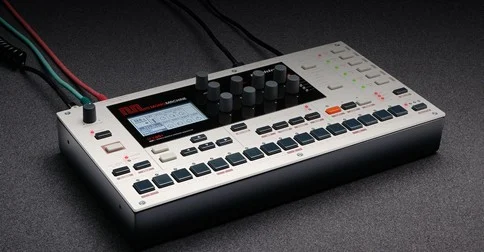
The landscape of digital music production has witnessed a significant milestone with the release of Gearmulator MD/MM, a new open-source project developed by Joe Landers designed to emulate the iconic Elektron Monomachine and Machinedrum hardware units. This software project represents a sophisticated foray into digital preservation, offering a virtualized environment capable of executing the original firmware of these highly sought-after instruments on modern computing platforms. Currently in its alpha phase—specifically version 0.1.0 alpha.12—the Gearmulator MD/MM provides a cross-platform solution with dedicated builds for Linux, macOS, and Windows, effectively bridging the gap between legacy hardware architecture and contemporary software workflows.
Technical Architecture and the Emulation Paradigm
The Gearmulator MD/MM is not a traditional software synthesizer or a "clone" in the sense of modern VST recreations that attempt to mimic the sound of hardware through new code. Instead, it functions as a specialized virtual machine or hardware emulator. The core of the project involves recreating the instruction set and hardware environment of the Motorola 56300 family of Digital Signal Processors (DSP), which served as the computational heart of Elektron’s "Silver Era" machines.
By emulating the DSP environment, Gearmulator allows the original, unmodified binary firmware files created by Elektron decades ago to run on a standard PC processor. This approach ensures a high degree of sonic accuracy, as the software is executing the exact same algorithms and logic as the original hardware. The developer, Joe Landers, has focused on creating a wrapper that handles the necessary input and output (I/O) protocols, translating MIDI data and audio streams between the emulated environment and the host operating system’s drivers.
The Legacy of the Elektron Machinedrum and Monomachine
To understand the significance of the Gearmulator project, one must look at the historical impact of the hardware it seeks to replicate. The Elektron Machinedrum SPS-1, first released in 2001, and the Monomachine SFX-6/SFX-60, released in 2003, were revolutionary instruments that defined the sound of experimental electronic music for over a decade.
The Machinedrum was a digital drum machine that featured multiple synthesis "engines," including FM, physical modeling, and a unique "GND" engine for utility sounds. Its 16-track sequencer and "Parameter Locks" system—which allowed users to automate every parameter on a per-step basis—became the blueprint for Elektron’s subsequent success. The Monomachine followed a similar philosophy but applied it to melodic synthesis, offering five distinct synthesis types: Superwave, SID (Commodore 64 emulation), FM+, DigiPRO, and VO (formant synthesis).
Both machines were discontinued in 2016, leading to a dramatic surge in their value on the secondary market. Units that originally retailed for approximately $1,000 to $1,500 now frequently command prices exceeding $2,500 to $3,000 among collectors and professional musicians. The Gearmulator MD/MM arrives at a time when the accessibility of these sounds has become a barrier for many creators, providing a functional alternative to the increasingly rare and expensive physical hardware.
Development Timeline and Current Status
The Gearmulator project follows in the footsteps of previous successful DSP emulation efforts, most notably the DSP56300 Emulation project (often referred to as "The Vember Audio Surge" or "Osirus" and "Vavra" projects), which successfully emulated the Access Virus and Waldorf Microwave II/XT.
The chronology of Gearmulator’s development has been rapid:
- Initial Research Phase: Analysis of the Motorola 56300 architecture and its implementation within Elektron’s proprietary hardware.
- Core Emulation Engine: Development of the virtual environment capable of loading the firmware binaries.
- Alpha Releases: The project entered the public alpha stage in late 2023 and early 2024, with alpha.12 being the most recent stable iteration.
- Community Integration: The project gained significant traction following demonstrations by community members such as Tico Ross, whose video showcases of the emulator demonstrated its ability to handle complex sequencing and modulation without crashing.
Despite its functional state, the project is explicitly labeled as "alpha." This designation indicates that while the core synthesis and sequencing logic are operational, users may encounter bugs related to MIDI timing, audio buffering, or user interface responsiveness.
User Requirements and Legal Considerations
A critical aspect of the Gearmulator MD/MM project is the requirement for users to supply their own firmware files. The open-source code provided by Joe Landers does not include the copyrighted operating system code owned by Elektron Music Machines AB.
To use the software, a user must possess a copy of the Machinedrum or Monomachine firmware (typically a .syx file). While these files were historically available for download on Elektron’s support pages for hardware owners to perform updates, the legal distribution of these files for use in an emulator remains a complex "grey area" in intellectual property law. By requiring users to provide the firmware, the developer shifts the responsibility of licensing and ownership to the end-user, a standard practice in the world of console and hardware emulation.
Broader Implications for the Music Technology Industry
The emergence of Gearmulator MD/MM highlights several growing trends in the music technology sector, ranging from the democratization of high-end tools to the necessity of digital archeology.
1. Digital Preservation
Electronic instruments, particularly those from the early digital era, are susceptible to hardware failure. Components such as capacitors, OLED screens, and specialized DSP chips have finite lifespans. Projects like Gearmulator ensure that the unique "DNA" of these instruments—the specific way their code processes sound—is preserved long after the last physical unit ceases to function.
2. Accessibility and Market Dynamics
The high cost of vintage digital gear has created a class divide in music production. Open-source emulation provides a pathway for younger or less affluent musicians to explore the specific workflows and sonic palettes of the Monomachine and Machinedrum. This may, in turn, influence the secondary market for the original hardware, as the "scarcity" of the sound itself is mitigated by software alternatives.
3. The Future of Hardware Design
The success of such emulators puts pressure on original manufacturers to consider how they manage their legacy products. There is an increasing demand for manufacturers to release official "legacy" VST versions of their discontinued hardware. While Elektron has not officially commented on the Gearmulator project, the existence of a high-quality community-driven emulator demonstrates a clear market demand for these specific instruments in a software format.
Technical Challenges and Future Prospects
Running the Gearmulator MD/MM is computationally intensive. Because it emulates hardware at a low level rather than just simulating the sound, it requires significant CPU overhead compared to a standard native plugin. Current users have reported that while modern multi-core processors can handle the load, optimization remains a primary goal for future releases.
Upcoming milestones for the project are expected to include:
- Enhanced Graphical User Interfaces (GUI): Improving the visual representation of the hardware controls for easier navigation.
- Improved MIDI Mapping: Streamlining the process of connecting external controllers to the virtual machine.
- Stability Updates: Addressing the edge-case bugs that cause audio glitches during high-modulation sequences.
Community Reception and Response
Initial reactions from the electronic music community have been overwhelmingly positive, albeit cautious. On platforms such as Elektronauts and various synthesizer subreddits, users have praised Landers for his technical proficiency and contribution to the open-source community. Many users have noted that the "raw" and "gritty" digital character of the original machines is perfectly captured, a feat that previous sample packs and VST approximations failed to achieve.
Experts in the field of DSP engineering have noted that the Gearmulator project is a testament to the power of modern computing. The fact that a standard consumer laptop can now emulate the complex, multi-processor architecture of a professional studio workstation from 2003 reflects the exponential growth in processing power over the last two decades.
Conclusion
Joe Landers’ Gearmulator MD/MM stands as a significant achievement in the field of music software development. By providing a stable, open-source platform for running Elektron’s legacy firmware, Landers has not only provided a tool for modern musicians but has also contributed to the long-term preservation of digital music history. As the project moves out of alpha and into more mature stages of development, it is poised to become a staple for producers seeking the unique, uncompromising sounds of the Machinedrum and Monomachine without the prohibitive costs of vintage hardware. For now, the project serves as a powerful reminder of the enduring relevance of Elektron’s early innovations and the vibrant community dedicated to keeping those sounds alive.
