

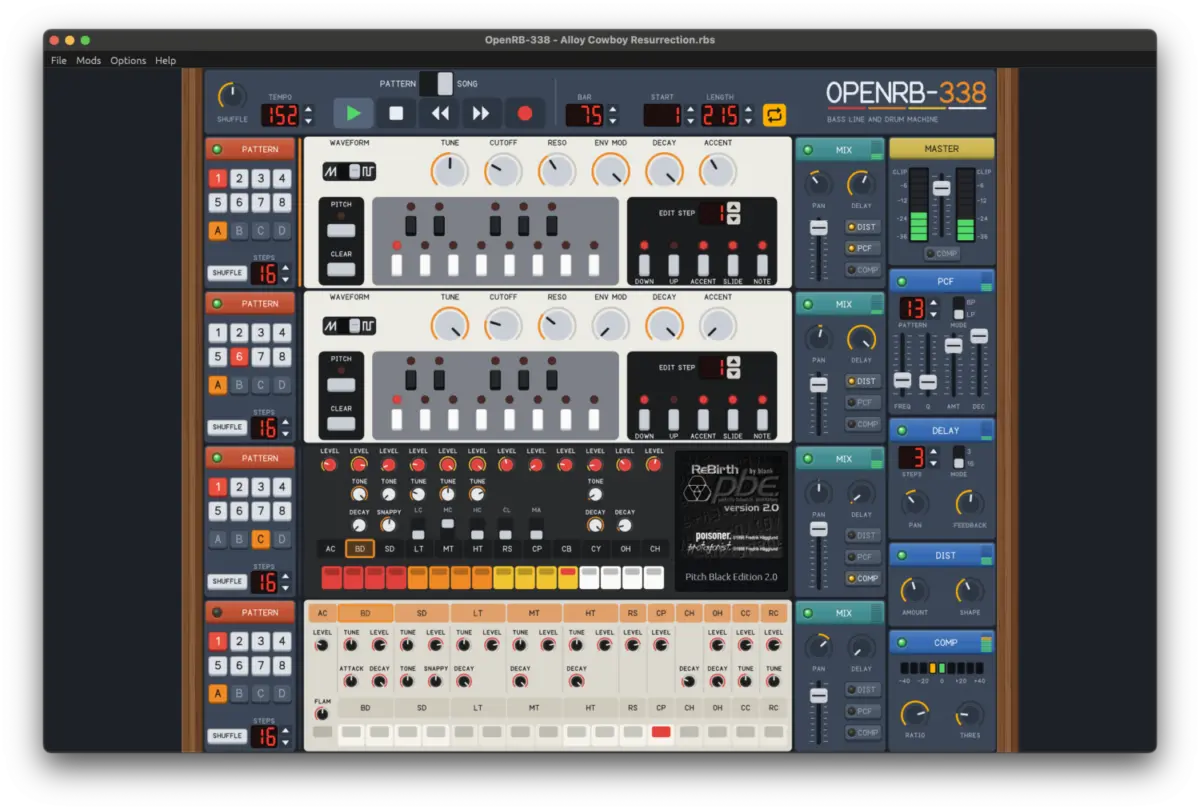
OpenRB-338 represents a significant milestone in the preservation of digital music history, emerging as a free and open-source recreation of the seminal Propellerhead ReBirth RB-338 software. Developed by the programmer known as pingw33n, this project seeks to bridge the gap between late-20th-century music production tools and contemporary operating systems. By reverse-engineering and reimplementing the audio engine that defined a generation of electronic music, OpenRB-338 offers a functional path for musicians and historians to access the specific sonic characteristics of the original 1997 release without the hurdles of legacy hardware or incompatible 32-bit software environments.
The Historical Significance of ReBirth RB-338
To understand the importance of the OpenRB-338 project, one must first examine the impact of the original ReBirth RB-338. Released in 1997 by the Swedish company Propellerhead Software, ReBirth was a revolutionary application that provided software emulations of two Roland TB-303 Bass Line synthesizers and a Roland TR-808 Drumatix drum machine. A subsequent update, version 2.0, added the Roland TR-909 Rhythm Composer to the suite.
At the time of its release, the "Acid House" and "Techno" sounds generated by these specific Roland hardware units were in high demand, yet the physical machines were becoming increasingly rare and expensive on the second-hand market. Propellerhead’s software was among the first to successfully utilize digital signal processing (DSP) to emulate the analog behavior of these instruments on a standard consumer personal computer. This democratization of sound allowed bedroom producers to achieve professional-grade electronic textures, effectively paving the way for the modern Digital Audio Workstation (DAW) era.
The original software was not merely a collection of synthesizers; it was a self-contained virtual studio. It featured a built-in sequencer, a pattern-based workflow, and integrated effects including distortion, delay, and a compressor. Its streamlined interface and specific "lo-fi" yet punchy digital aesthetic became a staple of late-90s electronic music production.
The Technical Evolution: From Propellerhead to OpenRB-338
As computing architecture moved from 32-bit to 64-bit systems, and as operating systems like Windows and macOS underwent fundamental kernel changes, the original ReBirth code became increasingly difficult to run. While Propellerhead (now known as Reason Studios) briefly maintained the software through the "ReBirth Museum" and an eventual iOS port, the software was officially discontinued and removed from digital storefronts in 2017.
The OpenRB-338 project serves as a technical response to this obsolescence. The developer, pingw33n, has focused on creating a standalone application that reproduces the original audio engine’s output with high fidelity. This is a critical distinction from simple sampling; the project aims to emulate the specific synthesis algorithms and sequencing logic that gave ReBirth its unique "swing" and harmonic character.
Currently hosted on GitHub, OpenRB-338 is built to run natively on modern desktop operating systems. By utilizing open-source frameworks, the project ensures that the software can be maintained by the community, shielding it from the "bit rot" that typically claims proprietary software once official support ends.
A Chronology of the ReBirth Legacy
The journey from a commercial breakthrough to an open-source revival spans over a quarter-century of technological change:
- 1996–1997: Propellerhead Software develops and releases ReBirth RB-338. It initially faces potential legal scrutiny from the Roland Corporation regarding the use of their instrument designs, but the two companies eventually reach an agreement where Roland officially endorses the software.
- 1998: Version 2.0 is released, introducing the TR-909 emulation and expanding the software’s versatility for techno and house production.
- 2001–2005: The software remains a cult favorite, but Propellerhead shifts its focus to "Reason," a more expansive virtual rack system. In 2005, ReBirth is officially discontinued as a commercial product and moved to the "ReBirth Museum" as a free download for legacy users.
- 2010: ReBirth is ported to the iPad, finding a new audience in the burgeoning mobile music production market.
- 2017: Following a request from the Roland Corporation, which cited intellectual property concerns related to their own "Boutique" and "Roland Cloud" recreations of the 303, 808, and 909, Propellerhead removes ReBirth from the App Store and shuts down the ReBirth Museum.
- 2023–2024: The OpenRB-338 project gains traction on GitHub, offering a modern, open-source alternative that bypasses the compatibility issues of the original installers.
Features and Current Limitations
OpenRB-338 is currently in an active state of development. While it provides a functional recreation of the core experience, it is categorized as a work in progress.
Current Capabilities:
- Authentic Audio Reproduction: The primary achievement of the project is an audio engine designed to match the output of the original software.
- Legacy File Support: The application supports original ReBirth song files (.rbs), allowing users to open and play compositions created decades ago.
- Standalone Operation: It functions as an independent application on modern Windows, Linux, and potentially macOS environments, depending on the build.
- Tooling for Formats: The project includes utilities for interacting with the specific file formats used by the original software, aiding in data recovery and preservation.
Known Limitations:
As of the current documentation, several "pro-level" features found in modern DAWs or the original ReBirth’s later versions are not yet implemented:
- Lack of MIDI Integration: The software currently lacks MIDI input and MIDI synchronization, meaning it cannot yet be triggered by external hardware controllers or synced to other software clocks.
- Plugin Support: There is currently no support for VST, AU, or ReWire protocols. This prevents the software from being used as a plugin inside other DAWs like Ableton Live, Logic Pro, or FL Studio.
- Editing Constraints: Certain pattern-editing functions and a comprehensive "Undo" system are listed as unimplemented, which may affect the fluidity of the creative workflow for new compositions.
Analysis of Implications: Preservation and Intellectual Property
The emergence of OpenRB-338 highlights a growing tension in the digital age: the conflict between corporate intellectual property (IP) and the preservation of digital culture. When Roland requested the removal of ReBirth in 2017, they were acting within their rights to protect the visual and functional likeness of their legendary hardware. However, this move effectively "orphaned" thousands of user compositions that relied on the ReBirth engine to sound correct.
OpenRB-338 operates in a gray area common to many emulation projects. By providing a clean-room style recreation of the software’s functionality, it serves as a "digital archaeologist’s" tool. For the music community, the project is less about infringing on Roland’s current product line—which features high-resolution "ACB" (Analog Circuit Behavior) modeling—and more about maintaining the specific "90s digital" character of the original Propellerhead code.
Furthermore, the open-source nature of the project ensures that even if the developer ceases work, the source code remains available for others to fork and update. This is a vital safeguard against the total loss of software that, while obsolete to its original manufacturers, remains culturally significant.
Impact on the Modern Music Production Landscape
While modern producers have access to dozens of high-end 303 and 808 emulations, OpenRB-338 offers a specific workflow that many find more inspiring than modern, feature-bloated alternatives. The "limitation" of having only two 303s and two drum machines forces a specific type of creativity that defined the "minimal" movements of the late 90s.
The revival of ReBirth through OpenRB-338 also coincides with a resurgence of interest in "Y2K aesthetics" and early digital synthesis. Just as analog hardware saw a revival in the 2010s, the specific sound of early-generation DSP (Digital Signal Processing) is now being sought after for its unique textures.
Conclusion and Future Outlook
OpenRB-338 is more than a nostalgic trip; it is a functional tool that addresses a gap in the software ecosystem. By enabling original .rbs files to run on modern hardware, it allows a new generation of artists to explore the foundations of virtual synthesis.
The future of the project likely depends on community involvement. The implementation of MIDI and VST support would transform OpenRB-338 from a preservationist’s curiosity into a powerful tool for modern studio integration. For now, the project stands as a testament to the enduring legacy of Propellerhead’s original vision and the dedication of the open-source community to ensure that digital history is not erased by the passage of time or the shifting priorities of corporate entities. As development continues, OpenRB-338 remains a primary point of interest for anyone invested in the intersection of software engineering, music history, and digital preservation.
